
Does Ceramic Cookware Have PFAS: 7 Facts
Ceramic cookware typically doesn’t contain PFAS, which are harmful chemicals often found in some non-stick coatings. However, some ceramic products might still include these chemicals, so it’s important to check labels for “PFAS-free” claims or trusted certifications. Understanding whether ceramic cookware has PFAS is essential for making safer kitchen choices.
Unlike traditional PFAS-based non-stick coatings, ceramic cookware uses mineral-based coatings that can handle higher heat without releasing toxic fumes.
Avoid overheating your ceramic pans and opt for high-quality brands to minimize any potential risks.
Proper care and maintenance also help preserve the safety and durability of your cookware. If you want to make the best choice and protect your health, there’s more to uncover about identifying and using safe ceramic cookware.
Key Takeaways
- Most ceramic cookware is free from PFAS, but some may contain PFAS coatings, so always check labels and manufacturer info.
- Ceramic coatings are mineral-based and inorganic, typically made from silica, not synthetic PFAS chemicals.
- Look for “PFAS-free” or “PFOA-free” labels and third-party certifications to ensure cookware safety.
- Overheating ceramic cookware can damage coatings but does not release PFAS if the cookware is PFAS-free.
- Avoid low-quality or unlabeled ceramic cookware as they may contain undisclosed PFAS or unsafe bonding agents.
What Are PFAS and Their Health Risks in Cookware?
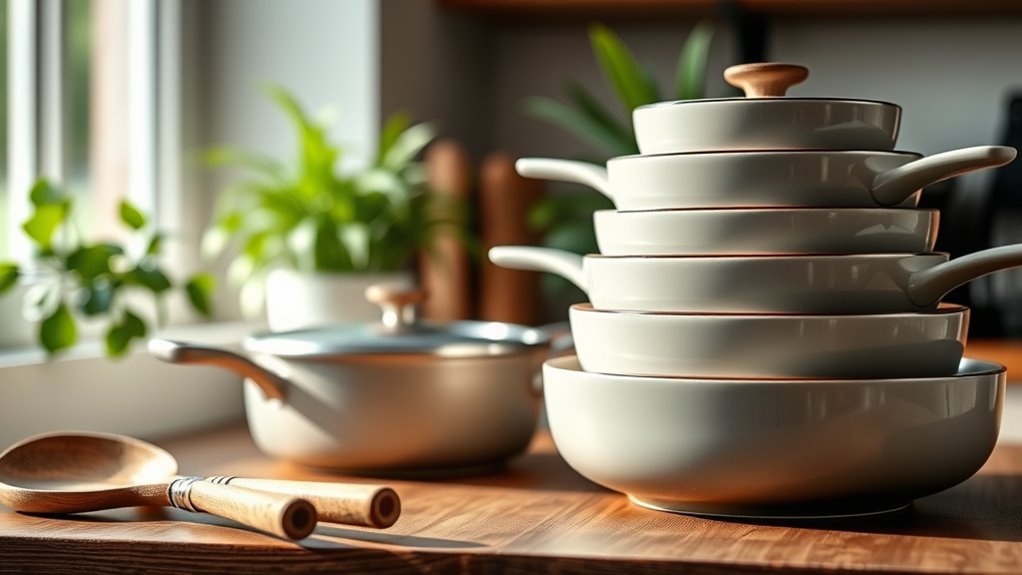
Although you may not see PFAS listed on your ceramic cookware, these synthetic chemicals often coat non-stick surfaces to repel heat and stains. PFAS, or per- and polyfluoroalkyl substances, are man-made chemicals used to make cookware resistant to grease, water, and heat. However, when heated, PFAS can release harmful fumes and particles that may pose health risks.
You should be aware that exposure to PFAS has been linked to issues like hormone disruption, immune system problems, and increased cancer risk. Since these chemicals persist in the environment and your body, minimizing contact with PFAS-coated cookware can reduce potential harm. Understanding PFAS helps you make safer choices when selecting non-stick kitchen tools.
How Is Ceramic Cookware Different From Pfas-Based Non-Stick?
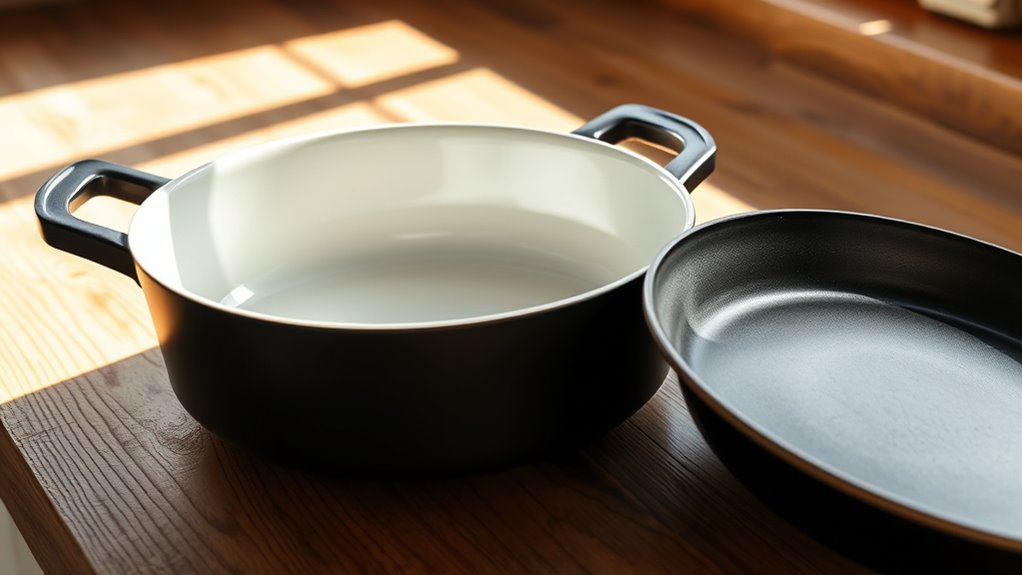
You’ll notice ceramic cookware uses a mineral-based coating, while PFAS-based non-stick relies on synthetic chemicals. This difference affects how each surface prevents food from sticking during cooking.
Understanding these material and mechanism contrasts helps you make safer choices in your kitchen.
Material Composition Differences
When comparing ceramic cookware to PFAS-based non-stick options, you’ll notice they differ considerably in their material makeup. Ceramic cookware primarily features a metal base, like aluminum or stainless steel, coated with a silica-based ceramic layer. This ceramic layer is free from synthetic chemicals like PFAS, giving it a more natural composition.
On the other hand, PFAS-based non-stick pans use synthetic polymers such as polytetrafluoroethylene (PTFE) to create their non-stick surface. These polymers are chemically engineered and contain fluorinated compounds linked to environmental and health concerns. So, while ceramic cookware relies on a mineral-derived coating, PFAS-based non-stick cookware depends on man-made fluorinated chemicals.
Understanding this difference helps you make informed choices about cookware safety and environmental impact.
Non-Stick Mechanism Comparison
Because ceramic cookware relies on a hard, inorganic coating, it prevents food from sticking differently than PFAS-based non-stick pans, which use a slippery polymer surface. When you cook with ceramic, the smooth, glass-like layer creates a barrier that reduces food adhesion through its natural slickness and heat resistance.
In contrast, PFAS-based cookware achieves non-stick properties by repelling water and oil at the molecular level, thanks to the fluoropolymer coating. This difference means ceramic coatings can handle higher temperatures without breaking down, while PFAS coatings might degrade and release chemicals if overheated.
Does Ceramic Cookware Contain PFAS?
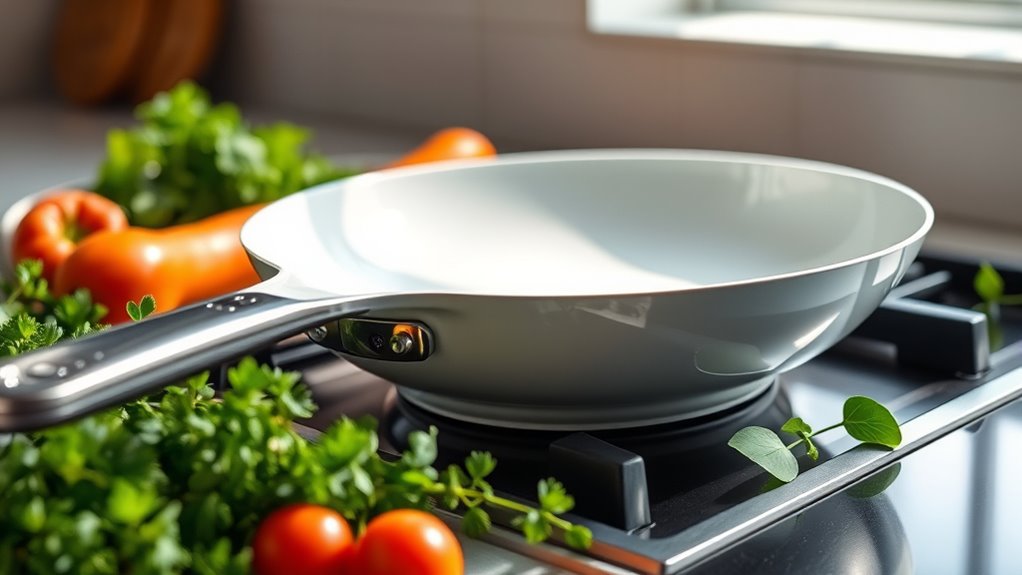
You might wonder if ceramic cookware contains PFAS like some other non-stick options. The good news is that most ceramic coatings are free from these harmful chemicals.
Let’s look at what this means for your health and safety.
PFAS Presence In Ceramic
How can you be sure that your ceramic cookware is free from PFAS? While ceramic itself is a natural material, some ceramic cookware uses coatings that might contain PFAS to enhance non-stick properties. To determine PFAS presence, you’ll need to check product labels, manufacturer information, or certifications.
Here’s a quick guide to help you assess PFAS presence in ceramic cookware:
| Factor | What to Look For |
|---|---|
| Material Base | Pure ceramic or mixed with PFAS |
| Coating Type | Non-stick ceramic vs. PFAS-based |
| Manufacturer Claims | “PFAS-free” or “PFOA-free” |
| Certifications | Verified by third-party labs |
| User Reviews | Reports of chemical concerns |
Being informed helps you choose safer ceramic cookware without PFAS.
Safety Of Ceramic Coatings
Understanding whether ceramic cookware contains PFAS often leads to questions about the safety of ceramic coatings themselves. You’ll want to know if these coatings pose any health risks or if they’re truly non-toxic. Fortunately, ceramic coatings are generally free from PFAS, but here’s what you should consider:
- Ceramic coatings are typically made from inorganic materials like silica.
- They don’t release harmful chemicals when heated.
- High-quality ceramic coatings are durable and scratch-resistant.
- Some low-quality ceramics may contain additives, so check labels carefully.
- Proper use and avoiding overheating prevent coating degradation.
Is Ceramic Cookware Safe at High Heat?
Although ceramic cookware is often praised for its non-toxic surface, it can react differently under high heat. When you cook at very high temperatures, ceramic coatings may start to degrade or become less effective. This can lead to discoloration, surface cracking, or even chipping over time.
While ceramic itself is generally heat-resistant, the bonding agents or layers beneath the surface might not tolerate extreme heat well. To keep your cookware safe and durable, avoid heating it empty or using maximum heat settings for extended periods. Instead, cook on medium or medium-high heat, which is sufficient for most recipes and preserves the integrity of the ceramic coating.
How Can You Spot Low-Quality Ceramic Cookware That May Hide PFAS?
When you’re shopping for ceramic cookware, it’s important to recognize signs of low quality that could indicate the presence of hidden PFAS chemicals. Low-quality pieces often cut corners, using coatings or materials that might contain these harmful substances. To spot them, watch for:
- Cheap price tags that seem too good to be true
- Lack of clear labeling or ingredient transparency
- Uneven or rough ceramic coating surfaces
- Products from unknown brands without certifications
- Cookware that peels or chips easily after light use
Paying attention to these red flags helps you avoid cookware that may pose health risks. Don’t just rely on the “ceramic” label—inspect details carefully to keep your kitchen safe.
How Can You Choose Truly PFAS-Free Ceramic Cookware?
How can you be sure your ceramic cookware is truly free of PFAS? Start by checking product labels and descriptions for clear claims like “PFAS-free” or “no synthetic chemicals.” Research brands that prioritize transparency and third-party testing.
Look for certifications from reputable organizations that verify non-toxicity. Avoid cookware with vague marketing or that lacks ingredient disclosures. You can also contact manufacturers directly to ask about their materials and coatings.
Choose cookware made from natural ceramic materials without added non-stick layers that often contain PFAS. Finally, read customer reviews and expert reports to confirm a product’s safety. By doing this homework, you’ll confidently select ceramic cookware that’s safe, healthy, and free from harmful PFAS chemicals.
How Do You Care for Ceramic Cookware to Keep It Safe and Durable?
Choosing the right PFAS-free ceramic cookware is just the beginning—you also need to care for it properly to maintain its safety and durability. Treating your cookware with care guarantees it stays non-toxic and lasts longer.
Here’s how you can keep your ceramic pieces in top shape:
- Use wooden, silicone, or plastic utensils to avoid scratching the surface.
- Avoid high heat; medium or low settings prevent damage and preserve the coating.
- Hand wash with mild detergent and a soft sponge instead of abrasive cleaners.
- Let cookware cool before washing to prevent thermal shock and cracking.
- Store carefully, avoiding stacking without protection to prevent chips and scratches.
Frequently Asked Questions
Can PFAS Be Found in Other Kitchen Utensils Besides Cookware?
Yes, you can find PFAS in other kitchen utensils like non-stick pans, spatulas, and some food storage containers. Always check labels and opt for PFAS-free products to keep your kitchen safer and healthier for cooking.
What Are Common Symptoms of PFAS Exposure From Cookware?
An ounce of prevention is worth a pound of cure. If you’re exposed to PFAS from cookware, you might notice fatigue, liver issues, or immune problems.
Watch for hormonal imbalances and increased cholesterol, too. Stay cautious!
How Do PFAS Levels Vary in Ceramic Cookware Brands?
PFAS levels vary widely in ceramic cookware brands because manufacturing processes differ. You should check product labels and certifications carefully, as some brands use safer, PFAS-free coatings while others might still contain trace amounts.
Are There Regulations Limiting PFAS in Cookware?
You’ll find some regulations limiting PFAS in cookware, but they vary by country. In the U.S., the FDA and EPA are working on stricter rules, so it’s smart to check product labels and certifications before buying.
Can PFAS in Cookware Affect Food Taste or Quality?
You won’t usually notice PFAS affecting your food’s taste or quality directly, but prolonged exposure to these chemicals during cooking could impact safety.
It’s best to choose cookware without PFAS to keep your meals pure and healthy.
Conclusion
Choosing ceramic cookware without PFAS is like picking a clear, fresh stream over murky water—it keeps your cooking safer and healthier. You don’t have to worry about hidden chemicals when you know what to look for and how to care for your cookware.
By being informed and cautious, you can enjoy the benefits of ceramic cookware without the risks. So, trust your instincts and cook with confidence, knowing you’ve made a safer choice.
When selecting ceramic cookware, always check for PFAS-free labels and prioritize quality brands. This way, you ensure your kitchen stays free from harmful chemicals. Embrace ceramic cookware without PFAS for a healthier cooking experience every time.