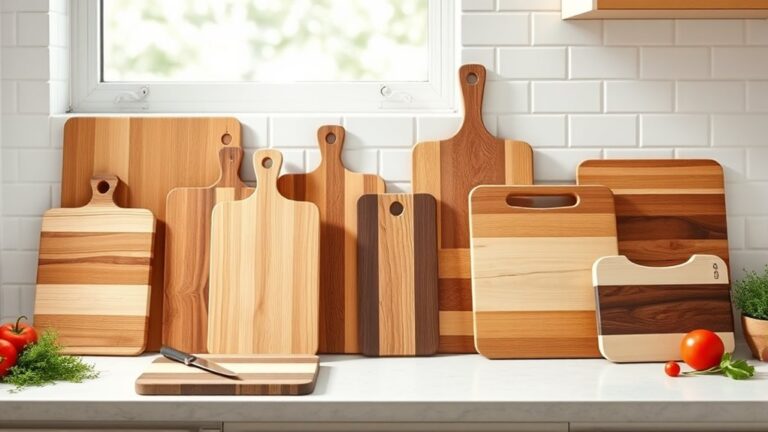
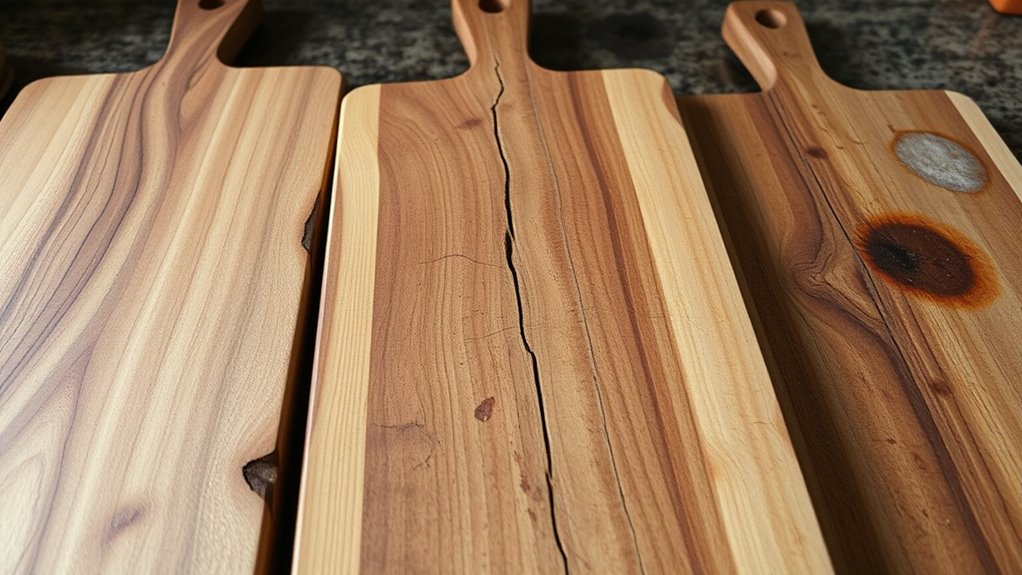
10 Signs It’s Time to Replace Cutting Boards
You should replace your cutting board if you notice deep grooves, persistent stains, or any warping, cracking, or splintering, as these issues compromise your board’s safety and hygiene. Lingering odors and discoloration are also key signs that bacteria may be hiding deep within the surface.
Prolonged use naturally wears down the board’s germ protection, and poor cleaning habits accelerate this damage.
Both plastic and wooden cutting boards display warning signs before they become unsafe to use. It’s important to keep an eye out for these critical indicators to maintain food safety.
By recognizing these signs early, you can prevent contamination and keep your kitchen hygienic.
Remember, replacing your cutting board when needed is an essential step in proper kitchen care. You’ll find more helpful tips ahead to guide you in choosing the right time for a new board.
Key Takeaways
- Deep grooves, cracks, or warping on the cutting board compromise safety and hygiene, signaling the need for replacement.
- Persistent stains and odors indicate bacterial buildup and material deterioration requiring a new cutting board.
- Excessive knife marks and surface wear harbor bacteria and reduce chopping efficiency, making replacement necessary.
- Warping, splinters, or surface damage create contamination risks and unsafe chopping conditions.
- Poor cleaning habits causing discoloration, cracks, or brittleness accelerate deterioration and warrant timely replacement.
How to Know When to Replace Your Cutting Board
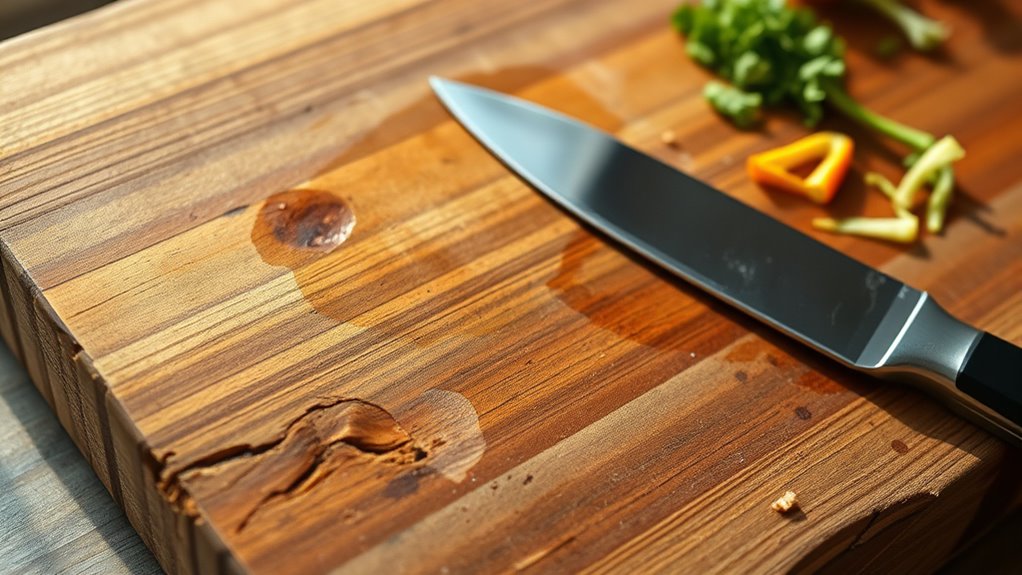
Although cutting boards can last a long time, you’ll need to replace yours once it shows deep grooves, cracks, or warping. These signs indicate the board’s surface is compromised, making it less effective and potentially unsafe. You’ll notice if your board becomes uneven or wobbly, which makes chopping difficult and increases the risk of slipping knives.
If your wooden board starts to crack or split, moisture can seep in, weakening the material. Warping, often caused by improper drying or exposure to heat, can cause instability during use. Even without visible damage, if your cutting board has an unpleasant odor or persistent stains that don’t wash away, it’s a clear sign it’s time to get a new one.
Recognizing these issues early helps you maintain hygiene and safety in your kitchen.
When Deep Grooves and Cuts Harbor Bacteria
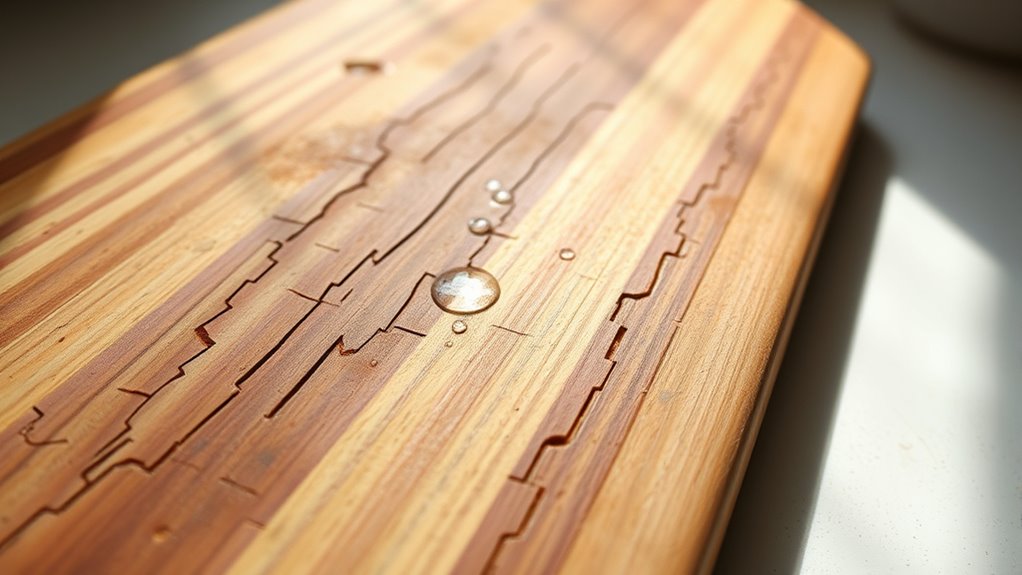
When deep grooves and cuts develop on your cutting board, they create perfect hiding spots for bacteria that regular cleaning can’t reach. These cracks trap food particles and moisture, encouraging bacterial growth, even if you wash the board thoroughly. Over time, this buildup can lead to cross-contamination, posing health risks in your kitchen.
You might think scrubbing harder will help, but it’s nearly impossible to sanitize these crevices completely. If your cutting board has numerous deep cuts, it’s a clear sign you should replace it. Choosing a new board ensures you maintain a clean, safe surface for food prep and avoid potential foodborne illnesses.
Don’t wait until these grooves become a serious hygiene problem—swap out your board promptly.
Why Persistent Stains Mean It’s Time to Replace
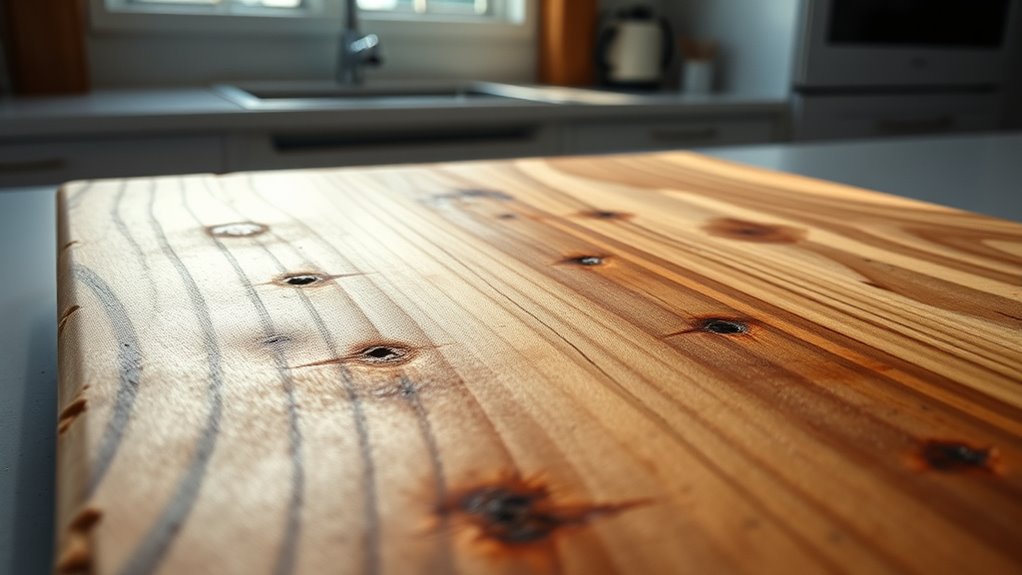
If your cutting board has stains that just won’t come out, it’s a sign bacteria might be hiding there. You can’t clean these spots thoroughly, which puts your food safety at risk.
It’s time to replace the board before those stains become a health hazard.
Stains Harbor Bacteria
Since cutting boards often come into contact with raw meats and other foods, persistent stains can become a breeding ground for harmful bacteria. When stains soak deep into your board, they create tiny pockets where bacteria hide and multiply, even after washing. This means harmful germs might linger, risking your health and contaminating your meals.
If you notice stains that won’t fade or darken over time, it’s a clear sign bacteria could be thriving beneath the surface. No matter how much you scrub, those stains can harbor pathogens you can’t see. To keep your kitchen safe and your food healthy, replacing a stained cutting board is a smart move.
Don’t let hidden bacteria compromise your cooking space.
Difficult To Clean
Although you may scrub your cutting board regularly, persistent stains often signal that it’s becoming difficult to clean thoroughly. When stains won’t lift, it means food particles and oils have deeply penetrated the surface, creating pockets that soap and water can’t reach. This buildup makes your cleaning efforts less effective and increases the chance that odors and residue linger.
If you notice your board still looks grimy or smells even after washing, it’s a clear sign that the material has aged or worn down. Instead of struggling to restore cleanliness, it’s smarter to replace the board. A new cutting board will be easier to clean and maintain, ensuring your kitchen stays fresh and your prep work hassle-free.
Affects Food Safety
When persistent stains remain on your cutting board, they can harbor harmful bacteria that threaten your food safety. These stains often hide germs that regular washing can’t remove, increasing the risk of cross-contamination. Ignoring this puts you and your loved ones at risk of foodborne illnesses.
Here’s why you should replace your cutting board when stains won’t fade:
- Bacteria thrive in grooves and stains, making cleaning ineffective.
- Stains can indicate deep cuts where pathogens easily hide.
- Persistent discoloration shows material breakdown, reducing the board’s hygienic integrity.
Don’t wait for sickness to strike. Swap out stained, worn boards for new ones to keep your kitchen safe and your meals healthy.
How Lingering Odors Signal Hidden Contamination
If your cutting board holds onto stubborn smells, it’s a sign bacteria may be hiding in the grooves. These lingering odors mean the board isn’t fully clean and could compromise your food safety.
You should consider replacing it to keep your kitchen hygienic.
Persistent Smells Indicate Bacteria
Since cutting boards come into contact with raw foods, they can easily trap bacteria that cause lingering odors. When you notice persistent smells, it’s a clear sign bacteria may be hiding deep in the board’s grooves. These smells won’t just fade with washing—they indicate contamination that can affect your food safety.
Watch for these warning signs:
- Foul odors that linger despite thorough cleaning
- Stains or discoloration paired with bad smells
- A musty or sour scent developing over time
If your cutting board exhibits any of these, it’s time to replace it. Don’t risk cross-contamination or foodborne illness by ignoring persistent smells—they’re your board’s way of telling you it’s no longer safe to use.
Odor Retention and Safety
Persistent odors on your cutting board do more than just annoy your senses—they often signal hidden contamination that cleaning can’t reach. When smells linger despite thorough washing, it means bacteria or mold might be trapped deep in the board’s grooves or cracks. These microorganisms can multiply, increasing the risk of foodborne illness.
You shouldn’t ignore these signs because they compromise your food safety. If your cutting board retains strong odors, it’s time to replace it, especially if it’s heavily scarred or stained. Using a compromised board not only affects the taste of your meals but also puts your health at risk.
Prioritize safety by swapping out odor-retentive boards for fresh, clean ones that won’t harbor unseen contaminants.
When Warping, Cracks, or Splinters Compromise Safety
When your cutting board starts to warp, crack, or develop splinters, it’s a clear sign that it no longer provides a safe surface for food prep. These damages create crevices where bacteria can hide and multiply, increasing the risk of foodborne illness.
You should replace the board immediately if you notice:
- Warping that causes instability, making chopping unsafe
- Deep cracks that trap food particles and bacteria
- Splinters that can contaminate food or cause injury
Ignoring these issues puts your health at risk and compromises the integrity of your kitchen tools. A smooth, intact surface is essential for hygiene and safe food handling, so don’t hesitate to swap out a damaged cutting board for a new one.
Why Excessive Knife Marks Affect Your Cutting Board’s Lifespan
You’ll notice that excessive knife marks create grooves where bacteria can hide, making your cutting board less safe. These cuts also weaken the surface, causing it to wear out faster.
If you don’t replace your board, you risk contaminating your food and shortening its lifespan.
Knife Marks Harbor Bacteria
Although knife marks might seem harmless, they create tiny grooves that trap food particles and moisture. These trapped elements become a breeding ground for bacteria, putting your health at risk every time you prepare food. You might not see the buildup, but it’s there, lurking beneath the surface.
Here’s why you should pay attention to knife marks on your cutting board:
- Bacteria thrive in grooves, increasing the chance of cross-contamination.
- Regular cleaning can’t fully reach deep cuts, allowing harmful microbes to multiply.
- Over time, these hidden bacteria can lead to foodborne illnesses, especially when handling raw meat or vegetables.
If your cutting board has excessive knife marks, it’s time to replace it to keep your kitchen safe and hygienic.
Surface Integrity Deterioration
Because excessive knife marks compromise the surface of your cutting board, they considerably shorten its lifespan. Each cut creates grooves that weaken the board’s structure, making it more susceptible to cracks and splits over time. You might notice your board becoming rougher, less stable, and harder to clean properly.
As these indentations deepen, the board loses its smoothness, affecting your chopping efficiency and potentially damaging your knives. Ignoring these signs means you’re pushing your cutting board beyond its functional limits, risking expensive replacements or injury from splinters. To maintain a safe and effective kitchen tool, watch for surface wear and replace your cutting board once these deteriorations become prominent, ensuring you always have a reliable, sturdy surface to prepare your meals.
Increased Food Contamination Risk
As the surface of your cutting board becomes riddled with knife marks, those grooves don’t just weaken its structure—they create perfect hiding spots for bacteria and food particles. These tiny crevices are tough to clean thoroughly, increasing the risk of cross-contamination and foodborne illnesses. You might think a quick wash is enough, but harmful pathogens can linger deep within the cuts.
Here’s why excessive knife marks raise contamination risks:
- Bacteria thrive in grooves, multiplying rapidly.
- Food debris gets trapped, making sanitation difficult.
- Damaged surfaces promote quicker absorption of liquids, spreading contaminants.
To protect your health and keep meals safe, it’s essential to replace your cutting board once those knife marks become excessive. Don’t wait until contamination becomes a real problem—swap out your board and maintain a hygienic kitchen.
How Prolonged Use Reduces Your Cutting Board’s Germ Protection
When you keep using the same cutting board over time, tiny grooves and cuts form on its surface, creating perfect hiding spots for bacteria. These grooves trap food particles and moisture, making it harder to clean the board thoroughly. Even with scrubbing, germs can linger in these crevices, increasing the risk of cross-contamination.
Your cutting board’s ability to protect against bacteria diminishes as these imperfections multiply. Over time, bacteria can multiply rapidly, especially when the board is used for raw meats or vegetables. To maintain a safe kitchen, you need to recognize when your cutting board’s surface has become too worn to clean effectively.
Replacing it before it becomes a breeding ground for harmful germs ensures you keep your food preparation safe and hygienic.
When Plastic Cutting Boards Become Discolored or Brittle
Wooden cutting boards develop grooves that trap bacteria over time, but plastic boards face their own issues that signal it’s time for replacement. When your plastic cutting board starts to discolor or becomes brittle, it’s a clear warning. You might notice:
- Yellow or dark stains that won’t wash off, indicating deep food residue buildup.
- Cracks or chips forming, creating hard-to-clean crevices for bacteria.
- A rough texture or warping, which compromises the board’s surface integrity.
These signs mean your board no longer provides a safe cutting surface. Continuing to use a discolored or brittle plastic board increases the risk of contamination and foodborne illness. Replace it promptly to maintain hygiene and keep your kitchen safe.
Why Wooden Cutting Boards Need More Frequent Replacement
Because they absorb moisture and develop deep grooves more easily, wooden cutting boards demand more frequent replacement than plastic ones. When you cut on wood, tiny cracks form, creating perfect hiding spots for bacteria that soap and water can’t reach. Over time, these grooves deepen, making your board less sanitary and more prone to harboring harmful germs.
Additionally, wood’s porous nature means it can warp or crack with repeated exposure to water and fluctuating temperatures. Even if you oil your board regularly, it can only delay these issues, not prevent them entirely. If you notice your wooden board becoming rough, cracked, or smelling musty despite proper care, it’s time to replace it to keep your kitchen safe and clean.
How Poor Cleaning Habits Shorten Your Cutting Board’s Life
The condition of your cutting board often reflects how you clean and maintain it. If you skip proper cleaning, bacteria and stains build up, weakening the board’s surface and causing odors. Neglecting to dry your cutting board thoroughly after washing can lead to warping or cracking.
Proper cleaning and drying prevent bacteria buildup, odors, and damage like warping or cracking on your cutting board.
Using harsh detergents or soaking the board too long strips away protective oils, making it more prone to damage.
Avoid these poor habits to extend your cutting board’s life:
- Leaving food residue on the surface for long periods
- Washing with abrasive scrubbers or harsh chemicals
- Storing the board in damp or enclosed spaces without ventilation
Frequently Asked Questions
What Types of Cutting Boards Are Safest for Different Foods?
You should use wooden cutting boards for vegetables and bread because they’re gentle and less prone to harbor bacteria. For raw meat or fish, choose plastic boards since you can sanitize them thoroughly to avoid cross-contamination.
How Often Should I Sanitize My Cutting Board?
You should sanitize your cutting board after every use, like wiping sweat off your brow after a workout—essential for cleanliness.
Studies show bacteria can double every 20 minutes, so regular sanitizing keeps your kitchen safe and fresh.
Can Cutting Boards Be Repaired Instead of Replaced?
Yes, you can repair wooden cutting boards by sanding out deep cuts or cracks.
But if damage is extensive or bacteria hide in grooves, it’s safer to replace the board to keep your food preparation hygienic.
Are There Eco-Friendly Options for Disposing of Old Cutting Boards?
Yes, you can recycle wooden cutting boards or compost them if untreated. Some eco-friendly disposal services accept plastics.
You’ll also find creative upcycling ideas to give old boards a second life instead of tossing them.
What Materials Resist Bacteria Growth Best in Cutting Boards?
Bamboo and butcher block boards best banish bacteria, boasting natural antibacterial benefits. You’ll find plastic cutting boards also fend off filth when frequently sanitized.
Choose materials combining cleanliness and convenience to keep your kitchen cutting-edge.
Conclusion
Your cutting board is like the unsung hero of your kitchen—silent but essential. When it’s riddled with grooves, stains, or odors, it’s waving a red flag you can’t ignore.
Don’t let warping or cracks turn your trusty board into a ticking germ time bomb. Trust your instincts and replace it before it’s too late.
After all, a fresh cutting board means safer meals and a kitchen that’s ready to shine. Recognizing the signs it’s time to replace cutting boards helps maintain hygiene and ensures your food prep stays safe and efficient.