10 Reasons End Grain Cutting Boards Are Better
You’ll love end grain cutting boards because they protect your knives by letting fibers flex and close after each cut, reducing dulling and damage. These cutting boards are made from the cross-section of wood fibers, which makes them exceptionally durable and gentle on your blades. Their unique construction helps maintain knife sharpness longer, making them a must-have for any kitchen.
They’re super durable, resisting warping, cracking, and deep scratches over time. End grain boards absorb impacts better than other types, which means they last longer with less visible wear.
Their natural wood patterns add beauty and warmth to any kitchen, while maintenance stays simple with proper care.
Plus, their long-lasting performance makes them a smart investment. Keep exploring to discover even more benefits and care tips. With the right upkeep, your end grain cutting board will remain a reliable kitchen companion for years to come.
Key Takeaways
- End grain boards protect knives by allowing blades to cut between fibers, reducing dulling and damage.
- Their self-healing fibers flex and close, minimizing scratches and maintaining a smooth surface.
- Vertical fiber orientation resists deep cuts, warping, and cracking, ensuring long-term durability.
- The unique mosaic pattern offers natural beauty, enhancing kitchen aesthetics while remaining functional.
- Easy maintenance with proper oiling and cleaning extends lifespan, justifying their higher initial cost.
What Are End Grain Cutting Boards and How Are They Different?

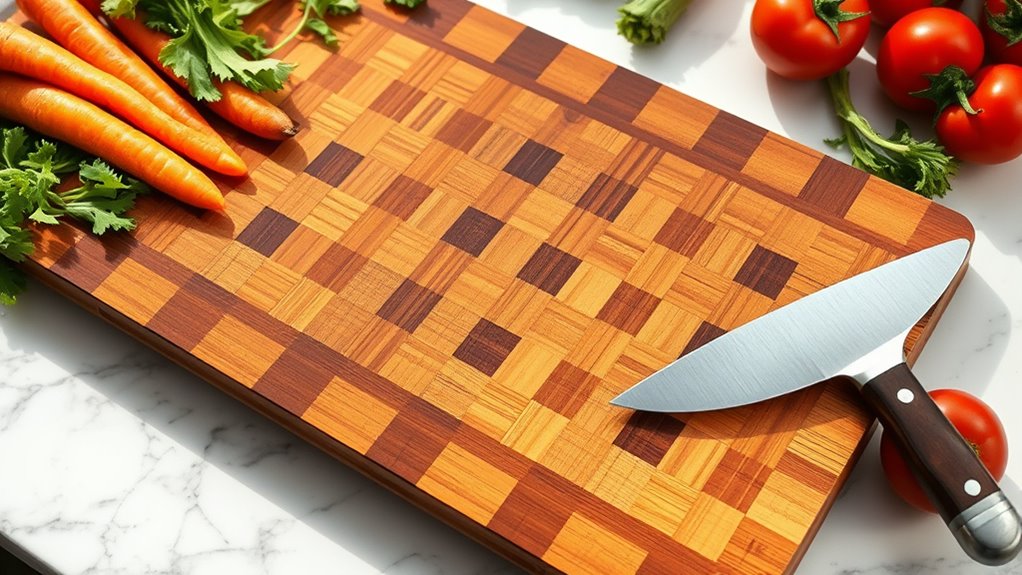
Although you might not have noticed before, end grain cutting boards differ markedly from other types because of how the wood fibers are oriented. Instead of running lengthwise, the fibers stand upright, showing the “end” of the grain on the board’s surface. This unique orientation creates a checkerboard-like pattern that’s not only visually appealing but also functional.
When you chop on an end grain board, the knife cuts between the wood fibers rather than across them. This design makes the board more durable and helps it absorb impact better. Unlike edge grain or face grain boards, end grain boards often feel softer under your knife, giving you a different cutting experience.
Understanding this difference helps you appreciate why these boards are a favorite among chefs and home cooks alike.
Why End Grain Cutting Boards Protect Your Knives Better
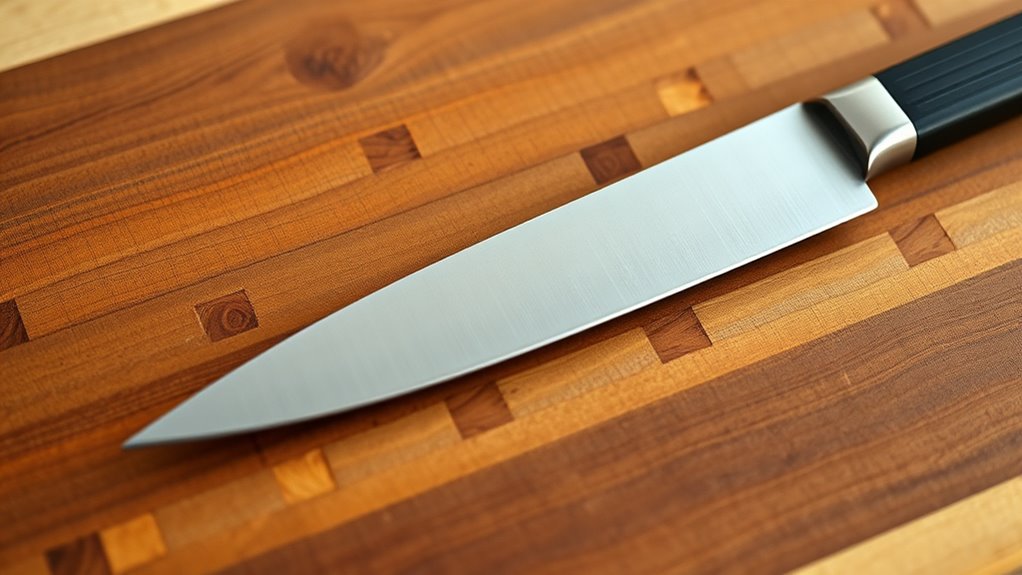
When you cut on an end grain board, the way the wood fibers absorb the impact means your knives stay sharper longer. Unlike edge grain boards, the knife blade sinks between the vertical fibers rather than cutting across them. This reduces the dulling effect because the fibers give way and close back up after each cut, cushioning your blade.
You won’t experience the same harsh resistance that can quickly wear down your knives on harder surfaces. Plus, this gentle interaction prevents tiny chips and nicks from forming on the blade edge, keeping it smooth and effective. Using an end grain cutting board means you can trust your knives to maintain their sharpness with less frequent sharpening, saving you time and effort in the kitchen.
Why End Grain Cutting Boards Are More Durable

You’ll notice end grain cutting boards last longer because their wood fibers stand vertically, absorbing impacts better. This orientation helps the board resist deep cuts and warping over time.
When you use one, you get a durable surface that handles heavy chopping without wearing down quickly.
Wood Fiber Orientation
Many wood fibers run vertically in end grain cutting boards, which makes them tougher against knife impact. When you cut on an end grain board, you’re slicing between the fibers rather than across them. This orientation lets the fibers flex and separate slightly, reducing wear and tear.
You won’t see your knife blade dull as quickly because the wood fibers absorb the cutting action instead of resisting it. This fiber alignment also helps the board maintain its structure over time, preventing cracks and splits. Unlike edge grain boards, where fibers run horizontally and can fray or break, end grain boards keep their integrity even with heavy use.
Impact Resistance Benefits
Because end grain cutting boards absorb knife impacts more effectively, they last longer than other types of boards. When you cut on an end grain surface, the wood fibers flex and separate instead of splitting or cracking. This natural give protects the board from deep gouges and extends its lifespan.
You won’t have to replace your board as often, saving money and hassle. Plus, the self-healing quality means your board stays smoother and safer, reducing bacteria buildup in cuts. You’ll notice your knives also stay sharper longer since the blade meets less resistance.
Choosing an end grain board means you’re investing in durability and performance, making your kitchen prep more efficient and enjoyable every day.
How End Grain Cutting Boards Resist Scratches
Although it may not be obvious at first, end grain cutting boards resist scratches far better than other types. When you cut on an end grain board, the knife hits the wood fibers vertically, allowing them to separate and then close back up. This means the blade slices between fibers rather than across them, reducing visible marks.
You’ll notice fewer grooves and less wear, keeping your board looking fresh longer. Plus, the wood’s natural resilience absorbs the blade’s impact, so scratches don’t accumulate as quickly. This not only preserves the board’s appearance but also maintains a smoother, safer cutting surface.
Choosing an end grain board means you spend less time sanding and refinishing, letting you focus on your cooking instead of constant upkeep.
Why End Grain Cutting Boards Resist Warping and Cracking
Not only do end grain cutting boards handle knife marks better, but they also stand up to changes in moisture and temperature more effectively. When you use an end grain board, the wood fibers are oriented vertically, allowing them to expand and contract naturally without stressing the board. This alignment reduces the likelihood of warping or cracking, even if your kitchen experiences humidity shifts.
Unlike edge grain boards, which have long, continuous fibers that can split under stress, end grain boards distribute stress evenly across the surface. So, you get a cutting board that stays flat and intact longer, saving you the hassle and expense of replacement. By choosing end grain, you’re investing in durability that withstands the demands of everyday kitchen use.
How End Grain Cutting Boards Provide Stable Cutting Surfaces
You’ll notice that end grain cutting boards offer a tougher surface that holds up better over time. This durability helps keep your board stable, so it won’t move around as you work.
Plus, the textured surface reduces knife slippage, making your cutting safer and more precise.
Enhanced Surface Durability
When you cut on an end grain board, the wood fibers absorb the impact by separating and closing back up, which keeps the surface looking fresh longer. This self-healing action means your board resists deep grooves and lasts much longer than other types. The durability also protects your knives by offering a stable, forgiving surface.
You’ll notice less wear and tear, making it a smart investment for any kitchen.
| Feature | End Grain Board | Edge Grain Board |
|---|---|---|
| Impact Absorption | Fibers separate and close | Fibers cut through |
| Surface Longevity | High | Moderate |
| Knife Friendliness | Gentle on blades | More abrasive |
| Maintenance | Requires oiling | Requires oiling |
| Wear Visibility | Minimal | High |
Reduced Knife Slippage
Although many cutting boards can feel slippery, an end grain board provides a more stable surface that keeps your knife from sliding around. The unique orientation of the wood fibers on an end grain board creates tiny grooves that gently grip your knife’s edge, giving you better control with each cut. This stability reduces the risk of accidental slips, making your chopping safer and more efficient.
You’ll notice that your knife stays where you want it, whether you’re dicing vegetables or slicing meat. Plus, the natural give of the wood absorbs some of the pressure, preventing sudden shifts. Choosing an end grain cutting board means you can focus on precision and safety without worrying about your knife skidding unexpectedly.
Why Professional Chefs Prefer End Grain Cutting Boards
Professional chefs choose end grain cutting boards because they offer unmatched durability and knife protection. When you use one, you’ll notice how it stands up to heavy chopping without wearing down, keeping your knives sharper longer.
End grain cutting boards deliver superior durability and protect knives, staying resilient through heavy use.
Here’s why pros prefer them:
- Self-Healing Surface – The wood fibers close up after cuts, minimizing grooves and bacteria buildup.
- Knife-Friendly – The end grain absorbs impact, reducing dulling and extending blade life.
- Stability – These boards resist warping and stay flat, providing a reliable cutting surface.
- Longevity – Their robust construction means you won’t need frequent replacements, saving you money over time.
Choosing an end grain board means you’re working with a tool designed to meet professional standards every time you prepare a meal.
The Natural Beauty of End Grain Cutting Boards
Beyond their functional benefits, end grain cutting boards bring a striking visual appeal to your kitchen. The unique pattern created by the wood fibers standing upright forms a mosaic of rich textures and tones. Each board showcases natural variations in wood grain, making yours genuinely one-of-a-kind.
You’ll notice how the intricate block patterns add warmth and sophistication to your countertop. Unlike other cutting boards that can look plain or generic, end grain boards double as beautiful serving platters. Their aesthetic complements both modern and traditional kitchen styles effortlessly.
Choosing an end grain cutting board means you’re inviting a piece of natural art into your cooking space—something that’s not just practical but visually inspiring every day.
How to Maintain and Care for End Grain Cutting Boards
To keep your end grain cutting board in top shape, you’ll want to oil it regularly to prevent drying and cracking. Always clean it properly by hand, avoiding harsh detergents and soaking.
Plus, steer clear of excess moisture to protect the wood and extend its life.
Regular Oiling Routine
Maintaining your end grain cutting board starts with a simple, regular oiling routine that keeps the wood hydrated and prevents cracking. To protect your board and extend its life, follow these four steps:
- Clean the board thoroughly and let it dry completely before oiling.
- Apply a generous amount of food-safe mineral oil or cutting board oil evenly across the surface.
- Let the oil soak in for several hours or overnight to deeply nourish the wood fibers.
- Wipe off any excess oil with a clean cloth to avoid sticky residue.
Proper Cleaning Techniques
Although end grain cutting boards are durable, you should clean them carefully to preserve their integrity and appearance. After each use, wipe your board with a damp cloth or sponge and mild dish soap. Avoid soaking it in water or placing it in the dishwasher, as this can damage the wood.
For stubborn residue, gently scrub with a soft brush, then rinse quickly under running water. Once cleaned, dry your board immediately with a clean towel to prevent warping. Occasionally, sprinkle coarse salt on the surface and rub it with a lemon half to remove odors and stains naturally.
Avoiding Moisture Damage
Since wood naturally absorbs moisture, you’ll want to protect your end grain cutting board from prolonged exposure to water to prevent warping and cracking.
Here’s how you can avoid moisture damage and keep your board in great shape:
- Dry your board thoroughly after washing—never leave it soaking or wet.
- Store the board upright or in a well-ventilated area to allow air circulation.
- Regularly apply food-safe mineral oil to create a moisture barrier and maintain wood integrity.
- Avoid putting your board in the dishwasher or exposing it to extreme heat, which can cause splitting.
Why Buying an End Grain Cutting Board Is a Smart Investment
When you invest in an end grain cutting board, you’re choosing durability and longevity that few other boards can match. These boards withstand heavy use without significant wear, saving you money over time because you won’t need to replace them often. Their unique construction self-heals from knife marks, maintaining a smooth surface and protecting your knives.
You’ll also appreciate how they resist moisture better, reducing warping and cracking. While the upfront cost may be higher, the board’s extended lifespan and superior performance make it a smart investment. Plus, an end grain cutting board adds a touch of craftsmanship to your kitchen, blending function with aesthetic appeal.
Choosing one means you’re investing in quality that pays off daily.
Frequently Asked Questions
Are End Grain Cutting Boards Safe for Raw Meat Preparation?
Yes, you can safely use end grain cutting boards for raw meat, but you should clean them thoroughly after each use to prevent bacteria buildup.
Regular oiling also keeps the board in good condition and reduces contamination risks.
Can End Grain Cutting Boards Be Used in Dishwashers?
You can’t toss end grain cutting boards in dishwashers—they’re like delicate dancers in a rainstorm, swelling and cracking under heat and water.
Instead, wash them by hand, dry promptly, and keep them dancing gracefully longer.
How Heavy Are End Grain Cutting Boards Compared to Other Types?
End grain cutting boards are generally heavier than edge grain or plastic boards because of their thicker, denser construction. You’ll notice the weight adds stability, but it also means they’re less convenient to move or store.
Do End Grain Cutting Boards Have Any Health Benefits?
You’ll find end grain cutting boards naturally resist bacteria better because their fibers close after cuts, making them less prone to deep grooves where germs hide.
This keeps your food prep healthier without extra effort.
Are End Grain Cutting Boards Environmentally Friendly?
Yes, end grain cutting boards are environmentally friendly because they last longer and resist damage, reducing waste. You’ll use fewer resources over time, making them a sustainable choice for your kitchen.
Conclusion
Now that you know the ins and outs of end grain cutting boards, it’s clear why they’re the cream of the crop. They protect your knives, last longer, and bring a touch of natural beauty to your kitchen.
With proper care, they’ll stick with you through thick and thin, making your investment truly worthwhile. So, don’t beat around the bush—upgrade to an end grain board and enjoy the difference every time you chop!
Experience the durability, knife-friendliness, and stunning design that make end grain cutting boards the best choice for your kitchen.