Are Acrylic Cutting Boards Safe to Use?
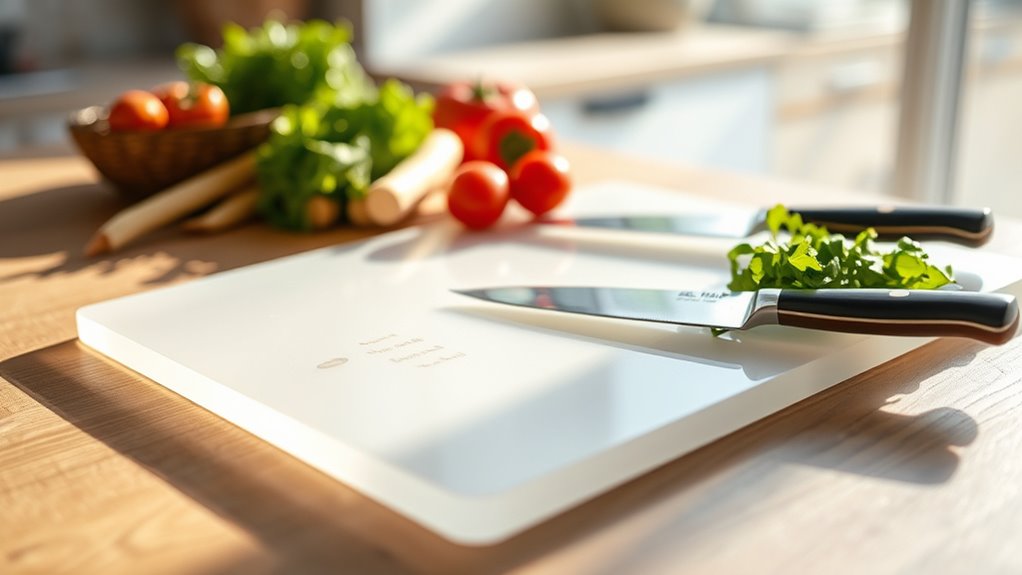
You can confidently use acrylic cutting boards because they resist stains and moisture, helping reduce bacteria buildup. Acrylic cutting boards are popular in kitchens due to their non-porous and durable surface, which makes them safe for food preparation.
Their resistance to warping and cracking adds to their reliability when maintained properly.
While scratches appear over time, they don’t impact safety if you replace heavily scored boards. Using the right knives and cleaning methods extends their lifespan significantly.
If you want to know how acrylic cutting boards compare to other materials or when to replace yours, keep exploring important tips.
Key Takeaways
- Acrylic cutting boards are non-porous, resisting bacteria buildup and stains, making them hygienic for food preparation.
- Proper cleaning with hot, soapy water and regular sanitizing prevents cross-contamination on acrylic boards.
- Acrylic boards are durable but can develop knife scratches over time, which do not compromise safety if regularly inspected.
- Avoid deep grooves by using appropriate knives and replacing the board when heavy scoring occurs to maintain safety.
- Acrylic boards are dishwasher safe but should be dried thoroughly to prevent moisture retention and bacterial growth.
Are Acrylic Cutting Boards Safe to Use?

Although acrylic cutting boards are less common than wooden or plastic ones, they offer a safe option for food preparation when used properly. You’ll find that acrylic boards resist staining and don’t absorb moisture, which helps prevent bacteria buildup. When you clean them thoroughly with hot, soapy water after each use, you reduce the risk of cross-contamination.
However, it’s important to avoid deep knife grooves that can harbor germs, so inspect your board regularly and replace it if it becomes excessively scored. Since acrylic is non-porous and durable, it won’t warp or crack easily, making it a hygienic choice. Just remember to handle your acrylic cutting board with care, clean it properly, and you’ll have a reliable surface for preparing your meals safely.
What’s Acrylic Made Of?
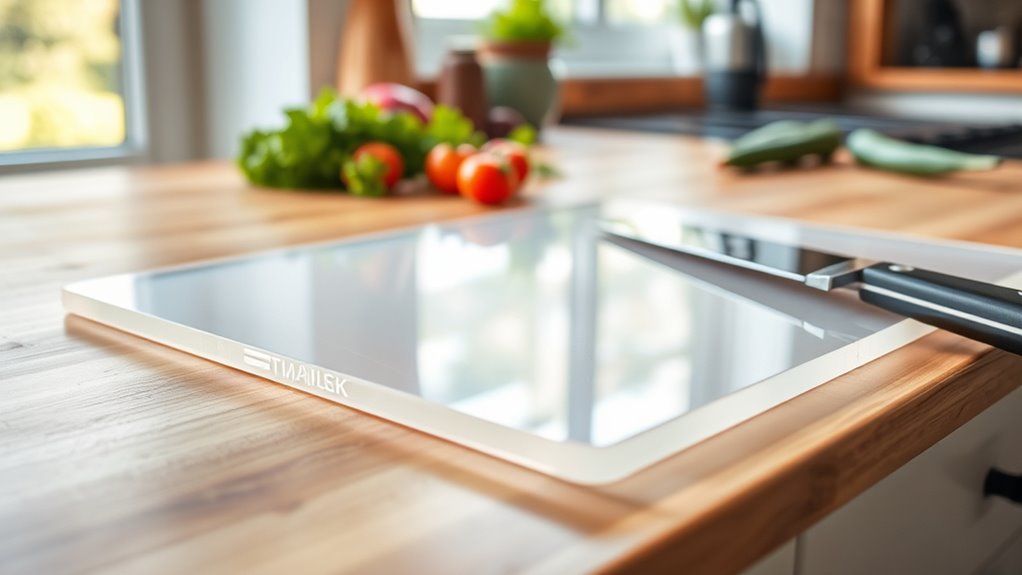
Understanding what acrylic cutting boards are made of can help you appreciate their durability and safety features. Acrylic is a type of plastic known as polymethyl methacrylate (PMMA), a synthetic polymer. When you use an acrylic cutting board, you’re working with a material created through a process called polymerization.
Here’s a quick breakdown of what goes into it:
- Monomers: Small molecules that bond together during polymerization to form long chains.
- Polymer chains: These chains create a hard, transparent, and lightweight solid.
- Additives: Ingredients like UV stabilizers and colorants improve the board’s appearance and resistance to wear.
This combination makes acrylic boards strong, non-porous, and safe for food prep, resisting bacteria and stains effectively.
How Do Acrylic Cutting Boards Compare to Wood and Bamboo?
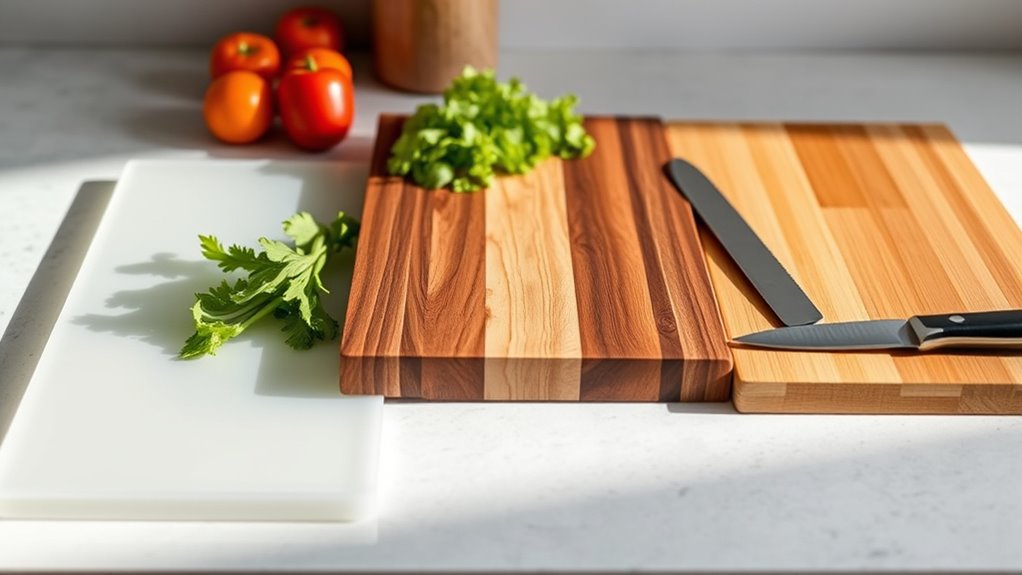
When you choose a cutting board, you’ll notice that acrylic, wood, and bamboo each offer distinct benefits and drawbacks. Acrylic boards are lightweight, non-porous, and dishwasher safe, making them easy to clean and maintain. They’re less likely to dull your knives compared to glass but can show knife marks over time.
Wood boards, often made from hardwoods like maple, are gentle on knives and have natural antimicrobial properties, but they require more care to prevent warping or cracking. Bamboo is eco-friendly and harder than most woods, offering durability, but it can be rougher on knives and may absorb moisture if not properly treated.
Ultimately, your choice depends on your cleaning habits, knife care preferences, and environmental considerations.
Do Acrylic Cutting Boards Harbor Bacteria?
You might wonder if acrylic cutting boards harbor bacteria more than other materials. The key factors are how bacteria grow on their surface and how you clean and maintain them.
Let’s explore how these aspects affect the safety of acrylic boards.
Bacterial Growth Potential
How likely are acrylic cutting boards to harbor bacteria compared to other materials? Acrylic boards have a smooth, non-porous surface, which means bacteria can’t easily penetrate them like they can with wood or bamboo. However, the risk still exists if you don’t handle them properly.
Here’s why:
- Surface scratches: Over time, knives can leave tiny grooves where bacteria can hide.
- Moisture retention: Acrylic doesn’t absorb water, but moisture trapped in grooves can encourage bacterial growth.
- Food residue: Bits of food stuck in scratches provide nutrients, allowing bacteria to multiply.
You’ll find acrylic boards generally less prone to bacterial harboring than porous materials, but those small scratches and trapped moisture can still create hotspots for bacteria to thrive if ignored.
Cleaning and Maintenance
Though acrylic cutting boards resist bacterial penetration better than porous materials, proper cleaning and maintenance play a big role in keeping them safe. You should wash your board thoroughly after each use with hot, soapy water to remove any food residue. Avoid using abrasive scrubbers that can scratch the surface, as grooves can harbor bacteria.
For deeper cleaning, sanitize with a diluted bleach solution or white vinegar, then rinse well. Acrylic boards are dishwasher-safe, so feel free to run them through your dishwasher for a more thorough clean. Regularly inspect your board for deep cuts or cracks; if you notice any, it’s time to replace it to prevent bacterial buildup.
How to Clean Acrylic Cutting Boards the Right Way
You want to clean your acrylic cutting board daily with warm, soapy water to keep it safe and fresh. For tough stains, use a gentle scrub and baking soda to lift discoloration without scratching.
When sanitizing, choose methods that kill germs without damaging the board’s surface.
Daily Cleaning Techniques
Since acrylic cutting boards can harbor bacteria in tiny grooves, cleaning them thoroughly every day is essential to keep your kitchen safe. You don’t want harmful germs lingering on a surface you use to prepare food.
Here’s how to clean your acrylic cutting board effectively:
- Rinse Immediately: Right after use, rinse the board under hot water to remove food particles and prevent staining.
- Scrub with Soap: Use a sponge or brush with warm, soapy water to scrub every inch, focusing on grooves where bacteria hide.
- Sanitize and Dry: Wipe the board with a mild bleach solution or vinegar spray, then dry it completely with a clean towel to avoid moisture buildup.
Removing Stains Effectively
When stains set into your acrylic cutting board, simple washing might not cut it. To remove stubborn marks, sprinkle baking soda directly on the board. Add a few drops of water to form a paste, then scrub gently with a soft sponge or cloth.
Baking soda’s mild abrasiveness lifts stains without scratching the surface. For tougher discoloration, try white vinegar—apply it with a cloth and let it sit for a few minutes before rinsing. Avoid harsh scrubbing tools, as they can damage the board’s finish.
After treating stains, rinse thoroughly with warm water and dry completely. Regularly tackling stains this way keeps your acrylic cutting board looking fresh and extends its usability without compromising its safety.
Sanitizing Without Damage
After removing stains, it’s important to sanitize your acrylic cutting board properly to keep it safe for food preparation. You want to kill bacteria without damaging the surface. Here’s how to do it right:
- Mix a solution of one tablespoon of bleach with one gallon of water.
- Soak a clean cloth or sponge in the solution and wipe the entire board thoroughly.
- Let the board air dry completely before storing or using it again.
Avoid harsh scrubbing or abrasive cleaners that can scratch acrylic, creating grooves where bacteria hide. Also, never put your acrylic board in the dishwasher unless it’s labeled dishwasher-safe, as high heat can warp or discolor it.
Are Acrylic Cutting Boards Dishwasher Safe?
Although acrylic cutting boards are durable and resistant to stains, you might wonder if they’re safe to clean in a dishwasher. The good news is that most acrylic boards can handle dishwasher cycles without warping or cracking.
However, repeated exposure to high heat and harsh detergents may dull their finish over time. To keep your board looking fresh, it’s best to follow manufacturer instructions and avoid overcrowding the dishwasher.
| Aspect | Dishwasher Safe? | Tips for Best Care |
|---|---|---|
| Durability | Yes | Avoid high heat cycles |
| Stain Resistance | Yes | Rinse before loading |
| Warping Risk | Low | Use top rack only |
| Finish Longevity | Moderate | Hand wash for longevity |
| Sanitization | Effective | Combine with hand scrubbing |
Do Acrylic Cutting Boards Scratch Easily?
Since acrylic is a relatively hard plastic, your cutting board will resist scratches better than softer materials like polyethylene. However, no cutting board is entirely scratch-proof, and acrylic can still show marks after regular use.
You’ll notice:
- Fine knife marks appearing over time, especially with frequent chopping.
- Deeper scratches if you use very sharp or serrated knives aggressively.
- Slight surface dulling after prolonged use, but the board remains functional.
These scratches don’t compromise safety but might affect the board’s appearance. Acrylic’s durability makes it a practical choice if you want less visible wear compared to softer boards. While you can expect some scratching, acrylic cutting boards generally maintain their integrity and hygiene despite everyday kitchen tasks.
How to Keep Your Acrylic Cutting Board Like New
To keep your acrylic cutting board looking like new, you need to clean it properly after each use and store it carefully. Use gentle cleaning methods to avoid scratches and prevent bacteria buildup.
Also, store it in a dry, flat place to maintain its shape and durability.
Cleaning Tips
When you clean your acrylic cutting board properly, you preserve its appearance and functionality for longer. To keep it looking like new, follow these simple steps:
- Use warm, soapy water: Immediately after use, scrub your board with a sponge and mild dish soap to remove food particles and stains. Avoid harsh abrasives that can scratch the surface.
- Disinfect with vinegar or diluted bleach: Wipe the board with white vinegar or a bleach solution (1 tablespoon bleach per gallon of water) to kill bacteria. Rinse thoroughly afterward.
- Dry completely: Pat dry with a clean towel and let it air dry standing upright to prevent moisture buildup and warping.
Proper Storage Methods
Although acrylic cutting boards are durable, how you store them greatly affects their lifespan and appearance. To keep your board looking new, store it upright or flat in a dry area, away from direct sunlight and heat sources.
Avoid stacking heavy items on top to prevent warping or scratches. Proper storage also helps prevent bacteria buildup.
| Storage Method | Benefit | Tip |
|---|---|---|
| Upright Position | Prevents warping | Use a stand or rack |
| Flat Surface | Stability | Ensure it’s clean and dry |
| Avoid Sunlight | Maintains color | Store in a shaded spot |
| Keep Dry | Prevents bacteria | Wipe completely before storing |
Which Knives Work Best on Acrylic Cutting Boards?
Since acrylic cutting boards have a hard, non-porous surface, you’ll want to choose knives that maintain sharpness without damaging the board. Using the right knives helps prolong both the blade’s edge and your board’s lifespan.
Here are the best options:
- Chef’s knives with high-carbon stainless steel blades – These stay sharp longer and cut smoothly without excessive force.
- Santoku knives – Their slightly thinner blades glide through ingredients, reducing wear on acrylic surfaces.
- Paring knives with a sharp, pointed tip – Perfect for small tasks, they cause minimal impact on the board’s durability.
Avoid overly serrated knives or heavy cleavers, as they can cause scratches and chips. By picking these knives, you’ll maintain both your acrylic board and your knives in top shape.
When Should You Replace Your Acrylic Cutting Board?
You’ll know it’s time to replace your acrylic cutting board once deep grooves and scratches become difficult to clean or start harboring bacteria. These cuts can trap food particles, increasing the risk of contamination. If you notice persistent stains or odors that don’t fade after thorough washing, it’s a clear sign your board has worn out.
Also, if your board shows signs of warping, cracking, or discoloration, it’s best to get a new one to maintain food safety. Regularly inspect your board for any damage and replace it every few years or sooner if you use it heavily. Prioritizing replacement helps prevent cross-contamination and guarantees your cutting surface stays hygienic and safe for food prep.
Frequently Asked Questions
Can Acrylic Cutting Boards Be Used for Hot Foods?
You shouldn’t put hot foods directly on acrylic cutting boards because heat can warp or melt them.
Instead, let hot foods cool slightly before cutting to keep your board in good shape and avoid damage.
Are Acrylic Cutting Boards Environmentally Friendly?
You might think acrylic cutting boards are eco-friendly, but they’re made from non-biodegradable plastic. While durable and long-lasting, they don’t break down easily, so you’ll want to recycle or replace them thoughtfully to reduce waste.
Do Acrylic Cutting Boards Retain Odors?
Yes, acrylic cutting boards can retain odors, especially from strong-smelling foods like garlic or onions. You can minimize this by cleaning them promptly and using baking soda or vinegar to help neutralize lingering smells effectively.
Regular maintenance and thorough cleaning are key to keeping your cutting board fresh. Avoid letting food residues sit for too long, as this increases the chance of odor retention.
Using a mixture of baking soda and water or wiping with vinegar can significantly reduce unpleasant smells. These methods help break down odor-causing compounds and keep your board smelling clean.
Can Acrylic Cutting Boards Be Customized With Designs?
Yes, you can customize acrylic cutting boards with designs. They’re perfect for adding personal touches or logos using techniques like laser engraving or printing.
This lets you create unique, stylish boards that reflect your personality or brand easily.
Are Acrylic Cutting Boards Safe for Children to Use?
You can rest easy—acrylic cutting boards are safe for kids to use, as long as you supervise them and keep knives sharp.
Conclusion
Acrylic cutting boards are a safe, durable choice for your kitchen. Did you know that acrylic boards can resist bacteria better than wooden ones when cleaned properly? This means you’re reducing your risk of foodborne illness.
Just remember to clean them thoroughly and replace them when heavily scratched. With the right care, your acrylic board will stay looking fresh and safe, making meal prep both hygienic and hassle-free.
In conclusion, acrylic cutting boards are not only safe to use but also offer excellent resistance to bacteria. Proper cleaning and maintenance ensure they remain a hygienic option for your kitchen. Choose acrylic cutting boards for a safe and reliable meal preparation experience.