How to Make Grape Juice With a Blender
To make grape juice with a blender, start by selecting ripe, firm grapes for the best flavor. Wash the grapes thoroughly to remove any dirt or pesticides. Removing stems is essential, and you can optionally peel thick-skinned grapes to achieve smoother juice.
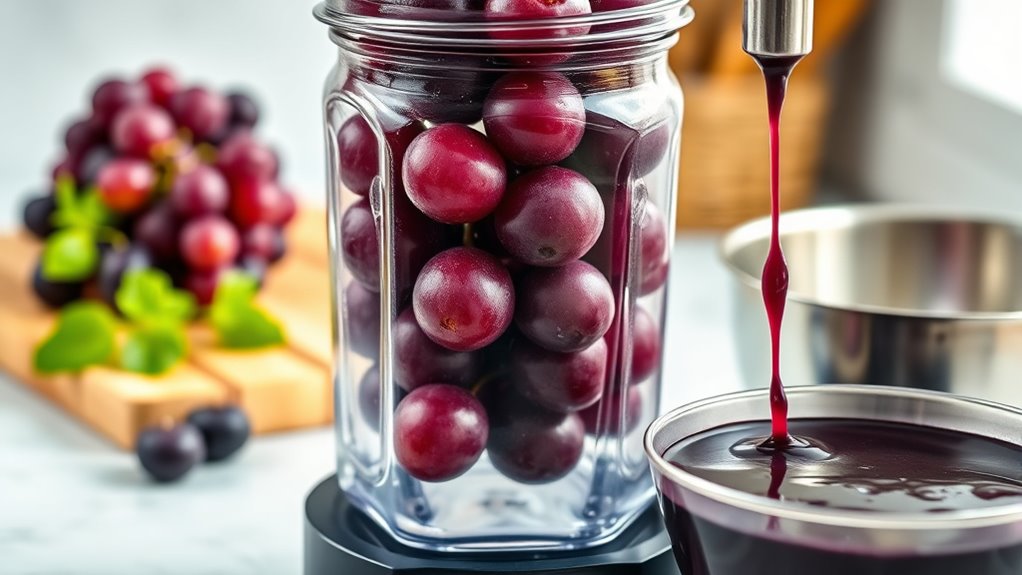
Blend the grapes in small batches with a little water to help the blending process. Use pulse blending to avoid overheating and preserve the fresh taste. After blending, strain the juice through a fine mesh to remove pulp and seeds.
Adjust the sweetness by adding sugar or honey if desired. You can also enhance the flavor with lemon juice or fresh mint leaves. Chill the juice before serving to enjoy a refreshing drink. Keep going to discover more handy tips and tricks.
Key Takeaways
- Select ripe, fresh grapes, wash thoroughly, and remove stems before blending for the best flavor and smooth juice.
- Add about ¼ cup water per 2 cups of grapes to the blender to facilitate easier and smoother blending.
- Use pulse blending on low, then high speed for 1-2 minutes, stopping periodically to check texture and prevent overheating.
- Strain the blended grape mixture through a fine mesh sieve or cheesecloth to remove seeds and pulp for clarity.
- Adjust sweetness or flavor by adding natural sweeteners or lemon juice, then stir or re-blend for a smooth consistency.
Choosing the Best Grapes for Juicing
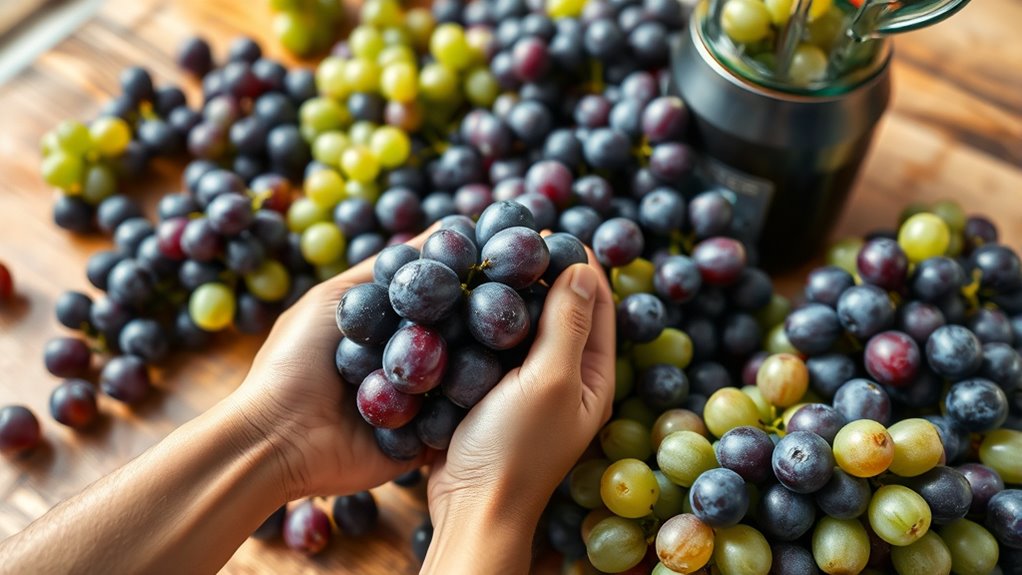
How do you pick the best grapes for juicing? Start by choosing grapes that are ripe and firm, without any wrinkles or soft spots. Look for deep, rich colors—whether you prefer green, red, or black grapes—as this indicates sweetness and flavor.
Avoid grapes with stems that look dry or brown; fresh, green stems signal freshness. Also, make sure the grapes are free from mold or damage. If possible, taste a few to check for sweetness, since tart grapes can make your juice less enjoyable.
Organic grapes are a great choice if you want to avoid pesticides. Remember, the quality of your juice directly depends on the grapes you pick, so spend a little extra time selecting the best ones for a delicious, fresh juice experience.
Preparing Grapes for Blender Juice
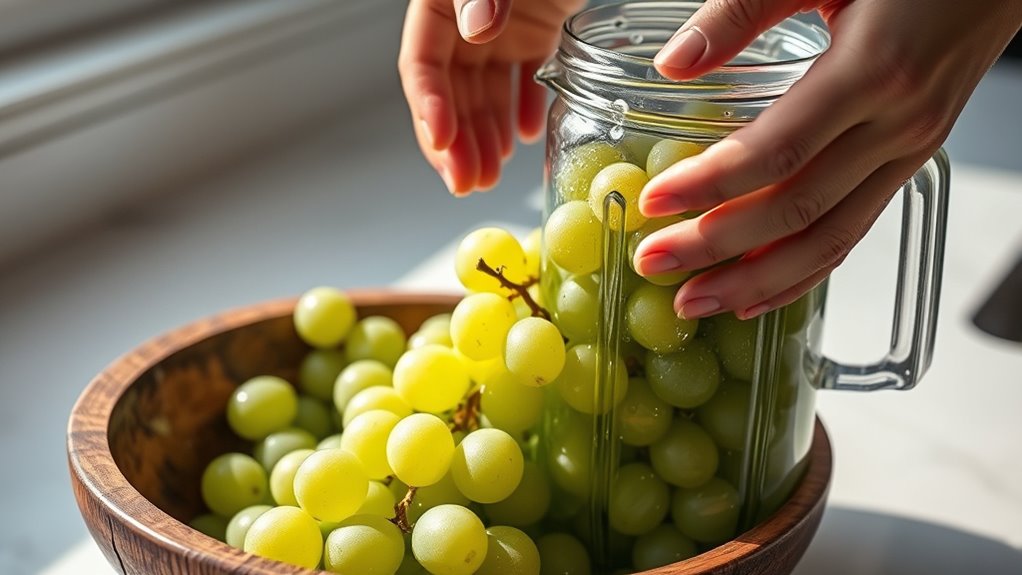
Before blending, you’ll want to thoroughly wash your grapes to remove any dirt or residue. Place them in a colander and rinse under cold running water, gently rubbing each grape to guarantee cleanliness. After washing, remove the grapes from their stems; this prevents bitterness and makes blending smoother.
Check for any damaged or moldy grapes and discard them. If you prefer a smoother juice, consider peeling the grapes, especially if the skins are thick or waxy. Once prepped, pat the grapes dry with a clean towel or let them air dry briefly to avoid excess water diluting your juice.
Properly preparing your grapes ensures a cleaner, fresher taste and helps your blender work more efficiently when you move on to the blending step.
How to Make Grape Juice With a Blender
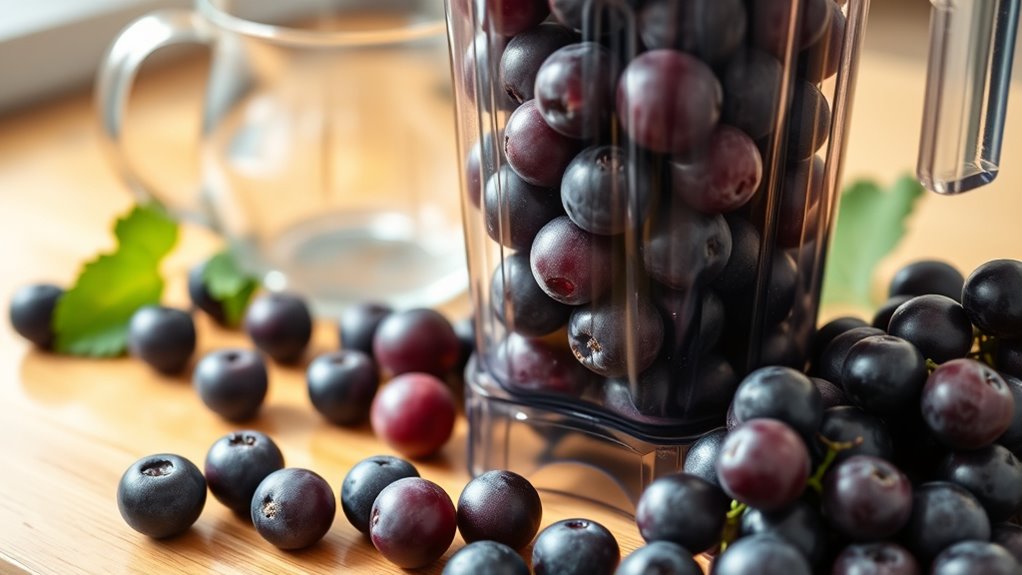
Once you’ve prepped your grapes, place them in the blender jar without overcrowding it. Add a small amount of water—about a quarter cup per two cups of grapes—to help the blending process. Secure the lid tightly and start blending on low speed, gradually increasing to high.
Blend for about 1 to 2 minutes until the grapes break down into a smooth mixture. Stop and check the consistency; if it’s too thick, add a little more water and blend briefly again. After blending, pour the mixture through a fine mesh strainer or cheesecloth to separate the juice from the pulp.
Press gently to extract as much juice as possible. Your fresh grape juice is now ready to enjoy or chill before serving.
Tips for Smooth and Delicious Grape Juice
Even if you follow the basic steps perfectly, a few simple tips can elevate your grape juice to a smoother, more delicious level. First, blend the grapes in short bursts rather than one long cycle to prevent overheating, which can affect flavor. Strain the juice through a fine mesh sieve or cheesecloth to remove skins and seeds for a silky texture.
Chill the juice before serving; cold temperatures enhance its invigorating quality. If your blender isn’t powerful, blend in small batches to achieve a consistent puree. Finally, rinse grapes thoroughly to remove any residue that might alter taste.
How to Sweeten and Flavor Your Grape Juice
You can enhance your grape juice by adding natural sweeteners like honey or agave syrup to suit your taste. Experiment with flavor boosts such as a splash of lemon juice or a hint of cinnamon for a unique twist.
Remember to balance the sweetness carefully so your juice tastes just right every time.
Natural Sweetener Options
Wondering how to naturally enhance the sweetness and flavor of your homemade grape juice? You can easily do this by adding natural sweeteners instead of refined sugar. Honey is a popular choice—it dissolves well and adds a subtle floral note.
Maple syrup works beautifully too, offering a rich, caramel-like sweetness. If you want to keep it light, try agave nectar; it blends smoothly and has a mild taste. For a fruitier twist, mashed ripe bananas or dates can also boost sweetness while adding fiber.
Just blend them with your juice for a smooth mix. Remember to add these sweeteners gradually, tasting as you go, so you get the perfect balance without overpowering the natural grape flavor.
Enhancing Juice Flavor
When aiming to enhance your grape juice’s flavor, balancing sweetness with complementary notes can transform a simple drink into a delightful treat. Start by adding a splash of fresh lemon or lime juice to introduce a bright, zesty contrast. A pinch of ground cinnamon or a few fresh mint leaves can add unexpected depth without overpowering the natural grape taste.
If you want a richer flavor, try blending in a small piece of fresh ginger or a dash of vanilla extract. These subtle additions awaken the juice and make it more invigorating. Remember to taste as you go, adjusting flavors to suit your preference.
Enhancing your juice this way keeps it vibrant and exciting without masking the grapes’ natural goodness.
Balancing Sweetness Levels
Adding complementary flavors can elevate your grape juice, but getting the sweetness just right will make it truly satisfying. Start by tasting your juice before adding any sweeteners, as grapes can vary in natural sugar. If needed, add a small amount of honey, agave syrup, or sugar, blending well after each addition to avoid over-sweetening.
You can also experiment with natural flavor enhancers like a splash of lemon juice or a pinch of cinnamon to balance sweetness and add depth. Remember, it’s easier to add more sweetener than to fix juice that’s too sweet. Sweeten gradually, tasting as you go, until you reach the perfect balance that suits your palate and complements the grape’s natural flavor.
Storing Fresh Grape Juice at Home
To keep your fresh grape juice tasting its best, choose airtight glass containers for storage. You’ll want to refrigerate it promptly and consume it within a few days to maintain freshness.
Following these tips guarantees your juice stays delicious and safe to drink.
Ideal Storage Containers
Although fresh grape juice tastes best when consumed quickly, choosing the right storage container can help you preserve its flavor and freshness for longer. You’ll want a container that prevents oxidation and keeps contaminants out. Glass bottles or jars are excellent because they don’t absorb odors or flavors.
BPA-free plastic containers are lightweight and convenient but might not offer the same flavor protection. Stainless steel bottles can also work well, especially if they have airtight seals.
Consider these factors when selecting your container:
- Airtight seals to limit exposure to air
- Non-reactive materials like glass or stainless steel
- Easy-to-clean designs to prevent bacterial growth
- Size appropriate for your juice quantity to reduce air space
Using the right container guarantees your homemade grape juice stays fresh and tasty.
Refrigeration Tips and Timing
When you store fresh grape juice in the refrigerator, keeping it cold slows down spoilage and maintains its vibrant taste. Aim to refrigerate your juice within two hours of blending to preserve freshness. Use airtight containers to prevent odor absorption and keep it sealed tightly.
Fresh grape juice typically lasts 3-5 days in the fridge, so plan to consume it quickly.
| Tip | Recommendation |
|---|---|
| Temperature | Keep at or below 40°F (4°C) |
| Storage Duration | 3-5 days |
| Container Type | Glass or BPA-free plastic |
| Seal | Airtight lids only |
Fixing Common Grape Juice Blending Problems
If your grape juice turns out too thick or unevenly blended, you can quickly fix these issues with a few simple adjustments. First, add a small amount of water or another liquid like apple juice to thin the mixture.
Next, blend in short bursts to avoid overheating and ensure even texture. If seeds or skin remain, strain the juice through a fine mesh sieve. Finally, if the juice tastes bitter, try adding a pinch of sugar or a squeeze of lemon to balance flavors.
- Add liquid gradually to reach desired consistency
- Use pulse blending for better control
- Strain to remove seeds and pulp
- Adjust sweetness or acidity to improve flavor
These steps will help you enjoy smooth, delicious grape juice every time.
Creative Ways to Enjoy Your Fresh Grape Juice
Since you’ve made fresh grape juice, why not explore some creative ways to enjoy it beyond just drinking it straight? You can turn it into a revitalizing grape smoothie by blending it with yogurt and a banana. Add some fresh mint or a splash of lemon juice for extra zing.
Grape juice also makes a fantastic base for homemade popsicles—perfect for hot days. If you like cocktails, mix your grape juice with sparkling water and a bit of lime for a light, bubbly mocktail. You can even pour it over ice cream or use it as a glaze for grilled chicken or pork.
These ideas let you savor your fresh grape juice in fun, tasty ways every day.
Frequently Asked Questions
Can I Use Frozen Grapes to Make Grape Juice?
Yes, you can use frozen grapes to make grape juice. They’ll blend smoothly and add a cooled, revitalizing taste.
Just let them thaw slightly if your blender struggles, then blend and enjoy your fresh juice!
Is Grape Juice Healthy for Children?
Yes, grape juice can be healthy for children in moderation since it’s rich in antioxidants and vitamins. Just watch the sugar content and avoid giving too much to prevent excess calorie intake or tooth decay.
How Long Does Homemade Grape Juice Last in the Freezer?
You’ll find homemade grape juice lasts about 6 to 12 months in the freezer. Keeping it tightly sealed prevents freezer burn, so you can enjoy fresh-tasting juice long after you’ve blended and frozen it.
Can I Make Grape Juice Without a Blender?
Yes, you can make grape juice without a blender. You’ll just need to crush the grapes manually using a fork or potato masher, then strain the juice through a fine mesh or cheesecloth to separate the pulp.
What Are the Benefits of Drinking Fresh Grape Juice?
You’ll love that fresh grape juice packs antioxidants, reducing heart disease risk by 20%. It boosts your immune system, improves digestion, and hydrates you naturally.
Drinking it regularly keeps your body energized and healthy.
Conclusion
Now that you know how to make grape juice with a blender, you can enjoy fresh, homemade juice anytime. Imagine Sarah, who started blending grapes daily and noticed her energy boost and improved digestion. By choosing ripe grapes and blending them properly, you’ll get smooth, flavorful juice every time.
Don’t forget to experiment with sweeteners and store your juice well for the best taste. Fresh grape juice is simple, healthy, and delicious! Making grape juice with a blender is an easy way to enjoy nutritious, refreshing drinks at home.