Can You Season Stainless Steel Cookware
You can season stainless steel cookware to create a temporary nonstick surface that helps reduce food sticking and makes cleanup easier.
Seasoning stainless steel pans involves forming a thin oil layer that improves cooking performance, though it wears off faster than with cast iron. This technique enhances your cookware’s usability and can extend its lifespan.
Using high-smoke-point oils and proper heating techniques ensures better seasoning results.
While seasoning isn’t essential for every cooking task, it can significantly improve how your pan performs during certain recipes.
Keep exploring to discover the best methods and when seasoning works best for you.
Key Takeaways
- Yes, you can season stainless steel cookware to create a temporary nonstick layer that helps reduce food sticking and eases cleaning. Seasoning stainless steel doesn’t form a durable protective layer like cast iron but improves food release when properly maintained.
- Use high-smoke-point oils such as avocado, grapeseed, or refined safflower oil for effective seasoning results. Proper seasoning requires cleaning, applying a thin oil layer, heating until shimmering, cooling, and wiping off excess oil.
- Seasoning stainless steel cookware enhances cooking performance but isn’t essential and should be combined with good preheating and oiling techniques.
How Stainless Steel Differs From Cast Iron in Seasoning
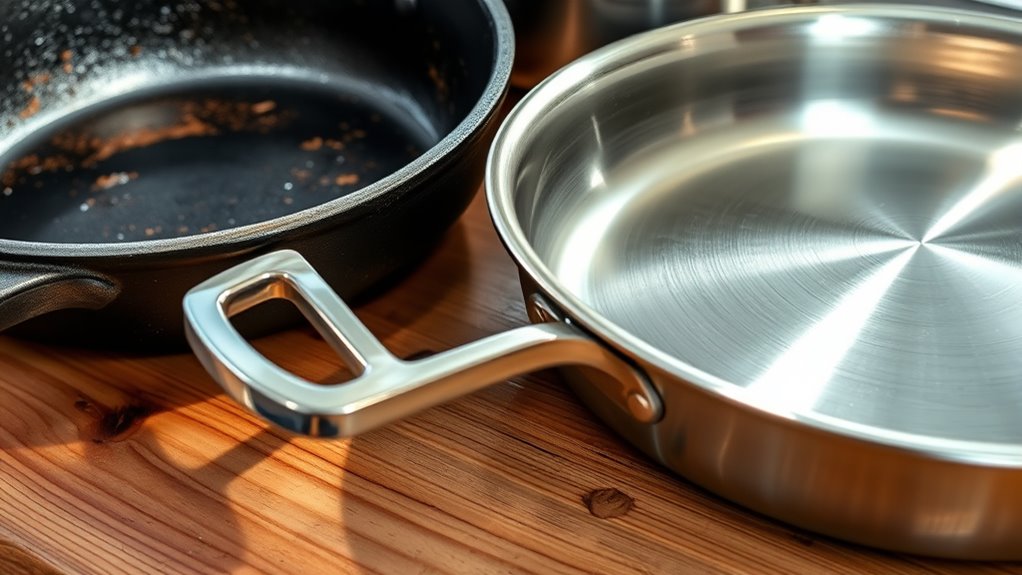
Although both stainless steel and cast iron cookware benefit from seasoning, the process and purpose differ considerably between the two. When you season cast iron, you’re creating a strong, nonstick layer by bonding oil to its porous surface, preventing rust and enhancing cooking performance.
Stainless steel, however, has a smooth, non-porous surface that doesn’t absorb oil the same way. So, seasoning stainless steel mainly helps improve food release temporarily but doesn’t build that durable, protective layer cast iron develops. You won’t rely on seasoning to prevent rust on stainless steel, since it’s naturally corrosion-resistant.
Instead, seasoning stainless steel is more about reducing sticking during cooking than preserving the cookware itself. Understanding these differences helps you manage your pans better and get the most from each type.
Does Seasoning Stainless Steel Cookware Work?
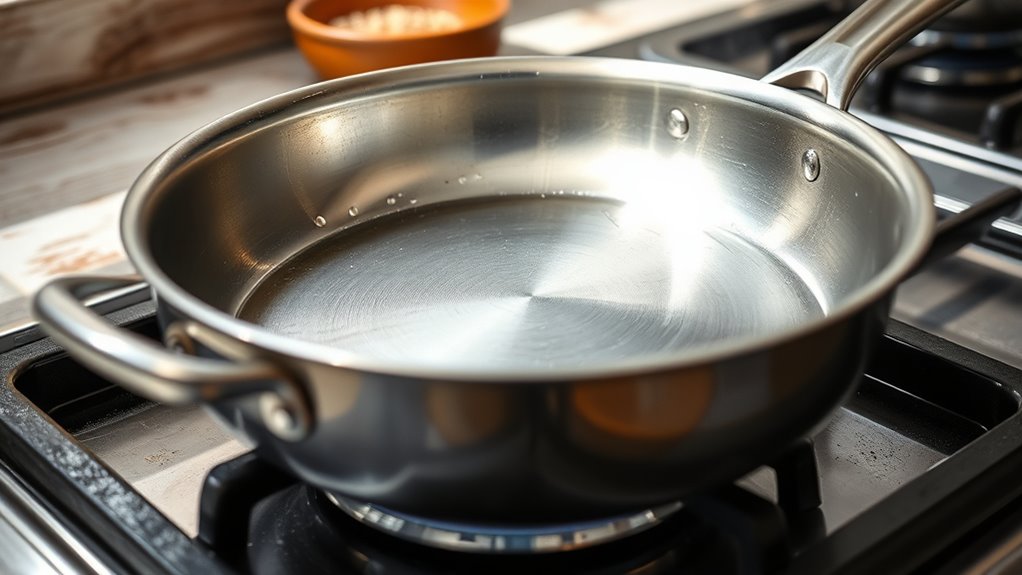
You might wonder if seasoning stainless steel cookware really makes a difference. It can help create a smoother cooking surface and reduce sticking, but it doesn’t behave exactly like cast iron seasoning.
Let’s explore how seasoning works on stainless steel and what practical limits you should keep in mind.
Benefits Of Seasoning
When you season stainless steel cookware, you create a natural non-stick layer that improves cooking performance and makes cleanup easier. This simple step can transform your cooking experience in several rewarding ways:
- Enjoy food that releases effortlessly, reducing frustration.
- Cook with less oil, promoting healthier meals.
- Protect your cookware from rust and corrosion.
- Extend the lifespan of your pots and pans.
- Save time scrubbing stuck-on food, freeing up your day.
Seasoning not only enhances how your cookware performs but also helps maintain its appearance and durability. By taking a few moments to season your stainless steel, you’re investing in better meals, less hassle, and cookware that stands the test of time.
How Seasoning Works
Since stainless steel doesn’t have a natural non-stick surface like cast iron or non-stick pans, seasoning helps create a thin, polymerized oil layer that fills microscopic pores and smooths the cooking surface. When you heat oil beyond its smoke point, it undergoes polymerization, bonding to the metal and forming this durable, slick coating. This layer reduces food sticking by creating a barrier between the metal and your ingredients.
You’ll notice that properly seasoned stainless steel pans develop improved release over time, especially with repeated use and maintenance. Seasoning doesn’t change the metal itself but modifies the surface texture, making it more resistant to sticking and easier to clean. So yes, seasoning stainless steel cookware works by building this protective, non-stick layer through heat and oil interaction.
Practical Limitations
Understanding how seasoning builds a polymerized oil layer that smooths stainless steel surfaces sets the stage for examining its practical effectiveness. While seasoning can slightly improve your cookware’s stick resistance, it has clear limitations. Stainless steel’s non-porous surface doesn’t absorb oils like cast iron, so the layer is thin and fragile.
You might find that:
- Food still sticks during high-heat cooking
- The seasoning layer wears off quickly
- You need to re-season frequently
- Acidic foods can break down the coating
- It won’t replace proper preheating and oiling techniques
In short, seasoning stainless steel won’t transform it into a non-stick pan. It’s a helpful extra step, but you’ll still rely on good heat control, oil use, and proper cleaning to get the best results.
Why Seasoning Stainless Steel Improves Cooking Performance
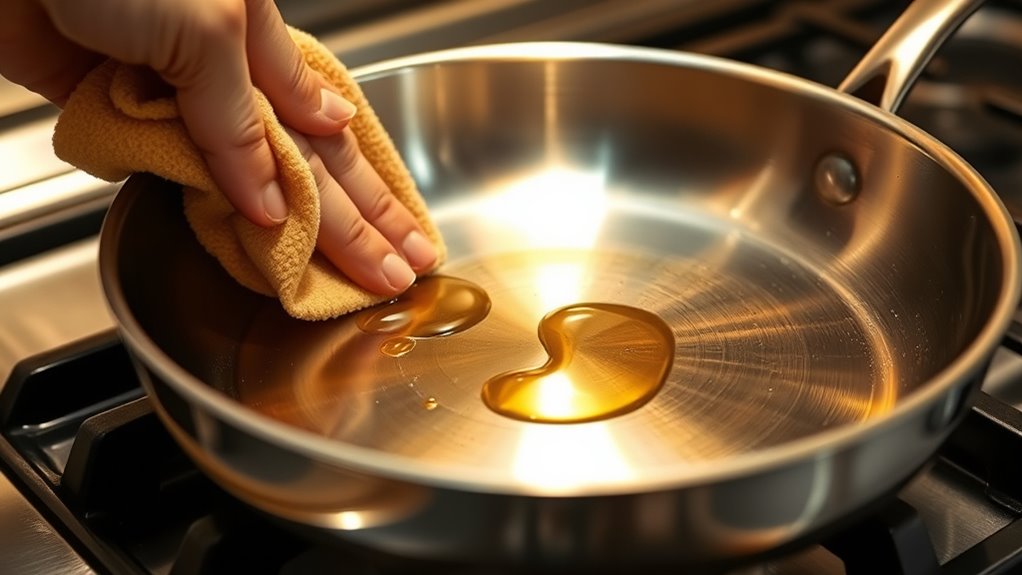
Although stainless steel is durable and versatile, seasoning it can considerably enhance your cooking experience. When you season your stainless steel cookware, you create a thin, natural non-stick layer that reduces food sticking and tearing. This means you’ll spend less time scrubbing stubborn residue and more time enjoying your meals.
Seasoning also helps distribute heat more evenly across the pan’s surface, improving cooking consistency. You’ll notice better browning and searing, which elevates flavors and textures. Plus, a well-seasoned pan resists rust and corrosion, extending its lifespan.
What Oils Work Best for Seasoning Stainless Steel Pans
When seasoning your stainless steel pan, choosing an oil with a high smoke point is key to creating a durable, nonstick surface. Oils like grapeseed, avocado, and refined coconut work great because they withstand high heat without burning.
Using the right oil helps build a smooth layer that improves your pan’s performance over time.
Best High-Smoke Point Oils
Since seasoning stainless steel cookware requires heating oil to high temperatures without burning, choosing the right oil is vital. Using oils with a high smoke point guarantees you create a durable, smooth seasoning layer without unpleasant smoke or burnt residue.
Here are some of the best oils you can rely on:
- Avocado oil (smoke point around 520°F) – perfect for high heat and neutral flavor.
- Grapeseed oil (smoke point about 420°F) – light and clean, it forms a great protective layer.
- Refined safflower oil (smoke point near 510°F) – stable under heat, excellent for seasoning.
- Sunflower oil (smoke point roughly 450°F) – affordable and effective for seasoning.
- Peanut oil (smoke point around 450°F) – durable and reliable for repeated seasoning.
Picking one of these oils helps you season your stainless steel cookware efficiently and safely.
Oils Enhancing Nonstick Surface
What oils truly boost the nonstick qualities of your stainless steel pans? You want oils with a high smoke point and the ability to polymerize into a durable layer. Flaxseed oil is a top choice because it forms a hard, smooth coating when heated properly.
Grapeseed oil and avocado oil also work well—they tolerate high heat and create a slick surface. You should avoid low smoke point oils like olive oil, which can break down and leave sticky residue. When seasoning, heat the oil until it smokes slightly, then let it cool and repeat the process.
This builds a thin, resilient layer that enhances your pan’s nonstick performance, making cooking and cleanup easier every time.
Step-by-Step Guide to Seasoning Stainless Steel Cookware
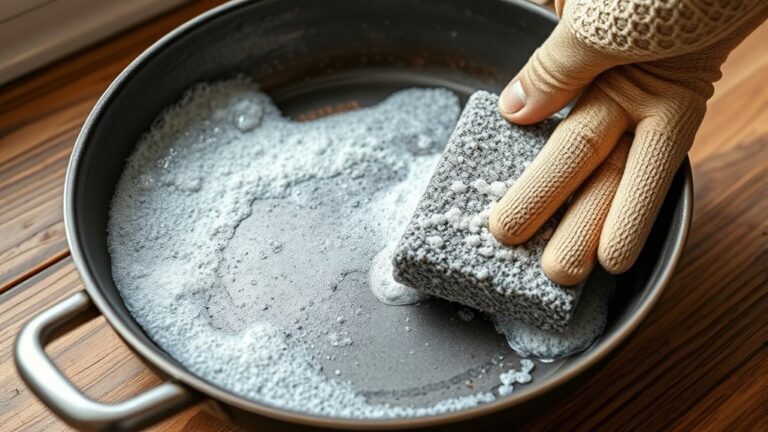
Although seasoning stainless steel cookware may seem intimidating at first, you’ll find it straightforward once you follow the right steps. Start by cleaning your pan thoroughly to remove any residues. Then, heat it gently on medium until it’s hot but not smoking.
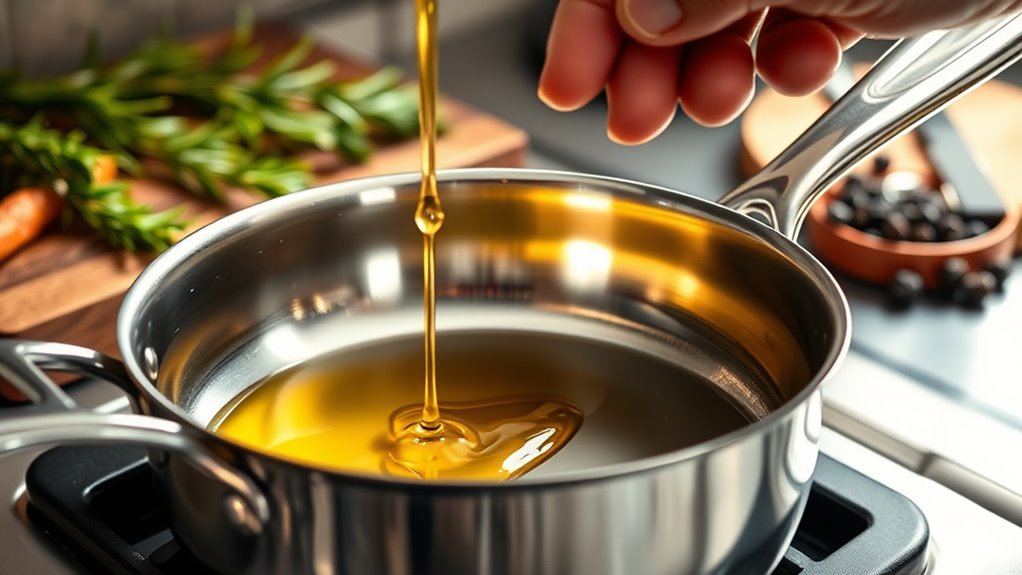
Next, add a thin layer of high-smoke-point oil, like grapeseed or canola, and spread it evenly across the surface. Let the pan heat until the oil starts to shimmer, then turn off the heat and let it cool completely. Finally, wipe off any excess oil with a paper towel.
Here’s a quick checklist to guide you:
- Clean pan thoroughly
- Preheat on medium heat
- Apply thin oil layer evenly
- Heat until oil shimmers
- Cool and wipe off excess oil
This simple routine enhances your cookware’s performance beautifully.
Common Mistakes to Avoid When Seasoning Stainless Steel
When seasoning stainless steel cookware, you’ll want to steer clear of some common mistakes that can undermine your efforts. First, don’t skip thoroughly cleaning and drying your pan before seasoning; any residue or moisture can prevent proper oil bonding. Avoid using too much oil—apply a thin, even layer to prevent sticky buildup.
Also, don’t rush the heating process; seasoning requires steady, moderate heat to polymerize the oil correctly. Using the wrong type of oil, like those with low smoke points, can cause unpleasant odors and uneven seasoning. Finally, avoid seasoning cold pans; always start with a warm surface for better oil absorption.
Steering clear of these mistakes helps you build a durable, non-stick layer on your stainless steel cookware.
How to Maintain and Re-Season Stainless Steel Cookware
Since seasoning stainless steel cookware isn’t a one-time task, you’ll need to maintain and occasionally re-season your pans to keep their non-stick surface effective. Regular care guarantees your cookware stays reliable and enjoyable to use.
To maintain and re-season your stainless steel cookware, you should:
- Clean gently with warm water and mild soap to preserve the seasoning layer.
- Dry immediately to prevent water spots and rust.
- Apply a thin coat of oil after each use while the pan is warm.
- Re-season by heating oil in the pan until it smokes, then let it cool before wiping excess oil away.
- Avoid abrasive scrubbers that can strip away the seasoning.
Following these steps will keep your pans performing beautifully and make cooking a joy.
How Seasoning Affects Food Sticking and Cleanup
If you want your food to release easily and cleanup to be hassle-free, seasoning plays a essential role. When you season stainless steel cookware, you create a thin, natural non-stick layer that helps prevent food from clinging to the surface. This means you’ll spend less time scraping stuck-on bits and more time enjoying your meal.
Additionally, the seasoned surface reduces the need for excessive oil or butter, making cooking healthier and cleanup quicker. After cooking, food residues slide off smoothly, so washing requires less elbow grease. Over time, as you keep seasoning your cookware, this protective layer strengthens, improving both cooking performance and ease of maintenance.
Seasoning transforms your stainless steel into a more user-friendly tool, saving you effort during and after cooking.
When You Should Skip Seasoning Stainless Steel (And Alternatives)
Seasoning stainless steel cookware can greatly improve your cooking experience, but it’s not always the best choice for every situation. You might want to skip seasoning if you:
- Prefer the natural stainless steel surface for high-heat searing.
- Cook acidic dishes often, as seasoning layers can degrade.
- Use non-stick sprays or oils that suit your cooking style.
- Want to maintain the cookware’s original shine and appearance.
- Need quick, hassle-free cleanup without additional seasoning upkeep.
Instead of seasoning, try preheating the pan properly and using enough oil before cooking to prevent sticking. Alternatively, consider investing in non-stick or cast iron pans for specific cooking tasks.
These options can save you time and frustration while still delivering great results. Remember, seasoning isn’t a one-size-fits-all solution.
Frequently Asked Questions
Can Seasoning Stainless Steel Cookware Change Its Appearance?
Yes, seasoning stainless steel cookware can change its appearance slightly. You’ll notice a darker, more matte finish where the oil bonds to the surface, which helps improve non-stick properties and protects the metal from discoloration.
Is It Safe to Season Stainless Steel Cookware Frequently?
If you season your stainless steel pan frequently, like a chef maintaining their tools, it’s generally safe and can enhance non-stick properties.
Just avoid overheating oil to prevent buildup or damage over time.
How Does Seasoning Affect the Durability of Stainless Steel Pans?
Seasoning your stainless steel pans can enhance their durability by creating a temporary non-stick layer, reducing wear from food sticking and scrubbing. Just don’t overdo it, or you might build up residue that’s hard to clean.
Can Seasoning Stainless Steel Cookware Impact Its Warranty?
You won’t send your warranty into a fiery meltdown by seasoning stainless steel cookware! Usually, it won’t impact your warranty, but always check manufacturer guidelines.
Don’t risk voiding it by ignoring their specific care instructions.
Does Seasoning Stainless Steel Cookware Influence Flavor Transfer?
Seasoning stainless steel cookware won’t considerably influence flavor transfer since it doesn’t create a nonstick layer like cast iron. You might notice less sticking, but flavors generally won’t carry over between dishes after proper cleaning.
Conclusion
Seasoning stainless steel cookware can truly enhance your cooking experience, making sticking less of a hassle and cleanup easier. While it’s not exactly like seasoning cast iron, giving your pans a proper oil layer helps create a natural non-stick surface.
Remember, “a stitch in time saves nine”—regular maintenance and re-seasoning keep your cookware in top shape. So, don’t hesitate to season your stainless steel cookware and enjoy better meals with less fuss. Properly seasoning stainless steel cookware is a simple step that leads to improved cooking results and easier cleanup.