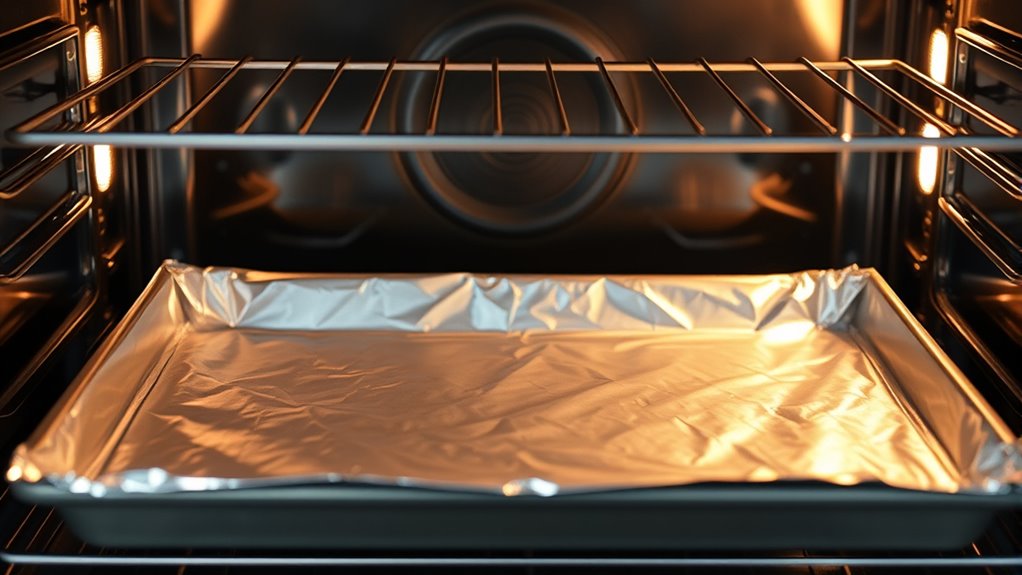
Can You Put Aluminum Foil in the Oven
You can put aluminum foil in the oven, but it’s important to use it carefully to avoid any hazards. Aluminum foil is a versatile kitchen tool that helps with cooking by reflecting heat and trapping moisture. This can help your food cook evenly and stay juicy, making it a great option for many recipes.
However, you should avoid letting foil touch the heating elements or the oven floor, as this can cause sparks or damage.
Also, don’t tightly wrap acidic foods in foil or use it to cover the bottom of the oven.
Following these tips will make your cooking safer and more effective.
There’s more to discover about how to use foil best and explore alternatives for different cooking needs.
Key Takeaways
- Aluminum foil is generally safe for oven use but must not touch heating elements or oven walls to prevent sparks or damage.
- Avoid covering the oven’s bottom with foil to prevent heat trapping and potential appliance damage.
- Use the shiny side of foil facing the food for better heat reflection and more even cooking.
- Lightly grease foil contacting food to prevent sticking and avoid wrapping acidic foods tightly to prevent reactions.
- Alternatives like parchment paper and silicone mats offer safer, eco-friendly options for oven cooking and easier cleanup.
Can You Put Aluminum Foil in the Oven?
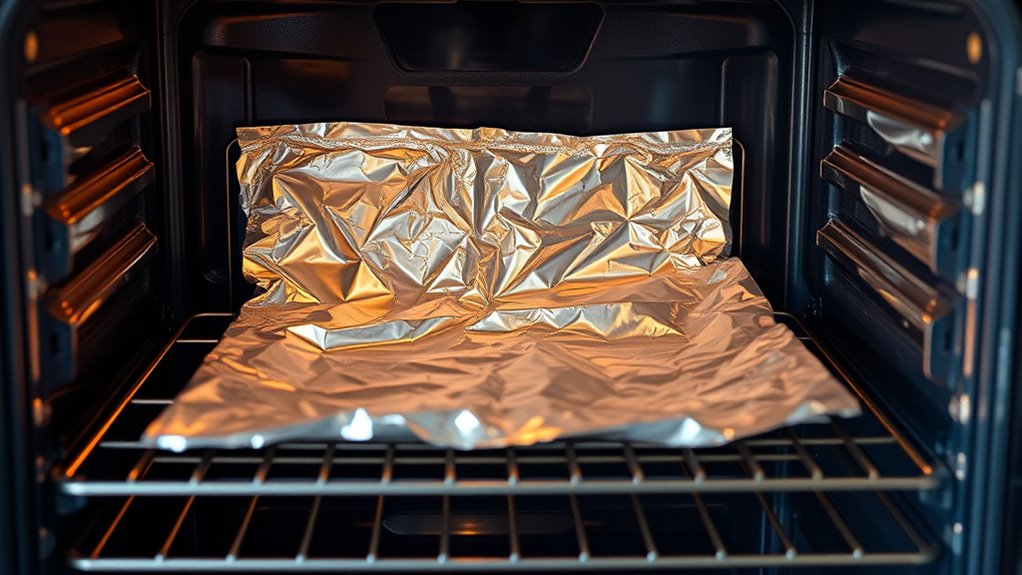
Although aluminum foil is commonly used in cooking, you might wonder if it’s safe to put it in the oven. The good news is that you can use aluminum foil in most ovens without any problems. It’s designed to withstand high temperatures, making it a handy tool for covering dishes, lining pans, or wrapping food to keep moisture in.
However, you should avoid letting the foil touch the oven’s heating elements or walls, as this could cause sparks or damage. Also, be cautious about completely sealing a dish with foil, as this could trap steam and affect cooking. When used correctly, aluminum foil can make your cooking easier and cleanup faster.
Just follow basic guidelines to keep it safe.
Is It Safe to Use Aluminum Foil in the Oven?
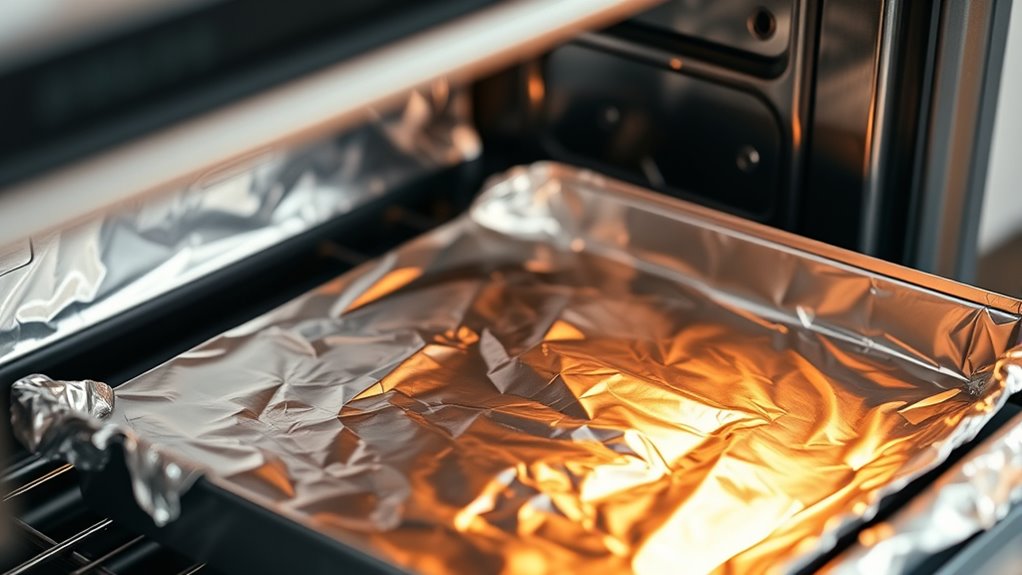
When you use aluminum foil in the oven, you’ll find it’s generally safe as long as you handle it properly. Make sure the foil doesn’t touch heating elements or block vents, which can disrupt heat circulation. Avoid using foil to cover the bottom of the oven, as it can trap heat and damage the appliance.
You can safely wrap food or line baking trays, but be cautious with acidic or salty ingredients, as they may react with the foil and affect flavor or appearance. Always check your oven’s manual for specific guidelines, since some models may have restrictions. By following these precautions, you can confidently use aluminum foil to help cook and clean without worrying about safety issues.
Can Aluminum Foil Cause Sparks or Fires in the Oven?
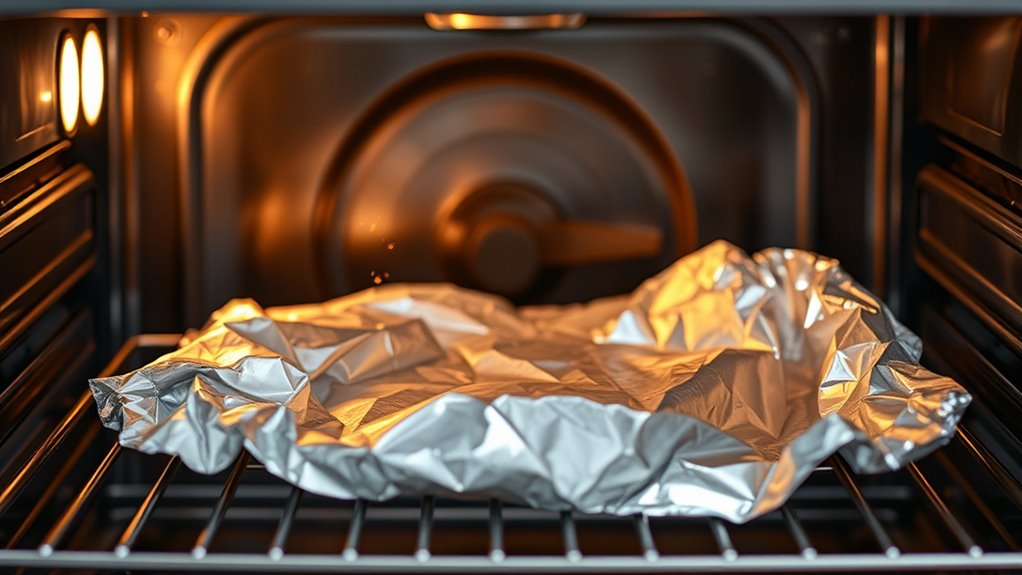
Handling aluminum foil properly in your oven reduces safety risks, but you might still wonder if it can cause sparks or fires. Typically, aluminum foil itself won’t spark or ignite in a conventional oven because it’s a metal that doesn’t burn. However, if the foil touches the oven’s heating elements or walls, it can cause electrical sparks.
This risk is higher in toaster ovens or convection ovens where elements aren’t shielded. Also, crumpled or torn foil with sharp edges can reflect heat unevenly, potentially damaging the oven or creating hot spots that might ignite grease or food residue. To avoid sparks or fires, always place foil flat, keep it away from heating elements, and never cover the oven’s bottom, which can trap heat and cause problems.
How Aluminum Foil Affects Cooking Times and Heat
Since aluminum foil reflects heat, it can speed up cooking times by directing more heat toward your food. When you wrap food tightly in foil, it traps steam and moisture, effectively creating a mini-oven that cooks food faster and keeps it juicier. However, this also means you should check your dish earlier than usual to avoid overcooking.
If you line a baking dish with foil, heat distributes more evenly, reducing hot spots that might burn your food. Keep in mind, though, that foil can block heat if it’s covering the top of a dish, which might slow browning.
Dos and Don’Ts for Lining Baking Sheets With Aluminum Foil
Although lining baking sheets with aluminum foil can make cleanup easier, you’ll want to follow certain guidelines to avoid common pitfalls. Using foil improperly could cause uneven cooking or even damage your bakeware. Here are some dos and don’ts to keep in mind:
Using aluminum foil on baking sheets simplifies cleanup but requires careful use to prevent cooking issues or bakeware damage.
- Do smooth the foil tightly against the pan to prevent food from sticking in creases.
- Don’t let foil hang over the edges; it can catch fire or block heat circulation.
- Do use shiny side up for better heat reflection when roasting or baking.
- Don’t use foil with acidic foods like tomatoes or citrus directly on it, as it can react and alter flavors.
Following these tips helps you enjoy hassle-free cooking without compromising safety or taste.
How to Cover Food With Aluminum Foil Without Trapping Steam
When you cover food with aluminum foil, it’s important to prevent steam from getting trapped, which can make dishes soggy or affect cooking times. To avoid this, don’t seal the foil tightly against the food. Instead, create a loose tent over the dish, leaving space for steam to escape.
You can also poke a few small holes in the foil to allow moisture to vent. If you’re covering something like a roast or casserole, fold the foil edges over the rim of the pan without pressing down firmly. This way, steam won’t build up underneath.
Can You Wrap Food Completely in Aluminum Foil for Oven Baking?
You can wrap food completely in aluminum foil for oven baking, but you need to think about safety and how it affects cooking. Wrapping tightly traps steam, which changes texture and cooking time.
Make sure the foil doesn’t touch heating elements to avoid fire risks.
Safety Considerations
How safe is it to wrap food completely in aluminum foil for oven baking? Generally, it’s safe if you follow some key guidelines. Aluminum foil can handle the oven’s heat without melting or catching fire, but you should be cautious about certain factors to avoid hazards.
Keep these safety tips in mind:
- Don’t let foil touch oven heating elements to prevent sparks or fires.
- Avoid wrapping acidic foods tightly, as acid can react with the foil.
- Use heavy-duty foil for better durability and less risk of tearing.
- Ensure proper ventilation by not sealing food too tightly to allow steam to escape.
Cooking Effects
Although wrapping food completely in aluminum foil can lock in moisture and flavors, it also changes how heat circulates during cooking. When you seal food tightly, steam builds up, which helps tenderize but slows browning and crisping.
This method is great for slow-cooked dishes but not ideal if you want a crispy exterior.
Here’s a quick look at how foil wrapping affects different cooking aspects:
| Effect | Description |
|---|---|
| Moisture Retention | Keeps food juicy and tender |
| Browning | Reduced, less crust formation |
| Cooking Time | May increase due to trapped steam |
| Flavor Infusion | Enhanced as aromas stay contained |
Use foil wrapping thoughtfully to get the results you want.
Why You Shouldn’t Put Aluminum Foil on Oven Racks or Heating Elements
When aluminum foil touches oven racks or heating elements, it can cause serious problems. You might think it’s harmless, but it can lead to safety hazards and damage. Here’s why you should avoid placing foil directly on these parts:
- Foil can melt onto racks or elements, making a tough mess to clean.
- It may block heat circulation, causing uneven cooking or hot spots.
- Contact with heating elements could spark a fire or cause electrical issues.
- Foil on racks might sag or tear, risking food contamination or injury.
To keep your oven safe and working properly, always use foil as recommended—never directly on racks or heating parts. This simple step prevents damage and keeps your kitchen safer.
Using Aluminum Foil in Conventional, Convection, and Toaster Ovens
Because each type of oven operates differently, you need to use aluminum foil carefully to avoid affecting cooking performance or safety. In a conventional oven, you can line pans with foil to catch drips or wrap food for even cooking, but avoid covering the oven floor or racks.
For convection ovens, foil can block the fan’s airflow, causing uneven cooking or overheating, so use it sparingly and never cover vents. When using a toaster oven, aluminum foil helps with easy cleanup and heat reflection, but don’t let foil touch the heating elements, which can cause sparks or fires.
Always check your oven’s manual for specific guidelines, and never use foil in ways that could block airflow or contact heating components directly, ensuring safe and effective cooking each time.
How to Prevent Aluminum Foil From Sticking to Food in the Oven
To keep aluminum foil from sticking to your food in the oven, you need to prepare the foil properly before use. Start by lightly greasing the side of the foil that will touch your food. This simple step creates a barrier and reduces sticking.
You can use cooking spray, oil, or butter. Also, try these tips:
- Use the shiny side of the foil facing the food for a smoother surface.
- Avoid wrapping acidic foods tightly, as they can cause foil to stick.
- Place a layer of parchment paper between the food and foil for extra protection.
- Let food cool slightly before removing the foil to prevent tearing or sticking.
Following these steps helps you enjoy mess-free cooking and easy cleanup every time.
Alternatives to Aluminum Foil for Oven Cooking and Baking
If you find yourself looking for ways to avoid aluminum foil sticking to your food, you might also consider alternatives that work well in the oven. Parchment paper is a reliable choice; it’s non-stick and can handle temperatures up to about 420°F. Silicone baking mats also offer a reusable, non-stick surface perfect for baking cookies or roasting vegetables.
For roasting, you might use an oven-safe glass or ceramic dish with a lid to trap moisture without aluminum foil. Another option is using a Dutch oven or covered roasting pan, which evenly distributes heat and keeps food moist. These alternatives not only prevent sticking but also reduce waste, making your cooking both convenient and eco-friendly.
Common Myths About Aluminum Foil Safety Debunked
Although aluminum foil has been used in kitchens for decades, many people still worry about its safety when cooking. Let’s clear up some common myths so you can use it confidently.
Despite its long history in kitchens, many still question aluminum foil’s safety when cooking.
- Myth: Aluminum foil releases harmful toxins when heated. Actually, it’s safe at normal cooking temperatures.
- Myth: Using foil causes aluminum to leach into food dangerously. Minimal leaching occurs and is generally not a health risk.
- Myth: Foil can cause fires in the oven. Foil itself won’t catch fire unless it touches heating elements.
- Myth: You shouldn’t use foil with acidic foods. Acidic foods can react slightly but it’s usually safe for short cooking times.
Now you know the facts and can cook with aluminum foil without worry.
Frequently Asked Questions
Can Aluminum Foil Be Recycled After Oven Use?
Yes, you can recycle aluminum foil after oven use, but make sure it’s clean and free of food residue.
If it’s heavily soiled, you should toss it to avoid contaminating other recyclables.
Does Aluminum Foil Affect Microwave Cooking?
You might not expect it, but aluminum foil can cause sparks and damage your microwave. Since microwaves reflect off metal, you shouldn’t use foil there; instead, stick to microwave-safe containers to cook your food safely.
Can Aluminum Foil Be Used for Grilling Outdoors?
Yes, you can use aluminum foil for grilling outdoors. It helps prevent food from sticking, retains moisture, and makes cleanup easier.
Just avoid covering air vents or direct flames to prevent flare-ups and guarantee even cooking.
Is There a Difference Between Heavy-Duty and Regular Aluminum Foil in the Oven?
Yes, heavy-duty aluminum foil is thicker and more durable, so it’s better for high-heat cooking and wrapping heavier foods.
Regular foil is thinner and can tear easily, so it’s best for lighter tasks in the oven.
How Should Aluminum Foil Be Disposed of After Cooking?
Don’t just toss aluminum foil anywhere like it’s worthless! You should rinse off food residue, then recycle it if your local program accepts it.
Otherwise, wrap it into a ball and throw it in the trash.
Conclusion
You might think aluminum foil in the oven is risky, but it’s actually safe when used right—just like life’s little surprises. The same foil that can spark worries won’t cause fires if you handle it carefully.
So, when you line your baking sheets or cover dishes, remember: caution and common sense turn what seems risky into something useful. In cooking and life, the right approach makes all the difference.
Using aluminum foil in the oven properly ensures safety and effectiveness. Always avoid direct contact with heating elements to prevent hazards. With the right precautions, aluminum foil is a helpful kitchen tool you can trust.