
How to Make Tomato Juice in a Blender
To make fresh, flavorful tomato juice in a blender, start by choosing ripe, firm tomatoes. Washing them thoroughly ensures cleanliness, while removing stems and seeds helps achieve a smooth juice texture. This simple process is the foundation for delicious homemade tomato juice.
Cut the tomatoes into quarters and blend on low speed initially, then increase to high until the mixture is smooth. Be careful to avoid overheating to preserve the natural flavors and nutrients.
Next, strain the blended mixture through a fine sieve or cheesecloth to remove pulp for clarity. Season the juice with salt or your favorite spices to taste.
Adjust the thickness by adding water or gently simmering the juice.
Finally, store your fresh tomato juice in airtight containers and refrigerate promptly to maintain freshness. Keep exploring for more tips on perfecting flavor and storage techniques.
Key Takeaways
- Select ripe, firm tomatoes, wash thoroughly, remove stems, and halve before blending.
- Blend tomatoes in a blender on low for 30 seconds, then high for 1-2 minutes until smooth.
- Strain the blended mixture through a fine mesh sieve or cheesecloth to remove pulp and seeds.
- Season the juice with salt, pepper, or spices; adjust thickness by adding water or simmering.
- Store juice in airtight containers, refrigerate promptly, and consume within 3-4 days for freshness.
Picking the Best Tomatoes for Juicing

When you’re picking tomatoes for juicing, choose ripe, firm ones with vibrant color. Look for tomatoes that feel heavy for their size—that means they’re juicy inside. Avoid any with bruises, cracks, or soft spots, as these can affect the flavor and shelf life of your juice.
Heirloom varieties often offer richer taste and sweetness, but Roma or plum tomatoes work well too because they have fewer seeds and thicker flesh. Select tomatoes that smell fresh and fragrant; a strong tomato aroma signals peak ripeness. If you’re buying from a market, ask the vendor about the tomato’s origin and how recently they were picked to guarantee freshness.
Picking the right tomatoes is the first step toward making delicious, invigorating juice every time.
Preparing Tomatoes for Blending
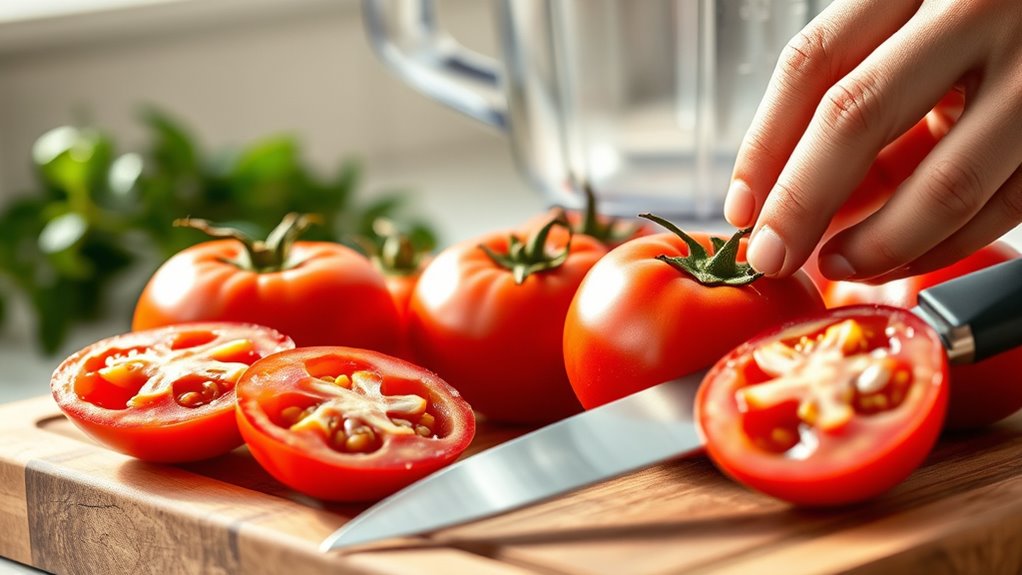
Now that you’ve picked ripe tomatoes, it’s time to get them ready for blending. Make certain to wash and clean them thoroughly to remove any dirt or pesticides.
Then, remove the stems and seeds to ensure a smooth, fresh juice.
Selecting Ripe Tomatoes
Although selecting ripe tomatoes might seem straightforward, choosing the right ones is essential for a flavorful juice. Look for tomatoes that are vibrant in color—deep red or orange, depending on the variety. Avoid those with green spots or blemishes, as they may taste bitter or underripe.
Feel the tomatoes gently; they should be firm but yield slightly to pressure, indicating juiciness without being mushy. Choose medium to large tomatoes, as they often have a better balance of sweetness and acidity. Heirloom varieties can add unique flavors, but standard vine-ripened tomatoes work well, too.
Picking ripe tomatoes guarantees your juice will be rich, fresh, and naturally sweet, setting a great foundation before you move on to washing and blending.
Washing and Cleaning
After selecting ripe tomatoes, the next step is to wash and clean them thoroughly. Rinse each tomato under cool running water to remove dirt, pesticides, and any residues. Use your hands to gently rub the surface, making sure all grime is loosened without damaging the skin.
Avoid soaking tomatoes for too long, as they can absorb water and lose flavor. For extra cleanliness, you can use a vegetable brush to scrub stubborn spots lightly. Once washed, pat the tomatoes dry with a clean kitchen towel or paper towels to prevent excess moisture from diluting your juice.
Proper washing ensures your tomato juice tastes fresh and pure, free from unwanted contaminants before you move on to blending.
Removing Stems and Seeds
Before blending, you’ll want to remove the stems and seeds from your tomatoes to guarantee a smoother juice texture and reduce bitterness. Start by cutting out the green stems with a sharp knife. Then, slice the tomatoes in half horizontally to expose the seeds.
Use a small spoon or your fingers to scoop out the seeds and any excess gel. This step helps prevent a gritty or overly tart juice. Finally, give the tomato halves a quick rinse to wash away any leftover seeds or pulp.
Here’s a quick rundown:
- Cut off the green stems.
- Halve the tomatoes horizontally.
- Scoop out seeds and gel, then rinse lightly.
Removing these parts ensures your juice blends evenly and tastes fresh.
Blending Tomatoes for Smooth Tomato Juice

You’ll want to start with ripe tomatoes for the best flavor and sweetness. Make sure they’re properly prepped by removing stems and any blemishes before blending.
Blending them well will help you achieve a smooth, revitalizing tomato juice every time.
Choosing Ripe Tomatoes
How do you know when tomatoes are perfectly ripe for blending into smooth tomato juice? Choosing the right tomatoes sets the foundation for a delicious juice. Here’s what to look for:
- Color: Pick tomatoes with a deep, vibrant red hue. This indicates full ripeness and rich flavor.
- Texture: Gently squeeze the tomato; it should yield slightly under pressure without being mushy or hard.
- Aroma: Ripe tomatoes have a sweet, earthy smell near the stem. If you can’t smell much, they’re probably underripe.
Avoid tomatoes with blemishes or green spots, as these can affect the juice’s taste and texture. By selecting ripe tomatoes, you ensure your juice blends smoothly and tastes fresh every time.
Preparing Tomatoes Properly
Once you’ve selected ripe tomatoes, it’s time to prepare them for blending to achieve that perfectly smooth tomato juice. Start by washing the tomatoes thoroughly under cold water to remove any dirt or pesticides. Next, remove the stems and any blemishes or bruised spots to guarantee the best flavor.
You can peel the tomatoes if you prefer a cleaner juice, but it’s not mandatory—just score an “X” on the bottom and blanch them in boiling water for 30 seconds, then transfer to ice water; the skins will slip off easily. Finally, cut the tomatoes into quarters to fit better in your blender jar.
Proper preparation ensures your blender works efficiently and helps you get fresh, flavorful juice with minimal effort.
Achieving Smooth Consistency
Although preparing your tomatoes properly sets a strong foundation, blending them correctly is key to achieving a smooth, velvety tomato juice. Start by placing the tomatoes in your blender jar, filling it no more than halfway to avoid overloading.
Then, follow these steps:
1. Blend on low speed for 30 seconds to break down the chunks gently. 2. Gradually increase to high speed and blend for 1-2 minutes until the mixture looks uniformly smooth. 3. Pause and check the texture; if it’s still chunky, pulse a few more times.
This process prevents over-blending, which can heat the juice and alter the flavor. Using these techniques, you’ll get the perfect silky consistency every time.
How to Strain Tomato Juice for a Clearer Drink
To achieve a clearer tomato juice, you’ll want to strain it carefully after blending. First, place a fine mesh sieve or cheesecloth over a large bowl or pitcher. Slowly pour the blended tomato mixture into the sieve, allowing the juice to separate from the pulp and seeds.
Use the back of a spoon or spatula to gently press the pulp, extracting as much liquid as possible without forcing solids through. If you prefer an ultra-clear drink, strain the juice a second time through a fresh layer of cheesecloth or a finer sieve. This extra step removes any lingering bits, resulting in a smooth, clean juice.
Once strained, your tomato juice is ready to enjoy or use in recipes that call for a clearer, pulp-free liquid.
How to Add Flavor With Spices and Seasonings
When you want to elevate the natural taste of your tomato juice, adding spices and seasonings is key. These ingredients bring depth and complexity, transforming bland juice into a flavorful treat. Start simple and build your blend to suit your taste buds.
Enhance your tomato juice with spices to unlock rich, complex flavors and personalize every sip.
Here are three essential additions to consider:
- Salt and Black Pepper: Enhance the basic flavor and add a mild kick.
- Celery Salt: Introduce a subtle, savory note that pairs perfectly with tomatoes.
- Smoked Paprika or Cayenne: Add warmth and a smoky or spicy undertone for extra character.
Mix your chosen spices into the blended tomato juice, then taste and adjust. Remember, it’s easier to add more than to fix an overpowering flavor!
How to Adjust Tomato Juice Thickness for Perfect Texture
You’ll want to get your tomato juice thickness just right for the best texture and taste. If it’s too thin, you can thicken it by blending in more pulp or simmering it gently.
On the other hand, if it’s too thick, simply add a bit of water or ice to lighten it up.
Importance Of Juice Consistency
Although tomato juice naturally varies in thickness, achieving the right consistency is key to enhancing its flavor and mouthfeel. When you get this just right, your juice becomes more enjoyable and satisfying. Too thin, and it might feel watery and bland.
Too thick, and it can be overwhelming or hard to drink.
To understand why consistency matters, consider:
- Flavor balance – Thicker juice holds flavors better, making every sip richer.
- Texture experience – The mouthfeel impacts how invigorating or heavy the juice feels.
- Versatility – Proper consistency lets you use the juice in soups, cocktails, or sauces without adjustments.
Techniques To Thicken Juice
Finding the ideal tomato juice consistency often means making adjustments to thicken it up just right. To start, you can simmer the juice gently on low heat, which reduces water content and intensifies texture without altering flavor.
Another effective way is to blend in some tomato paste; it naturally thickens the juice while boosting richness. If you want a smoother texture, try adding a small amount of cooked, pureed vegetables like carrots or bell peppers—they provide body without overpowering taste.
For a quick fix, sprinkle in a pinch of xanthan gum or cornstarch, but add these gradually to avoid clumping. By experimenting with these techniques, you’ll achieve the perfect thickness to suit your personal preference every time.
Diluting For Lighter Texture
Three simple methods can help you dilute tomato juice to achieve a lighter, more revitalizing texture. Adjusting the thickness ensures the juice feels invigorating rather than heavy. Here’s how you can do it:
- Add Cold Water: Start by stirring in small amounts of cold water. This gently thins the juice without sacrificing flavor, making it smoother and easier to sip.
- Incorporate Ice Cubes: Blend a few ice cubes with your tomato juice. This chills and dilutes simultaneously, perfect for a cool, crisp drink.
- Mix in Vegetable Broth: For a savory twist, add a splash of low-sodium vegetable broth. It lightens the texture while enhancing the juice’s natural taste.
Try these steps until you reach your perfect consistency.
How to Store Homemade Tomato Juice Safely
When you’ve just made fresh tomato juice in your blender, storing it properly is essential to keep it fresh and safe to drink. First, pour the juice into a clean, airtight container—glass jars with tight-fitting lids work best. Avoid leaving the juice at room temperature for more than two hours, as bacteria can grow quickly.
Instead, refrigerate it promptly, where it will stay fresh for up to 3-4 days. If you want to keep it longer, freeze the juice in freezer-safe containers, leaving space for expansion. Always label your containers with the date so you can track freshness.
Before drinking, give the juice a quick sniff and check for any off smells or mold. Proper storage helps you enjoy your homemade tomato juice safely.
How to Troubleshoot Common Tomato Juice Problems
Proper storage keeps your tomato juice fresh, but sometimes issues can still arise during or after preparation. If your juice tastes bland, try adding a pinch of salt or a splash of lemon juice to enhance flavor.
If the juice is too thick, thin it out by blending in a little cold water or tomato broth. In conclusion, if you notice separation, simply give the juice a good stir or shake before serving.
Here’s a quick checklist to troubleshoot:
- Blah flavor? Add salt or lemon juice.
- Too thick? Blend in water or broth.
- Separation? Stir or shake the juice well.
These tips help you enjoy fresh, tasty tomato juice every time.
Making Tomato Juice Variations: Spicy, Sweet, or Savory
Although classic tomato juice is delicious on its own, you can easily customize it to suit your taste by adding spices, sweeteners, or savory ingredients. For a spicy kick, blend in a pinch of cayenne pepper, a dash of hot sauce, or finely chopped jalapeños.
If you prefer something sweet, stir in a little honey, agave syrup, or a splash of orange juice to balance the acidity. For a savory twist, mix in Worcestershire sauce, a bit of soy sauce, or fresh herbs like basil and thyme.
Don’t forget a pinch of salt and freshly ground black pepper to enhance flavors. Experiment with these variations until you find the perfect blend that satisfies your palate.
Ways to Use Tomato Juice in Your Recipes and Cocktails
Since tomato juice offers a rich, tangy flavor, you can easily incorporate it into a variety of recipes and cocktails to elevate their taste.
Here are some ways to use your homemade tomato juice:
- Savory Soups and Stews: Use tomato juice as a base for gazpacho or add it to stews for extra depth and acidity.
- Cocktails: Mix it into classic drinks like Bloody Marys or create your own spicy tomato-based cocktail with a splash of hot sauce.
- Pasta Sauces: Replace canned tomatoes with fresh tomato juice to make a lighter, fresher pasta sauce.
Frequently Asked Questions
Can I Use Canned Tomatoes Instead of Fresh Ones?
Yes, you can use canned tomatoes instead of fresh ones. They’re already cooked and softened, so you’ll blend faster.
Just drain excess liquid if you want thicker juice, and adjust seasoning to taste before blending.
Is It Necessary to Peel Tomatoes Before Juicing?
You don’t have to peel tomatoes before juicing; like skipping the prelude in a symphony, diving straight in saves time and keeps nutrients intact.
Just blend and strain if you want a smoother, seed-free juice.
How Long Does Homemade Tomato Juice Last in the Refrigerator?
Your homemade tomato juice lasts about 2 to 3 days in the refrigerator. Make sure you store it in an airtight container to keep it fresh, and always give it a sniff before drinking to check quality.
Can I Freeze Tomato Juice for Later Use?
You can freeze tomato juice like a time capsule, preserving its fresh essence. Just pour it into airtight containers, leaving space for expansion.
When thawed, it’s ready to revive your dishes with vibrant flavor anytime you want.
What Health Benefits Does Tomato Juice Offer?
You’ll get antioxidants like lycopene that support heart health and reduce cancer risk. Tomato juice boosts your immune system, improves skin, and provides vitamins A and C.
It’s a revitalizing way to nourish your body daily.
Conclusion
Now that you’ve mastered making tomato juice in your blender, you hold the key to a garden’s worth of fresh flavor right at your fingertips. Whether you like it spicy, sweet, or savory, this simple process turns humble tomatoes into liquid gold.
So, don’t let those ripe tomatoes wait—blend, strain, season, and savor the vibrant taste you created. Enjoy the refreshing and nutritious benefits of homemade tomato juice that’s easy to make with your blender. Your taste buds will thank you with every invigorating sip!