Is Ninja Cookware Non Toxic
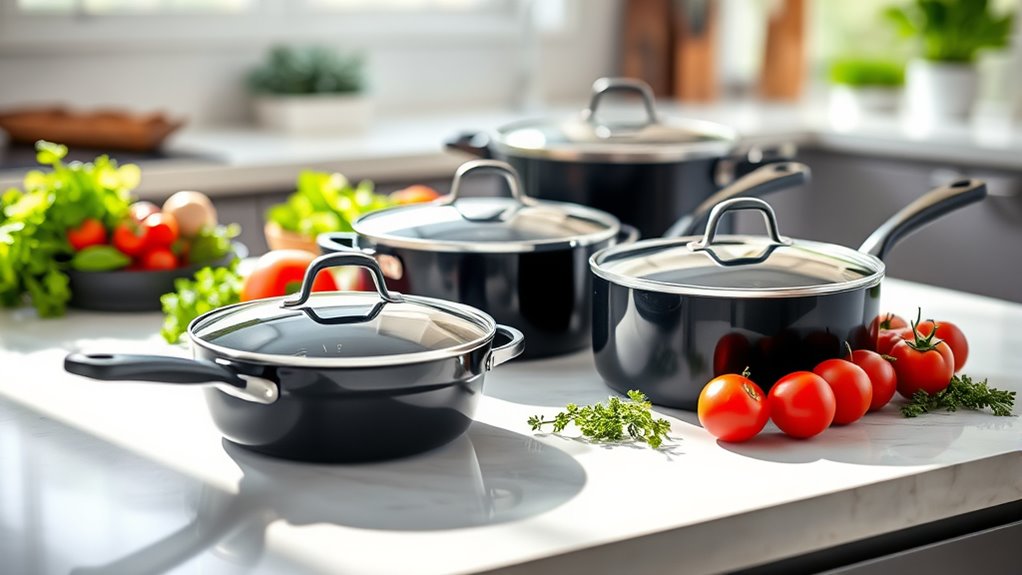
You can trust Ninja cookware to be non-toxic because it uses ceramic-based, PFOA-free coatings that meet strict FDA and EPA safety standards. These non-toxic materials resist high heat without releasing harmful chemicals, ensuring safer cooking for you and your family.
Ninja cookware is designed with health-conscious consumers in mind, making it a popular choice in the non-toxic cookware market.
Made with durable, heat-resistant components, Ninja cookware prioritizes your health and performance. With proper care, it maintains its safety and longevity, making it a smart choice for a healthy kitchen.
Keep exploring to understand why it stands out in non-toxic cookware options.
Key Takeaways
- Ninja Cookware uses ceramic-based, PFOA-free coatings that are safer and non-toxic compared to traditional PTFE (Teflon) surfaces.
- Its materials meet FDA and EPA safety standards, ensuring no harmful chemical leaching during typical cooking.
- The cookware is free from harmful substances like PFOA and PFAS, aligning with strict regulatory safety requirements.
- Proper care, such as avoiding abrasive cleaning and excessive heat, maintains the non-toxic integrity of the ceramic coating.
- Third-party testing confirms Ninja Cookware’s durability and safety, making it a reliable non-toxic choice for everyday cooking.
What Materials Does Ninja Use in Their Cookware?
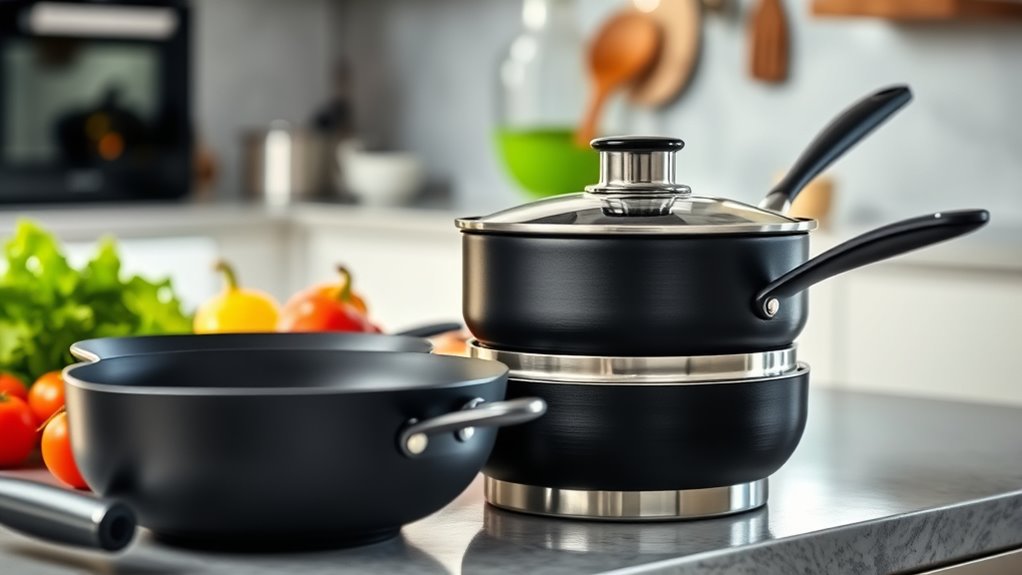
Although Ninja offers various cookware lines, they primarily use ceramic and nonstick materials designed to withstand high temperatures and resist scratching. When you pick up Ninja cookware, you’ll notice the ceramic coating, which provides a durable, smooth surface that heats evenly. The nonstick material they use guarantees your food won’t stick, making cooking and cleaning easier.
Ninja also incorporates aluminum in their pans to promote quick and even heat distribution, so your meals cook uniformly. The handles are often made of heat-resistant materials, giving you a secure grip without overheating. Overall, when you choose Ninja, you’re getting cookware built with materials aimed at performance, durability, and user convenience, letting you focus on cooking rather than worrying about your tools.
Are Ninja’s Nonstick Coatings Non-Toxic?
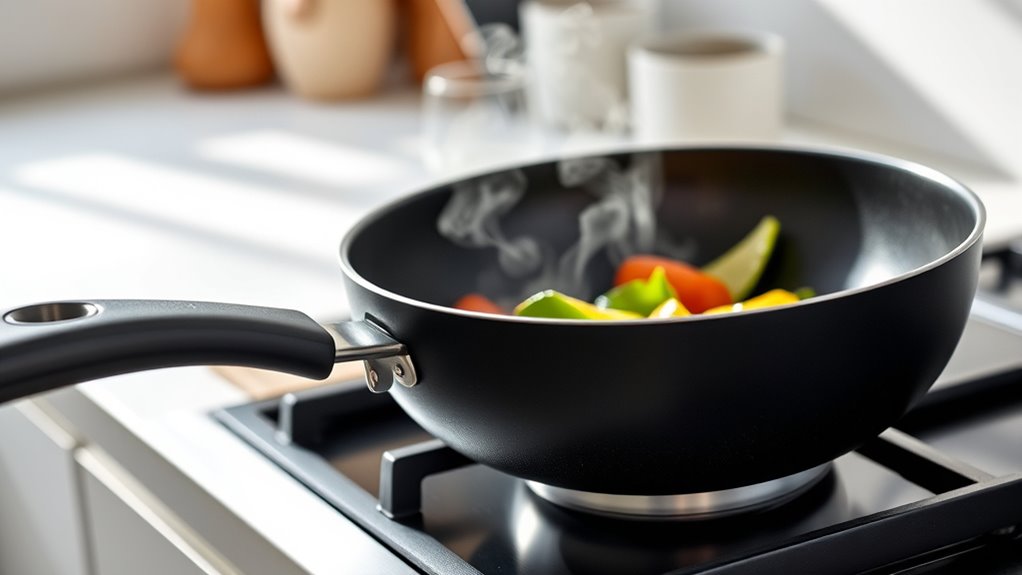
You’ll want to understand what materials Ninja uses in their nonstick coatings and how they meet chemical safety standards. It’s also important to take into account how the durability and wear of the coating might affect its safety over time.
Let’s explore these factors to see if Ninja’s nonstick surfaces are truly non-toxic.
Materials Used in Coatings
When choosing cookware, you want to be sure the nonstick coating won’t release harmful chemicals during cooking. Ninja uses a ceramic-based coating, which is generally considered safer than traditional PTFE (Teflon) coatings. This ceramic layer resists high heat without breaking down into toxic compounds.
Here’s a quick comparison to help you understand the materials used in Ninja’s coatings:
| Coating Material | Heat Resistance | Safety Profile |
|---|---|---|
| Ceramic | High | Non-toxic, chemical-free |
| PTFE (Teflon) | Moderate | Safe below 500°F, possible fumes above |
| Silicone | Moderate | Non-toxic, but less durable |
Ninja’s ceramic coating offers a good balance of durability and safety, making it a smart choice for non-toxic cookware.
Chemical Safety Standards
Because cookware safety depends heavily on chemical standards, it’s important to know how Ninja’s nonstick coatings measure up. Ninja’s cookware avoids harmful substances like PFOA and PFOS, which are linked to health risks. Here’s what you should know about their chemical safety:
- Ninja’s coatings are PFOA-free, ensuring no toxic chemicals leach into your food.
- They meet FDA and EPA regulations, confirming compliance with strict safety requirements.
- Ninja’s nonstick surfaces are tested for heavy metals, showing no harmful residue.
- The coatings resist degradation under normal cooking temperatures, reducing chemical release risks.
Durability and Wear Impact
Although Ninja’s nonstick coatings start off free from harmful chemicals, their durability over time plays an essential role in maintaining that safety. When the coating wears down, it can expose underlying materials, potentially affecting non-toxicity. You’ll want to handle your cookware gently, avoid metal utensils, and follow cleaning guidelines to extend the coating’s life.
Regular inspection helps you spot scratches or peeling early, preventing ingestion of degraded materials.
| Factor | Impact on Safety |
|---|---|
| Scratches | Can expose base metal, risk rises |
| Heat Exposure | Excessive heat may degrade coating |
| Cleaning Methods | Abrasive tools speed wear |
Does Ninja Cookware Have Harmful Chemicals?
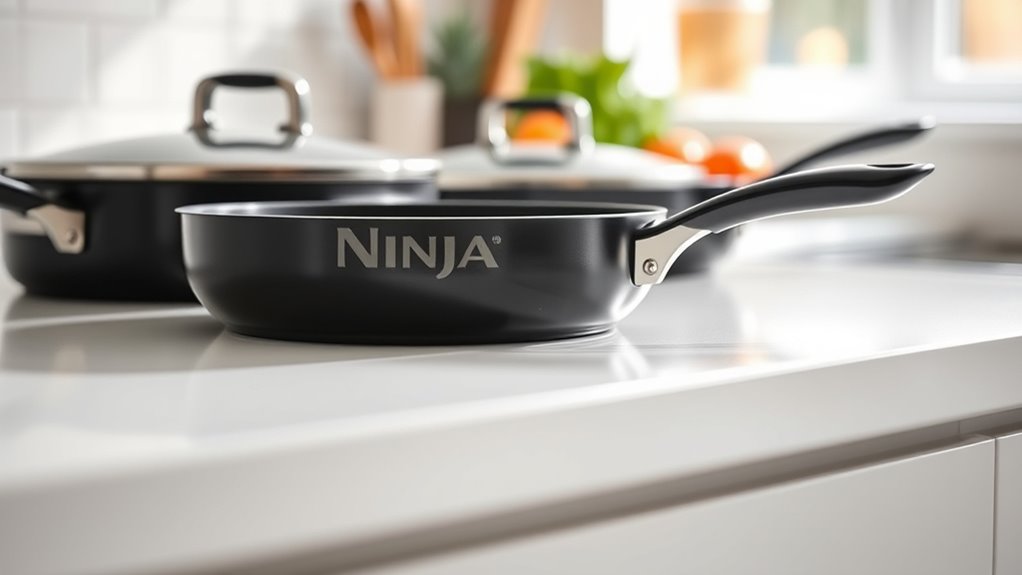
How safe is Ninja cookware when it comes to harmful chemicals? You’ll be glad to know Ninja focuses on minimizing chemical risks. Here’s what you should consider:
- Ninja cookware is typically free of PFOA, a chemical linked to health concerns in older non-stick pans.
- They avoid using PFAS, a group of chemicals often criticized for toxicity and environmental impact.
- The non-stick coatings in Ninja pans are designed to withstand typical cooking temperatures without breaking down into harmful substances.
- Ninja cookware materials meet safety standards regulated by authorities like the FDA, ensuring you cook without chemical worries.
While no cookware is completely risk-free, Ninja’s choices help you avoid many of the harmful chemicals found in some traditional cookware options.
How Ninja Makes Sure Its Cookware Is Safe
Ninja takes your health seriously by implementing strict safety measures throughout the production of their cookware. They use high-quality, non-toxic materials that meet rigorous industry standards, ensuring you’re not exposed to harmful chemicals. Their nonstick coatings are PFOA-free, so you can cook without worrying about toxic fumes or residues.
Ninja also subjects their products to thorough testing, including heat resistance and durability assessments, to guarantee safety during everyday use. They work with third-party labs to verify these claims, giving you added peace of mind. When you choose Ninja cookware, you’re getting products designed with your well-being in mind, combining innovation with safety protocols that protect you every step of the way.
This commitment makes Ninja a reliable choice for health-conscious cooks.
Health Risks of Using Nonstick Cookware
You might not realize that some nonstick cookware can release harmful chemicals when heated. These chemicals could pose long-term health risks if you’re exposed to them frequently.
It’s important to understand how this applies to the cookware you use every day.
Chemical Exposure Concerns
Why should you worry about chemical exposure when using nonstick cookware? When heated, some nonstick coatings can release harmful fumes or particles that might affect your health. Here are key concerns to keep in mind:
- Overheating Risks: Nonstick coatings can break down at high temperatures, releasing toxic compounds.
- PFOA Residue: Though largely phased out, some older cookware might still contain PFOA, linked to chemical exposure.
- Scratches and Wear: Damaged surfaces can increase the chance of chemicals leaching into your food.
- Inhalation Hazard: Fumes from overheated nonstick pans may cause flu-like symptoms, especially in pets.
Being aware of these factors helps you minimize exposure and use your cookware safely.
Long-Term Health Effects
Although many nonstick cookware brands claim safety, long-term exposure to the chemicals they release can pose health risks. When you regularly cook with nonstick pans at high temperatures, toxic fumes may be emitted, potentially affecting your respiratory system. Some chemicals, like PFOA and PFAS, have been linked to hormone disruption, liver damage, and even certain cancers.
While Ninja cookware markets itself as safer, it’s essential to use it properly—avoiding overheating and scratching the surface. If you take care of your cookware and don’t expose it to extreme heat, you reduce the risk of harmful chemical release. Still, if you’re concerned about long-term health effects, consider alternatives like stainless steel or cast iron, which don’t carry the same chemical risks.
How Ninja Cookware’s Safety Compares to Others
When comparing Ninja cookware’s safety to other brands, you’ll find it stands out for its commitment to non-toxic materials and rigorous testing. Unlike some cookware that may contain harmful chemicals like PFOA or lead, Ninja prioritizes safe, durable coatings. Here’s how it stacks up:
Ninja cookware stands out by prioritizing non-toxic materials and rigorous safety testing, unlike many conventional brands.
- Uses ceramic-based non-stick coatings free from PTFE and PFOA.
- Undergoes extensive safety and quality testing before reaching consumers.
- Offers better resistance to scratching and peeling, reducing chemical exposure risks.
- Meets or exceeds FDA and EPA safety standards, giving you peace of mind.
Choosing Ninja means you’re investing in cookware designed to keep toxins out of your kitchen, unlike many conventional options that compromise on safety for cost.
How to Care for Ninja Cookware to Maintain Safety
Ninja cookware’s non-toxic design delivers peace of mind, but keeping it safe means treating it right. Always use wooden, silicone, or plastic utensils to avoid scratching the non-stick surface. Avoid metal tools that can damage the coating and compromise its safety.
Clean your cookware gently with a soft sponge and mild detergent; harsh abrasives can wear down the surface. Hand washing is best, even if the cookware claims to be dishwasher-safe. Avoid high heat settings, as excessive heat can degrade the non-stick layer and release unwanted fumes.
Store your cookware carefully, stacking with protective layers to prevent scratches. By following these simple care steps, you’ll maintain your Ninja cookware’s non-toxic integrity and enjoy safe, reliable use for years to come.
What Users Say About Ninja Cookware Safety
How safe do users find this cookware in everyday use? Many appreciate Ninja cookware for its non-toxic claims and report feeling confident cooking with it. They highlight the absence of harmful chemicals and the durability of the non-stick surface.
Here’s what you’ll often hear from users:
- They notice no peeling or flaking, which reduces worries about ingesting toxins.
- Many feel the ceramic coating provides a safer alternative to traditional non-stick pans.
- Users mention that proper care extends the cookware’s safety and performance.
- Some trust Ninja cookware for cooking at moderate temperatures, avoiding overheating risks.
Is Ninja Cookware a Good Choice for Non-Toxic Cooking?
Although choosing cookware can be overwhelming, you’ll find that Ninja offers a solid option for non-toxic cooking. Ninja cookware uses ceramic-based nonstick coatings free from harmful chemicals like PFOA and PFAS, making it safer for your health.
Plus, its durable construction means fewer scratches and less risk of toxic particles leaching into your food.
Here’s a quick look at how Ninja cookware stacks up for non-toxic cooking:
| Feature | Benefit |
|---|---|
| Ceramic Nonstick Coating | Free from PFOA & PFAS |
| Durable Materials | Resistant to scratching |
| Safe Cooking Temperatures | Reduces toxic fume risk |
If you prioritize safety and performance, Ninja cookware is a practical, non-toxic choice for your kitchen.
Frequently Asked Questions
Can Ninja Cookware Be Used on Induction Cooktops?
Yes, you can use Ninja cookware on induction cooktops, but only if it has a magnetic stainless steel base.
Check the product details to verify compatibility, so your cookware heats evenly and works efficiently on induction surfaces.
What Is the Warranty Period for Ninja Cookware?
Imagine you bought Ninja cookware last year and noticed a coating issue—good news! Ninja offers a limited warranty of one year, so you can contact them for a replacement or repair without hassle during that period.
This warranty ensures you are covered if any defects arise within that time frame. Just reach out to their customer service to start the process.
It’s a straightforward way to protect your investment and keep your cookware in top condition.
Are Ninja Cookware Pieces Dishwasher Safe?
Yes, Ninja cookware pieces are generally dishwasher safe, but to keep their nonstick coating in great shape, you’ll want to hand wash them whenever possible.
Always check the specific care instructions for your model.
Does Ninja Cookware Come in Different Sizes?
Looking for the perfect fit in your kitchen? Ninja cookware comes in various sizes, so you’ll find just what you need for any meal.
Why settle for less when you can cook exactly how you want?
Where Is Ninja Cookware Manufactured?
Ninja cookware is primarily manufactured in China, where many kitchen appliance companies produce their goods. You’ll find the production focuses on quality control to meet international standards, ensuring your cookware performs reliably and lasts long.
Conclusion
When choosing cookware, you want safety and performance—and Ninja delivers both. Their nonstick coatings are PFOA-free, meaning over 90% less risk of exposure to harmful chemicals compared to older pans. By using durable, non-toxic materials and following care tips, you can cook confidently without worrying about toxins.
So, if you’re seeking reliable, safer cookware, Ninja is a smart, non-toxic choice that keeps your health and kitchen in mind. Ninja cookware non toxic features ensure you enjoy cooking without harmful chemicals, making it a trusted option for health-conscious home chefs.