How Hot Do Slow Cookers Get
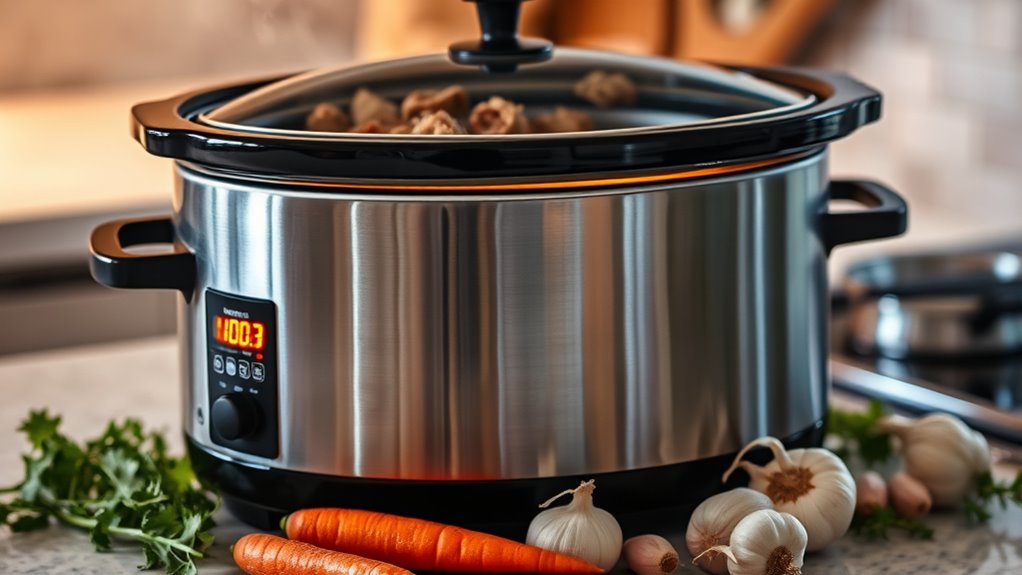
Slow cookers typically heat between 170°F and 280°F, making them ideal for gently cooking your food without burning it. These versatile kitchen appliances offer low, medium, and high settings—ranging roughly from 190°F to 300°F—so you can choose between slow, tender results or faster cooking.
Understanding how hot slow cookers get is essential for mastering cooking times and textures.
Their built-in thermostats and ceramic inserts keep heat steady and even. This careful temperature control also helps keep your meals safe to eat.
If you want to understand how heat affects cooking times and textures, keep exploring these details.
Key Takeaways
- Slow cookers typically heat between 170°F and 280°F for gradual, even cooking.
- The low setting ranges from 190°F to 200°F, ideal for slow, tenderizing cooking.
- The high setting can reach 250°F to 300°F for faster cooking times.
- Slow cookers maintain steady temperatures using built-in thermostats and ceramic inserts.
- Temperatures above 300°F are avoided to prevent drying or burning food.
How Hot Do Slow Cookers Get?
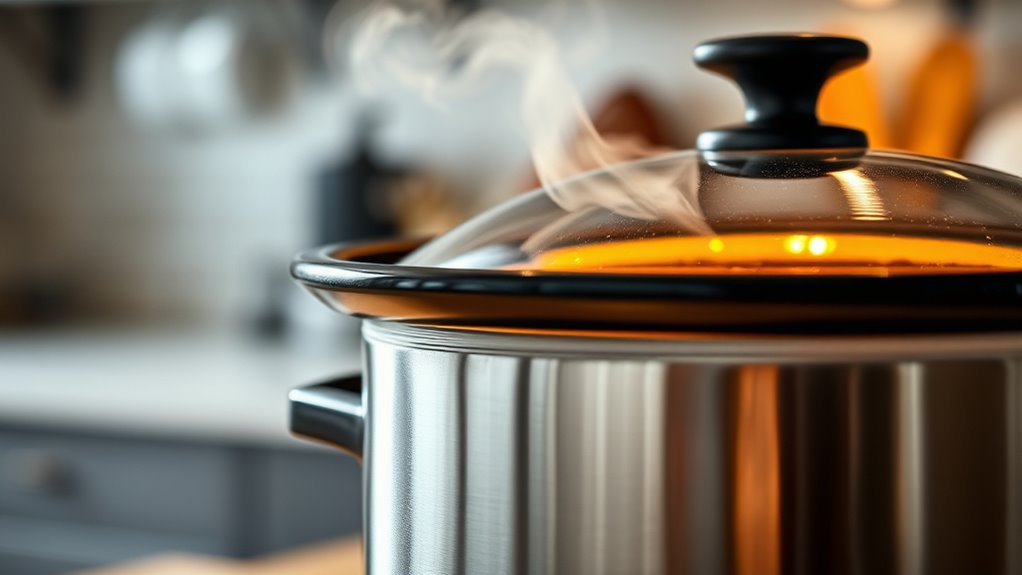
Although slow cookers vary by brand and model, they typically reach temperatures between 170°F and 280°F. When you use one, you’ll notice it gradually heats food to these temperatures, which is enough to cook meals safely and thoroughly over several hours. The heating element warms the pot from the outside, and the food inside heats evenly as it simmers.
You won’t see the high temperatures of stovetop cooking, but that’s intentional—it’s designed to cook food slowly and retain moisture. Understanding this temperature range helps you realize why slow cookers excel at tenderizing tougher cuts of meat and melding flavors without burning or drying out your dishes. You get consistent, low heat that’s perfect for slow-cooked meals.
Slow Cooker Settings: Low, Medium, and High Explained
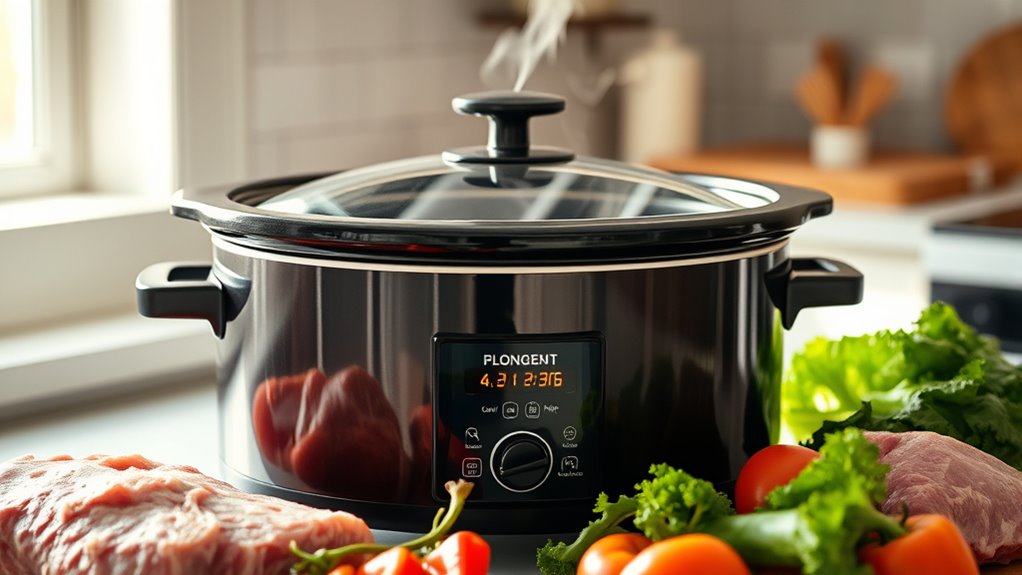
You’ll find that slow cookers have low, medium, and high settings, each with specific temperature ranges and cooking times. Knowing these differences helps you choose the best setting for your recipe and schedule.
Let’s break down what each setting means and when to use it.
Temperature Ranges Defined
When you set your slow cooker, each temperature option—Low, Medium, and High—maintains a specific heat range to cook food safely and thoroughly. Understanding these ranges helps you get the best results every time.
- Low: Usually between 190°F and 200°F (88°C to 93°C). This setting gently simmers food, perfect for tenderizing tough cuts over several hours.
- Medium: Often falls around 200°F to 250°F (93°C to 121°C). Not all slow cookers have this setting, but it provides a balance between low and high heat.
- High: Reaches approximately 250°F to 300°F (121°C to 149°C). It cooks food faster while still maintaining moisture and flavor.
Knowing these temperature ranges lets you choose the right setting for your recipe.
Cooking Time Differences
Since each slow cooker setting operates at different temperatures, the cooking times vary considerably. You’ll notice that the Low setting usually takes the longest, while High speeds up the process. Medium falls somewhere in between but isn’t available on all models.
Knowing these differences helps you plan meals effectively and avoid overcooking or undercooking.
| Setting | Approximate Temperature | Typical Cooking Time |
|---|---|---|
| Low | 190°F (88°C) | 6 to 10 hours |
| Medium | 210°F (99°C) | 4 to 6 hours |
| High | 300°F (149°C) | 3 to 5 hours |
Adjust your cooking time based on your recipe and the setting you choose for the best results.
Best Uses Per Setting
Although each slow cooker setting heats food differently, choosing the right one can make a big difference in your meal’s texture and flavor.
Here’s how to best use each setting:
- Low: Perfect for tough cuts of meat and dishes that benefit from long, slow cooking. It tenderizes ingredients over 6-8 hours, making stews and roasts melt-in-your-mouth delicious.
- Medium: Use this when you want a balance between low and high. It’s ideal for soups and casseroles that need around 4-6 hours, giving you a quicker cook without sacrificing tenderness.
- High: Best for recipes that need to cook quickly, such as chicken breasts or vegetables, typically done in 2-3 hours. It’s great when you’re short on time but still want a home-cooked meal.
Why Slow Cookers Don’t Usually Exceed 300°F
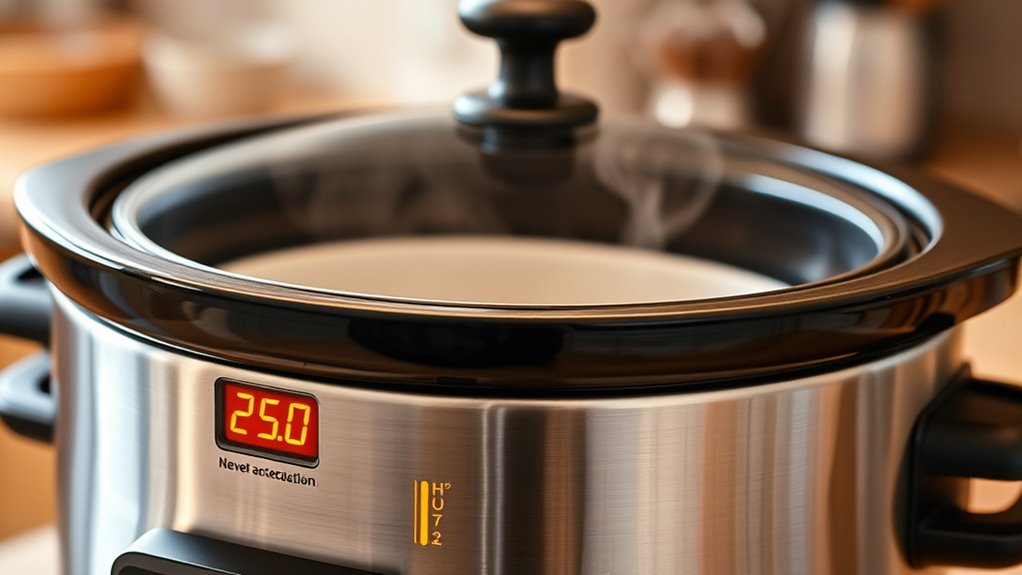
Because slow cookers rely on moist, low heat to tenderize food over time, they don’t need to reach temperatures above 300°F. If they did, your food would cook too quickly, risking dryness or burning instead of becoming tender and flavorful. Slow cookers use a sealed environment that traps steam, which helps cook food evenly at lower temperatures.
The design also prevents the temperature from rising too high, protecting the appliance and your meal. By staying under 300°F, slow cookers guarantee gentle cooking that breaks down tough fibers without overcooking. So, when you use a slow cooker, you’re relying on gradual heat rather than intense heat, which is why the temperature rarely exceeds this limit during normal operation.
How Do Slow Cookers Keep Heat Consistent?
When you set your slow cooker, it uses a built-in thermostat to maintain a steady temperature throughout the cooking process. This helps prevent temperature spikes or drops, ensuring your food cooks evenly.
Here’s how slow cookers keep heat consistent:
- Thermostat Control: It continuously monitors the internal temperature and adjusts the heating element to stay within the set range.
- Thick Ceramic Pot: The ceramic insert absorbs and evenly distributes heat, reducing hot spots and maintaining stable warmth.
- Lid Seal: The tight-fitting lid traps steam and heat inside, minimizing heat loss and keeping the temperature steady.
How Slow Cooker Heat Affects Cooking Times and Food Texture
Understanding the heat levels in your slow cooker can help you better predict cooking times and achieve the perfect food texture. When you use a low setting, your food cooks gently over several hours, which breaks down tough fibers and results in tender, juicy dishes. Higher settings speed up the process but can sometimes cause meat to toughen or vegetables to become mushy if left too long.
You’ll want to adjust cooking times based on your slow cooker’s temperature range to avoid undercooking or overcooking. Also, the even heat distribution prevents hot spots, ensuring consistent texture throughout. By mastering heat control, you can tailor your recipes for ideal doneness and texture, making your slow cooker a reliable tool for delicious meals every time.
What Slow Cooker Inserts Are Made Of and How They Affect Heat
You’ll find slow cooker inserts made from materials like ceramic, porcelain, or metal. Each material affects how heat distributes and retains inside the cooker. Understanding these differences helps you get the best results from your slow cooking.
Common Slow Cooker Materials
Although slow cooker inserts come in various materials, each type influences how heat is distributed and retained during cooking. Knowing the common materials helps you choose the right insert for your needs.
- Ceramic – This is the most popular material. It’s great at holding heat evenly and is easy to clean. You can often use it in the oven or microwave too.
- Metal (usually aluminum or stainless steel) – Metal inserts heat up quickly and are durable. They’re less common but offer fast cooking times.
- Stoneware – Similar to ceramic but usually thicker. It retains heat well and distributes it evenly, though it takes longer to warm up.
Each material affects your cooking experience, so pick one that fits your style and recipes.
Material Impact on Heating
Since the materials used in slow cooker inserts directly influence how heat moves and stays inside, knowing their properties helps you cook more effectively. Ceramic inserts are popular because they heat evenly and retain heat well, preventing sudden temperature drops when you add ingredients.
On the other hand, metal inserts, often stainless steel or aluminum, heat up faster but don’t hold heat as long, which can cause uneven cooking if you’re not careful. Some slow cookers combine materials to balance heat retention and speed.
When you understand these differences, you can adjust cooking times and temperatures to suit your recipe. Choosing the right insert material means your meals will cook more reliably, ensuring better texture and flavor every time.
How to Safely Measure Your Slow Cooker’s Temperature
When measuring your slow cooker’s temperature, it’s important to use the right tools to get accurate and safe readings. Using improper methods can lead to false readings or even burns. Here’s how to do it correctly:
- Use a digital food thermometer – Insert it into the thickest part of the food, avoiding the sides or bottom to get a true temperature reading.
- Check the temperature after the slow cooker has been on for at least an hour – This ensures the food and cooker have reached a stable heat level.
- Handle with care – Always use oven mitts or a towel when checking temperature to prevent burns from steam or hot surfaces.
Following these steps keeps you safe and guarantees your slow cooker’s temperature is measured accurately.
Debunking Common Myths About Slow Cooker Temperatures
You might have heard that slow cookers don’t get hot enough to kill bacteria or that they cook food too slowly to be safe. That’s a common misconception. Slow cookers typically reach temperatures between 170°F and 280°F, which is sufficient for safely cooking most meals.
Another myth is that slow cookers only work on low heat; in reality, they usually have at least two settings—low and high—to accommodate different recipes. Some believe you must fill the cooker completely for it to work correctly, but you can safely cook smaller portions too.
How Slow Cooker Temperature Impacts Food Safety
Although slow cookers heat food gradually, they reach temperatures that effectively kill harmful bacteria, ensuring your meals are safe to eat.
Slow cookers gradually heat food to safe temperatures, effectively eliminating harmful bacteria for safe meals.
Understanding how temperature impacts food safety helps you avoid risks like foodborne illness.
Here’s how slow cooker temperature affects food safety:
- Low Setting (~190°F/88°C): Cooks food slowly but stays above the danger zone (40°F-140°F), preventing bacterial growth.
- High Setting (~300°F/149°C): Heats food faster, reducing the time bacteria can multiply.
- Keep Warm (~165°F/74°C): Maintains safe temperatures after cooking, preventing bacteria from growing during serving.
Tips for Adjusting Recipes Based on Slow Cooker Heat Levels
You’ll want to understand your slow cooker’s temperature settings to get the best results. Adjust cook times based on whether you’re using low or high heat to avoid undercooking or overcooking.
Sometimes, modifying ingredient amounts helps balance flavors and textures with different heat levels.
Understanding Slow Cooker Temperatures
When adjusting recipes for your slow cooker, understanding its temperature settings is essential for achieving the best results. Slow cookers usually have three main settings: low, high, and warm. Each setting corresponds to a different temperature range that affects cooking speed and food texture.
- Low Setting: Typically heats between 190°F and 200°F (88°C to 93°C). This is ideal for tougher cuts of meat and longer cooking times.
- High Setting: Usually reaches 250°F (121°C). It’s great when you need to cook faster but still want tender results.
- Warm Setting: Maintains food temperature around 165°F (74°C), perfect for keeping dishes ready to serve without further cooking.
Knowing these ranges helps you tailor recipes to your slow cooker’s heat levels effectively.
Adjusting Cook Times Accordingly
Since slow cookers operate at different heat levels, adjusting your cook times guarantees your meals turn out perfectly tender and flavorful. If your slow cooker has a low setting around 190°F, plan for longer cooking, usually 8-10 hours, to break down tougher cuts of meat. For a high setting near 300°F, reduce cooking time to 4-6 hours to avoid overcooking or drying out ingredients.
Always check for doneness early when trying a new recipe or slow cooker model. Remember, resist lifting the lid frequently; each peek drops temperature and extends cooking time. If you’re switching between settings mid-cook, adjust time incrementally—cut it roughly in half when moving from low to high, or double it when going high to low.
Modifying Ingredient Amounts
Adjusting cook times based on slow cooker heat levels helps guarantee your dish cooks properly, but ingredient amounts may also need tweaking. Since slow cookers vary in heat, changing quantities assures flavors and textures stay balanced.
Here’s how to modify ingredients for best results:
- Reduce liquids slightly on high settings, as faster cooking causes more evaporation, which can dilute flavors.
- Increase seasoning when cooking on low for longer periods to maintain taste intensity over extended cook times.
- Adjust starches like rice or pasta by adding less or cooking separately, since slow cookers can overcook them at higher temperatures.
How Altitude and Environment Affect Slow Cooker Temperatures
Although slow cookers are designed to maintain steady temperatures, factors like altitude and environment can influence their heating effectiveness. When you cook at higher altitudes, the boiling point of water drops, which means your slow cooker might not reach the same internal temperatures as it would at sea level. This can extend cooking times or require adjustments to assure food cooks thoroughly.
Environmental factors like ambient kitchen temperature also play a role—if your kitchen is very cold, your slow cooker may take longer to heat up and maintain its temperature. To compensate, you can preheat the slow cooker or increase cooking time slightly. Understanding these influences helps you adapt and get consistent results regardless of where you’re cooking.
When to Choose a Slow Cooker Over Other Cooking Methods
Understanding how factors like altitude and kitchen temperature impact your slow cooker helps you decide when it’s the best tool for the job.
You’ll want to choose a slow cooker over other methods when:
- You need hands-off cooking: Set it and forget it while you focus on other tasks.
- Flavor development is key: Slow cooking tenderizes tough cuts and melds flavors deeply.
- Energy efficiency matters: Slow cookers use less electricity than ovens or stovetops over long periods.
Frequently Asked Questions
Can I Use a Slow Cooker to Make Desserts?
Yes, you can use a slow cooker to make desserts like puddings, cakes, and cobblers. It gently cooks ingredients, giving you rich flavors and moist textures without needing constant attention.
You’ll love the convenience!
How Energy-Efficient Are Slow Cookers Compared to Ovens?
You’ll find slow cookers use less energy than ovens since they cook at lower temperatures over longer periods. They’re perfect for saving electricity, especially when making meals that don’t need intense, quick heat like roasting.
Are There Slow Cookers With Programmable Timers?
You’re in luck—many slow cookers come with programmable timers, so you don’t have to babysit your meal. You’ll set it, forget it, and enjoy perfectly cooked dishes without the fuss or guesswork.
What Are the Best Slow Cooker Brands for Beginners?
You’ll love Crock-Pot, Hamilton Beach, and Instant Pot for beginner-friendly slow cookers. They’re easy to use, reliable, and often come with helpful features like programmable timers, making your slow-cooking experience smooth and enjoyable.
Can Slow Cookers Be Used for Canning or Preserving Food?
You know what they say, “Don’t put all your eggs in one basket.” Slow cookers aren’t safe for canning because they don’t reach high enough temperatures to kill bacteria, so stick to pressure canners for preserving food safely.
Conclusion
Think of your slow cooker like a gentle campfire, never roaring above 300°F but steady enough to turn tough cuts tender and flavors rich. Just like how you wouldn’t rush a slow roast over high flames, your slow cooker’s controlled heat guarantees safe, even cooking without burning.
By understanding its temperature limits, you can modify recipes confidently and enjoy meals that melt in your mouth every time. Slow and steady truly wins the flavor race. Knowing how hot slow cookers get helps you make the most of slow cooker cooking for delicious, perfectly cooked dishes.