How to Pan Fry a Steak With Butter
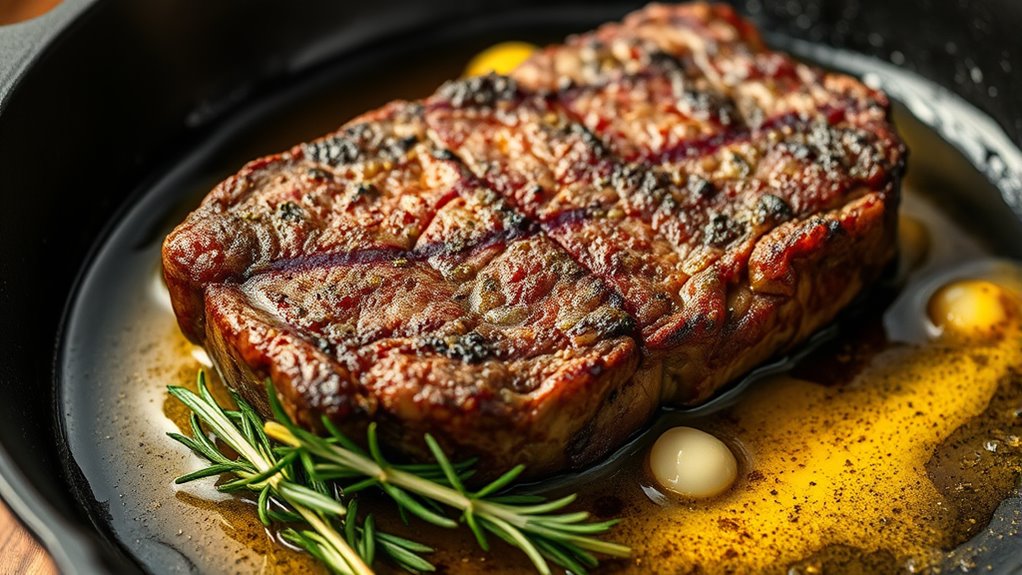
To pan fry a steak with butter, start by selecting a 1 to 1.5-inch thick cut like ribeye or New York strip and bring it to room temperature. This method ensures even cooking and enhances flavor.
Using butter to pan fry a steak adds richness and depth to the meat.
Pat the steak dry and season generously with salt and pepper.
Heat a heavy pan until it’s very hot to achieve a perfect sear.
Sear the steak on both sides to lock in juices.
Next, add cold butter, garlic, and fresh herbs to the pan.
Continuously baste the steak with the melted butter for a rich, infused flavor.
Let the steak rest before slicing against the grain to maintain tenderness.
Keep practicing to master the art of perfect searing and flavor infusion.
Key Takeaways
- Bring steak to room temperature, pat dry, season with salt and pepper, and lightly brush with oil before cooking.
- Heat a heavy-bottomed pan on medium-high until water droplets dance, then add the steak for searing.
- Sear the steak without overcrowding, flipping only once or twice to develop a crust and even cooking.
- Add cold butter, garlic, and fresh herbs; tilt the pan and baste the steak with the infused butter for 2-3 minutes.
- Rest the steak for 5-10 minutes, loosely covered with foil, then slice against the grain for maximum tenderness.
Choose the Best Steak Cut for Pan Frying
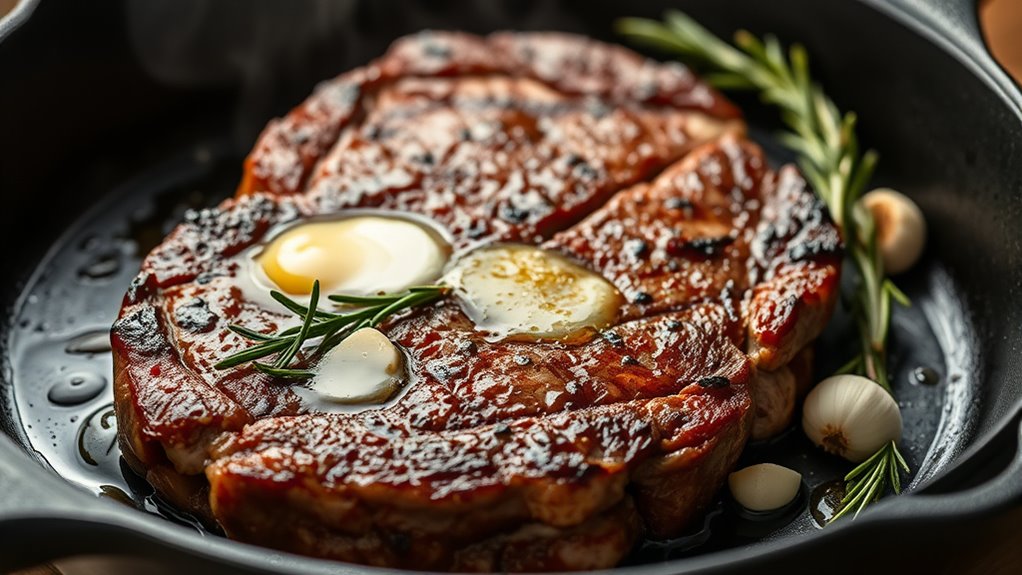
Which steak cut will give you the best results when pan frying? You want something that cooks evenly and stays tender. Ribeye is a top choice because of its marbling, which melts into the meat and keeps it juicy.
New York strip also works well, offering a balance between tenderness and flavor. If you prefer leaner cuts, filet mignon is perfect, but be careful not to overcook it since it’s very lean. Avoid super thick cuts, as they won’t cook evenly on the stove.
Aim for steaks about one to one and a half inches thick for ideal pan frying. Choosing the right cut sets you up for success, making your buttery pan-fried steak delicious every time.
How to Prepare Your Steak Before Cooking
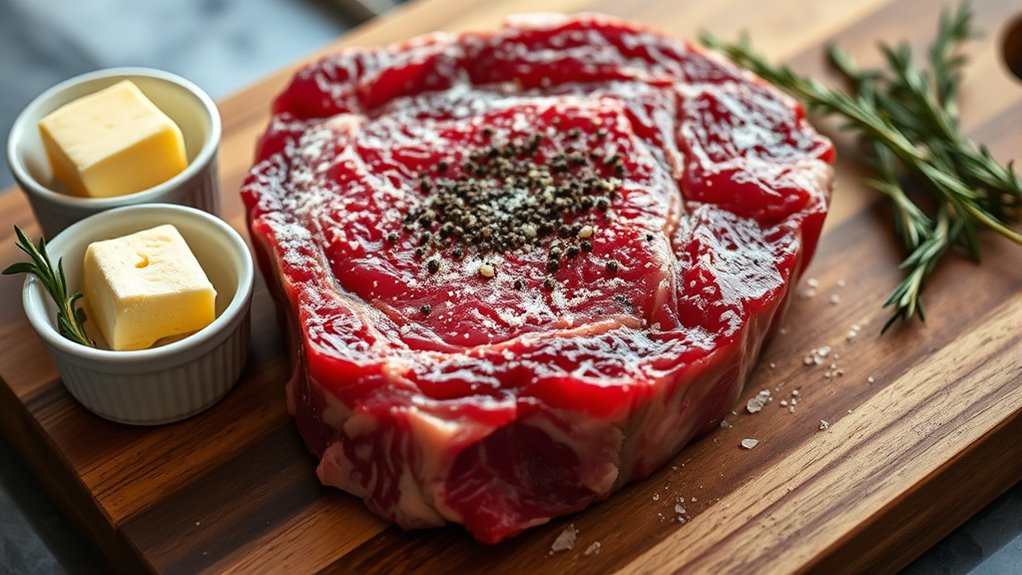
Before you start cooking, properly preparing your steak guarantees it cooks evenly and develops a rich flavor. First, bring your steak to room temperature by letting it sit out for about 30 minutes. This helps it cook more uniformly.
Next, pat the steak dry with paper towels to remove any excess moisture; this makes certain a better sear. Season it generously with salt and freshly ground black pepper on both sides. Don’t be shy—seasoning is key to enhancing the steak’s natural taste.
If you want, you can also lightly brush the steak with a bit of oil to help with browning. Once prepped, your steak is ready to hit the pan for that perfect buttery finish.
Prepare Your Pan and Pick the Best Butter for Steak
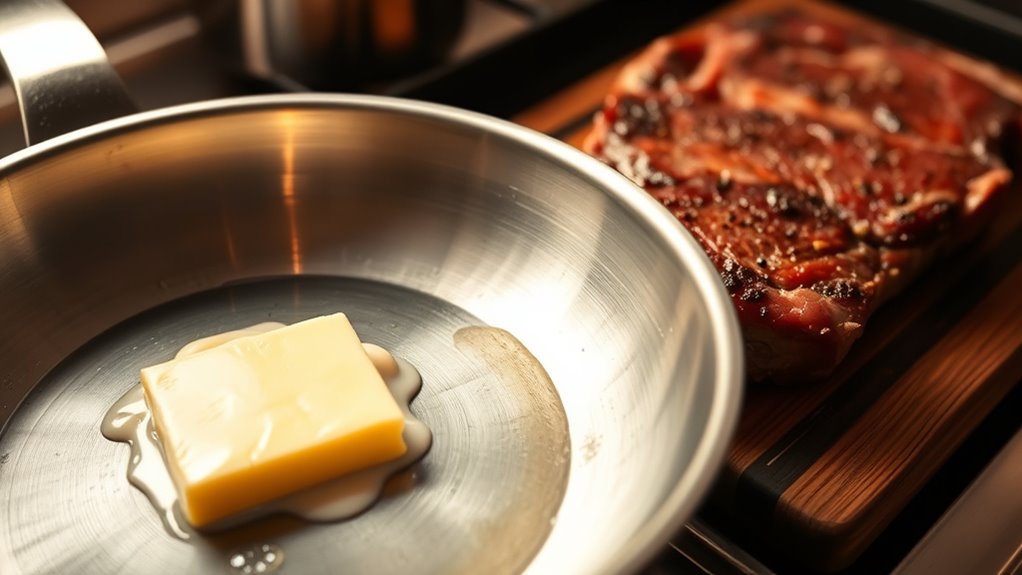
Once your steak is prepped, heating the right pan and choosing the best butter are essential steps to achieve that perfect sear and rich flavor. Start by picking a heavy-bottomed pan like cast iron or stainless steel for even heat distribution. Then, select butter that can withstand high heat without burning.
Here’s how to get ready:
- Use a clean, dry pan to avoid splattering and uneven cooking.
- Choose unsalted butter for better control over seasoning and flavor.
- Consider mixing butter with a small amount of oil to raise its smoke point.
- Keep your butter cold until you add it to the pan to prevent premature melting.
These steps set the stage for a beautifully cooked, buttery steak.
How to Heat the Pan for a Perfect Sear
Although heating the pan might seem simple, getting it just right is essential for a perfect sear. You want your pan hot enough to create a brown, flavorful crust without burning the steak. Start by placing your pan on medium-high heat and let it warm for about 3-5 minutes.
To test if it’s ready, sprinkle a few drops of water; they should dance and evaporate quickly.
Here’s a quick guide to heating your pan efficiently:
| Heat Level | Duration | Water Test Result |
|---|---|---|
| Low | 1-2 minutes | Water sits and bubbles |
| Medium | 2-3 minutes | Water sizzles slowly |
| Medium-High | 3-5 minutes | Water dances rapidly |
| High | 5+ minutes | Water evaporates fast |
| Too Hot | Immediate | Water vaporizes instantly |
Aim for medium-high heat to get the ideal sear without burning.
Step-by-Step Guide to Pan Frying Steak With Butter
First, you’ll want to season your steak well to bring out its flavor. Once your pan is hot, add butter and start basting the steak to keep it juicy and rich.
Follow these steps closely to get that perfect, buttery crust every time.
Preparing The Steak
How do you guarantee your steak is perfectly prepared before it hits the pan? Start by ensuring your steak is at room temperature; this helps it cook evenly. Next, pat the steak dry with paper towels to remove excess moisture, which promotes a better sear.
Then, season generously with salt and freshly ground black pepper on both sides to enhance flavor. Finally, lightly oil the steak or the pan to prevent sticking and encourage a crisp crust.
Here’s a quick checklist:
- Bring steak to room temperature.
- Pat dry thoroughly.
- Season both sides with salt and pepper.
- Apply a light coat of oil.
Following these steps sets you up for a perfectly cooked, flavorful steak.
Butter Basting Technique
Once your steak is sizzling in the pan, adding butter and aromatics takes the flavor to the next level. Reduce the heat to medium-low and toss in a couple of tablespoons of butter along with garlic cloves and fresh herbs like thyme or rosemary.
As the butter melts, tilt the pan slightly so the butter pools on one side. Use a spoon to continuously scoop the melted butter and pour it over the steak. This basting technique helps cook the steak evenly while infusing rich, buttery flavor.
Keep basting for about 2-3 minutes, turning the steak occasionally to coat all sides. Once done, remove the steak and let it rest before serving to lock in those delicious juices.
Basting Steak With Butter While Cooking
While the steak sizzles in the pan, you’ll want to start basting it with butter to enhance flavor and tenderness. This simple step locks in juices and creates a rich, golden crust. Here’s how to do it effectively:
- Add a generous knob of butter to the pan once the steak has seared.
- Tilt the pan slightly to pool the melted butter on one side.
- Use a spoon to scoop the butter and continuously pour it over the steak.
- Keep basting for about 1-2 minutes per side, ensuring the butter coats the meat evenly.
This technique infuses the steak with buttery richness while helping it cook evenly. Keep the butter moving to prevent burning and get the best taste and texture.
How to Check Steak Doneness Without a Thermometer
You don’t need a thermometer to know when your steak is done. Pay attention to visual cues like color and juice, and use the touch test to judge firmness.
These simple methods help you cook your steak perfectly every time.
Visual Doneness Cues
Although a meat thermometer is the most reliable tool for checking steak doneness, you can confidently gauge it using visual cues. These signs help you nail your steak’s perfect finish without any gadgets.
- Color of the juices: Clear juices indicate well-done, while pinkish juices suggest medium-rare.
- Surface texture: A well-seared crust with slight firmness means medium to medium-well doneness.
- Steak color: Look inside the cut edge—bright red is rare, pink is medium, and grayish-brown is well-done.
- Shrinkage: The steak will shrink more as it cooks longer; minimal shrinkage means rare or medium-rare.
Use these cues during cooking to judge doneness confidently and serve a perfectly cooked steak every time.
Touch Test Techniques
Since not everyone has a meat thermometer on hand, mastering touch test techniques lets you check steak doneness by feel alone. Start by comparing the steak’s firmness to parts of your hand. For rare, press the tip of your index finger to your thumb—then feel the fleshy area below your thumb; it should feel soft and give easily, just like a rare steak.
For medium-rare, touch your middle finger to your thumb and check the same area; it firms up slightly. For medium, touch your ring finger to your thumb, and for well-done, your pinky to your thumb, noticing the increasing firmness. With practice, this method helps you perfectly time your steak without a thermometer.
Rest Your Steak for Juicy, Tender Results
After cooking your steak to perfection, letting it rest allows the juices to redistribute throughout the meat, ensuring every bite is juicy and tender. Here’s how to do it right:
- Remove the steak from heat and place it on a warm plate or cutting board.
- Loosely cover it with foil to keep it warm without trapping steam, which can soften the crust.
- Wait 5 to 10 minutes, depending on thickness; thicker cuts need more time to rest.
- Slice against the grain to maximize tenderness and lock in those flavorful juices.
Skipping this step means the juices will spill out when you cut, leaving your steak dry. Resting is simple but essential for a perfect, juicy steak every time.
How to Avoid Common Pan Frying Steak Mistakes
When you pan fry a steak, small mistakes can quickly turn a great meal into a disappointing one. First, don’t overcrowd the pan; it lowers the temperature and prevents a good sear. Make sure your steak is dry before cooking—moisture steams the meat instead of browning it.
Avoid flipping your steak too often; let it develop a crust by flipping only once or twice. Don’t cook straight from the fridge; let your steak reach room temperature for even cooking. Use a heavy pan that retains heat well, and don’t rush the process with high heat that burns the butter and meat.
Add Flavor With Herbs and Seasonings in Butter
Although a perfectly seared steak is delicious on its own, adding herbs and seasonings to the butter you use while pan frying can elevate the flavor to a whole new level. Infusing your butter with the right ingredients creates a rich, aromatic base that complements the meat beautifully. Here’s how you can do it:
- Choose fresh herbs like rosemary, thyme, or sage for bright, earthy notes.
- Add smashed garlic cloves to impart a subtle, savory depth without overpowering.
- Season with salt and freshly ground black pepper to enhance the steak’s natural flavors.
- Consider a pinch of chili flakes or smoked paprika for a gentle hint of heat and smokiness.
Add these to the butter as it melts, then spoon the flavorful mixture over the steak as it cooks.
Frequently Asked Questions
Can I Use Olive Oil Instead of Butter for Pan Frying Steak?
Yes, you can use olive oil instead of butter for pan frying steak. It has a higher smoke point and adds a different flavor.
Just watch the heat to avoid burning and enjoy a delicious, juicy steak.
What Side Dishes Pair Best With Pan-Fried Steak?
You’ll love pairing pan-fried steak with garlic mashed potatoes, roasted asparagus, or a fresh Caesar salad. These sides balance richness and add texture, making your meal both satisfying and delicious every time you cook.
How Long Can Cooked Steak Be Safely Stored in the Refrigerator?
You can safely store cooked steak in the refrigerator for 3 to 4 days.
Make sure to keep it in an airtight container or wrapped tightly to maintain freshness and prevent contamination.
Is It Better to Pan Fry Steak on Gas or Electric Stovetops?
Gas stovetops heat quickly and offer precise control, while electric ones warm evenly but slower.
You’ll get better searing and responsiveness on gas, making it the preferred choice when you want that perfect steak crust.
Can I Pan Fry a Frozen Steak Without Thawing First?
You can pan fry a frozen steak without thawing, but it’ll cook unevenly and take longer.
For best results, thaw first to guarantee even cooking and better texture, then sear with confidence and flavor.
Conclusion
Now that you know how to pan fry a steak with butter, are you ready to elevate your cooking game? With the right cut, proper prep, and careful searing, you can create a juicy, flavorful steak every time.
Don’t forget to rest your steak and add those herbs for extra flavor. Avoid common mistakes, and you’ll impress yourself and anyone at your table.
So, why settle for less when perfect steak is just a pan away? Mastering how to pan fry a steak with butter ensures a delicious, tender result that will make every meal memorable.