How to Store a Cast Iron Skillet
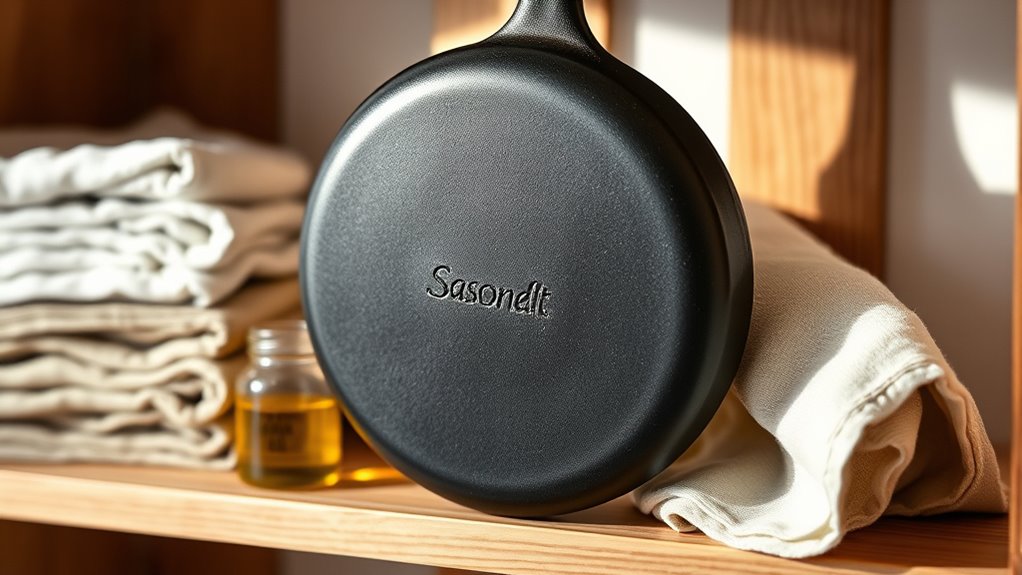
To store your cast iron skillet properly, it is essential to keep it completely dry and lightly coated with oil. This helps protect its seasoning and prevents rust, ensuring your skillet remains in excellent condition. Proper storage techniques are key to maintaining the durability and performance of your cast iron cookware.
Use breathable covers like cloth or paper towels to allow air circulation, and avoid airtight wrapping that can trap moisture. Store your skillet in a cool, dry place with good airflow to further prevent rusting.
If you need to stack skillets, place a cloth between them to prevent scratches or damage.
Regularly check your cast iron skillet for any signs of rust or wear to keep it in top shape. By following these simple care steps, you can extend the life of your skillet and enjoy its benefits for years.
Discover how to care for and revive your skillet to maximize its longevity.
Key Takeaways
- Store cast iron skillets in a cool, dry place away from moisture and humidity to prevent rust.
- Ensure skillets are completely dry and lightly oiled before storage to maintain seasoning and prevent rust.
- Use breathable covers like cotton cloth or paper towels, avoiding plastic wraps that trap moisture.
- Avoid stacking skillets directly; place paper towels or cloth between pans if stacking is necessary.
- Store skillets in well-ventilated areas, optionally using moisture absorbers like silica gel to maintain dryness.
How to Store Your Cast Iron Skillet Properly
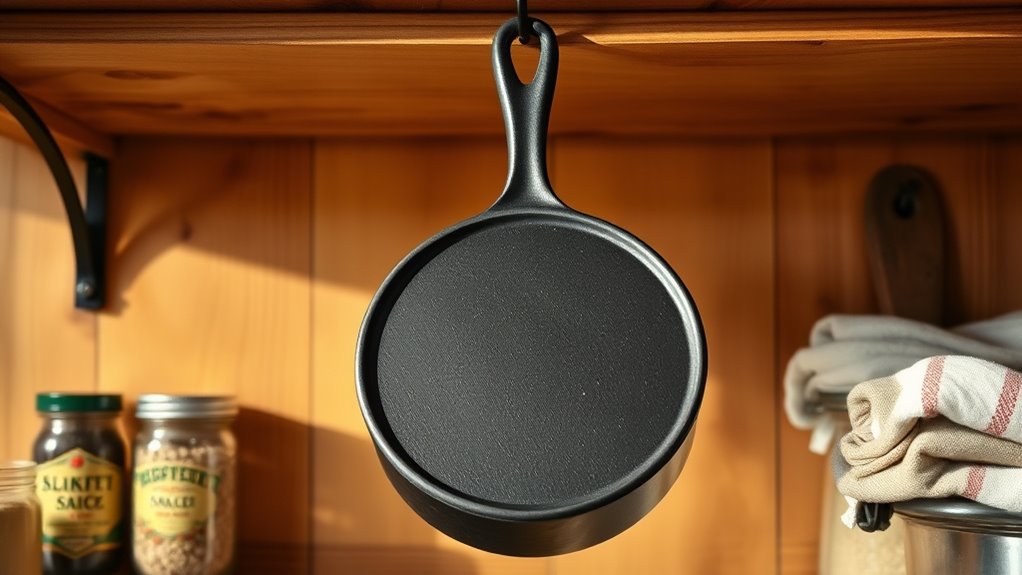
Although cast iron skillets are known for their durability, how you store yours can greatly affect its longevity. First, always make sure your skillet is completely dry before storing it to prevent rust. You can lightly coat it with a thin layer of oil to maintain its seasoning.
Avoid stacking it directly with other cookware, as this can cause scratches or chips. If you need to stack, place a paper towel or cloth between pans to protect the surface. Store your skillet in a cool, dry place away from moisture and humidity.
Hanging your skillet by its handle is a great way to keep it accessible and avoid damage. Proper storage preserves your skillet’s seasoning and keeps it ready for your next cooking adventure.
How to Clean Your Cast Iron Skillet Before Storage
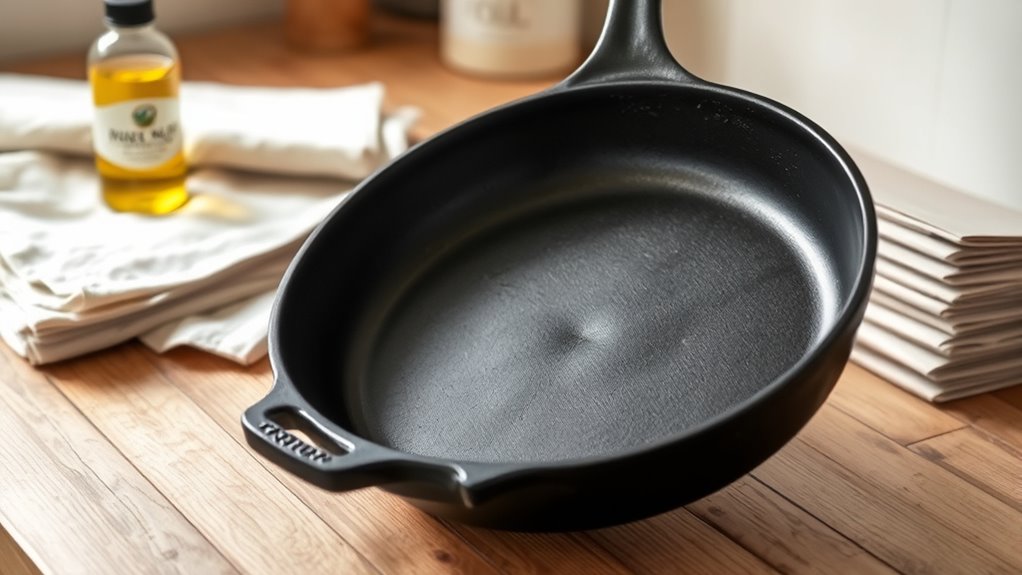
Before storing your cast iron skillet, make sure you remove all food residue to prevent buildup. You’ll want to dry it thoroughly to avoid rust, then apply a light coat of oil to keep the surface seasoned.
These steps will keep your skillet in great shape for the next use.
Remove Food Residue
Since food residue can cause rust and affect the skillet’s seasoning, you’ll want to remove it thoroughly before storing your cast iron. Start by scrubbing the skillet with a stiff brush or non-metallic scrubber under warm water to dislodge stuck-on bits. Avoid harsh soaps, as they can strip the seasoning.
For stubborn residue, sprinkle coarse kosher salt into the skillet and scrub with a damp cloth or paper towel; the salt acts as a gentle abrasive. Rinse well to wash away loosened particles. If any food remains, repeat the process until the skillet is clean.
Removing all residue prevents bacteria growth and keeps your skillet in prime condition, ensuring it’s ready for your next cooking session. Proper cleaning protects both the surface and seasoning.
Dry Thoroughly
After thoroughly cleaning your cast iron skillet, you’ll want to dry it completely to prevent rust from forming. Moisture trapped on the surface can cause corrosion, ruining your skillet’s seasoning and performance.
Here’s how to dry it effectively:
- Use a clean towel: Wipe the skillet inside and out with a dry cloth immediately after washing.
- Heat on the stove: Place the skillet over low heat for a few minutes to evaporate any remaining moisture.
- Air dry in a warm place: If you prefer, leave it upside down in a warm, dry spot to let air circulate.
- Avoid cooling too fast: Don’t rinse with cold water or store it while still warm and wet.
Following these steps guarantees your cast iron stays rust-free and ready for your next meal.
Apply Light Oil
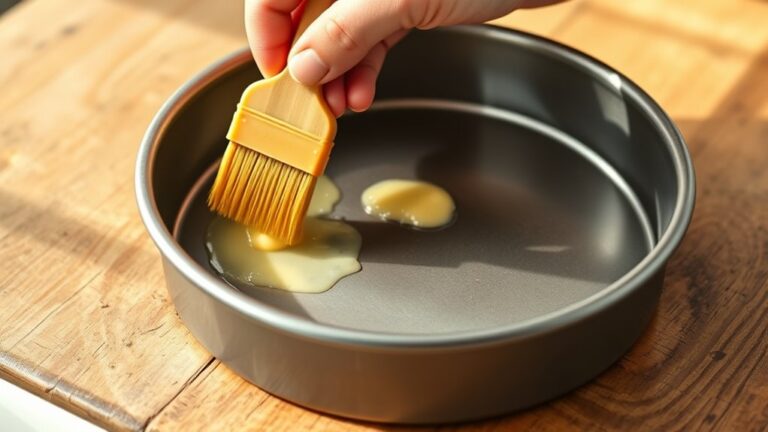
Once your skillet is completely dry, the next step is to apply a light layer of oil to protect its surface. Use a small amount of a neutral oil like vegetable, canola, or flaxseed oil. Pour a teaspoon of oil onto the skillet and spread it evenly with a clean cloth or paper towel.
Make sure to coat the entire cooking surface and exterior, but avoid excess oil that can create a sticky residue. This thin layer helps maintain the seasoning and prevents rust during storage. After applying, let the skillet sit for a few minutes to absorb the oil.
If needed, wipe off any remaining excess. This simple step keeps your cast iron skillet in great shape and ready for your next cooking adventure.
How to Dry Your Cast Iron Skillet to Prevent Rust
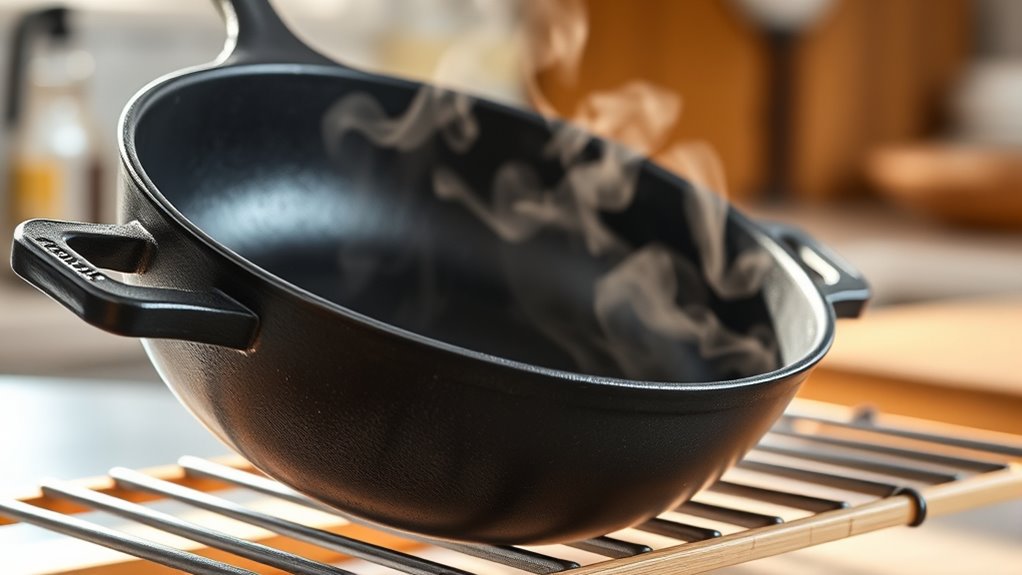
Although cast iron is incredibly durable, it can rust quickly if left wet. Proper drying is vital to keep your skillet in top shape. Here’s how you can dry your cast iron skillet effectively:
- Wipe it thoroughly with a clean, dry cloth or paper towel to remove excess water.
- Place the skillet on a stovetop burner set to low heat for 2-3 minutes to evaporate any remaining moisture.
- Let it cool slightly, then inspect for damp spots and wipe again if needed.
- Store the skillet in a dry place with good air circulation to prevent moisture buildup.
Following these steps ensures your cast iron stays rust-free and ready for your next cooking adventure.
How to Maintain Seasoning When Storing Your Skillet
Since seasoning forms the protective layer that keeps your cast iron skillet non-stick and rust-free, you’ll want to preserve it carefully when storing your pan. After cleaning and thoroughly drying your skillet, apply a thin, even coat of cooking oil—like vegetable or flaxseed oil—to the surface. This layer helps maintain the seasoning and prevents moisture from causing rust during storage.
Avoid stacking other cookware directly on top of your skillet, as this can scrape away the seasoning. If you must stack, place a paper towel or cloth between pans to protect the surface. Re-season your skillet periodically, especially if you notice dull spots or food sticking.
Taking these steps guarantees your cast iron stays well-seasoned and ready for your next cooking adventure.
Where to Store Your Cast Iron Skillet for Best Results
You’ll want to store your cast iron skillet in a dry place to prevent rust and preserve its seasoning. Keep it somewhere easy to reach so you can grab it quickly when cooking.
Avoid spots with high humidity, like near the sink or stove, to keep your skillet in top shape.
Dry Environment Importance
Where should you store your cast iron skillet to keep it in top shape? The key is a dry environment. Moisture can cause rust, which damages the seasoning and shortens your skillet’s life.
To protect your skillet, consider these tips:
- Store it in a cabinet with good air circulation to prevent humidity buildup.
- Avoid placing it near sinks or dishwashers where steam and water are common.
- Use a moisture-absorbing packet or a small container of rice inside the storage space to capture excess moisture.
- Wipe the skillet dry thoroughly after each use before storing to remove any residual water.
Keeping your cast iron dry ensures it stays rust-free and ready for your next cooking adventure.
Easy Access Placement
Keeping your cast iron skillet dry is just one part of proper storage; making it easily accessible can save you time and encourage frequent use. Store your skillet near your cooking area, such as on a sturdy hook or open shelf close to the stove. This way, you won’t have to search through cabinets or cupboards when you need it.
Hanging it by the handle or placing it on a countertop rack keeps it visible and ready to grab. Avoid stacking it under heavy pots, which can make it harder to reach and risk damage. By keeping your skillet within arm’s reach, you’ll be more likely to use it regularly, maintaining its seasoning and ensuring it stays in great shape for years to come.
Avoid Humidity Exposure
Although cast iron skillets are durable, exposure to humidity can cause rust and damage their seasoning. To keep your skillet in top condition, store it in a dry environment that minimizes moisture exposure.
Here are four tips to help you avoid humidity damage:
- Choose a well-ventilated area – Avoid cramped spaces where moisture can accumulate.
- Use moisture absorbers – Silica gel packets or rice sachets can help keep the air dry.
- Avoid storing near sinks or dishwashers – These areas tend to have higher humidity levels.
- Keep the skillet lightly oiled – A thin layer of oil creates a protective barrier against moisture.
Should You Cover Your Cast Iron Skillet During Storage?
Even if you want to protect your cast iron skillet from dust and moisture, covering it during storage isn’t always the best choice. Covering it tightly can trap moisture, leading to rust.
Instead, a breathable storage method works best, allowing air circulation to keep the skillet dry. Here’s a quick comparison to help you decide:
| Storage Method | Pros | Cons |
|---|---|---|
| Covered Tightly | Keeps dust out | Traps moisture, causes rust |
| Open Shelf | Allows air circulation | Collects dust |
| Light Cloth Cover | Blocks dust, allows airflow | Needs regular changing |
| Plastic Wrap | Moisture barrier | Prevents air circulation |
| Paper Towel Wrap | Absorbs moisture | Needs frequent replacement |
Choose a method that balances protection and breathability to keep your skillet in top shape.
How to Keep Moisture Away Using Paper Towels or Cloth
If you want to prevent moisture from accumulating on your cast iron skillet, wrapping it in paper towels or a breathable cloth can be an effective solution. This method helps absorb any lingering dampness and allows air circulation, reducing the risk of rust.
Here’s how to do it right:
- Make sure your skillet is completely dry before wrapping.
- Use a few layers of paper towels or a cotton cloth to cover the skillet.
- Avoid plastic wraps or airtight containers that trap moisture.
- Store the wrapped skillet in a cool, dry place away from humidity.
How to Store Multiple Cast Iron Skillets Without Damage
When you have multiple cast iron skillets, storing them carefully prevents scratches and rust. First, avoid stacking them directly on top of each other. Instead, place a layer of paper towels, cloth, or pan protectors between each skillet to cushion and prevent metal-on-metal contact.
Make sure each skillet is completely dry and lightly oiled before storing to keep moisture at bay. Store them in a cool, dry place with good air circulation to inhibit rust formation. If space allows, consider hanging the skillets individually or using a sturdy rack designed for cast iron.
Taking these precautions helps maintain their seasoning and extends their lifespan, letting you enjoy your cast iron collection without damage or frustration.
How Often Should You Inspect Your Cast Iron Skillet in Storage?
You should check your cast iron skillet every few months while it’s in storage to catch any early signs of rust. Look closely for discoloration or rough spots that could indicate moisture buildup.
Regular inspections help you keep your skillet in great shape and ready for cooking.
Frequency of Inspection
How often should you check your cast iron skillet while it’s in storage? Regular inspections help maintain its condition and prevent issues before they start.
Aim to inspect your skillet based on your storage environment and how often you use it.
Consider these guidelines for inspection frequency:
- Monthly if stored in a humid area to catch early moisture problems.
- Every 3 months in a dry, temperature-controlled space.
- Before seasonal use if you only cook with it occasionally.
- After any unusual event like exposure to water or extreme temperature changes.
Signs of Rust
Regular inspections help you catch early signs of rust before it damages your cast iron skillet. Look closely for small, reddish-brown spots or patches on the surface—these indicate rust starting to form. You might also notice a rough texture or flaking, which means rust is progressing.
Pay attention to any dullness or discoloration, especially in areas where moisture may have settled. If you spot these signs, act quickly to clean and reseason your skillet to prevent further corrosion. Checking your skillet every few weeks, especially in humid environments, guarantees you catch rust early.
Don’t wait until rust spreads; early detection keeps your skillet in great shape and ready for cooking. Regular care protects your investment and extends your skillet’s life.
How to Revive and Care for Neglected Cast Iron Skillets
Although neglected cast iron skillets may seem beyond saving, you can restore their seasoning and functionality with some dedicated care. Start by removing rust and old seasoning layers.
Neglected cast iron skillets can be restored with care by removing rust and old seasoning layers first.
Here’s how to revive and care for your skillet:
- Scrub the skillet with steel wool and warm, soapy water to remove rust and residue.
- Rinse thoroughly and dry immediately to prevent new rust.
- Apply a thin layer of vegetable oil or flaxseed oil all over the skillet, inside and out.
- Bake the skillet upside down in a 375°F oven for an hour, placing foil below to catch drips. Let it cool in the oven.
Repeat this process if needed. Regular seasoning and proper drying keep your skillet cooking-ready and rust-free.
Frequently Asked Questions
Can Cast Iron Skillets Be Safely Stored Outdoors?
You shouldn’t store cast iron skillets outdoors because moisture causes rust. If you must, keep them in a dry, covered spot and season them regularly to protect the surface.
Otherwise, store them indoors to maintain quality.
Is It Necessary to Re-Season After Every Use?
You don’t need to re-season after every use, but wiping it with a thin layer of oil while it’s still warm helps maintain the seasoning.
Deep seasoning is only necessary if food starts sticking or rust appears.
What Types of Oils Are Best for Seasoning?
Think of flaxseed oil like a painter’s finest brush, perfect for seasoning. You’ll also want to use grapeseed, canola, or vegetable oil—they polymerize well, creating that durable, non-stick surface you’re after every time.
Can You Store Cast Iron With Other Cookware Types?
Yes, you can store cast iron with other cookware, but make sure to place a cloth or paper towel between them to prevent scratches and moisture buildup.
That way, you’ll keep your skillet in great shape.
How Does Humidity Affect Cast Iron Storage?
Humidity causes cast iron to rust quickly, so you’ll want to store your skillet in a dry place. Using a paper towel or cloth inside can absorb moisture, and seasoning it well also helps protect against rust.
Conclusion
To store your cast iron skillet well, clean it thoroughly, dry it completely, and maintain its seasoning. Keep moisture away using paper towels or cloth, store it in a dry, ventilated spot, and separate multiple skillets to prevent damage.
Check your skillet regularly and revive it if neglected.
By caring for your cast iron consistently, protecting it diligently, and inspecting it often, you’ll guarantee it stays durable, reliable, and ready for every meal. Proper storage and maintenance are key to preserving your cast iron skillet’s longevity and performance.