Is a Charcoal Grill Cooking Hamburgers Conduction Convection or Radiation
When you cook hamburgers on a charcoal grill, the heat transfer involves conduction, convection, and radiation simultaneously. This combination creates the perfect conditions for grilling. Understanding how each type of heat transfer works helps explain why charcoal grilling produces such delicious burgers.
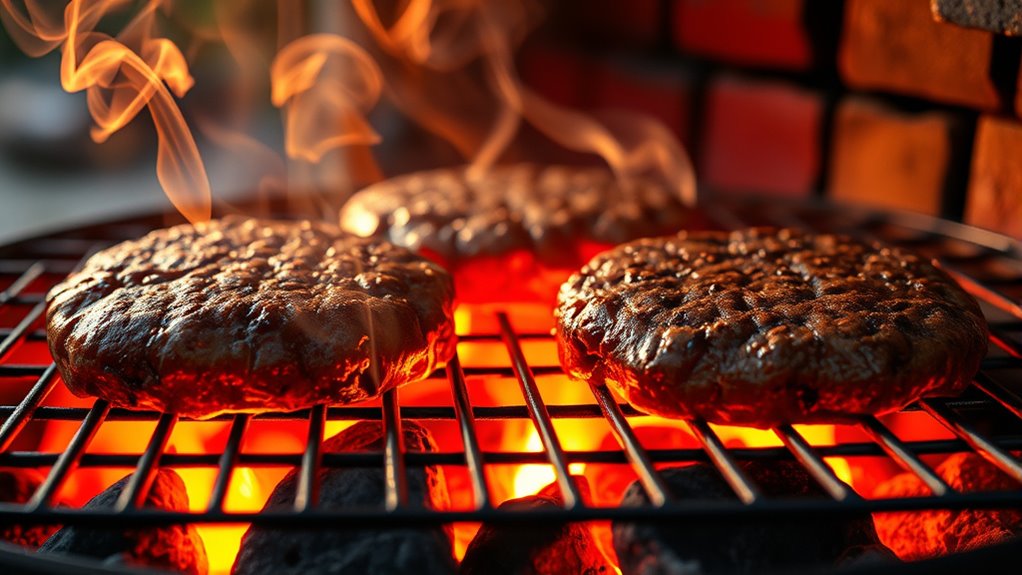
Heat moves through direct contact from the hot grates to your burger’s surface—this is conduction. At the same time, hot air circulates around the meat, cooking it evenly through convection.
Additionally, infrared rays from the glowing coals radiate heat, searing and browning the meat’s exterior.
Each method plays a key role in developing flavor and juiciness. By mastering these heat transfers, you can perfect your grilling technique and enjoy the ultimate burger experience.
Key Takeaways
- Charcoal grilling cooks burgers through conduction by direct contact with hot grill grates, searing the meat and forming grill marks.
- Convection circulates hot air around the burger, ensuring even cooking on sides not touching the grill.
- Radiation from glowing coals emits infrared heat that directly warms the burger’s surface, speeding cooking and crust formation.
- Effective charcoal grilling combines conduction, convection, and radiation for thorough cooking and optimal flavor development.
- Managing grill setup and airflow enhances all three heat transfer methods, improving burger cooking consistency and quality.
Which Heat Transfer Method Cooks Your Burger Most?
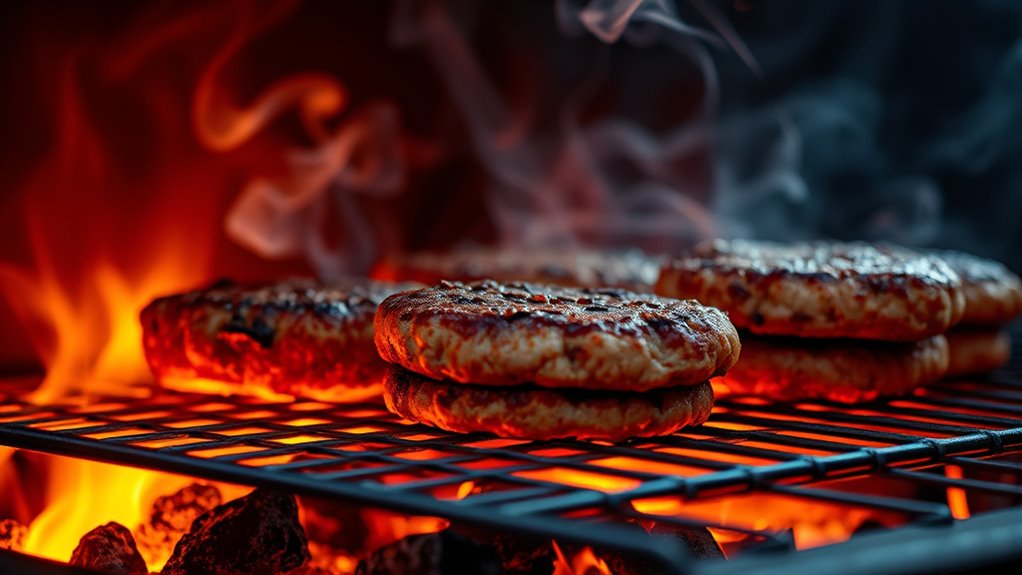
When you grill a hamburger over charcoal, three main heat transfer methods work together: conduction, convection, and radiation. You’ll find that conduction plays a key role since the patty sits directly on the hot grill grates, transferring heat through direct contact. However, convection also helps cook your burger by circulating hot air around it, ensuring even cooking inside.
Radiation from the glowing coals sends infrared heat to the patty’s surface, adding another layer of cooking power. Among these, conduction usually cooks the burger most because it directly heats the meat’s exterior, creating that flavorful crust. Still, the combined effect of convection and radiation ensures your burger cooks evenly, locking in juices and flavor.
Understanding these methods helps you control heat for the perfect burger.
What Is Conduction in Charcoal Grilling?
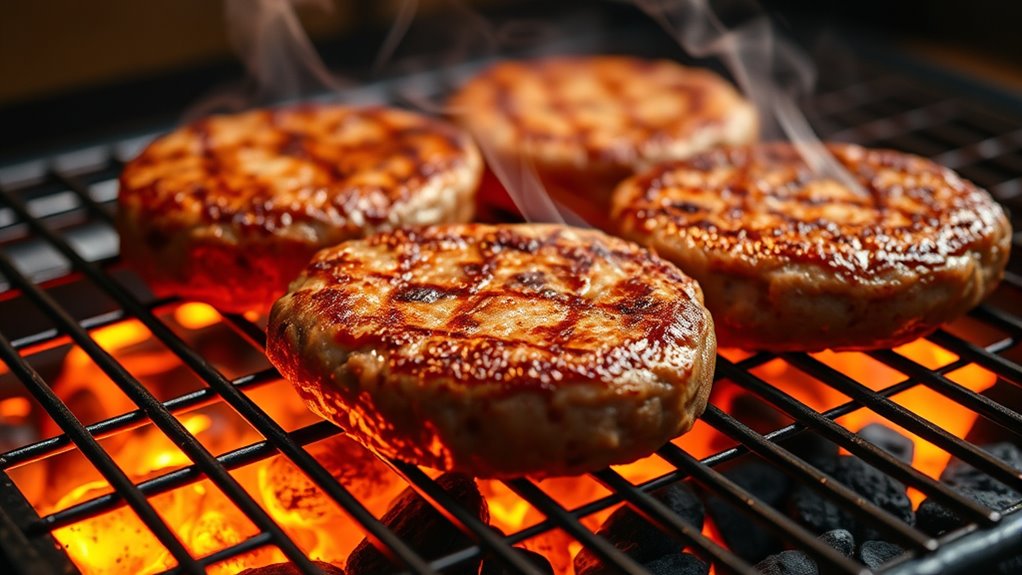
Among the heat transfer methods that cook your burger, conduction stands out because it heats the meat through direct contact with the hot grill grates. When you place your patty on the grill, the intense heat from the metal transfers straight into the meat’s surface. This direct touch causes the proteins to sear, locking in juices and creating those signature grill marks you love.
The grill grates heat up from the burning charcoal below, and because metal is a good conductor, it efficiently passes that heat to your burger. The closer and firmer your burger presses against the grill, the better conduction works. So, when you’re flipping your burger, remember conduction is doing much of the heavy lifting right where the meat meets the grill.
How Convection Moves Heat Around Burgers on a Charcoal Grill
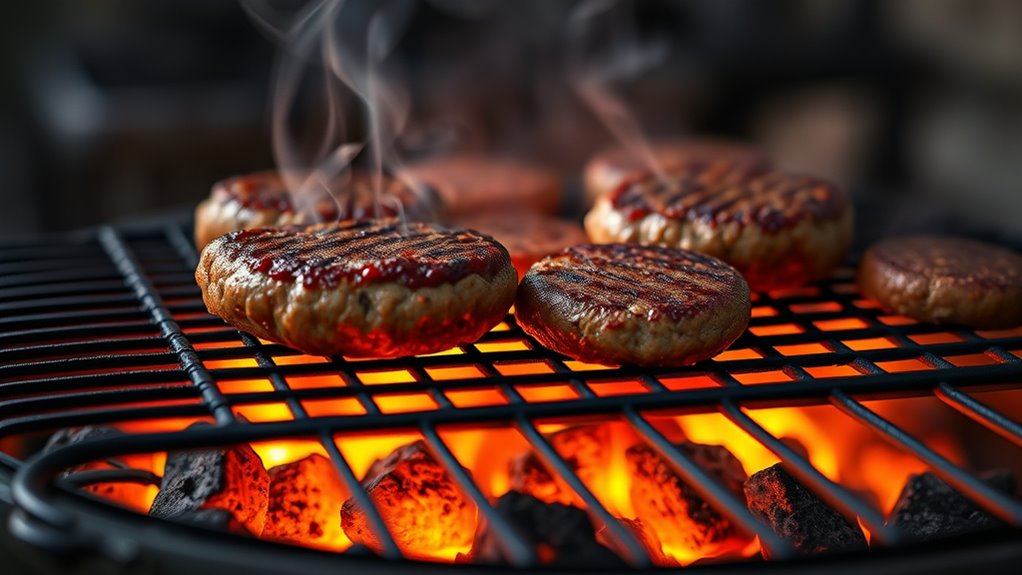
How does heat circulate around your burger on a charcoal grill? Convection is the process that moves hot air around the grill, surrounding your burger with heated gases. As the charcoal burns, it heats the air near it, causing this warm air to rise.
Cooler air then rushes in to replace it, creating a continuous circulation of heat. This movement helps cook your burger evenly, especially on the sides, by transferring heat through the air rather than direct contact. You’ll notice that even parts of the burger not touching the grill grate still get cooked, thanks to convection.
Understanding this helps you manage grill temperature and placement, ensuring your burger cooks thoroughly without burning on just one side.
How Radiation Cooks Food on a Charcoal Grill
When you grill burgers over charcoal, infrared heat from the glowing coals radiates directly onto the meat, cooking it quickly. If your burger touches the flames, that direct exposure adds intense heat that boosts flavor and texture.
This radiation is what helps create the delicious surface browning you want on every burger.
Infrared Heat Transfer
Ever wondered what makes your burger sizzle so perfectly on a charcoal grill? It’s infrared heat transfer at work. When charcoal burns, it emits infrared radiation—electromagnetic waves that travel through the air and directly heat your burger’s surface.
Unlike conduction, which requires direct contact, infrared radiation heats without touching the food. This form of radiation penetrates the burger’s outer layers, cooking it evenly while creating that tasty crust. Infrared heat is efficient because it delivers energy straight to the food, allowing you to cook faster and lock in juices.
Direct Flame Exposure
Although charcoal grills primarily cook through infrared radiation, direct flame exposure plays a crucial role in developing the flavor and texture of your burger. When the flames lick your burger, they emit intense radiant energy that rapidly heats the surface. This quick, high-temperature radiation sears the meat, locking in juices while creating a distinct smoky aroma you can’t get any other way.
You’ll notice flare-ups when fat drips onto the coals, causing brief bursts of flame that further intensify this radiant heat. While the flames don’t cook the burger entirely, they add complexity by delivering powerful radiation that complements the slower, even infrared heat from the glowing charcoal. This interaction helps you achieve that classic grilled taste and texture you crave.
Surface Browning Effects
As radiant heat from the charcoal hits your burger’s surface, it triggers a series of chemical reactions that create the rich browning you crave. This process, known as the Maillard reaction, enhances flavor and texture by forming a savory crust. Radiation cooks the exterior directly, without heating the air around it, making it essential for that perfect sear.
Understanding how radiation affects your burger helps you control cooking times and temperatures, ensuring mouthwatering results every time.
| Effect | Description |
|---|---|
| Maillard Reaction | Protein and sugar molecules react |
| Surface Browning | Creates flavor and appealing crust |
| Radiation Heat Source | Direct infrared energy from coals |
| Cooking Control | Adjust distance for desired browning |
How Charcoal Grill Design Affects Heat Transfer
You’ll notice that the grill’s structure and materials play a big role in how heat moves through it. Proper airflow is key, too, since it controls how evenly the heat spreads.
Understanding these factors helps you manage your cooking temperature better.
Grill Structure And Materials
When you choose a charcoal grill, its structure and materials play an essential role in how evenly and efficiently heat transfers to your burgers. The grill’s body, grate, and cooking chamber all influence conduction, convection, and radiation. Consider these key factors:
- Material Thickness – Thicker steel or cast iron retains heat better, promoting steady conduction.
- Grate Composition – Cast iron grates hold and conduct heat well, while stainless steel heats quickly but loses it faster.
- Cooking Chamber Shape – Rounded designs reflect radiant heat more evenly onto your food.
- Insulation – Well-insulated grills reduce heat loss, ensuring consistent cooking temperatures.
Airflow And Heat Distribution
How does your charcoal grill’s design control airflow and heat distribution? The vents, lid shape, and charcoal placement work together to regulate oxygen flow, which directly affects the fire’s intensity and heat spread. Open vents increase oxygen, making the coals hotter, while closing them cools things down.
The lid traps heat and directs hot air, promoting even cooking through convection. Proper charcoal arrangement also guarantees consistent heat zones.
| Design Element | Effect on Heat Transfer |
|---|---|
| Bottom Vents | Controls oxygen, alters heat |
| Top Vents | Releases smoke, regulates heat |
| Lid Shape | Traps heat, promotes convection |
| Charcoal Setup | Creates direct and indirect zones |
Understanding these factors helps you master heat control for perfect burgers.
How Different Cooking Zones Impact Heat Transfer on a Charcoal Grill
Because charcoal grills create varying temperatures across the cooking surface, understanding the different cooking zones helps you control heat transfer effectively. You’ll notice these zones impact how your hamburgers cook through conduction, convection, and radiation.
Here’s how to use them smartly:
- Direct Heat Zone – Place coals directly under the grate for intense radiation and conduction; perfect for searing burgers.
- Indirect Heat Zone – Position food away from coals to slow cooking, relying on convection and radiation for even heat.
- Medium Heat Zone – Use an area with fewer coals for gradual conduction and gentle radiation, ideal for finishing burgers.
- Cool Zone – The edge of the grill offers minimal heat, useful to keep cooked burgers warm without overcooking.
Mastering these zones lets you balance heat transfer and cook burgers just right.
Common Mistakes That Reduce Heat Transfer When Grilling Burgers
When you place your burgers too far from the heat, they won’t cook evenly or quickly. Using cold patties straight from the fridge also slows down the cooking process and reduces heat transfer.
Avoiding these mistakes helps you get that perfect sear every time.
Improper Grill Placement
Although you might be enthusiastic to start grilling, placing your charcoal grill in the wrong spot can seriously cut down on heat transfer and cook time. Where you set your grill affects how well heat reaches your burgers. To avoid this common mistake, keep these points in mind:
- Don’t place the grill in a windy area—wind cools the coals and disperses heat.
- Avoid putting it too close to walls or fences, which block airflow and trap smoke.
- Steer clear of placing the grill on uneven ground; it can cause heat to distribute unevenly.
- Keep it away from direct sunlight, which can affect temperature control and your cooking rhythm.
Proper placement guarantees steady, efficient heat transfer for perfectly cooked burgers every time.
Using Cold Patties
How cold should your burger patties be before hitting the grill? Ideally, you want them close to room temperature. Using cold patties straight from the fridge slows heat transfer, causing uneven cooking.
When the cold meat hits the hot grill, the surface temperature drops considerably. This forces the grill to work harder to bring the patty up to cooking temperature, often resulting in overcooked outsides and undercooked centers.
To avoid this, let your patties rest at room temperature for about 15-20 minutes before grilling. This small step guarantees more efficient conduction and radiation heat transfer, promoting even cooking throughout. Don’t rush – using cold patties is a common mistake that compromises your burger’s juiciness and texture.
How to Adjust Your Charcoal Grill Setup for Better Heat
To get the best heat from your charcoal grill, you’ll need to arrange the coals strategically. Proper coal placement ensures even cooking and ideal temperature control. Here’s how to adjust your setup for better heat:
- Create a Two-Zone Fire: Pile coals on one side for direct high heat and leave the other side empty for indirect cooking.
- Adjust Air Vents: Open vents fully to increase oxygen flow and boost heat; close slightly to lower it.
- Spread Coals Evenly: For uniform heat, spread coals in a single layer beneath the cooking grate.
- Add Fresh Charcoal: Toss in new coals midway to maintain consistent heat during longer grilling sessions.
Using Conduction, Convection, and Radiation to Make Juicy Burgers
When you grill burgers over charcoal, understanding how conduction, convection, and radiation work together helps you cook them juicy and flavorful. Conduction happens when the hot grill grates directly touch your burger, searing the outside and locking in juices. Meanwhile, convection circulates hot air around the meat, cooking it evenly and preventing cold spots.
Radiation from the glowing charcoal emits infrared heat that penetrates the burger, cooking it gently from the inside out. By balancing these heat transfers, you guarantee your burger develops a perfect crust without drying out. This trio of heat sources works in harmony, so knowing their roles lets you control cooking times and temperatures.
As a result, your burgers stay tender, juicy, and packed with flavor every time you fire up your charcoal grill.
Tips for Monitoring and Managing Heat Transfer While Grilling
Mastering the balance of conduction, convection, and radiation sets the stage, but maintaining a close eye on your grill’s heat guarantees your burgers cook just right. To manage heat transfer effectively:
- Use a grill thermometer to monitor surface temperature, ensuring consistent conduction.
- Adjust vents to control airflow, which regulates convection currents inside the grill.
- Arrange coals for zones of direct and indirect heat, letting you switch between radiation intensities.
- Flip burgers at the right times to prevent flare-ups and uneven cooking from sudden heat spikes.
Summary: Mastering Heat Transfer for Perfect Charcoal-Grilled Burgers
Although grilling the perfect burger can seem challenging, understanding how heat moves through your charcoal grill makes it much easier. You’ll rely on conduction as the patty contacts the grill, convection from the hot air circulating around it, and radiation from the glowing coals below. Mastering these heat transfer methods helps you control cooking temperatures and timing precisely.
Frequently Asked Questions
What Type of Charcoal Is Best for Grilling Hamburgers?
You’ll want lump charcoal for grilling hamburgers because it lights quickly, burns hotter, and produces less ash.
It gives your burgers a great smoky flavor, making your grilling experience more enjoyable and efficient overall.
How Long Should I Preheat My Charcoal Grill?
You’ve got to let your grill wake up like a slow sunrise—preheat your charcoal grill for about 15 to 20 minutes until the coals glow red with a light gray ash.
Then, you’re ready to cook.
Can I Use Wood Chips With a Charcoal Grill?
Yes, you can use wood chips with a charcoal grill to add extra flavor. Soak the chips in water first, then sprinkle them over the hot coals for smoky, delicious results while you cook your food.
What Tools Are Essential for Charcoal Grilling?
You’ll need a sturdy grill brush, long-handled tongs, and a spatula. A chimney starter, heat-resistant gloves, and a meat thermometer are also essential.
These tools help you manage the fire, flip burgers safely, and guarantee perfect grilling every time.
How Do I Safely Extinguish Charcoal After Grilling?
You safely extinguish charcoal by closing the grill vents to cut oxygen supply, then letting the coals cool completely.
You can also carefully pour water over them, stirring to guarantee all embers are out before disposal.
Conclusion
When grilling burgers on your charcoal grill, you’re using conduction, convection, and radiation all at once. For example, imagine flipping a burger: conduction cooks it where it touches the grate, convection circulates hot air around it, and radiation beams heat from the glowing coals.
By adjusting your grill’s setup to balance these methods, you’ll lock in juicy, flavorful burgers every time. Mastering conduction, convection, and radiation makes your backyard cookouts truly unforgettable. Understanding these heat transfer methods is key to perfect charcoal grill cooking hamburgers.