How to Season a Cast Iron Skillet
To season your cast iron skillet properly, start by cleaning and drying it thoroughly to remove any rust or debris.
Seasoning a cast iron skillet is essential for creating a natural, non-stick surface that improves cooking performance and extends the life of the pan. This process involves applying a thin layer of high-smoke-point oil and baking it to form a durable protective coating.
Next, apply a thin, even layer of oil all over the skillet. Place it upside down in a preheated oven at 450°F (230°C), with foil underneath to catch any drips.
Bake the skillet for one hour, then allow it to cool inside the oven.
This seasoning method creates a long-lasting, non-stick surface that protects your skillet from rust and enhances its cooking abilities.
Keep going to discover tips on maintenance and fixing common issues.
Key Takeaways
- Clean and thoroughly dry the skillet to remove rust, dirt, and moisture before seasoning.
- Apply a thin, even layer of high-smoke-point oil over all skillet surfaces.
- Bake the skillet upside down at 450°F (230°C) for one hour to polymerize the oil.
- Let the skillet cool inside the oven to create a durable, non-stick coating.
- Repeat seasoning if the surface appears dull, sticky, or food begins to stick.
Why Seasoning Your Cast Iron Skillet Is Essential
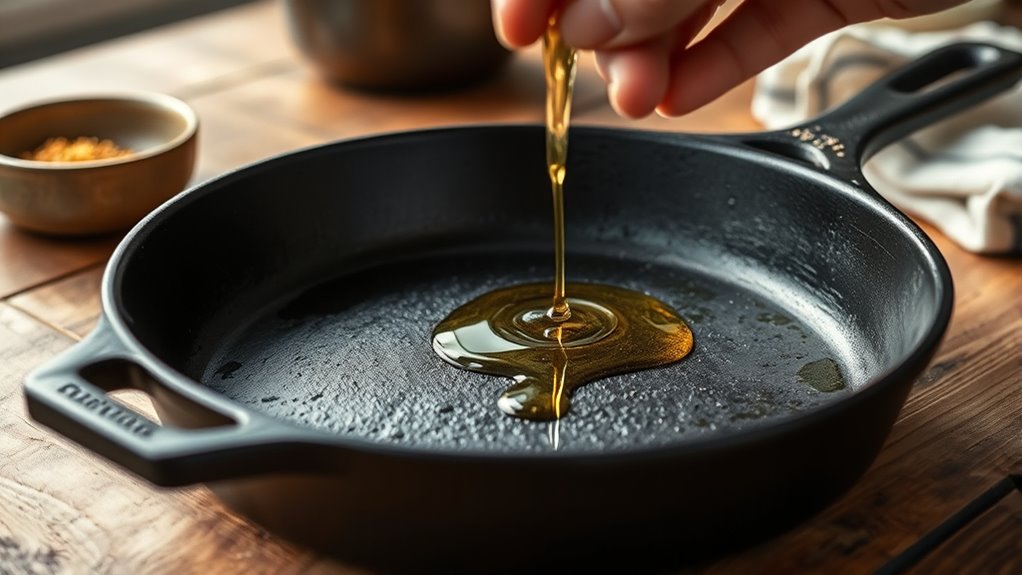
Although your cast iron skillet may look ready to use, seasoning it is vital to protect the surface and enhance its cooking performance. When you season your skillet, you create a natural, non-stick coating by baking oil into the pores of the iron. This layer prevents food from sticking and stops rust from forming.
Without seasoning, your skillet can corrode and lose its cooking quality quickly. Seasoning also improves heat distribution, helping your food cook more evenly. Each time you cook with oil, you reinforce this protective barrier, making your skillet more durable over time.
How to Tell If Your Cast Iron Skillet Needs Seasoning
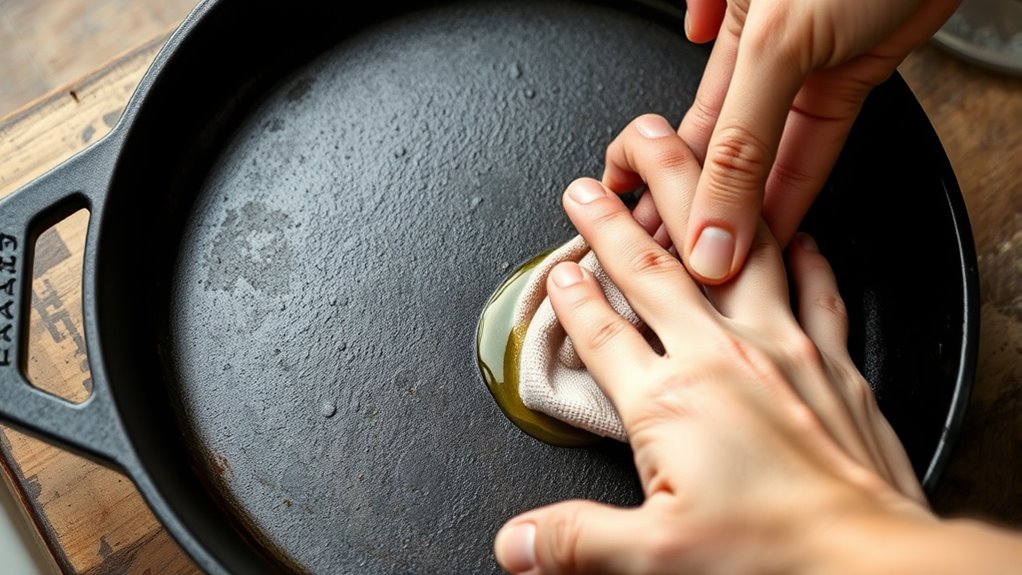
If your cast iron skillet has lost its smooth, dark finish or food starts sticking more than usual, it’s a clear sign it needs seasoning. You’ll notice dull, patchy spots where the protective layer has worn off, exposing bare metal. Rust spots can also develop, signaling that the seasoning has broken down.
When water doesn’t bead up and instead spreads out, your skillet lacks a proper non-stick surface. If you see any flaking or peeling of the coating, it’s time to re-season to avoid further damage. By recognizing these signs early, you can maintain your skillet’s performance and prolong its lifespan.
Keeping an eye out for these indicators helps you know exactly when to season your cast iron next.
How to Clean Your Cast Iron Skillet Before Seasoning
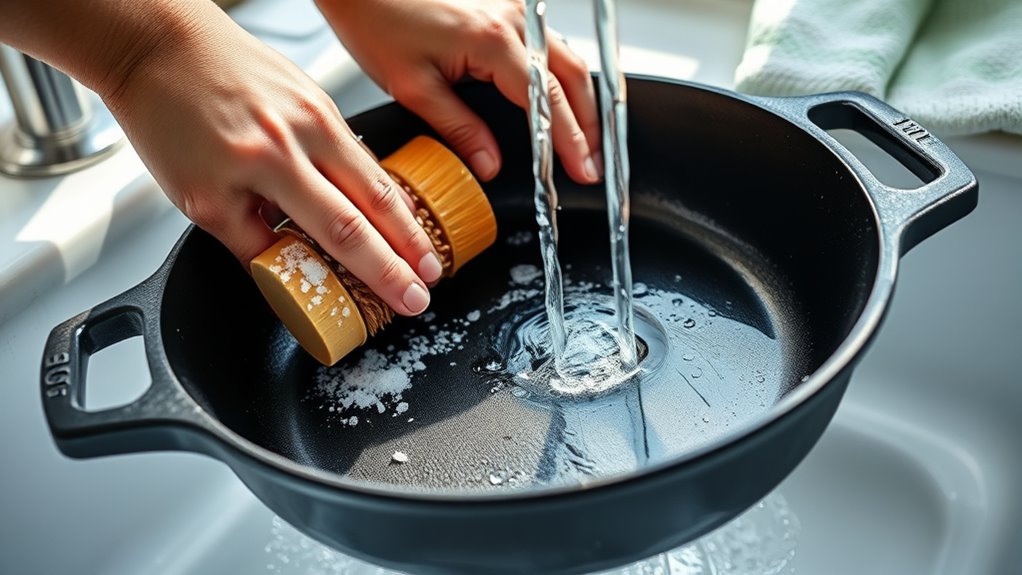
Once you spot wear or rust on your cast iron skillet, the next step is to clean it thoroughly before seasoning. Proper cleaning removes old seasoning, rust, and debris, guaranteeing the new seasoning bonds well.
Follow these steps:
- Scrub the skillet with a stiff brush and warm water. Avoid soap unless rust is present.
- For rust, use steel wool or a scrubbing pad to remove it completely.
- Rinse and dry the skillet immediately to prevent new rust from forming.
- Heat the skillet on the stove or in the oven for a few minutes to ensure it’s fully dry before applying oil for seasoning.
Cleaning well sets the foundation for a durable, non-stick surface.
Step-by-Step Guide to Seasoning Your Skillet in the Oven
Now that your skillet is clean, it’s time to prepare it for seasoning by applying a thin, even layer of oil all over the surface. Make sure you get into every corner to create a consistent coating.
Then, you’ll heat your skillet in the oven at the right temperature to lock in that protective layer.
Preparing Your Skillet
How do you prepare your cast iron skillet for seasoning in the oven? First, you need to ensure it’s clean and free of rust or old seasoning. Next, dry it thoroughly to prevent moisture from interfering with the process.
Follow these steps:
- Wash the skillet with warm water and a mild dish soap to remove debris.
- Scrub gently using a stiff brush or non-metal sponge to avoid scratching.
- Rinse and dry the skillet completely with a clean towel.
- Preheat your oven to 450°F (230°C) to get it ready for seasoning.
Preparing your skillet this way creates the perfect surface for oil to bond during seasoning, ensuring a smooth, durable finish.
Applying Oil Evenly
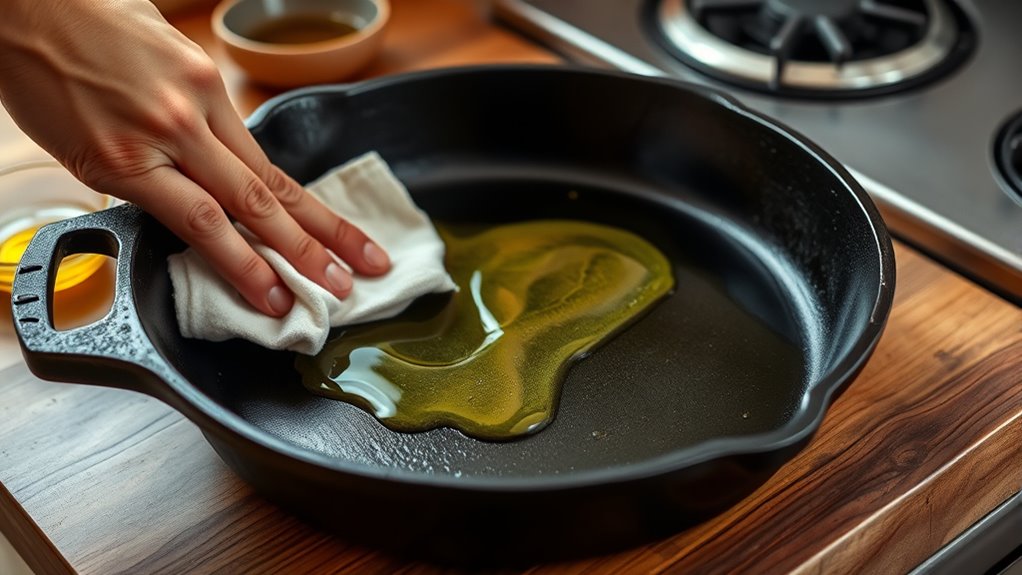
Before placing your skillet in the oven, you’ll want to apply oil evenly to create a strong, non-stick surface. Use a small amount of oil—just enough to coat every nook and cranny. Rub it in with a clean cloth or paper towel, making sure to cover the entire skillet, including the handle and bottom.
Wipe off any excess oil so it doesn’t pool or drip during seasoning. This step is essential for building a durable, smooth finish that improves with each use.
| Feel | Action | Result |
|---|---|---|
| Confident | Apply oil thinly | Even coating |
| Care | Rub thoroughly | No missed spots |
| Patient | Wipe excess | No sticky residue |
Oven Heating Process
Once you’ve evenly coated your skillet with oil, you’ll place it upside down in a preheated oven to allow the oil to bond with the cast iron. This heating process creates a durable, non-stick surface. Follow these steps:
- Preheat your oven to 450°F (230°C).
- Place the skillet upside down on the oven’s middle rack to prevent pooling of excess oil.
- Put a sheet of aluminum foil on the lower rack to catch drips.
- Bake the skillet for 1 hour, then turn off the oven and let the skillet cool inside completely.
This method guarantees a strong seasoning layer that improves with each use. Repeat the process if you want a thicker coating.
How to Season Your Cast Iron Skillet on the Stovetop
To season your cast iron skillet on the stovetop, start by thoroughly cleaning and drying it.
Next, apply a thin, even layer of oil all over the skillet’s surface.
This preps the pan for a smooth, durable seasoning layer as you heat it.
Preparing The Skillet
Although seasoning a cast iron skillet might seem intimidating, preparing it on the stovetop is a straightforward process that you can easily master. Before you start, make sure your skillet is clean and dry. Here’s how to get it ready for seasoning:
- Heat the skillet over medium heat for 5 minutes to open the pores of the metal.
- Turn off the heat and let the skillet cool slightly but stay warm.
- Use a clean cloth or paper towel to wipe off any moisture or debris.
- Place the skillet on a stable burner to prevent any movement while you work on seasoning.
Following these steps guarantees your skillet is perfectly prepped to absorb the oil evenly during the seasoning process.
Applying Oil Evenly
How exactly do you guarantee your cast iron skillet gets an even layer of oil for seasoning? First, pour a small amount of your chosen oil—like flaxseed or vegetable oil—onto the skillet’s surface. Use a clean cloth or paper towel to spread the oil thinly and uniformly across the entire skillet, including the bottom and handle.
Make sure you don’t oversaturate; too much oil leads to sticky buildup. Rotate the skillet as you wipe to cover every inch. Applying oil evenly ensures the seasoning bonds properly and prevents uneven spots.
Once coated, place the skillet on your stovetop over medium heat, allowing the oil to polymerize and create that durable, non-stick layer you want.
How Many Seasoning Coats Do You Really Need?
While some may suggest piling on multiple seasoning coats for a perfect finish, you don’t always need as many as you think. Typically, 2 to 3 coats of seasoning are enough to build a durable, non-stick surface. Overdoing it can cause uneven layers or sticky spots.
Focus on quality over quantity with each coat.
Here’s how to decide how many coats you really need:
- Start with a clean, dry skillet for the best adhesion.
- Apply a thin, even layer of oil to avoid buildup.
- Bake the skillet at the right temperature to polymerize the oil properly.
- Assess the surface—if it’s smooth and dark, you’re good; if not, add another coat.
This method gives you a strong, reliable seasoning without wasting time.
How to Maintain Your Cast Iron Skillet’s Seasoning
Once you’ve built a strong seasoning on your cast iron skillet, you need to maintain it properly to keep that non-stick surface intact. Always clean your skillet with hot water and a soft brush or sponge immediately after use—avoid soap, which can strip seasoning. Dry it thoroughly to prevent rust, then apply a thin layer of oil while it’s still warm.
Store your skillet in a dry place to avoid moisture buildup. When cooking, avoid acidic foods for long periods as they can wear down the seasoning. If you notice food sticking or dull spots, re-season the skillet promptly.
Common Seasoning Mistakes to Avoid
Maintaining your cast iron skillet’s seasoning takes care and attention, but it’s just as important to avoid common mistakes that can undo your hard work. Here are four key errors to watch out for:
- Skipping the drying step – Leaving your skillet wet invites rust, which damages the seasoning.
- Using soap or harsh detergents – These strip away the seasoning; stick to gentle cleaning methods.
- Applying too much oil during seasoning – Excess oil can create sticky, uneven layers instead of a smooth finish.
- Cooking acidic foods too soon – Acidic ingredients can break down the seasoning if your skillet isn’t well established.
Avoid these pitfalls to keep your skillet’s seasoning strong and reliable for years to come.
How to Fix Sticky or Uneven Seasoning Layers
If your cast iron skillet has developed sticky or uneven seasoning layers, don’t worry—you can fix it with a few simple steps. First, clean the skillet thoroughly using hot water and a stiff brush; avoid soap if possible. If residue remains, scrub gently with coarse salt to remove excess oil buildup.
Next, dry the skillet completely to prevent rust. Then, apply a thin, even coat of high-smoke-point oil all over the skillet, wiping off any excess with a paper towel. Bake the skillet upside down in an oven preheated to 450°F (230°C) for about an hour, placing foil below to catch drips.
Let it cool in the oven. This process smooths out sticky spots and evens the seasoning, restoring your skillet’s non-stick surface.
When and How to Reseason Your Cast Iron Skillet
You’ll know it’s time to reseason your cast iron skillet when food starts sticking or the surface looks dull and uneven.
Before you begin, make sure to clean the skillet thoroughly and remove any rust or old seasoning.
Then, follow a simple step-by-step process to build up a smooth, protective layer that keeps your skillet performing at its best.
Signs Your Skillet Needs
Though cast iron is incredibly durable, certain signs indicate when your skillet needs reseasoning to keep it performing at its best. Paying attention to these cues helps you maintain a smooth, non-stick surface and protects your skillet from rust.
Here are four clear signs your skillet needs reseasoning:
- Food sticks easily – If your skillet loses its slick surface, it’s time to reseason.
- Rust spots appear – Any rust means the protective layer has worn down.
- Dull or uneven color – A patchy or flaky appearance shows seasoning is breaking down.
- Sticky or gummy residue – This indicates old seasoning layers have built up improperly.
When you notice these, it’s a good idea to reseason promptly to extend your skillet’s life.
Preparing For Reseasoning
When should you reseason your cast iron skillet, and how do you prepare it properly? You’ll want to reseason when food starts sticking, rust appears, or the surface looks dull.
Before reseasoning, clean the skillet thoroughly and dry it completely to prevent rust.
Here’s a quick prep checklist:
| Step | Action | Tip |
|---|---|---|
| 1 | Remove old seasoning | Use mild soap and scrub |
| 2 | Dry skillet | Heat on stove to evaporate moisture |
| 3 | Inspect surface | Look for rust or residue |
Proper preparation guarantees the new seasoning bonds well. Avoid skipping cleaning or drying—these are key to a smooth reseasoning process.
Step-By-Step Reseasoning Process
Before you start reseasoning, make sure your skillet is completely clean and dry to guarantee the oil bonds properly. Once your pan is ready, follow these simple steps to restore its non-stick surface:
- Preheat your oven to 450°F (232°C).
- Apply a thin, even layer of vegetable oil or flaxseed oil to the entire skillet, including the handle and bottom.
- Place the skillet upside down on the oven’s middle rack; put a sheet of aluminum foil on the lower rack to catch drips.
- Bake for one hour, then turn off the oven and let the skillet cool inside to room temperature.
Repeat this process if needed, especially when food starts sticking or the surface looks dull.
Using Your Seasoned Cast Iron Skillet to Boost Flavor and Non-Stick
Once you’ve seasoned your cast iron skillet properly, you’ll notice it enhances both the flavor of your food and its natural non-stick properties. The seasoned surface builds up layers of polymerized oil, which prevents food from sticking and creates a subtle, smoky taste unique to cast iron cooking. When you cook with your skillet, the heat distributes evenly, allowing your dishes to brown beautifully and develop richer flavors.
You can confidently use less oil or butter, making meals healthier without sacrificing taste. Plus, the skillet’s non-stick nature makes flipping pancakes or searing meats easier, reducing the risk of tearing or burning. To get the best results, preheat your skillet adequately before cooking and avoid acidic foods until your seasoning is well established.
Quick Tips to Keep Your Cast Iron Skillet Seasoned for Life
Although seasoning your cast iron skillet takes some effort, maintaining it is straightforward with a few simple habits. To keep your skillet seasoned for life, follow these quick tips:
- Clean gently: Avoid soap; use hot water and a brush or sponge to remove food residue without stripping the seasoning.
- Dry thoroughly: After washing, dry your skillet immediately with a towel and heat it on the stove to evaporate any moisture.
- Apply a thin oil layer: While the skillet is warm, rub a light coat of cooking oil over the surface to reinforce the seasoning.
- Cook regularly: Use your skillet often to build and maintain a strong, non-stick seasoning layer naturally.
Stick to these practices, and your cast iron will stay in great shape for years.
Frequently Asked Questions
Can I Use Vegetable Oil Instead of Flaxseed Oil for Seasoning?
Yes, you can use vegetable oil instead of flaxseed oil for seasoning. It works fine, though flaxseed oil creates a harder, more durable coating.
Just make sure to apply thin layers and bake it properly for best results.
Does Seasoning Affect the Skillet’s Ability to Withstand High Heat?
Yes, seasoning strengthens your skillet, protects it, and improves its heat tolerance. You’ll handle high heat confidently, knowing the seasoned layer resists rust, prevents sticking, and enhances cooking performance without compromising the pan’s durability.
Can I Put a Cast Iron Skillet in the Dishwasher?
You shouldn’t put your cast iron skillet in the dishwasher because it can strip away the seasoning and cause rust.
Instead, clean it with hot water and a brush, then dry and oil it right after.
How Do I Store My Cast Iron Skillet to Prevent Rust?
Don’t stash your cast iron damp like a forgotten sponge; instead, dry it thoroughly and rub a light oil coat.
Store it in a dry place, ideally with a paper towel inside to absorb moisture and prevent rust.
Is It Safe to Cook Acidic Foods in a Newly Seasoned Skillet?
You shouldn’t cook acidic foods in a newly seasoned skillet because the seasoning isn’t fully developed and acid can break it down. Wait until your skillet has multiple seasoning layers for safe, flavorful cooking with acidic ingredients.
Conclusion
Seasoning your cast iron skillet isn’t just a chore—it’s practically magic! With a perfectly seasoned skillet, you’ll turn every meal into a masterpiece, and food will practically slide off like it’s on a slip ‘n slide.
Skip this step, and you might as well be cooking on a rusty relic. So, don’t wait—season that skillet like your kitchen’s life depends on it, because honestly, it kind of does!
Properly seasoning your cast iron skillet is essential for creating a non-stick surface and preventing rust. Regular care and seasoning ensure your skillet lasts for generations and delivers outstanding cooking performance every time.