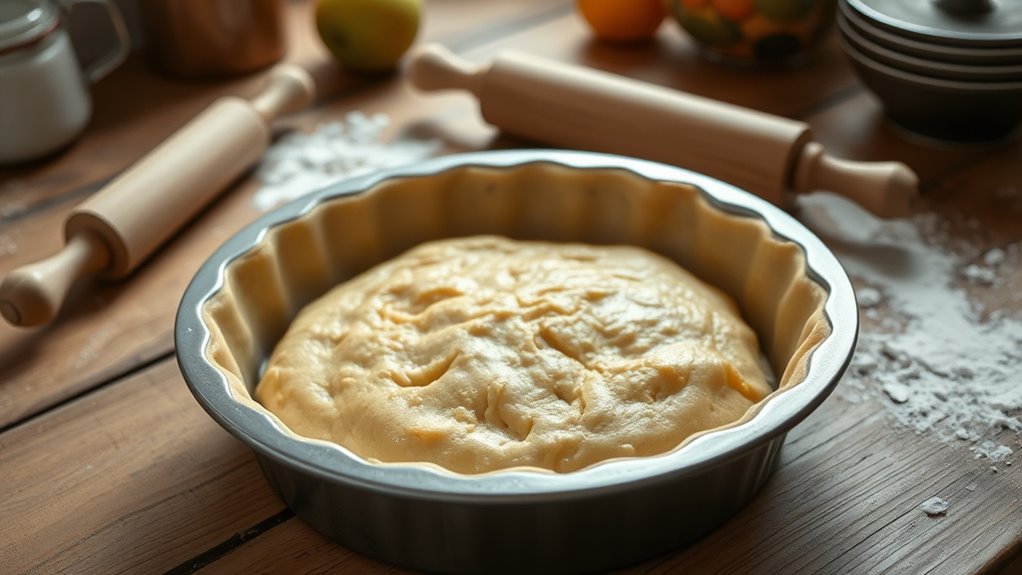
Can I Use a Cake Pan for Pie?
Yes, you can use a cake pan for pie, but there are some important things to consider. Cake pans differ from traditional pie pans because they are deeper and have straight sides. This affects how the crust bakes and how the filling cooks, so adjustments are necessary.
Cake pans work best with pies that have sturdy, thick fillings. You might need to lower the oven temperature and check the pie earlier for doneness to avoid overbaking. Watching the crust closely is essential since it may brown differently in a cake pan.
If you want to master using cake pans for pie, there’s more to discover about making the switch smoothly. With practice, you can achieve great results using a cake pan as a pie pan substitute.
Key Takeaways
- You can use a cake pan for pie, but baking time and texture may differ due to shape and material differences.
- Deeper cake pans hold more filling and create thicker crusts, requiring adjustments in filling volume and baking duration.
- Lack of fluted edges in cake pans may cause crust shrinkage and less flaky results compared to traditional pie plates.
- Pre-baking crust, lowering oven temperature, and monitoring browning help achieve better results when using a cake pan for pie.
- Cake pans work best with sturdy, thick-filled pies like apple crisp or pecan pie rather than delicate, flaky crust recipes.
Key Differences Between Cake Pans and Pie Plates
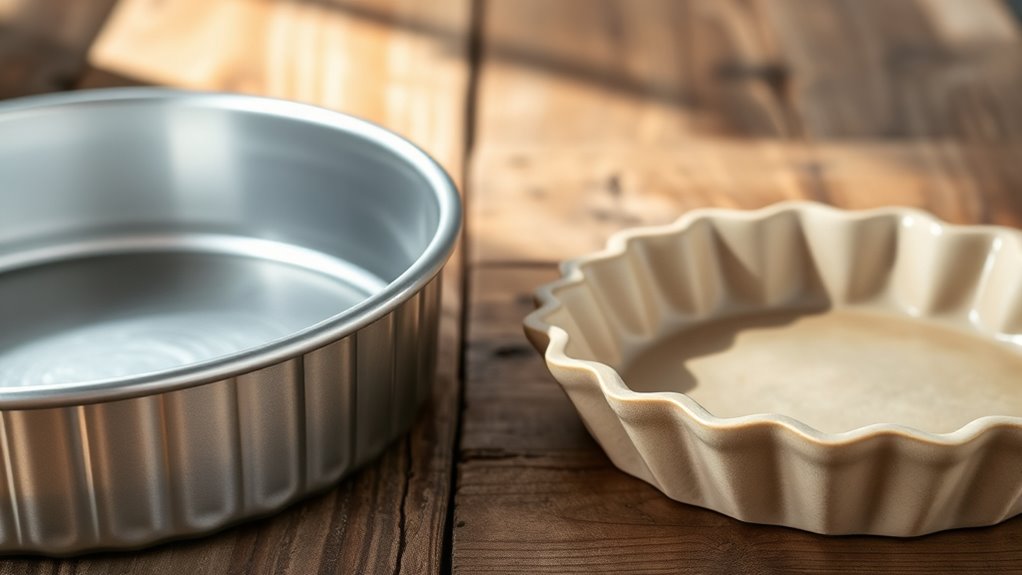
How do cake pans and pie plates differ? You’ll notice that cake pans usually have straight, tall sides, perfect for holding thick batter and shaping cakes evenly. Pie plates, on the other hand, have sloped, shallow sides that help support the flaky crust and allow it to brown nicely.
When you use a pie plate, the wide rim also makes crimping the dough easier, which you won’t find on most cake pans. Material-wise, pie plates often come in glass or ceramic, which distributes heat slowly and evenly, while cake pans are usually metal, heating up quicker.
These design differences are intentional—they affect how your dessert bakes, its texture, and even presentation. So, knowing these details helps you pick the right pan for your recipe.
Can You Use a Cake Pan for Pie?
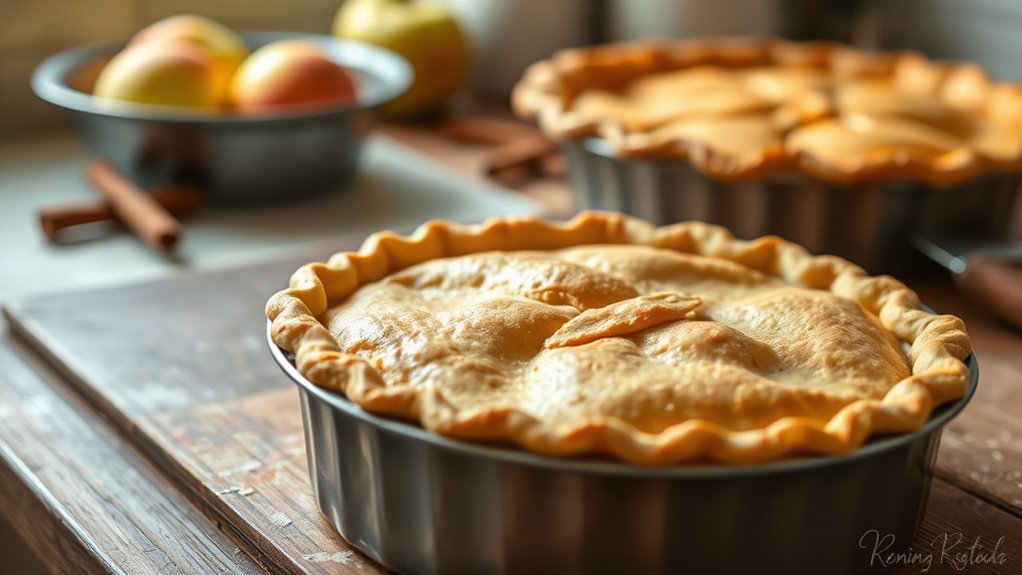
You can use a cake pan for pie, but it changes how your pie bakes. Cake pans are deeper and don’t have sloped sides, which affects crust texture and cooking time.
Understanding these differences helps you adjust your baking approach for the best results.
Cake Pan vs Pie
Although cake pans and pie pans serve different purposes, you can often use a cake pan to bake a pie if you don’t have the traditional pie dish on hand. The main difference lies in their shape and depth, which can affect how your pie bakes and looks.
Here’s what to take into account when choosing between the two:
- Shape: Pie pans usually have sloped sides, while cake pans have straight sides, which changes how the crust holds up.
- Depth: Cake pans tend to be deeper, so your pie filling might spread out thinner or require extra filling.
- Material: Both can be metal or glass, but metal cake pans heat differently, impacting crust crispness.
Knowing these differences helps you adapt and still enjoy a delicious pie.
Baking Differences Explained
Since cake pans and pie dishes differ in shape and depth, baking a pie in a cake pan will affect cooking times and crust texture. Cake pans are usually deeper and have straight sides, so your pie filling might take longer to cook through. The crust may not crisp as well because it’s not exposed to heat the same way it is in a traditional pie dish with sloped edges.
You’ll want to watch the pie carefully and possibly increase baking time, but be cautious not to overbake the filling. Also, since cake pans hold more volume, you might need to adjust your recipe quantities or use a smaller pan. Understanding these differences helps you adapt and still bake a delicious pie using a cake pan.
How Pan Shape Affects Pie Crust and Filling
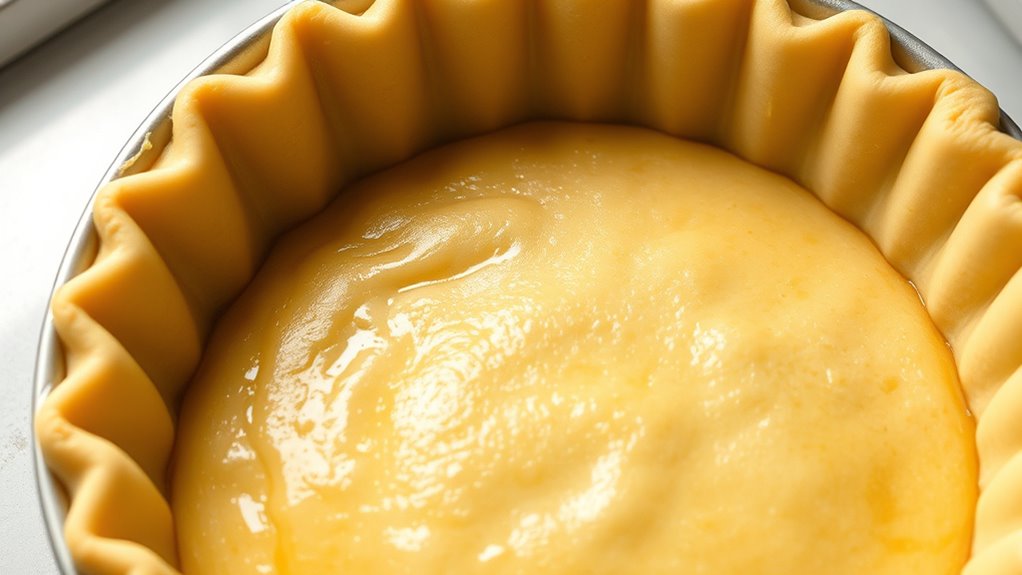
You’ll notice that the shape of your pan can change how the pie crust bakes and how the filling cooks. Different shapes affect heat distribution, which impacts texture and doneness. Understanding this helps you choose the right pan for the perfect pie.
Pan Shape Impact
When you choose a cake pan instead of a traditional pie pan, the shape directly influences how your crust bakes and how the filling sets. Cake pans are usually taller with straight sides, while pie pans have sloped edges designed to support the crust and filling differently. This difference affects heat distribution and how the pie cooks overall.
Here’s what you should keep in mind:
- Heat Exposure: Taller cake pans might slow crust browning since edges get less direct heat.
- Filling Depth: Deeper cake pans hold more filling, which changes cooking time and texture.
- Crust Support: Sloped pie pans help prevent the crust from collapsing, which can be an issue in straight-sided cake pans.
Choosing the right shape helps you control your pie’s final look and texture.
Crust and Filling
How does the shape of your pan affect the pie’s crust and filling? When you use a cake pan instead of a traditional pie dish, the crust’s thickness and the filling’s consistency can change. Cake pans usually have straight sides, which can make the crust thinner or uneven.
This also impacts how the filling cooks and sets, possibly making it less firm.
| Pan Type | Crust Thickness | Filling Texture |
|---|---|---|
| Pie Dish | Even, thicker edges | Holds shape well |
| Cake Pan | Thinner, uneven | May be softer, runny |
| Tart Pan | Crisp, uniform | Firm, structured |
Choosing the right pan helps you get the crust and filling just right every time.
Which Cake Pan Sizes Work Best for Pie Baking
Although cake pans come in various sizes, not all of them are ideal for pie baking. You want to choose a pan that helps your pie cook evenly and hold its shape well.
Here are three cake pan sizes that work best for pie baking:
- 9-inch round pans: These are the closest match to standard pie pans, offering enough depth and diameter for most pie recipes.
- 8-inch round pans: Great for smaller pies or when you want thicker filling layers, but watch your baking time.
- 9×9-inch square pans: These provide an alternative shape and size, perfect for rustic pies or those who prefer square slices.
Sticking to these sizes helps guarantee your pie bakes properly without adjusting the recipe too much.
How Baking Time and Oven Temperature Change in Cake Pans
When you use a cake pan for pie, you’ll need to adjust the baking time since the heat distributes differently. You might also want to lower the oven temperature slightly to avoid overbrowning the crust.
Paying attention to these changes helps guarantee your pie bakes evenly and turns out just right.
Adjusting Baking Duration
Since cake pans typically have different depths and materials than pie dishes, you’ll need to adjust both baking time and oven temperature to guarantee even cooking. Cake pans are often deeper and may conduct heat differently, so your pie might take longer or shorter to bake properly.
Here’s how to manage baking duration when using a cake pan:
- Check for doneness earlier than the recipe suggests to avoid overbaking.
- Use a toothpick or knife to test the filling’s consistency as it bakes.
- Rotate the pan halfway through baking to promote even heat distribution.
Modifying Oven Temperature
Because cake pans vary in thickness and material compared to pie dishes, you’ll often need to adjust your oven temperature to guarantee even baking. Cake pans usually conduct heat differently, causing your pie crust to brown faster or slower. To prevent overbaking, lower the oven temperature by 25°F (about 15°C) when using a cake pan.
This helps the filling cook thoroughly without burning the crust. Keep an eye on the pie as it bakes, since cake pans may require slightly longer or shorter baking times than traditional pie dishes. Using an oven thermometer can ensure your adjustments are accurate.
Modifying the temperature this way ensures your pie bakes evenly, with a perfectly cooked crust and filling, even in an unconventional pan.
Tips to Prevent Soggy Crusts When Using Cake Pans
Although cake pans aren’t specifically designed for pies, you can still achieve a crisp crust by taking a few simple precautions. Cake pans often have lower sides and different heat distribution, so you’ll want to adapt your approach to prevent sogginess. Here are three tips to help:
- Pre-bake the crust: Blind bake your pie crust in the cake pan to create a barrier, reducing sogginess from wet fillings.
- Use a metal or glass pan: These materials conduct heat better than silicone or non-stick pans, helping the crust bake evenly and crisp up.
- Add a thin layer of egg wash or melted butter: Brush your crust before baking to form a seal that keeps moisture out.
These steps let you enjoy a flaky, delicious pie crust even in a cake pan.
Pros and Cons of Baking Pie in a Cake Pan
When you bake a pie in a cake pan, you gain flexibility, but you also face some challenges. On the plus side, cake pans are usually deeper than pie pans, so you can pack in more filling or create thicker layers. Their straight sides also make slicing easier and neater.
Using a cake pan for pie offers deeper layers and neater slices but comes with some challenges.
Plus, if you don’t have a pie pan on hand, a cake pan is a convenient substitute.
However, cake pans often lack the fluted edges that help hold pie crusts in place, which might cause the crust to shrink or slip down. You may also find that the crust doesn’t bake as evenly because cake pans tend to distribute heat differently.
Keep these pros and cons in mind when deciding whether to use a cake pan for your pie.
Best Pie Recipes That Bake Well in Cake Pans
If you’re planning to use a cake pan for your pie, choosing recipes with sturdy fillings and thicker crusts will give you the best results. Cake pans don’t have sloped sides like pie plates, so you need pies that hold their shape well.
Here are three pie recipes that bake well in cake pans:
- Apple Crisp Pie – The thick fruit filling and crumbly topping won’t spread out too much.
- Chocolate Chess Pie – Its dense custard sets firmly, perfect for a flat-bottom pan.
- Pecan Pie – The gooey, rich filling stays put, and the thicker crust prevents sogginess.
These pies adapt nicely to cake pans, ensuring you get a delicious, well-formed pie every time.
When a Traditional Pie Plate Is the Better Choice
You’ll want to reach for a traditional pie plate whenever your recipe calls for a flaky crust and evenly browned edges. Pie plates, usually made of glass, ceramic, or metal, distribute heat more evenly than cake pans. Their sloped sides also help the crust bake uniformly and hold its shape.
This is especially important for fruit pies and custard pies that need a sturdy crust.
| Feature | Why It Matters |
|---|---|
| Even heat distribution | Prevents soggy or undercooked crust |
| Sloped sides | Supports crust shape and flakiness |
| Size and depth | Ideal for standard pie recipes |
| Material variety | Affects browning and texture |
| Easy to slice & serve | Clean, classic presentation |
Choosing a pie plate guarantees your pie looks and tastes just right.
How to Choose the Right Pan Without a Pie Plate
Though traditional pie plates often deliver the best results, there are plenty of other pans that can work well when you don’t have one on hand. Choosing the right alternative pan depends on size, shape, and material to guarantee even baking and proper crust support.
Traditional pie plates work best, but alternatives can ensure even baking with the right size, shape, and material.
Here’s what to take into account:
- Size and Depth: Pick a pan that matches your recipe’s dimensions to avoid undercooked filling or soggy crust.
- Material: Opt for metal or glass pans, as they conduct heat well, unlike some silicone or ceramic options.
- Shape: Round pans are ideal, but square or rectangular pans can work if you adjust the filling amount and baking time.
Quick Tricks to Make Cake Pans Work Like Pie Plates
When using a cake pan for pie, you need to adjust a few techniques to guarantee your crust bakes evenly and your filling sets properly. First, consider pre-baking the crust slightly to prevent sogginess since cake pans usually have straighter sides. Use pie weights or dried beans to keep the crust from puffing up.
Next, line the cake pan with parchment paper for easy removal. Because cake pans are deeper, reduce your filling or bake a bit longer at a lower temperature to avoid undercooked centers. Ultimately, keep an eye on browning; tent the edges with foil if they darken too fast.
These quick tricks help you transform a cake pan into a reliable pie plate substitute without sacrificing texture or flavor.
Frequently Asked Questions
Can I Use a Glass Cake Pan for Baking Pie?
Yes, you can use a glass cake pan for baking pie. Just remember glass heats slower and retains heat longer, so adjust your baking time and temperature slightly to prevent overbrowning or undercooking.
Keep an eye on it!
Do Cake Pans Affect the Flavor of the Pie?
You won’t notice any flavor difference using a cake pan. The pan’s material might affect baking time or crust texture, but your pie’s taste stays the same.
Just watch the crust to avoid overbaking!
Can I Freeze a Pie Baked in a Cake Pan?
Yes, you can freeze a pie baked in a cake pan. Just make sure it’s completely cooled, wrap it tightly with plastic wrap and foil, then freeze.
When ready, thaw it slowly in the refrigerator for best results.
How Do I Clean a Cake Pan After Baking Pie?
Picture warm, sticky pie remnants clinging to your pan. Soak it in warm, soapy water, then scrub gently with a soft sponge.
You’ll easily lift away residue, leaving your cake pan sparkling and ready for your next bake.
Are Silicone Cake Pans Suitable for Pie Baking?
Yes, you can use silicone cake pans for pie baking. They’re flexible, non-stick, and distribute heat evenly.
Just be careful when transferring the pie since silicone lacks rigidity, so you’ll need a sturdy surface to support it.
Conclusion
You absolutely can use a cake pan for pie, and it might just change your baking game forever! While the shape and depth differ, with a few tweaks, your pie crust and filling will turn out deliciously.
Just remember to adjust baking times and temperatures, and pick the right size pan. If you don’t have a pie plate, no worries—you’ve got this! Your kitchen creativity will soar to new heights, baking wonders you never imagined.
In conclusion, using a cake pan for pie is a great alternative that allows you to enjoy your favorite desserts even without traditional pie dishes. Embrace the flexibility of cake pans for pie baking and watch your culinary skills grow!