How Do Slow Cookers Work?
You use a slow cooker by setting it to a low, steady heat that gently breaks down tough cuts, turning them tender and flavorful over several hours. Slow cookers work by maintaining a consistent temperature that slowly cooks food, making it ideal for tougher meats and hearty stews.
The ceramic pot heats evenly while the lid traps moisture, keeping food juicy without much added liquid.
You’ll save time and effort since it cooks without constant checking. Different settings control cooking speed and texture, so understanding how they work helps you get the best results from your meals.
This method allows flavors to meld beautifully, enhancing the taste of your dishes.
Key Takeaways
- Slow cookers use a surrounding heating element to gradually warm a ceramic pot, maintaining low, steady heat over hours. The lid traps steam and moisture, creating a sealed environment that keeps food moist and tender. Temperature settings range from low (190°F-200°F) to high (~300°F), controlling cooking speed and tenderness.
- Slow cooking breaks down connective tissues in tough meats, making them soft and flavorful through prolonged heat. The appliance allows “set and forget” cooking by regulating temperature without constant monitoring.
What Is a Slow Cooker and How Does It Work?
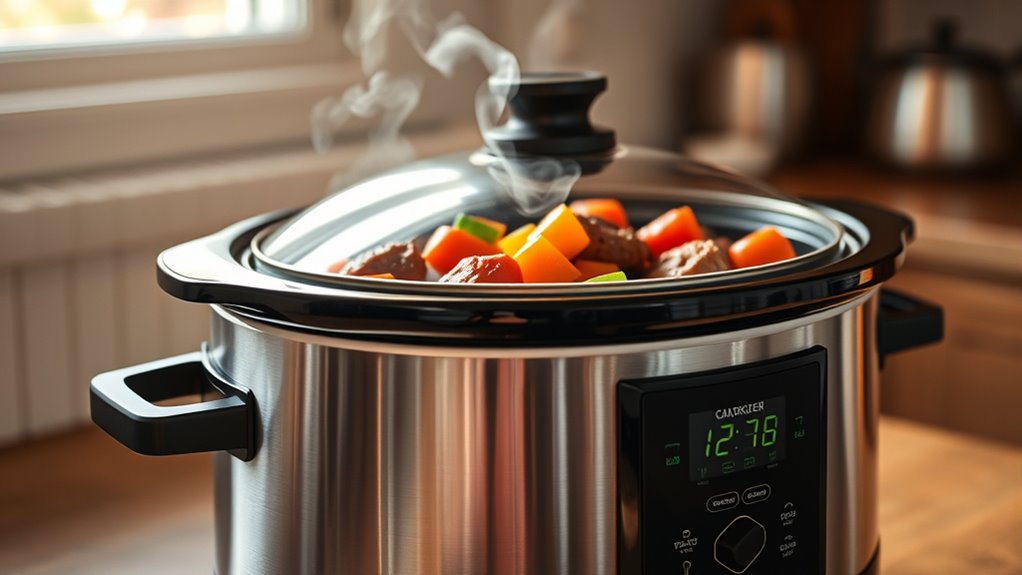
Although slow cookers might seem simple, they use a clever design to cook food gently over several hours. When you place ingredients inside, the cooker’s heating element surrounds the ceramic pot, slowly warming it. This steady heat allows food to cook evenly without burning or drying out.
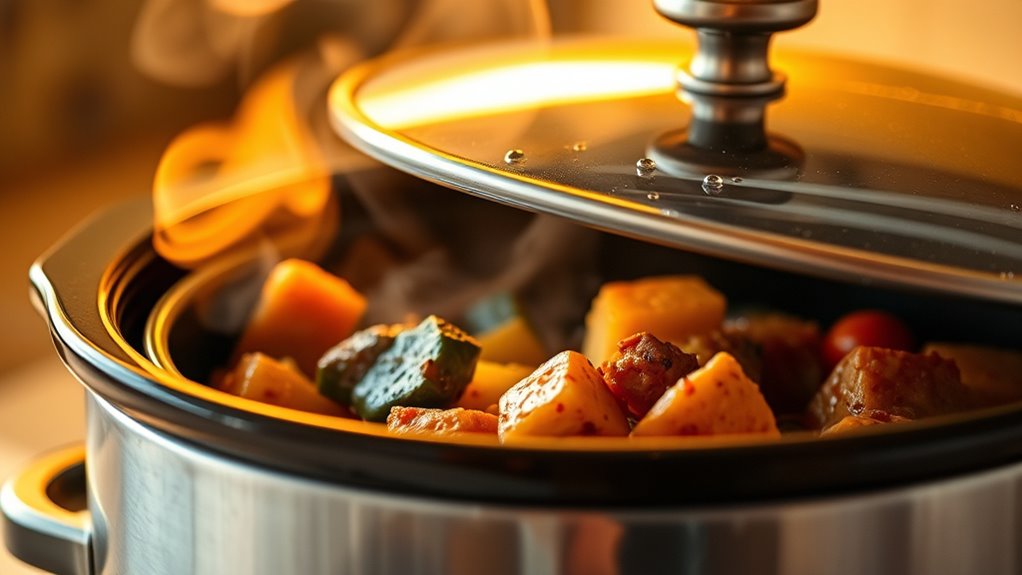
The lid traps steam and moisture, creating a sealed environment that helps tenderize tough cuts of meat and blend flavors deeply. You don’t need to stir or watch it constantly; the slow cooker does the work while you focus on other things. Its low, consistent heat breaks down fibers in food gradually, making meals more flavorful and tender by the time you’re ready to eat.
This hands-off process makes cooking convenient and efficient.
What Temperatures Do Slow Cookers Use?

The slow cooker’s ability to gently break down food fibers depends largely on the temperatures it maintains throughout the cooking process. Typically, slow cookers operate on two main heat settings: low and high. The low setting usually ranges between 190°F to 200°F (88°C to 93°C), while the high setting reaches about 300°F (149°C).
These temperatures are carefully designed to stay below boiling point, allowing your food to cook slowly and evenly without burning. Some models also have a “keep warm” setting that holds food around 165°F (74°C), perfect for serving without overcooking. By regulating these temperatures, your slow cooker ensures consistent heat distribution, so your meals come out tender and flavorful every time you use it.
Why Slow Cooking Tenderizes Tough Cuts and Enhances Flavor

When you slow cook tough cuts, the low heat gently breaks down connective tissue, turning them tender. The moisture has time to penetrate deeply, making every bite juicy.
Plus, flavors develop and meld over hours, giving your dish a rich, complex taste you won’t get with quick cooking.
Breaking Down Connective Tissue
Since slow cookers maintain a low, steady temperature over several hours, they give tough cuts of meat plenty of time to break down their connective tissue. This connective tissue, mainly collagen, transforms into gelatin, which tenderizes the meat and enriches its flavor.
As you cook, the slow cooker gradually softens these fibers, making the meat easier to chew and more enjoyable.
| Connective Tissue | Collagen Content | Result After Cooking |
|---|---|---|
| Tendons | High | Softens to gelatin |
| Ligaments | Moderate | Breaks down slowly |
| Fascia | Low | Dissolves, tenderizing |
| Cartilage | Low to Moderate | Partially melts |
| Skin | Variable | Becomes tender |
This breakdown is why slow cooking makes even the toughest cuts deliciously tender.
Low Heat Moisture Penetration
How exactly does slow cooking allow moisture to deeply penetrate tough cuts of meat? When you cook meat slowly at low temperatures, you give water and cooking liquids plenty of time to seep into the muscle fibers. This gradual process helps the moisture break down dense tissue and fills the meat from the inside out.
Unlike quick cooking methods, slow cooking prevents the outer layer from sealing too fast, so the juices don’t just run off. As a result, the meat stays juicy and tender throughout. By maintaining gentle heat and consistent moisture, slow cookers transform even the toughest cuts into melt-in-your-mouth meals that are rich in flavor and texture, all without drying out or toughening the meat.
Flavor Development Over Time
Why does slow cooking transform tough cuts into tender, flavorful meals? It’s all about time and temperature working together. When you cook slowly at low heat, collagen in meat breaks down into gelatin, making it tender and juicy.
Meanwhile, flavors meld and deepen, creating rich, complex tastes.
Here’s what happens during slow cooking:
- Collagen slowly converts to gelatin, softening the meat’s texture.
- Moisture evenly distributes, keeping the meat juicy and preventing dryness.
- Aromatic compounds from herbs, spices, and ingredients blend thoroughly, intensifying flavor.
How Slow Cooker Settings Impact Cooking Time and Food Texture
You’ll notice that choosing low or high settings affects both how long your food takes to cook and its final texture. Low heat breaks down fibers more gently, resulting in tender meals, while high heat speeds up cooking but can change the texture.
Understanding timing and heat distribution helps you get the perfect outcome every time.
Low vs. High Settings
Although both low and high settings heat your slow cooker, they affect cooking time and food texture in distinct ways. Choosing the right setting depends on your schedule and the dish you’re preparing.
Here’s how they differ:
- Low Setting: Cooks food slowly over 6-10 hours, allowing flavors to develop deeply and tougher cuts to tenderize gradually.
- High Setting: Speeds up cooking to 3-5 hours, perfect when you’re short on time but still want a slow-cooked meal.
- Switching Settings: Starting on high and then switching to low can balance time and tenderness, but be mindful of total cook time to avoid overcooking.
Impact on Food Texture
How exactly do slow cooker settings influence the texture of your food? When you choose the low setting, your food cooks gently over a longer period, allowing tough fibers in meats and vegetables to break down slowly. This results in tender, melt-in-your-mouth dishes.
On the other hand, the high setting speeds up cooking but can sometimes cause proteins to tighten and vegetables to become mushy if left too long. You’ll notice that delicate ingredients, like fish or soft vegetables, benefit from shorter cooking times on high to maintain their structure.
Timing and Heat Distribution
The setting you choose on your slow cooker directly affects both the timing and heat distribution during cooking. Understanding how these settings work helps you get the best texture and flavor from your meals.
- Low Setting: Heats slowly and evenly, usually around 190°F (88°C). It takes longer to cook but results in tender, well-developed flavors.
- High Setting: Reaches about 300°F (149°C), cooking food faster but with less gradual heat distribution. This can sometimes lead to uneven cooking or tougher textures.
- Keep Warm: Maintains food at a safe temperature without further cooking, perfect for serving later without overcooking.
What Types of Foods Work Best in a Slow Cooker
Which ingredients thrive in a slow cooker? Tough cuts of meat, hearty vegetables, and beans are perfect because they benefit from long, slow cooking that tenderizes and blends flavors. You’ll also find soups, stews, and casseroles excel in slow cookers.
Avoid quick-cooking vegetables and delicate seafood, which can turn mushy or overcooked.
Here’s a quick guide to what works best:
| Food Type | Examples | Why It Works |
|---|---|---|
| Meat | Chuck roast, pork shoulder | Tough cuts become tender |
| Vegetables | Carrots, potatoes | Hold shape, absorb flavors |
| Legumes | Beans, lentils | Need long cooking to soften |
| Soups & Stews | Beef stew, chili | Flavors meld over slow heat |
Use these tips to pick slow cooker-friendly foods every time.
How Slow Cookers Simplify Meal Prep and Save Time
When you start a slow cooker in the morning, you free up your day from constant kitchen duties, allowing you to focus on other tasks or relax. Slow cookers simplify meal prep and save time in several ways:
- One-Pot Cooking: You toss all ingredients into the pot, eliminating multiple pans and reducing cleanup.
- Set and Forget: Once programmed, the slow cooker handles cooking, so you don’t need to monitor the meal.
- Hands-Off Cooking: No stirring or adjusting temperature means less effort and stress.
Common Slow Cooker Mistakes to Avoid
Although slow cookers are incredibly convenient, many people make avoidable mistakes that can affect the outcome of their meals. One common error is overfilling the cooker, which can prevent food from cooking evenly. You should fill it only about two-thirds full.
Another mistake is lifting the lid frequently; each time you do, heat escapes, extending cooking time. Avoid adding too much liquid since slow cookers retain moisture—you can always add more after cooking if needed. Also, don’t put frozen meat directly into the cooker; it can stay in the “danger zone” too long, increasing the risk of bacteria.
Ultimately, skipping the browning step for meats can result in less flavor and tougher texture. Being mindful of these pitfalls helps ensure your meals turn out just right.
Tips for Getting the Best Results From Your Slow Cooker
To get the best results from your slow cooker, you need to pay attention to a few key practices that maximize flavor and texture. First, avoid lifting the lid during cooking; every time you do, heat escapes and extends cooking time. Second, layer ingredients properly—place dense vegetables like potatoes at the bottom since they take longer to cook, and put meats and delicate veggies on top.
Third, don’t overfill your slow cooker. Aim to fill it between half and two-thirds full to ensure even cooking and avoid spills. Following these tips helps you make the most of your slow cooker’s low-and-slow method, delivering tender, flavorful meals with minimal effort.
With these simple adjustments, you’ll enjoy perfectly cooked dishes every time.
Frequently Asked Questions
Can I Use a Slow Cooker Insert on the Stovetop?
You shouldn’t use a slow cooker insert directly on the stovetop because it’s not designed for direct heat. Doing so can crack or damage it.
Instead, use the slow cooker base or a stovetop-safe pot.
Are Slow Cookers Energy Efficient Compared to Ovens?
You’ll find slow cookers as energy-efficient as a nightlight compared to ovens. They use less electricity by cooking at low temperatures over hours, saving you money and reducing energy waste without sacrificing flavor or tenderness.
How Do I Clean a Slow Cooker With Stuck-On Food?
You’ll soak the slow cooker insert in warm, soapy water for an hour, then scrub gently with a non-abrasive sponge.
For tough spots, sprinkle baking soda, add vinegar, let it fizz, then scrub and rinse clean.
Can I Convert Slow Cooker Recipes to Pressure Cooker Recipes?
Yes, you can convert slow cooker recipes to pressure cooker recipes. You’ll need to reduce cooking time considerably and adjust liquid amounts since pressure cookers use high heat and steam.
Be sure to watch the recipe closely for best results.
Do Slow Cookers Work at High Altitudes Without Adjustments?
You’ll find slow cookers tend to require a gentle nudge at high altitudes—they don’t always perform flawlessly without adjustments. You’ll want to increase cooking time or add more liquid to achieve the perfect dish.
Conclusion
Using a slow cooker is like nurturing a seed into a blooming flower—you set it, forget it, and watch flavors unfold gently over time. By embracing the slow, steady heat, you reveal tender textures and rich tastes that quick cooking can’t match. With a little patience and care, your meals transform into comforting creations, saving you time and effort.
So, trust the process and let your slow cooker work its quiet magic in the kitchen. Slow cookers use low, consistent heat to break down ingredients slowly, unlocking deep flavors and tender textures. This method ensures your dishes are both delicious and convenient, making slow cooker meals a perfect choice for busy lifestyles.