What Temperature Do Slow Cookers Cook at on Low?
Your slow cooker on low usually cooks between 190°F and 200°F, gently heating food without boiling. This steady, moderate heat helps tenderize meats and soften vegetables while preserving flavors.
Understanding what temperature slow cookers cook at on low is essential for safe and effective slow cooking.
Temperatures can vary by brand, so testing yours with a thermometer guarantees consistent cooking and safety.
Keeping food above 140°F avoids bacterial risks and supports slow, even cooking.
If you want to understand how this heat affects cooking time and safety, there’s plenty more to explore.
Key Takeaways
- Slow cookers on low typically heat between 190°F and 200°F (88°C to 93°C), maintaining steady, moderate heat for gentle cooking.
- Temperature can vary by brand, ranging from about 190°F up to 210°F, so testing with a thermometer is recommended.
- This low heat setting prevents boiling and supports slow tenderization and flavor development over 6 to 10 hours.
- Maintaining temperatures above 140°F ensures safe cooking by inhibiting bacterial growth and properly cooking proteins and vegetables.
- Use a digital thermometer to verify your slow cooker’s temperature and ensure food reaches safe internal temperatures (e.g., 165°F for poultry).
What Temperature Range Does a Slow Cooker Use on Low?
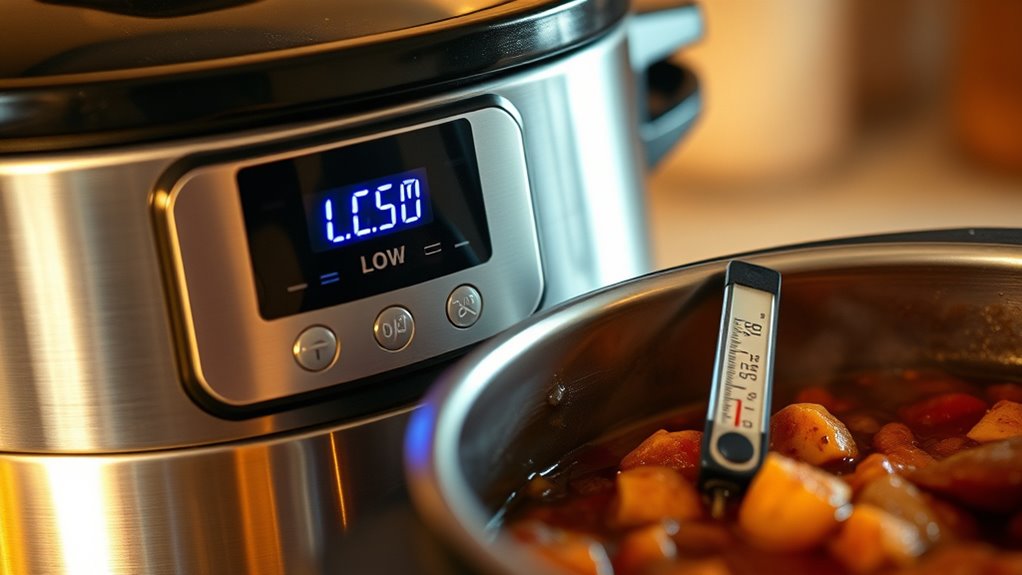
When you set your slow cooker to low, it typically heats food to a temperature between 190°F and 200°F (88°C to 93°C). This range allows your ingredients to cook gently and evenly over several hours. You’ll find that the low setting maintains a steady, moderate heat that’s safe for slow cooking without boiling.
This temperature range is ideal for breaking down tougher cuts of meat and developing rich flavors without overcooking. Slow cookers use a thermostat to regulate this heat, turning the heating element on and off to keep the temperature consistent within this range.
How Does Low Heat Affect Slow Cooker Cooking Times?
Because low heat keeps your slow cooker at a steady, moderate temperature, it extends the cooking time considerably compared to higher settings. When you use the low setting, your food cooks slowly and evenly, allowing tough cuts of meat to become tender without drying out. This slower process means you’ll need to plan for longer cooking times, often ranging from 6 to 10 hours, depending on the recipe.
You can’t rush slow cooking by cranking the heat; instead, you rely on the gradual heat to break down fibers and meld flavors. If you’re in a hurry, low heat might not be the best choice. But if you want rich, well-developed taste and texture, the extended time on low heat does the trick perfectly.
Why Is Maintaining a Steady Low Temperature Important for Slow Cooking?
Although slow cookers operate at low temperatures, maintaining a steady heat is crucial to guarantee your food cooks evenly and safely. When the temperature fluctuates, some parts of your dish might undercook while others overcook, affecting texture and flavor. Consistent heat ensures proteins break down properly, making meat tender and vegetables soft without turning mushy.
It also prevents bacteria growth by keeping food within a safe temperature range throughout the cooking process. If the heat dips too low, you risk food staying in the danger zone where harmful bacteria can multiply. By keeping a stable low temperature, your slow cooker allows flavors to meld gradually, resulting in a rich, well-balanced meal every time you use it.
How Consistent Is the Low Setting Across Slow Cooker Brands?
You’ll find that the low setting can vary quite a bit between slow cooker brands. Factors like heating element design and insulation affect how steady the temperature stays. Understanding these differences helps you choose the right cooker for consistent results.
Temperature Variations Among Brands
When choosing a slow cooker, you might expect the low setting to deliver the same temperature regardless of brand, but that’s not always the case. Different manufacturers use varied heating elements and internal designs, leading to temperature variations. For instance, one brand’s low setting might hover around 190°F, while another’s could reach 210°F.
These differences mean your cooking times and results can shift depending on the slow cooker you own. If you switch brands, you might notice your recipes cooking faster or slower, even on the same low setting. To get consistent results, you may need to test and adjust cooking times based on your specific slow cooker’s temperature performance rather than relying solely on the labeled settings.
Factors Affecting Heat Consistency
Since slow cookers come with different heating technologies and materials, the consistency of the low setting can vary considerably between brands. You might notice that some slow cookers maintain a steady temperature throughout cooking, while others fluctuate more. Factors like the heating element type—whether it’s a ring or a flat base—affect heat distribution.
The pot’s material and thickness also play a role; ceramic pots tend to retain heat better than metal ones, promoting steadier temperatures. Additionally, the lid’s fit impacts heat retention; a tight-fitting lid helps keep the temperature uniform. When choosing a slow cooker, consider these factors if you want reliable low-heat consistency.
Testing your model with a thermometer can also help you understand its specific heat patterns.
How to Test Your Slow Cooker’s Low Temperature at Home
To test your slow cooker’s low temperature at home, you’ll need a reliable instant-read thermometer and some water.
Start by filling the cooker with water, turning it on low, and checking the temperature after a few hours.
This simple process helps you see how your slow cooker performs and guarantees your recipes cook safely.
Equipment Needed
Although slow cookers are designed for convenience, you’ll need a few basic tools to accurately test the low-temperature setting at home. First, grab a reliable food thermometer—preferably a digital one with a probe—to measure the internal temperature precisely. You’ll also want a heat-resistant container or bowl that fits comfortably inside your slow cooker, allowing even heat distribution.
Additionally, have a notebook or device handy to record your temperature readings at different intervals for comparison. Finally, make certain you have access to clean water to fill the slow cooker as needed during testing, which helps mimic typical cooking conditions. With these simple items ready, you’ll be well-equipped to assess how your slow cooker performs on low without any guesswork.
Step-by-Step Process
When you’re ready to test your slow cooker’s low temperature, start by filling it with water to mimic typical cooking conditions. Place a reliable kitchen thermometer in the water, ensuring the sensor is fully submerged but not touching the pot’s sides or bottom. Plug in your slow cooker, set it to low, and cover it with the lid.
Let it run for at least 4 hours to stabilize and reach a consistent temperature. Check the thermometer reading periodically without removing the lid too often, as this can affect the temperature. After the testing period, note the final temperature shown.
This method gives you an accurate idea of how hot your slow cooker gets on low, helping you cook safely and effectively every time.
What Happens If the Low Setting Is Too Hot or Too Cool?
If your slow cooker’s low setting runs too hot, your food might overcook or dry out, ruining the texture and flavor you’re aiming for. Proteins can become tough, and vegetables may lose their vibrant color and turn mushy.
On the other hand, if the low setting is too cool, your meal may take longer to cook, risking food safety because it might stay in the temperature “danger zone” where bacteria grow. Undercooked dishes can also have uneven textures and flavors.
You want your slow cooker to maintain a steady, safe temperature—usually around 190°F—to guarantee thorough cooking without sacrificing quality. Monitoring your slow cooker’s performance helps you avoid these issues and enjoy perfectly cooked meals every time.
Tips for Adjusting Recipes to Your Slow Cooker’s Low Heat
Because slow cookers operate at a consistent low temperature, you’ll need to modify cooking times and ingredient quantities to match this gentle heat. Here are three tips to help you adapt recipes effectively:
- Extend Cooking Time: Recipes meant for stovetop or oven often require 6-8 hours on low in a slow cooker to reach the same tenderness and flavor.
- Reduce Liquid: Since slow cookers retain moisture, cut back on broth or water by about a third to prevent dishes from becoming watery.
- Add Dairy Late: Ingredients like milk or cheese can curdle if cooked too long, so stir them in during the last 30 minutes of cooking.
These adjustments ensure your meals come out perfectly cooked without losing texture or taste.
What Foods Benefit Most From Slow Cooking on Low?
Which ingredients truly shine when cooked slowly on low heat? Tough cuts of meat like chuck roast, brisket, and pork shoulder become tender and flavorful when given time to break down collagen. Beans and legumes also benefit, absorbing flavors while softening perfectly without splitting apart.
Root vegetables such as carrots, potatoes, and parsnips develop a rich, creamy texture that complements slow-cooked dishes. You’ll find that casseroles and stews thrive on low settings, allowing spices and herbs to meld deeply. Even delicate foods like poultry and fish can stay moist and flaky when cooked gently, avoiding dryness.
When you choose to cook on low, you’re maximizing flavor development and tenderness, especially with ingredients that need time to soften and absorb seasoning fully.
How Does Low Setting Temperature Compare to Other Slow Cooker Settings?
How exactly does the low setting temperature stack up against other slow cooker options? When you use the low setting, your slow cooker heats food to around 190°F (88°C).
Here’s how it compares:
- Low Setting (190°F/88°C): Cooks food gently over 6-10 hours, ideal for tenderizing tough cuts.
- High Setting (around 300°F/149°C): Cooks faster, typically 3-4 hours, but risks overcooking delicate ingredients.
- Keep Warm (around 165°F/74°C): Maintains food temperature without further cooking, perfect for serving.
Choosing the low setting means slower, steadier cooking that helps flavors develop deeply without drying out your meal, unlike higher settings that speed up the process but can sacrifice texture.
How to Use Slow Cooker Temperature Knowledge to Stay Food Safe
You need to keep your slow cooker within a safe temperature range to prevent harmful bacteria from growing. Always monitor the internal heat of your food to guarantee it reaches the right cooking temperature.
Knowing these details helps you cook safely and avoid foodborne illness.
Safe Cooking Temperature Range
Although slow cookers operate at lower temperatures than conventional ovens, they still maintain a safe cooking environment by consistently keeping food within a temperature range that inhibits harmful bacterial growth. Knowing this helps you use your slow cooker confidently to prepare meals safely.
Here’s what you need to bear in mind:
- Slow cookers on low typically heat food to around 190°F to 200°F, which is above the safe minimum internal temperature for most meats.
- Maintaining food temperature above 140°F prevents bacteria from multiplying rapidly.
- It’s essential to allow enough cooking time to ensure food reaches and stays within this safe temperature range.
Preventing Bacterial Growth
Keeping food at the right temperature in your slow cooker stops harmful bacteria from multiplying. When you use the low setting, your slow cooker generally maintains temperatures between 190°F and 200°F—hot enough to prevent bacteria growth but gentle enough for slow cooking.
To guarantee your meals safe, avoid adding frozen ingredients directly; they can lower the overall temperature, creating a breeding ground for bacteria. Also, don’t lift the lid frequently, as this causes heat loss and extends the time food spends in the danger zone (between 40°F and 140°F).
Monitoring Internal Food Heat
How can you guarantee your slow-cooked meals reach a safe internal temperature? Monitoring internal food heat is key to preventing foodborne illness. Since slow cookers on low usually operate between 190°F and 210°F, you need to make certain your food actually hits the safe zone inside.
Follow these steps:
- Use a reliable food thermometer to check the thickest part of the dish, especially with meats.
- Make sure the internal temperature reaches at least 165°F for poultry and 145°F for other meats, followed by a rest time.
- Avoid opening the lid frequently—each time you do, heat escapes and cooking times extend.
Frequently Asked Questions
Can I Use a Slow Cooker on Low Overnight Safely?
Yes, you can use a slow cooker on low overnight safely. Just make sure it’s on a stable surface, you follow the recipe’s guidelines, and your slow cooker is in good working condition to avoid any hazards.
Does Altitude Affect Slow Cooker Low Temperature Cooking?
Yes, altitude does affect slow cooker low temperature cooking. You might notice longer cooking times because water boils at lower temperatures up high.
What Are Common Slow Cooker Low Temperature Cooking Mistakes?
You often underfill the slow cooker or lift the lid too much, which lets heat escape. You might also add dairy too early or not preheat ingredients, causing uneven cooking or food safety issues.
How Do Slow Cookers on Low Affect Nutrient Retention?
Imagine simmering soup slowly, preserving each flavor note—slow cookers on low keep more nutrients intact by gently cooking food, preventing vitamin loss.
Can I Add Frozen Ingredients When Cooking on Low?
You can add frozen ingredients when cooking on low, but it’ll take longer to reach a safe temperature. To avoid uneven cooking, try thawing them first or increase the cooking time to guarantee everything cooks thoroughly.
Conclusion
So, your slow cooker’s low setting is basically a culinary turtle, plodding along at about 190-200°F, turning tough cuts into tender treasures. Think of it as a patient chef who never rushes, simmering your dinner like a wise old wizard brewing a potion—slow, steady, and magical.
Embrace the slow heat, or risk serving a dish that’s as raw as your impatience. Slow cooking on low isn’t just a setting; it’s a lifestyle for the truly hungry and patient. Understanding what temperature do slow cookers cook at on low helps you master the art of slow cooking and achieve perfect meals every time.