What Are Cast Iron Skillets Good for
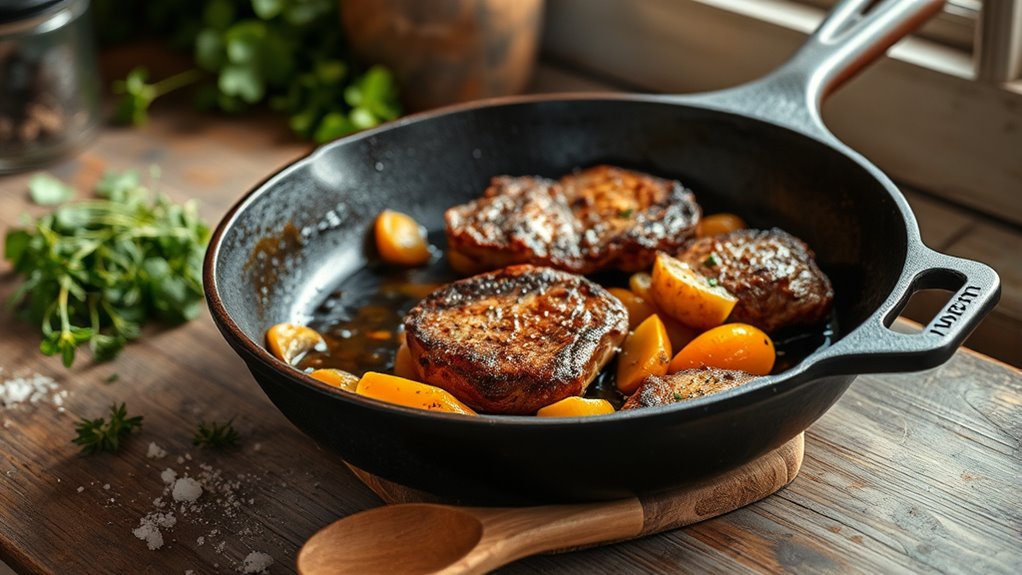
Cast iron skillets are essential cookware for searing steaks, sautéing veggies, baking cornbread, and roasting chicken. Known for their excellent heat retention and even heat distribution, they ensure your food develops a perfect crust and cooks consistently.
These versatile pans are prized for their durability and ability to enhance the flavors of your dishes.
With proper care, cast iron skillets build a natural non-stick surface that improves with use and can last for generations. They also add health benefits by enriching your food with iron.
Want to master their use and upkeep? Keep exploring to reveal the full potential of cast iron skillets in your kitchen.
Key Takeaways
- Cast iron skillets are versatile for stovetop, oven, campfire cooking, and baking, adapting to many cooking methods seamlessly.
- They provide even heat distribution and excellent heat retention, ensuring consistent cooking and perfect searing.
- Over time, they develop a natural non-stick surface through seasoning, enhancing cooking performance and flavor.
- Cast iron skillets are highly durable and long-lasting, often lasting generations with proper care and maintenance.
- Cooking with cast iron adds dietary iron to food, offering an additional nutritional benefit.
Why Cast Iron Skillets Are Essential for Every Kitchen
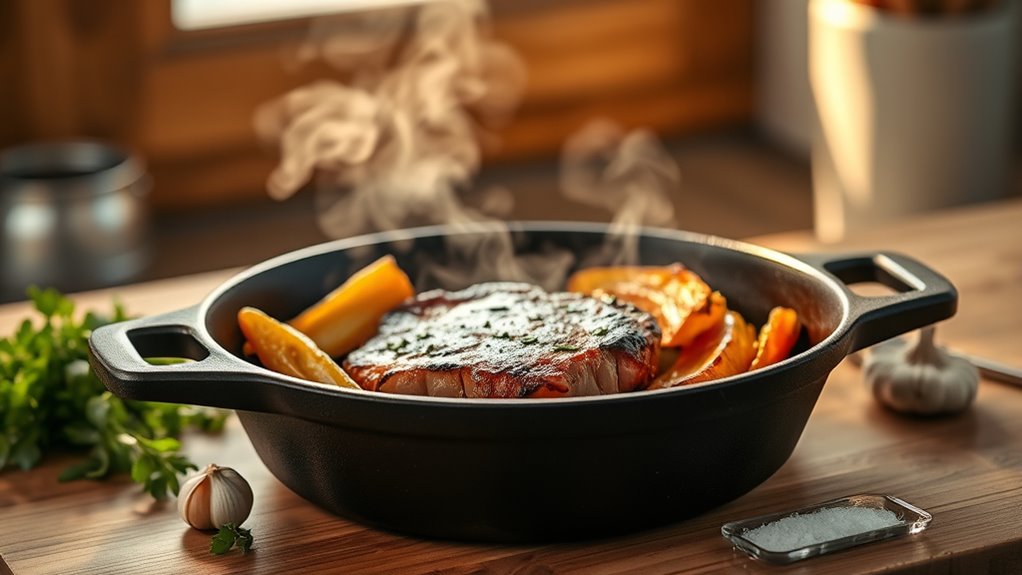
Although you might have many pans in your kitchen, a cast iron skillet stands out as a must-have tool. You’ll appreciate its unmatched durability—it can last for generations if you take care of it. Unlike other pans, cast iron provides even heat distribution and excellent heat retention, so your food cooks consistently without hot spots.
You can use it on the stovetop, in the oven, or even over a campfire, making it incredibly versatile. Plus, it naturally builds a non-stick surface over time, reducing the need for added oils. You also benefit from the iron it imparts to your food, which can be a healthy bonus.
Simply put, a cast iron skillet is an essential, reliable, and multifunctional kitchen companion you won’t want to be without.
Best Foods to Cook in a Cast Iron Skillet
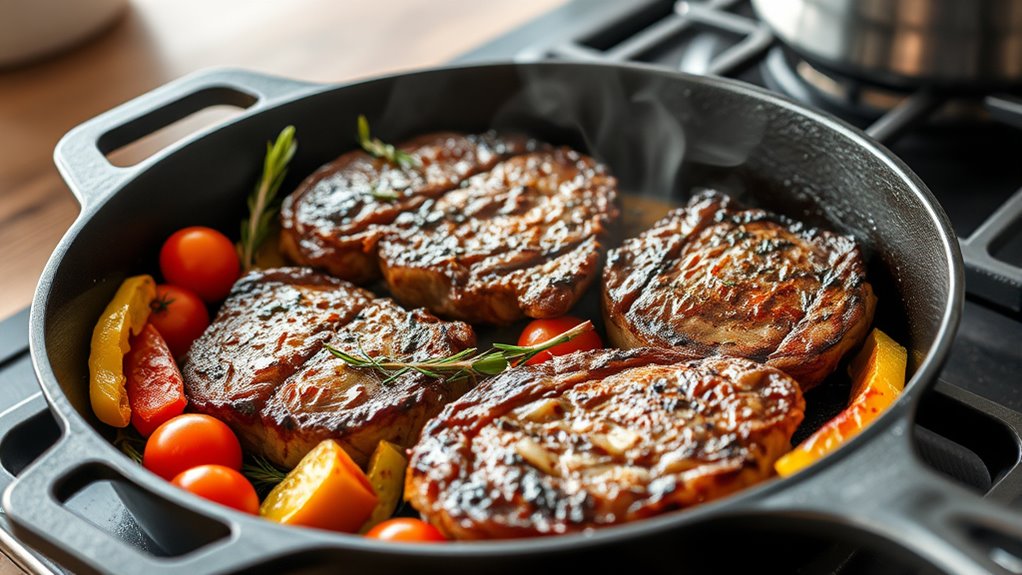
What makes a cast iron skillet so versatile in the kitchen? You can cook a wide range of foods with it, from searing steaks to frying eggs. Its sturdy surface lets you achieve a perfect crust on meats and veggies alike.
You can roast chicken, bake cornbread, or even whip up a skillet cookie. It’s great for sautéing greens or caramelizing onions, thanks to its even cooking surface. You can also use it for frying foods, like crispy bacon or golden potatoes.
Because it works on the stovetop and in the oven, you can easily shift from searing to baking without switching pans. Once you get comfortable, you’ll find it’s your go-to for both simple and complex meals.
Why Cast Iron Skillets Hold and Spread Heat So Well
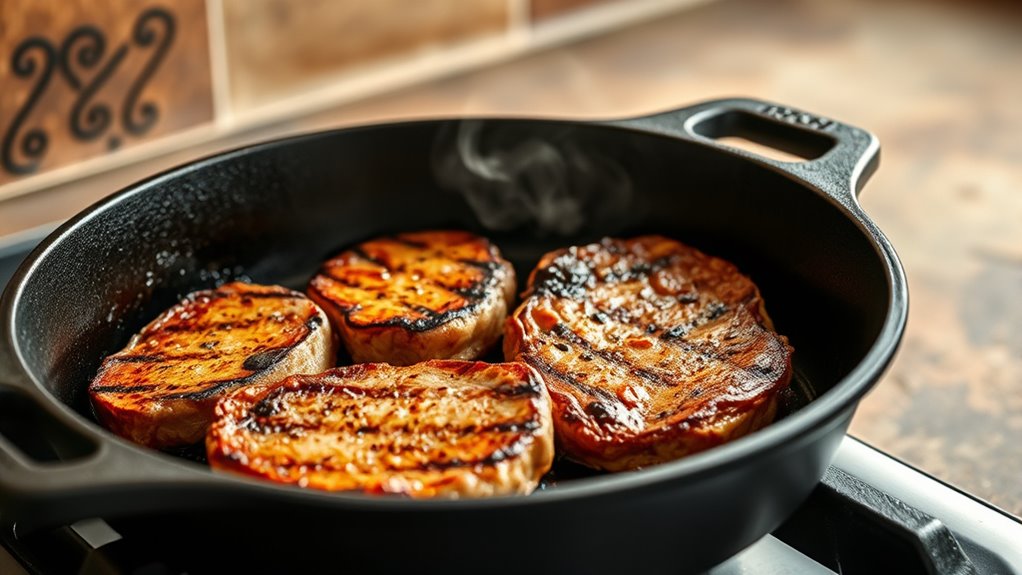
You’ll notice cast iron skillets heat evenly because their dense material spreads warmth across the surface. This density also helps them hold heat longer than other pans, so your food cooks consistently.
Understanding these qualities shows why cast iron is a kitchen favorite for heat retention and distribution.
Dense Material Composition
Because cast iron is made from a dense alloy of iron and carbon, it absorbs and retains heat exceptionally well. When you use a cast iron skillet, that density means the pan holds onto heat longer, giving you consistent cooking temperatures. This material composition gives cast iron its unique ability to withstand high heat without warping or damage.
Here’s why the dense material matters to you:
- Holds heat longer than lighter materials
- Provides steady cooking temperatures
- Withstands high oven and stovetop heat
- Builds a natural non-stick surface over time
- Durable and resistant to damage
Understanding this helps you appreciate why cast iron skillets are a reliable tool in your kitchen.
Even Heat Distribution
The dense composition of cast iron not only helps it hold heat but also allows it to spread that heat evenly across the cooking surface. When you cook with a cast iron skillet, you won’t find hot spots that burn your food. Instead, the heat travels uniformly, ensuring every bite cooks perfectly.
This even heat distribution is key for tasks like searing steaks or frying eggs.
| Material | Heat Conductivity | Heat Distribution |
|---|---|---|
| Cast Iron | Moderate | Even |
| Aluminum | High | Uneven (thin spots) |
| Stainless Steel | Low | Uneven |
With cast iron, you get steady, consistent warmth, helping you cook with confidence every time.
High Heat Retention
How does a cast iron skillet keep your food warm long after it’s off the heat? It’s all about its high heat retention. Cast iron is dense and thick, which means it absorbs a lot of heat and holds onto it for a long time.
This quality lets you cook evenly and maintain temperature even when the skillet is removed from the burner.
Here’s why cast iron excels at heat retention:
- Thick material stores more heat than thinner pans
- Dense iron slows heat loss to the environment
- Even heat spread prevents hot spots
- Maintains cooking temperature for searing and frying
- Keeps food warm longer on the plate
With a cast iron skillet, you get consistent cooking results and food that stays hot longer.
High-Heat Searing and Sautéing With Cast Iron
When you sear or sauté with cast iron, you get even heat distribution that prevents hot spots. The skillet holds high temperatures longer, giving you perfect browning every time. This makes it ideal for locking in flavors and achieving that beautiful crust on your food.
Even Heat Distribution
Because cast iron holds and distributes heat so evenly, you can achieve perfect high-heat searing and sautéing without worrying about hot spots burning your food. This even heat distribution guarantees your ingredients cook uniformly, locking in flavors and creating a beautiful crust. When you use cast iron, you’ll notice your food browns more consistently, which is key for dishes like steak, stir-fries, and vegetables.
Here’s why even heat distribution matters for you:
- Prevents burning in certain spots
- Promotes consistent browning
- Enhances flavor development
- Allows precise temperature control
- Saves energy by using heat efficiently
With cast iron, your cooking becomes more reliable and delicious every time.
High Temperature Retention
Why does cast iron excel at high-heat searing and sautéing? It’s all about its impressive temperature retention. Once your cast iron skillet heats up, it holds that heat steadily, even when you add cold ingredients.
This means you get a consistent, intense heat that’s perfect for quickly searing meats or sautéing vegetables without losing temperature. Unlike thinner pans that cool down rapidly, cast iron maintains the heat, ensuring your food cooks evenly and develops a great texture.
This high-heat retention also helps reduce cooking times and prevents sticking when properly seasoned. So, when you want to achieve that quick, intense cooking burst, your cast iron skillet is the reliable tool that won’t let you down.
Ideal For Browning
The ability of cast iron to hold heat steadily sets the stage for perfect browning. When you sear or sauté with cast iron, the pan maintains a consistent high temperature, ensuring your food develops that rich, golden crust without steaming.
This makes it ideal for locking in juices and flavors.
You’ll find cast iron excels at:
- Searing steaks to a caramelized finish
- Sautéing vegetables evenly without burning
- Browning chicken skin to crispy perfection
- Creating a flavorful crust on burgers
- Toasting spices and nuts for enhanced aroma
Baking and Roasting in Cast Iron Skillets
When you bake or roast in a cast iron skillet, you tap into its exceptional heat retention and even cooking surface. This means your dishes cook uniformly, avoiding hot spots that can ruin texture or flavor. You can confidently bake cornbread, deep-dish pizza, or even skillet cookies, knowing they’ll develop a perfect crust.
For roasting, the skillet’s heat helps brown vegetables and meats beautifully, locking in juices and flavor. Plus, cast iron can go straight from oven to table, making serving easier. Just remember to preheat your skillet well to allow the heat to distribute evenly.
With proper care, your cast iron skillet will become an indispensable tool for all your baking and roasting adventures.
Using Your Cast Iron Skillet From Stovetop to Oven
Although cast iron skillets excel on the stovetop, you can easily switch them to the oven for versatile cooking. This dual functionality lets you start a dish with a perfect sear and finish it by baking or roasting. Just make sure your skillet’s handle is oven-safe and preheat the oven as needed.
Cast iron skillets transition effortlessly from stovetop searing to oven roasting for versatile cooking.
Here’s what you can do with your skillet from stovetop to oven:
- Sear steaks or chicken on the stovetop, then transfer to the oven to cook through.
- Start a frittata on the stove and finish baking it in the oven.
- Begin a sauce or gravy on the stovetop, then bake casseroles directly in the skillet.
- Roast vegetables after sautéing them briefly.
- Bake cornbread or skillet cookies with a crispy crust.
This seamless switch expands your cooking options efficiently.
Developing a Natural Non-Stick Surface on Cast Iron Skillets
If you want your cast iron skillet to perform like a pro, developing a natural non-stick surface is essential. This surface forms through a process called seasoning, where oils bake into the skillet’s pores, creating a smooth, protective layer. To build this, cook with oils that have high smoke points, like vegetable or flaxseed oil.
Each time you cook fatty or oily foods, you enhance this layer. Avoid acidic ingredients early on, as they can break down seasoning. Over time, repeated heating and oiling create a slick, durable coating that prevents food from sticking.
This natural non-stick surface not only improves cooking performance but also protects your skillet from rust and damage, making it a reliable kitchen tool for years to come.
Caring for and Maintaining Your Cast Iron Skillet
Proper care and maintenance keep your cast iron skillet performing at its best for decades. To guarantee your skillet stays in top shape, follow these simple steps regularly:
- Clean it immediately after use with hot water and a stiff brush; avoid soap to preserve seasoning.
- Dry it thoroughly to prevent rust; use a towel or heat it on the stove.
- Apply a thin layer of cooking oil after each cleaning to maintain the seasoning.
- Store your skillet in a dry place, ideally with a paper towel inside to absorb moisture.
- Re-season your skillet occasionally by coating it with oil and heating it in the oven.
Common Mistakes to Avoid When Cooking With Cast Iron
When you cook with cast iron, steering clear of common mistakes can make all the difference in your results and the skillet’s longevity. First, don’t use soap or harsh detergents to clean your skillet; they strip away the seasoning. Avoid soaking it in water for long periods, which can cause rust.
Never cook acidic foods, like tomatoes, in an unseasoned pan, as this can damage the surface. Don’t heat the skillet too quickly or at excessively high temperatures—it can warp or damage the seasoning. Also, avoid leaving food stuck in the pan for too long, which complicates cleaning.
Finally, never put a hot skillet directly into cold water; the sudden temperature change can cause cracking. Follow these tips, and your cast iron will serve you well for years.
Frequently Asked Questions
Can Cast Iron Skillets Be Used on Induction Cooktops?
Yes, you can use cast iron skillets on induction cooktops because they’re magnetic. They heat evenly and retain heat well, making them perfect for induction cooking, as long as your skillet’s base is flat and clean.
Are Cast Iron Skillets Safe for Acidic Foods Like Tomato Sauce?
Don’t throw the baby out with the bathwater—you can use cast iron with acidic foods like tomato sauce, but don’t cook them too long. Acid can break down seasoning, so re-season afterward to keep your skillet happy.
How Heavy Is a Typical Cast Iron Skillet?
A typical cast iron skillet weighs between 5 to 12 pounds, depending on size. You’ll feel the sturdy weight when you lift it, but that heaviness helps with even heating and excellent heat retention while cooking.
Can Cast Iron Skillets Be Used for Deep Frying?
You can definitely use cast iron skillets for deep frying. Imagine golden, crispy fries sizzling evenly in hot oil—the skillet’s thick walls hold heat steady, giving your food a perfect, crunchy finish every time without temperature drops.
Is It Necessary to Season a New Cast Iron Skillet Before Use?
Yes, you should season a new cast iron skillet before use. It creates a natural non-stick surface, prevents rust, and improves cooking performance.
You’ll get better results and longer-lasting cookware by seasoning it properly.
Conclusion
Now that you know what cast iron skillets are good for, you’re ready to make them a kitchen staple. They’re perfect for searing, sautéing, baking, and roasting, and they only get better with time as you develop that natural non-stick surface.
Just remember, “a watched pot never boils,” so be patient with your skillet, care for it properly, and avoid common mistakes. Soon, you’ll enjoy cooking with cast iron every day!
Incorporating cast iron skillets into your cooking routine enhances flavor and durability. Their versatility makes them ideal for a variety of dishes, and mastering their use ensures delicious results every time. Embrace the benefits of cast iron skillets and transform your kitchen experience.