How to Clean Seriously Burnt Stainless Cookers in 7 Steps
To clean seriously burnt stainless cookers effectively, it’s important to understand the type of stains and the extent of damage. Burnt stainless cookware can be challenging to restore, but with the right cleaning techniques and supplies, you can bring back its shine.
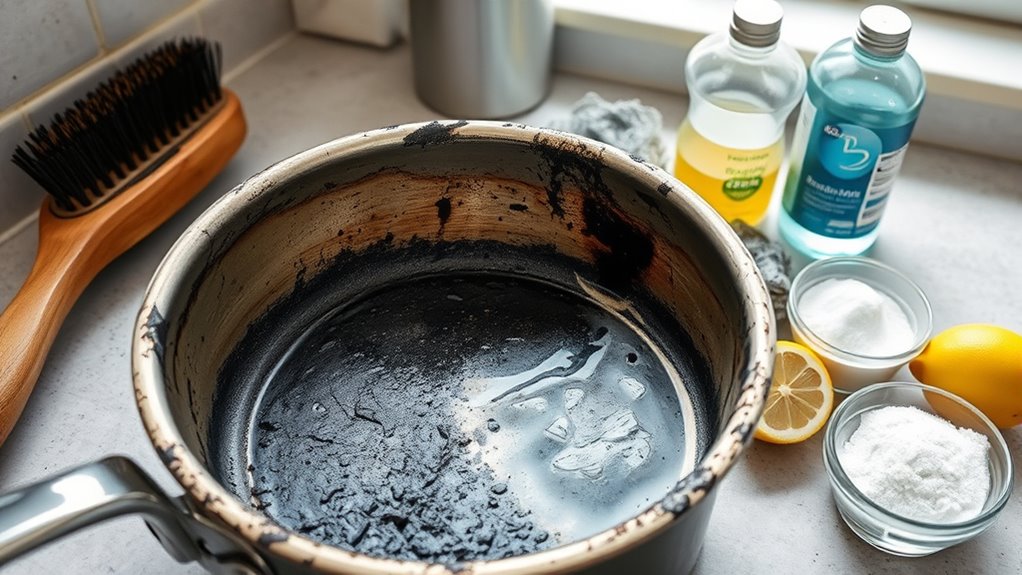
Essential items include baking soda, vinegar, a non-abrasive sponge, and gloves for protection.
Start by soaking the cookware in warm water mixed with baking soda or vinegar for about 30 minutes. This helps loosen stubborn burnt residue without damaging the surface.
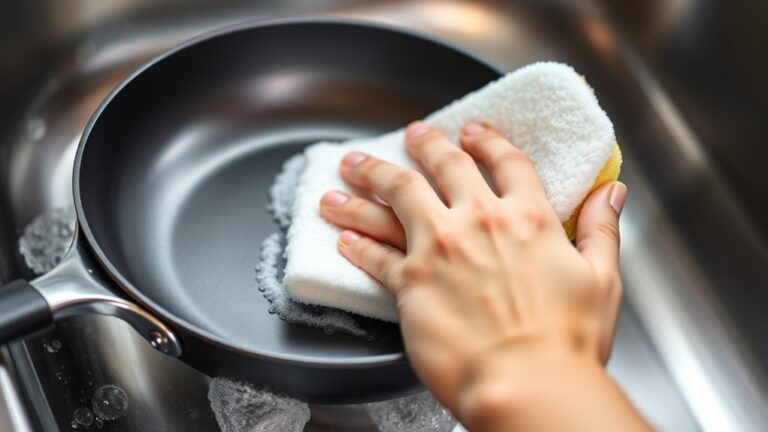
Next, gently scrub the cookware using a soft sponge or a nylon brush, avoiding harsh pads that can scratch the stainless steel.
For tough stains, apply a paste of baking soda and vinegar directly and let it sit before scrubbing again.
Finally, rinse thoroughly with clean water and dry the cookware completely to prevent water spots.
Follow these simple steps, and you’ll keep your stainless steel cookware spotless and damage-free for years to come.
Key Takeaways
- Identify the burnt stain type and severity to choose the appropriate cleaning method without damaging the stainless steel surface.
- Soak the burnt cookware in warm water with baking soda or vinegar for at least 30 minutes to loosen stubborn residue.
- Use a non-abrasive sponge or nylon brush with gentle circular scrubbing to avoid scratching the stainless steel.
- Apply baking soda and vinegar on burnt spots to create a fizzing reaction that helps lift tough stains effectively.
- Avoid harsh chemicals and metal scrubbers, and rinse thoroughly before drying with a microfiber cloth for a polished finish.
Assess Burnt Stain Types and Severity on Stainless Steel Cookware
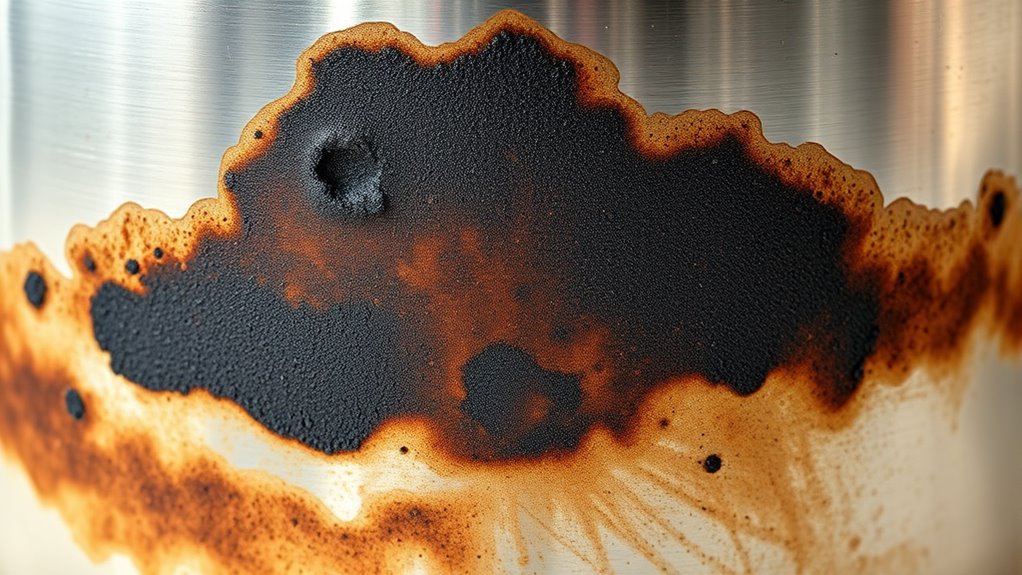
Before you start scrubbing, you need to identify the type and severity of the burnt stains on your stainless steel cookware. Are the stains light discolorations, brownish marks, or thick, blackened layers? Light stains might only need gentle cleaning, while thick burn marks require more effort.
Check if the burnt residue is stuck firmly or flakes off easily. Also, inspect the cookware’s surface for warping or pitting, as these damages affect your cleaning approach. Knowing whether the stains are from sugar, oil, or burnt food helps you choose the right method later.
Taking a moment to assess the damage saves you time and effort, so you don’t waste energy on ineffective cleaning techniques or damage your cookware further.
Gather Household Supplies for Cleaning Burnt Cookware

To clean seriously burnt stainless cookware, you’ll need a few essential supplies like a scrub brush, sponge, and soft cloth. You can also use safe household ingredients such as baking soda, vinegar, and dish soap to tackle tough stains.
Having these items ready will make the cleaning process much smoother and more effective.
Essential Cleaning Materials
Although burnt stainless steel cookware might seem impossible to clean, you can tackle the task effectively with a few common household supplies. Having the right tools on hand makes the process smoother and helps you restore your cookware without damage.
Start by gathering these essential cleaning materials:
- Non-abrasive sponge or scrubber – to gently remove burnt residue without scratching the surface.
- Plastic or wooden scraper – to lift stubborn burnt bits safely.
- Microfiber cloth – for wiping and polishing after cleaning.
- Rubber gloves – to protect your hands from harsh cleaning and hot water.
With these materials ready, you’re set to approach the cleaning process confidently and efficiently.
Safe Household Ingredients
When you’re ready to clean seriously burnt stainless steel cookware, using safe household ingredients can make the process both effective and gentle on your pots and pans. Start with baking soda, a mild abrasive that lifts burnt residue without scratching. White vinegar is another great choice—it helps break down stubborn stains and deodorizes.
You can also use lemon juice for its natural acidity and fresh scent. Dish soap is essential for cutting grease and loosening grime. For tough spots, mix baking soda with water to create a paste, or combine vinegar and water in a spray bottle for easy application.
These common ingredients are safe, affordable, and usually already in your kitchen, so gather them before tackling your burnt cookware.
Soak Cookware to Loosen Burnt Residue Quickly

You’ll save time and effort by soaking your burnt stainless cooker before scrubbing. Using solutions like warm water with baking soda or vinegar helps break down stubborn residue fast.
Let it sit for at least 30 minutes to loosen the burnt bits effectively.
Benefits of Soaking
Soaking your burnt stainless steel cookware can save you a lot of scrubbing effort and time. When you let the residue soak, it softens and loosens, making cleanup much easier. You’ll notice less frustration and fewer scratches from aggressive scrubbing.
Plus, soaking helps preserve your cookware’s finish and extends its lifespan.
Here are four key benefits you’ll enjoy by soaking:
- Easier residue removal – burnt bits detach more quickly.
- Less elbow grease – you don’t need harsh scrubbing tools.
- Prevents damage – protects the stainless steel surface.
- Saves time – cleanup becomes faster and more efficient.
Best Soaking Solutions
Although burnt stainless steel can be stubborn, choosing the right soaking solution makes residue removal much easier. Start with a mixture of warm water and dish soap to loosen light to moderate burnt bits.
For tougher stains, fill the cooker with hot water and add a cup of white vinegar; let it soak for an hour to break down carbonized residue. Baking soda also works wonders—sprinkle it generously over the burnt areas, then add hot water to cover.
Let it sit for several hours or overnight to soften the residue. Avoid harsh chemicals that can damage your cookware. After soaking, use a non-abrasive scrubber to wipe away loosened grime.
Using these effective soaking solutions saves time and effort when restoring your stainless steel cookware.
Scrub Burnt Stainless Steel Cookware Gently Without Scratching
When dealing with burnt stainless steel cookware, you need to choose your scrubbing tools carefully to avoid scratching the surface. Harsh scrubbing can damage your pot or pan, making it harder to clean next time. Use gentle but effective methods instead.
Here’s how to scrub without scratching:
- Use a soft sponge or non-abrasive scrubber designed for stainless steel.
- Try a nylon brush with firm but flexible bristles for stubborn spots.
- Avoid steel wool or metal scouring pads—they’re too harsh.
- Apply gentle pressure and scrub in circular motions to lift burnt residue.
Patience is key. By treating your cookware gently, you’ll restore its shine without causing damage.
Apply Baking Soda and Vinegar to Remove Tough Burnt Stains
If your burnt stains won’t budge with scrubbing alone, applying baking soda and vinegar can break down tough residue effectively. First, sprinkle a generous layer of baking soda over the burnt areas. Then, pour white vinegar slowly on top; it will fizz and help lift the grime.
Let this mixture sit for about 15 to 20 minutes, allowing the chemical reaction to work on the burnt spots. Afterward, use a non-abrasive scrubber to gently rub the stains. You’ll notice the burnt residue loosening, making it easier to clean.
If necessary, repeat the process for stubborn patches. This natural combination avoids harsh chemicals while restoring your stainless steel’s shine without damaging the surface.
Rinse and Dry Stainless Steel Cookware to Prevent Spots
After loosening burnt residue with baking soda and vinegar, make sure to thoroughly rinse your stainless steel cookware. This step removes any leftover cleaning agents that could cause discoloration or spots if left behind. Use warm water and a soft sponge to gently wash away residue without scratching the surface.
Once rinsed, dry your cookware immediately to prevent water spots and mineral deposits.
Follow these steps for effective rinsing and drying:
- Rinse under warm running water to remove all cleaning solution.
- Use a soft cloth or sponge to wipe off stubborn residue.
- Shake off excess water to speed up drying.
- Dry completely with a clean, soft towel to avoid water marks.
Proper rinsing and drying keep your stainless steel shiny and spot-free.
Maintain Stainless Steel Cookware to Avoid Future Burnt Stains
Although stainless steel is durable, you can prevent future burnt stains by maintaining your cookware with simple habits. Always preheat your pan on low to medium heat before adding oil or food to avoid scorching. After cooking, soak the cookware promptly to loosen any residue.
Avoid using harsh metal utensils that can scratch and make stains harder to remove.
Here’s a quick guide to maintaining your stainless steel cookware:
| Action | Benefit |
|---|---|
| Preheat on low/medium | Prevents food from sticking |
| Soak immediately | Loosens burnt-on residue |
| Use silicone utensils | Protects surface from scratches |
Frequently Asked Questions
Can Burnt Stainless Steel Cookware Release Harmful Chemicals?
No, burnt stainless steel cookware won’t release harmful chemicals. Stainless steel is non-reactive and safe even when burnt. You’ll just get stubborn stains and residue,
but it won’t contaminate your food with toxins or dangerous substances.
Is It Safe to Use Metal Utensils on Burnt Stainless Steel?
You shouldn’t use metal utensils on burnt stainless steel because they can scratch and damage the surface. Instead, opt for wooden, silicone, or plastic tools to protect your cookware and keep it in good condition.
These materials are gentler and help maintain the integrity of your cookware. Using the right utensils can extend the life of your stainless steel pots and pans. Always choose tools that won’t harm the surface.
How Do I Prevent Stainless Steel Cookware From Discoloring?
You can prevent discoloring by cooking on medium heat, avoiding overheating empty pans, and promptly cleaning after use.
Also, don’t let food or salt sit too long, and use gentle cleaners to keep your stainless steel shiny.
Can Professional Cleaning Services Restore Badly Burnt Cookware?
About 70% of cookware can be restored by professionals. You can trust cleaning services to revive your badly burnt stainless steel cookware, saving you time and effort while bringing back its shine and usability effectively.
Are There Specific Brands That Resist Burning Better?
Yes, you’ll find brands like All-Clad and Calphalon resist burning better due to their high-quality materials and construction. Choosing cookware with thick, layered bases helps you cook evenly and avoid serious burns.
These features contribute to better heat distribution. As a result, food is less likely to stick or burn. Investing in reputable brands can enhance your cooking experience.
Conclusion
Now that you’ve tackled those tough burnt stains, your stainless steel cookware will shine like a diamond in the kitchen. Just remember, a little care goes a long way—so don’t let burnt residue sneak back in like an uninvited guest.
With these simple steps, you’ll keep your pots and pans sparkling and ready for your next culinary adventure. Cleaning seriously burnt stainless steel doesn’t have to be a nightmare—it’s a breeze when you know how!
By following these effective methods to clean seriously burnt stainless cookers, you ensure your cookware stays in top condition. Regular maintenance and proper cleaning will make sure your stainless steel cookware remains spotless and durable for years to come.