How Long Do Rice Cookers Take to Cook Rice?
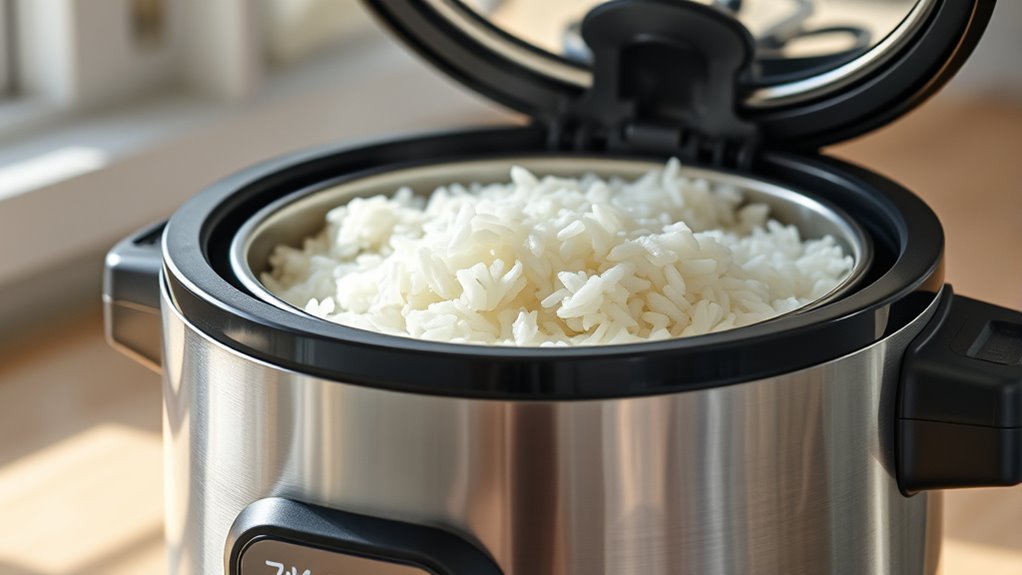
You can expect your rice cooker to take about 20 to 40 minutes to cook most rice types, depending on the variety and quantity you use. How long rice cookers take to cook rice varies, with white rice usually cooking faster, around 15 to 30 minutes.
Brown rice and whole grains take longer, often 40 minutes or more.
Features like induction heating and pre-soaking can speed things up. Understanding these factors can help you get perfectly cooked rice every time.
If you want to master precise times and techniques, there’s more helpful info to explore ahead.
Key Takeaways
- Rice cookers typically take between 20 to 40 minutes to cook rice, depending on type and quantity.
- White rice cooks in about 15 to 30 minutes, while brown and whole grains require 40 to 60 minutes.
- Advanced models with induction heating or fuzzy logic cook rice faster and more evenly than basic coil heater models.
- Pre-soaking rice for 20-30 minutes can reduce cooking time by 10 to 15 minutes.
- Using quick-cook settings, rinsing rice, and starting with hot water also help speed up the cooking process.
How Long Does a Rice Cooker Usually Take to Cook Rice?
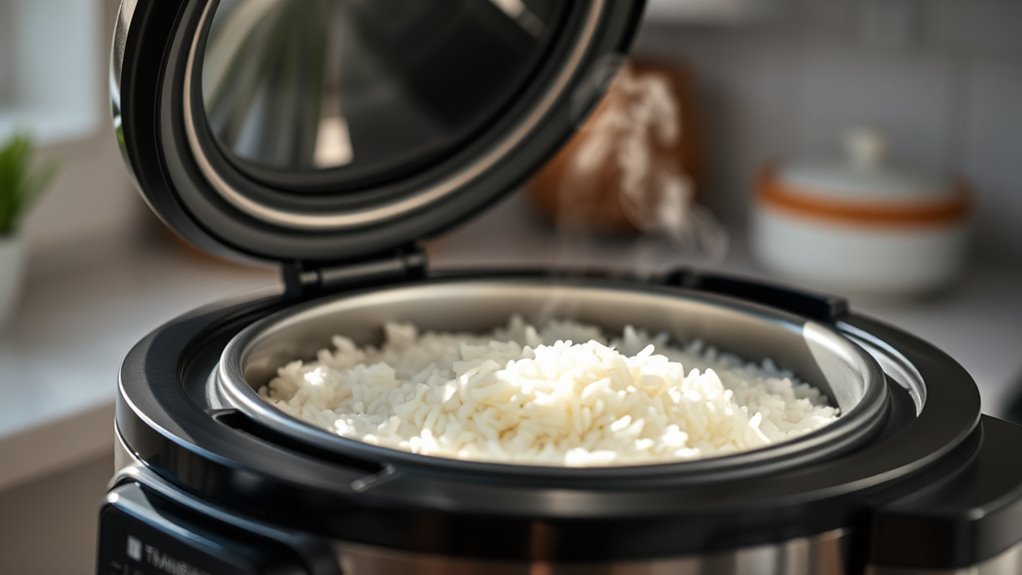
Although cooking times can vary based on the type of rice and your specific cooker, a rice cooker usually takes between 20 to 40 minutes to cook rice. When you start the cooker, it heats the water to boiling, then simmers until the rice absorbs the water. Most basic rice cookers fall within this time frame, making it easy to predict when your meal will be ready.
You don’t have to watch it constantly; the cooker automatically switches to “keep warm” when done. If you’re in a hurry, some models offer quick-cook settings that reduce time slightly. Remember, factors like the amount of rice and water you use can affect cooking time, so always follow your cooker’s instructions for the best results.
How Rice Cooker Cooking Times Vary by Rice Type
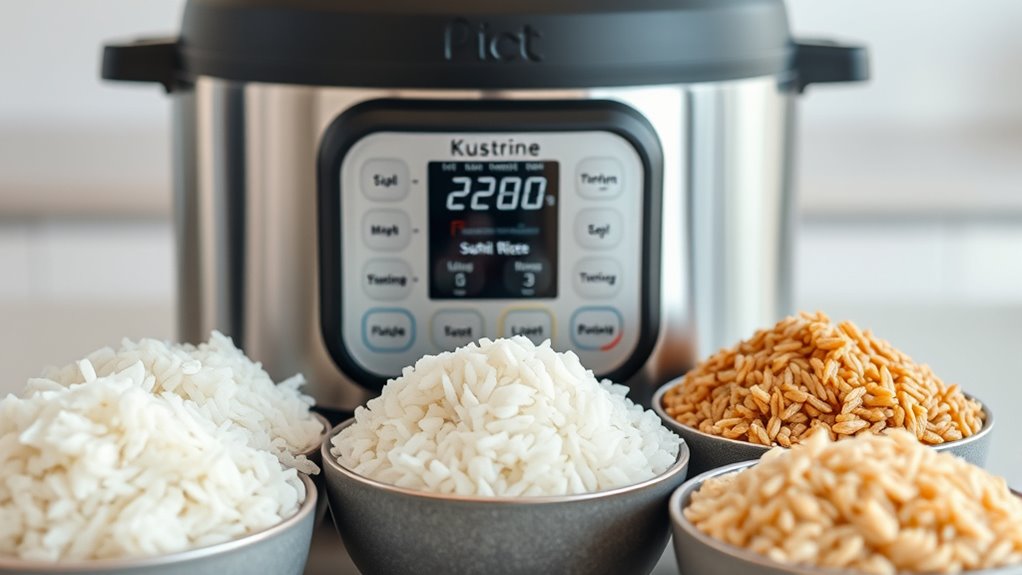
You’ll notice that cooking times change depending on the type of rice you use. White rice usually cooks faster, while brown rice takes longer due to its fibrous bran layer. Specialty rice varieties also have unique cooking durations that your rice cooker adjusts for best results.
White Rice Timing
How long does it take to cook white rice in a rice cooker? Typically, it ranges from 15 to 30 minutes depending on the rice type and cooker model. You’ll notice that timing varies with grain size and water amount.
Short grain cooks faster, while jasmine or basmati may take a bit longer. Here’s a quick reference to help you gauge cooking times:
| Rice Type | Typical Time | Texture |
|---|---|---|
| Short Grain | 15-20 mins | Sticky, soft |
| Medium Grain | 20-25 mins | Slightly firm |
| Long Grain | 25-30 mins | Fluffy, separate |
| Jasmine | 25-30 mins | Aromatic, tender |
| Basmati | 25-30 mins | Light, fluffy |
Knowing these times helps you plan perfectly cooked white rice every time.
Brown Rice Duration
Since brown rice retains its bran layer, it takes longer to cook than white rice in a rice cooker. Typically, you’ll find that brown rice takes about 40 to 50 minutes, compared to 20 to 30 minutes for white rice. That extra time allows the cooker to soften the tougher outer layer and fully hydrate the grains.
If your rice cooker has a specific brown rice setting, use it—it adjusts the cooking time and temperature to get the best texture. Without that setting, you can expect it to take longer or might need to add more water. Keep in mind that soaking brown rice beforehand can reduce cooking time slightly.
Specialty Rice Cooking
Wondering why your rice cooker sometimes takes longer or shorter to cook different types of rice? It all comes down to the rice variety’s unique water absorption and texture needs. For example, jasmine and basmati rice require less water and usually cook faster, around 15-20 minutes, because their grains are lighter and less dense.
On the other hand, sticky or glutinous rice demands more soaking and steaming time, often extending the cooking process to 30 minutes or more. Wild rice, which isn’t technically rice but a seed, takes even longer—up to 45 minutes—due to its tougher outer shell. Knowing these differences helps you adjust water levels and cooking times for perfect results every time,
so you can enjoy your specialty rice just the way you like it.
Exact Cooking Times for White Rice in a Rice Cooker
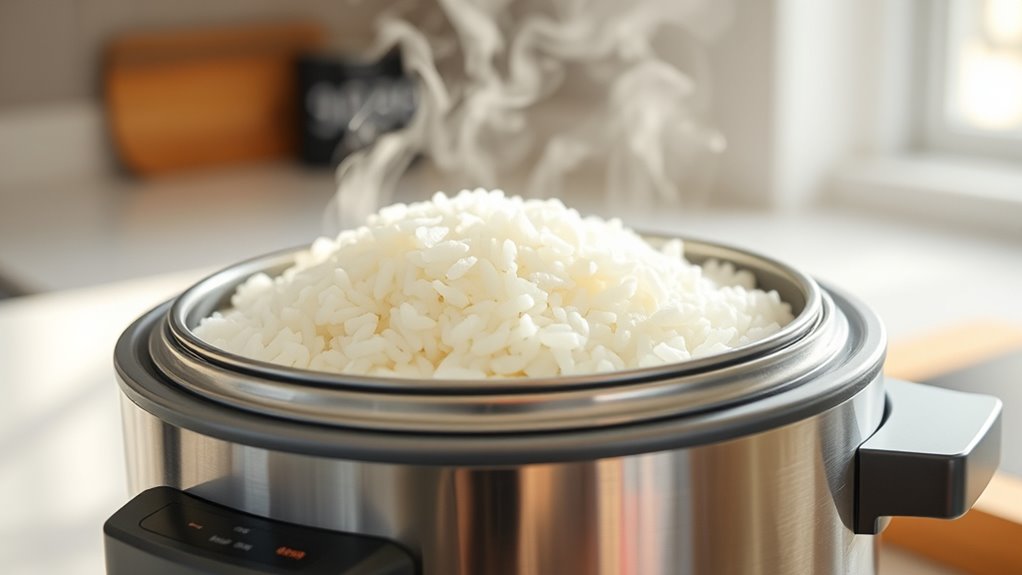
When cooking standard white rice in a rice cooker, you can expect it to take about 15 to 25 minutes. Keep in mind that factors like the rice variety, water ratio, and your rice cooker model can affect the exact time.
You’ll want to adjust accordingly to get perfectly cooked rice every time.
Standard White Rice Timing
Although cooking times can vary slightly depending on the rice cooker model, you can generally expect standard white rice to take between 15 and 25 minutes to cook. When you start your rice cooker, it heats the water to a boil, then switches to a simmer to absorb all the water. Most basic rice cookers stick to this timing, delivering fluffy, perfectly cooked rice without you needing to watch it closely.
If you’re using a more advanced model with specific white rice settings, it might adjust the time slightly but stay within this range. Once the timer ends or the cooker switches to “keep warm,” your rice should be ready to serve. This timing works well for typical white rice varieties like jasmine or long-grain white rice.
Factors Affecting Cook Duration
Since rice cookers vary in design and features, several factors can influence how long it takes to cook white rice. The type of rice cooker you use—basic, fuzzy logic, or induction heating—affects cooking time, with advanced models adjusting heat more precisely for faster, consistent results. The amount of rice and water you add matters too; larger quantities take longer to cook.
Also, the rice’s moisture content and temperature before cooking play roles—cold or drier rice may extend cooking time. Altitude influences boiling points, so higher elevations can lengthen cooking durations. In conclusion, how you rinse and soak the rice beforehand impacts absorption and texture, subtly changing cook times.
Knowing these factors helps you predict and optimize your rice cooker’s performance.
Rice Cooker Times for Brown Rice and Whole Grains
Because brown rice and whole grains retain their bran layers, they take longer to cook than white rice. When you use a rice cooker, expect these grains to need more time and water to become tender and fully cooked. Most rice cookers adjust automatically, but knowing general cook times helps.
Here’s what you should guarantee in mind:
- Brown rice usually takes 40-50 minutes to cook.
- Whole grains like barley or farro can take 45-60 minutes.
- You’ll need to increase the water ratio to about 2 to 2.5 cups per cup of grain.
- Some rice cookers have a specific setting for brown rice or whole grains to optimize cooking time.
Understanding these points assures your grains come out perfectly every time.
Cooking Times for Specialty Rice in Your Rice Cooker
Beyond brown rice and whole grains, specialty rice varieties bring unique flavors and textures that may require different cooking times in your rice cooker. For example, jasmine rice cooks faster than wild rice, which needs more time to soften. Adjusting your rice cooker’s settings or adding extra water can help achieve the best results with these varieties.
| Specialty Rice Type | Approximate Cooking Time |
|---|---|
| Jasmine Rice | 15-20 minutes |
| Arborio Rice | 20-25 minutes |
| Wild Rice | 45-50 minutes |
| Sushi Rice | 20-25 minutes |
Knowing these times helps you tailor your cooking process, ensuring each specialty rice cooks perfectly without undercooking or overcooking.
How Rice Quantity Affects Cooking Time in Rice Cookers
When you increase the amount of rice in your cooker, the cooking time usually goes up as well. More rice means the cooker needs extra time to absorb water and evenly heat the grains. However, the change isn’t always linear; doubling the rice won’t necessarily double the cooking time.
Keep in mind these key points:
- Larger quantities need more water, affecting cooking duration.
- Overfilling can lead to uneven cooking or longer times.
- Smaller amounts cook faster but risk drying out if not monitored.
- Using the rice cooker’s measurement markings helps balance rice and water perfectly.
Adjusting the rice quantity requires you to keep these factors in mind for consistent results every time.
Why Your Rice Cooker Model Changes Cooking Time
Your rice cooker’s cooking time can vary depending on its heating element and overall capacity. Different models have unique settings that adjust how heat is distributed and how long the rice cooks.
Understanding these factors helps you get the best results from your specific rice cooker.
Heating Element Variations
Since rice cookers rely on different heating elements, the time it takes to cook rice can vary considerably between models. Your rice cooker’s heating element directly affects how quickly and evenly the rice cooks. Some use basic coil heaters, while others have more advanced induction or microcomputer-controlled elements.
Here’s how these variations impact cooking time:
- Coil heaters heat unevenly, often taking longer.
- Induction heating provides faster, more consistent heat.
- Microcomputer-controlled elements adjust temperature dynamically, optimizing cooking time.
- Multi-layered heating elements can cook rice more evenly and quickly.
Understanding these differences helps you set realistic expectations for your cooker’s performance. If you want quicker or more precise cooking, models with advanced heating elements are worth considering.
Capacity And Settings
Although all rice cookers perform the same basic function, the capacity and available settings on your model considerably influence cooking time. If you have a larger cooker, it might take longer to cook a full pot because the heating element needs to work through more rice and water. Smaller models cook faster but might not handle big batches well.
Additionally, your rice cooker’s settings—like white rice, brown rice, or quick cook—adjust cooking times to suit different rice types. Some advanced models include fuzzy logic technology that fine-tunes the process, making cooking times more efficient. When you pick a cooker, consider how much rice you usually prepare and which settings you’ll use most, since both directly impact how long your rice takes to cook.
What Really Happens Inside Your Rice Cooker While Cooking
When you start your rice cooker, it heats the water and rice inside the pot, creating steam that cooks the grains evenly. As the temperature rises, the water turns to steam, transferring heat efficiently to every grain. The cooker monitors the temperature until the water’s fully absorbed or evaporated, signaling the rice is done.
Here’s what happens inside:
Here’s a simple breakdown of the cooking process inside your rice cooker.
- Heating element warms the pot from below
- Water temperature reaches boiling point, producing steam
- Steam cooks rice, softening the grains uniformly
- Sensor detects temperature change, triggering switch to “keep warm” mode
This process ensures consistent texture without burning or drying out. You don’t need to stir or adjust anything; your rice cooker manages everything automatically for perfect results every time.
How Pre-Soaking Rice Changes Cooking Time
Understanding how your rice cooker manages heat and moisture helps explain why pre-soaking rice can affect cooking time. When you soak rice before cooking, the grains absorb water, softening their outer layers. This means your rice cooker doesn’t need to work as long to hydrate and cook the rice fully.
As a result, pre-soaked rice typically cooks faster than unsoaked rice. However, the exact time saved depends on the rice variety and soaking duration. For example, soaking for 20 to 30 minutes can reduce cooking time by about 10 to 15 minutes in many cases.
Keep in mind that soaking doesn’t just speed things up; it also helps the rice cook more evenly, preventing some grains from being undercooked while others overcook.
How to Speed Up Rice Cooking Without Losing Texture
If you want to speed up rice cooking without sacrificing texture, there are several simple techniques you can try. First, rinse your rice thoroughly to remove excess starch, which helps prevent clumping and promotes even cooking. Second, increase the heat slightly at the start to bring water to a boil faster, then reduce it to a simmer.
Third, use hot water instead of cold when adding water to the rice cooker; this cuts down heating time. Finally, consider breaking up the rice into smaller portions inside the cooker, which allows heat to penetrate more quickly.
- Rinse rice well to remove starch
- Start with higher heat, then lower
- Use hot water when cooking
- Divide rice into smaller portions inside cooker
These tips help you cook faster while keeping rice fluffy and separate.
How to Adjust Cooking Time for Softer or Firmer Rice
Although rice cookers come with preset times, you can easily adjust cooking duration to get softer or firmer rice based on your preference. For softer rice, add a little extra water—about one to two tablespoons more than usual—and let the cooker run a few minutes longer. This extra moisture and time allow the grains to absorb more water, making them tender.
If you want firmer rice, reduce the water slightly and stop the cooking process as soon as the cooker switches to “keep warm.” You can also let the rice rest with the lid closed for a few minutes after cooking to even out the texture. By experimenting with water amounts and timing, you’ll find the perfect balance for your ideal rice texture.
Troubleshooting: When Your Rice Cooker Takes Too Long or Too Short
When your rice cooker takes too long or finishes too quickly, it can throw off the texture and consistency of your rice. To fix this, check a few common issues. First, ensure you’re using the right water-to-rice ratio, as too much or too little water affects cooking time.
Second, clean the heating plate regularly; residue can cause uneven heating. Third, inspect the sealing ring or gasket for damage, which might lead to heat loss. Finally, avoid opening the lid mid-cooking, as it disrupts the process.
- Measure water and rice accurately
- Clean heating plate after each use
- Replace damaged seals promptly
- Keep the lid closed during cooking
Frequently Asked Questions
Can I Cook Other Grains Besides Rice in a Rice Cooker?
Yes, you can cook other grains like quinoa, barley, or oats in a rice cooker. Just adjust the water ratio and cooking time based on the grain type, and you’ll get perfectly cooked results with minimal effort.
How Do I Clean and Maintain My Rice Cooker?
Did you know 80% of rice cooker issues come from poor cleaning? You should unplug it, remove the inner pot, wash it with mild soap, wipe the heating plate gently, and regularly descale to keep it working perfectly.
Is It Safe to Leave a Rice Cooker on Overnight?
It’s generally not safe to leave your rice cooker on overnight because it can overheat or cause electrical issues. Always unplug it after cooking to prevent accidents and keep your kitchen safe.
What Are the Energy Consumption Levels of Rice Cookers?
You’ll find rice cookers use about 300-700 watts while cooking, which is pretty energy-efficient. They switch to a low “keep warm” mode afterward, consuming much less power, so you won’t see huge energy bills from using one.
Can I Use a Rice Cooker to Prepare Meals Other Than Rice?
You can definitely use a rice cooker as your kitchen’s secret weapon—it’s not just for rice. You’ll whip up stews, soups, even steamed veggies easily, turning it into a versatile culinary wizard.
Conclusion
Rice cookers are like trusty kitchen clocks, turning simple grains into fluffy perfection. Whether you’re cooking white, brown, or specialty rice, knowing the right time helps you avoid mushy or undercooked results. Soaking can speed things up, while adjusting times lets you customize texture.
When your cooker takes too long or too short, troubleshooting keeps your meals on track. With these tips, you’ll master rice cooking times and enjoy perfect rice every time. Understanding how long rice cookers take to cook rice is key to achieving the best results in your kitchen.