How Does Stainless Steel Work on Induction Cooktops
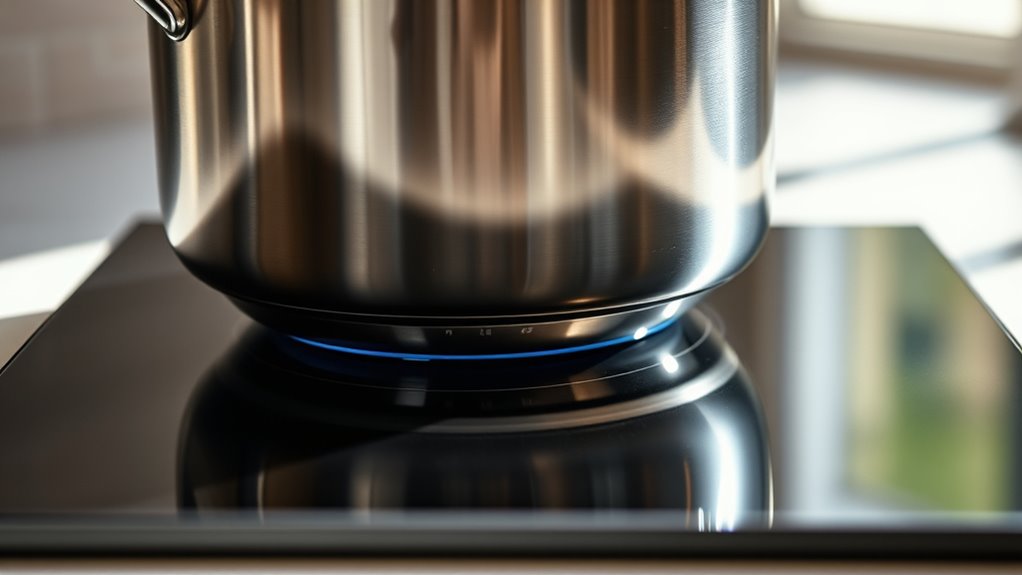
When you use stainless steel on an induction cooktop, the magnetic field creates electric currents inside the cookware, generating heat directly within the pot or pan.
Induction cooking relies on cookware with ferromagnetic properties to work efficiently. For stainless steel, this means having enough magnetic material—like a magnetic base—that can respond to induction.
Not all stainless steel types are compatible with induction cooktops, so a quick magnet test is a helpful way to check. If the magnet sticks well, the cookware will likely work.
Understanding why some stainless steel doesn’t work and how to pick the right ones can help you make the best choice for your kitchen.
Key Takeaways
- Stainless steel works on induction cooktops if it contains magnetic materials like iron to generate heat via induced electric currents. The induction process heats cookware internally through eddy currents, making cooking faster and more energy-efficient.
- Only stainless steel grades with magnetic properties, such as 430, are compatible; non-magnetic types like 304 or 316 require layered cores. Proper cookware design with a flat, magnetic base ensures even heat distribution and effective contact with the induction surface.
- Testing compatibility with a magnet helps identify if stainless steel cookware will function efficiently on an induction cooktop.
How Does Induction Heat Stainless Steel Cookware?
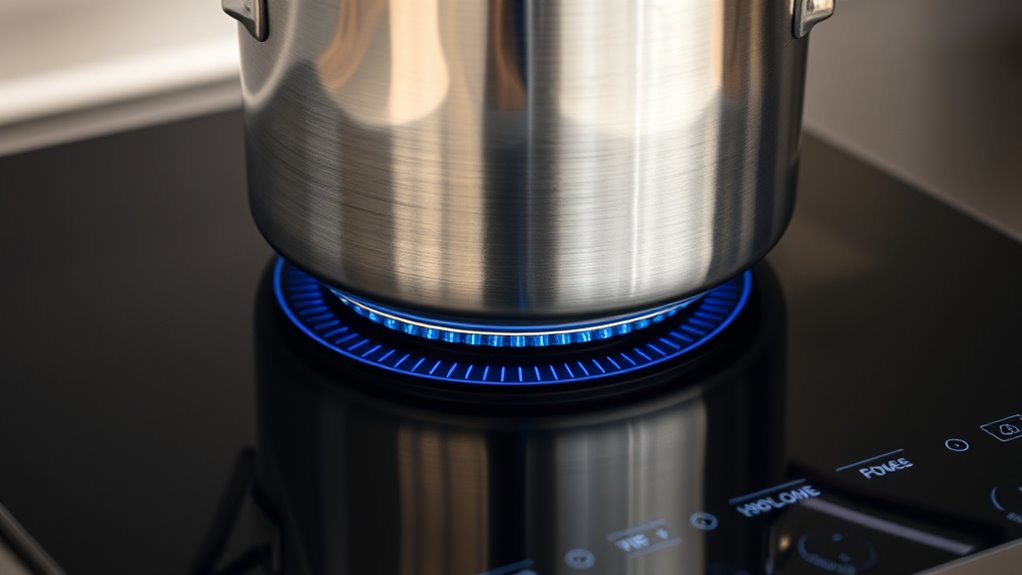
Although stainless steel itself isn’t the best conductor of heat, induction cooktops heat it efficiently by creating a magnetic field that induces electric currents directly in the cookware. When you place stainless steel cookware on an induction cooktop, the magnetic field penetrates the metal, causing tiny currents called eddy currents to flow through it.
These currents generate heat right inside the cookware, warming your food quickly and evenly. You don’t have to wait for the cooktop surface to get hot since the heat forms in the pot or pan itself. This method saves energy and speeds up cooking.
Keep in mind, the stainless steel must be magnetic for induction to work, but once it is, the process is fast and effective.
What Makes Stainless Steel Work on Induction?
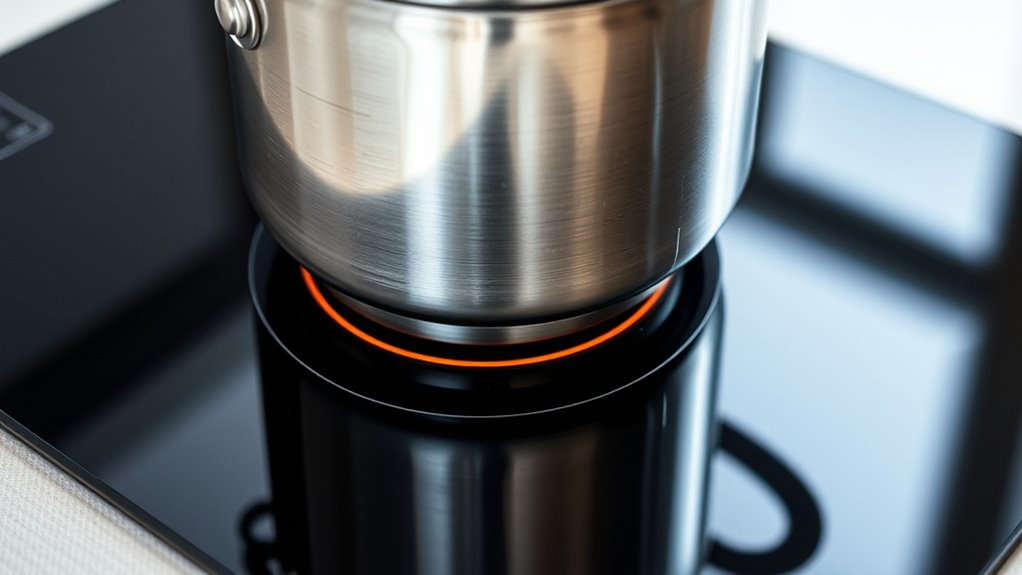
Because induction cooktops rely on magnetic fields to generate heat, stainless steel cookware works only if it contains enough ferromagnetic material.
When you choose stainless steel with a magnetic base, the cooktop’s coil creates an electromagnetic field that induces electric currents in the metal. These currents generate heat directly in the cookware, cooking your food efficiently.
You’ll find that stainless steel blends with iron or has a magnetic grade to guarantee this reaction happens. If the steel’s magnetic properties are strong enough, your cookware will heat up quickly and evenly on an induction surface.
Why Some Stainless Steel Doesn’t Work on Induction

Not all stainless steel meets the magnetic criteria needed for induction cooking, which is why some pieces won’t heat up on your cooktop. If your stainless steel cookware isn’t working, it often comes down to its composition and structure.
Some stainless steel cookware won’t heat on induction due to its magnetic properties and material structure.
Here are the main reasons why some stainless steel doesn’t work on induction:
- Austenitic Steel Type – This non-magnetic stainless steel is common in cookware but won’t respond to induction.
- Lack of Ferromagnetic Base – Without a magnetic layer or core, the cookware won’t induce heat.
- Poor Quality or Thin Bottom – Thin or low-quality bases can prevent proper heat transfer.
- Cookware Shape and Size – If the base doesn’t fully contact the induction surface, it won’t heat efficiently.
Knowing these factors helps you pick the right stainless steel for induction cooktops.
How Magnetic Properties Affect Induction Cooking
How exactly do magnetic properties influence induction cooking? Induction cooktops work by generating a magnetic field that induces electric currents in your cookware’s base. For this to happen efficiently, your pan must be magnetic.
When your stainless steel has strong magnetic properties, it allows these currents to flow, producing the heat needed to cook your food. If the steel isn’t magnetic, the cooktop can’t generate enough heat because the magnetic field won’t induce the necessary currents. This is why you might find some stainless steel pans that don’t heat well on induction.
Checking if your cookware is magnetic—using a simple magnet test—can help you know if it’ll work properly on your induction cooktop.
Comparing Stainless Steel Grades for Induction Use
You’ll want to compare stainless steel grades based on their magnetic properties since that directly affects induction compatibility. Consider durability and heat conductivity to find a balance that suits your cooking needs.
Also, weigh the cost against performance to get the best value for your investment.
Magnetic Properties of Grades
Because induction cooktops rely on magnetic fields to generate heat, the magnetic properties of stainless steel grades play a crucial role in their performance. Not all stainless steel is magnetic, so choosing the right grade guarantees your cookware heats efficiently.
Here’s what you need to know about common grades:
- Type 304 – Mostly non-magnetic, so it’s less efficient on induction.
- Type 316 – Similar to 304, it’s generally non-magnetic and not ideal for induction.
- Type 430 – Ferritic and magnetic, making it a good choice for induction cooking.
- Type 201 – Somewhat magnetic, but less reliable than 430 for induction use.
Knowing these differences helps you pick stainless steel that works seamlessly with your induction cooktop.
Durability and Heat Conductivity
Although magnetic properties determine whether stainless steel works on induction cooktops, durability and heat conductivity also impact your cooking experience. When choosing stainless steel, you’ll notice that grades like 304 and 316 offer excellent corrosion resistance, making them durable for everyday use. However, their heat conductivity isn’t as high as other metals, so they often include an aluminum or copper core to improve heat distribution.
On the other hand, 430 stainless steel is magnetic and works well on induction, but it’s less corrosion-resistant and more prone to warping under high heat. To get the best performance, pick cookware that balances durability with efficient heat conductivity, ensuring even cooking without hotspots or warping over time. This way, your induction cooking will be both effective and long-lasting.
Cost Versus Performance
When choosing stainless steel cookware for induction, balancing cost and performance is key. Different grades offer varying benefits that affect your cooking experience and budget. Here’s how to weigh your options:
- 304 Grade (18/8 or 18/10) – Offers excellent corrosion resistance and durability; mid-range price but great for everyday cooking.
- 430 Grade – Magnetic and affordable, ideal for induction, but less corrosion-resistant and prone to discoloration.
- 316 Grade – Higher corrosion resistance, often pricier, suitable if you cook acidic foods frequently.
- Clad Cookware – Combines stainless steel layers with aluminum or copper cores for superior heat distribution; costs more but improves performance.
Why Cookware Base Matters for Induction Heating
You need cookware with a magnetic base to get the most out of your induction cooktop. The thickness of the base also matters because it affects how evenly heat spreads.
Choosing the right base material guarantees your stainless steel pans heat quickly and cook food consistently.
Magnetic Properties Importance
Since induction cooktops rely on magnetic fields to generate heat, the magnetic properties of your cookware’s base play a crucial role in how well it performs. If the base isn’t magnetic enough, your pan won’t heat efficiently, wasting energy and time. You want cookware that reacts quickly and evenly to the induction coil.
Here’s why magnetic properties matter:
- Efficient Heat Transfer – Magnetic bases directly convert energy into heat, speeding cooking.
- Consistent Cooking – Strong magnetic attraction prevents hotspots and uneven heating.
- Energy Savings – Better magnetic response uses less power for the same cooking results.
- Cookware Compatibility – Only pans with magnetic bases work on induction cooktops.
Make sure your stainless steel cookware has a magnetic base to get the most out of your induction stove.
Base Material Thickness
How thick should the base of your stainless steel cookware be for ideal induction cooking? A thicker base helps distribute heat more evenly and prevents hot spots that can burn your food. Typically, a base thickness between 3 to 5 millimeters works well for induction cooktops.
If it’s too thin, the cookware heats unevenly and may warp over time. Too thick, and the cookware takes longer to respond to temperature changes, making it harder to control cooking precisely. You want a balance that ensures magnetic energy converts efficiently into heat and spreads smoothly across the base.
How to Test If Your Stainless Steel Pot Works on Induction
Although induction cooktops are becoming more common, not all stainless steel pots are compatible with them. You can easily test if your pot works on induction with a few simple steps.
- Check for an induction symbol (a coil or zigzag) on the pot’s bottom.
- Use a magnet to test the base—if it sticks firmly, the pot will work.
- Try placing the pot on the cooktop and turning it on at low heat; if it heats up, it’s compatible.
- Look up the brand and model online to confirm induction compatibility.
Benefits of Stainless Steel Cookware on Induction Stoves
When you choose stainless steel cookware for your induction stove, you get the benefit of magnetic compatibility that guarantees efficient heating. You’ll also appreciate how evenly it distributes heat, helping your food cook consistently.
These features make stainless steel a smart choice for induction cooking.
Magnetic Compatibility Advantage
Why does stainless steel perform so well on induction cooktops? It’s all about magnetic compatibility. Induction cooktops rely on magnetic fields to generate heat, so your cookware must be ferromagnetic.
Stainless steel fits the bill perfectly.
Here’s why this matters for you:
- Instant heating: Stainless steel’s magnetic properties let your cookware heat up quickly.
- Energy efficiency: Less energy is wasted, saving you money on your utility bills.
- Stable cooking: The magnetic connection keeps your pot or pan firmly in place.
- Wide availability: Stainless steel cookware designed for induction is easy to find and versatile.
With stainless steel, you get reliable, efficient cooking that matches your induction cooktop’s technology seamlessly.
Durable Heat Distribution
Beyond magnetic compatibility, stainless steel cookware stands out for its durable heat distribution on induction cooktops. When you cook with stainless steel, the material’s ability to spread heat evenly prevents hot spots, so your food cooks consistently. This means you won’t have to constantly adjust the heat or move pots around to avoid burning.
Stainless steel’s multi-layered construction often includes an aluminum or copper core, enhancing thermal conductivity while maintaining durability. You’ll notice better temperature control, which helps you prepare meals more efficiently and with greater precision. Plus, stainless steel retains heat well, keeping your food warm even after you turn off the cooktop.
Common Stainless Steel Induction Problems & Fixes
Although stainless steel works well on induction cooktops, you might encounter a few common issues that affect performance or usability. Knowing how to fix these can save you time and frustration.
- Poor Magnetic Response: If your pan doesn’t heat, check if it’s magnetic. Use a magnet test; if it fails, switch to a compatible pan.
- Uneven Heating: Warping or low-quality steel can cause hot spots. Choose heavier, well-constructed cookware.
- Scratches on Cooktop: Stainless steel can scratch glass surfaces. Use cookware with smooth, flat bottoms and avoid dragging pots.
- Noise or Buzzing: High-frequency vibrations create noise. Lower the heat or try a different pan to reduce it.
Addressing these problems guarantees your stainless steel cookware performs at its best on induction surfaces.
Tips for Choosing the Best Stainless Steel Cookware for Induction
Dealing with common issues like uneven heating or poor magnetic response often comes down to the cookware you choose. To get the best stainless steel cookware for induction, look for pieces with a magnetic base—check with a magnet before buying. Opt for multi-ply construction, which layers stainless steel with aluminum or copper, improving heat distribution.
Choose cookware with a flat, smooth bottom to maximize contact with your induction cooktop. Also, consider the weight; heavier pans often mean better quality and stability. Avoid thin, single-ply stainless steel as it may heat unevenly or fail to trigger the induction element efficiently.
Ultimately, pick reputable brands known for induction compatibility to guarantee durability and top performance on your cooktop.
How to Maintain Stainless Steel Cookware on Induction Stoves
To keep your stainless steel cookware performing well on induction stoves, you need to clean and care for it properly. Proper maintenance ensures durability and consistent cooking results. Follow these steps:
- Clean after each use: Wash with warm, soapy water and a soft sponge to prevent residue buildup.
- Avoid harsh scrubbers: Use non-abrasive pads to protect the surface from scratches.
- Dry immediately: Prevent water spots and streaks by drying your cookware right after washing.
- Remove discoloration: Use a mixture of vinegar and water or a stainless steel cleaner to restore shine and remove heat stains.
When to Choose Non-Stainless Steel Cookware for Induction
When should you opt for non-stainless steel cookware on an induction cooktop? Choose alternatives like cast iron or carbon steel when you want superior heat retention and even cooking, especially for searing or slow-cooking. Non-stainless steel options often have better magnetic properties, ensuring quicker and more consistent heating on induction surfaces.
If you’re looking for cookware that’s naturally non-stick or prefers a specific cooking style—such as wok cooking—carbon steel is a great choice. Also, some stainless steel pans lack the magnetic base necessary for induction, so if your cookware isn’t compatible, switching to non-stainless steel options guarantees functionality.
Ultimately, pick non-stainless steel cookware when you need reliable induction performance combined with specialized cooking benefits that stainless steel might not provide.
Frequently Asked Questions
Can Induction Cooktops Damage Stainless Steel Cookware?
Induction cooktops won’t damage your stainless steel cookware if you use them properly. Just avoid dragging pots across the surface to prevent scratches, and make sure the cookware has a flat, magnetic base for even heating and safety.
Is Stainless Steel Cookware Safe for Induction Cooking?
Yes, stainless steel cookware is safe for induction cooking as long as it has a magnetic base.
You’ll want to check with a magnet—if it sticks, your cookware will work perfectly on your induction cooktop.
How Does Induction Cooking Affect the Taste of Food in Stainless Steel?
Induction cooking doesn’t affect your food’s taste when using stainless steel. It heats evenly and quickly, preserving flavors.
You’ll notice better control, so your dishes come out just as delicious as with other cooking methods.
Can I Use Stainless Steel Induction Cookware on Gas Stoves?
You can think of your stainless steel cookware as a versatile traveler—it thrives on induction and feels right at home on gas stoves too.
What Is the Lifespan of Stainless Steel Cookware Used on Induction Cooktops?
You can expect stainless steel cookware on induction cooktops to last 10-15 years or more if you take care of it. Avoid harsh scrubbing, use proper cleaning methods, and prevent overheating to extend its lifespan.
Regular maintenance and gentle handling are key to preserving the cookware’s quality. Proper storage also helps prevent damage over time. Paying attention to these details will ensure your cookware remains effective and safe for cooking.
Conclusion
Using stainless steel on induction cooktops is like tuning a radio—you need the right magnetic frequency for the perfect signal. When you choose cookware with good magnetic properties and proper grades, your induction stove heats efficiently and safely.
Remember, not all stainless steel is created equal, so picking the right type and maintaining it well keeps your cooking smooth and reliable.
With the right care, your induction experience will shine like a well-oiled machine. Choosing the correct stainless steel cookware ensures optimal performance and durability on induction cooktops. Proper maintenance and selection are key to enhancing your induction cooking experience.