7 Best Tips on How Many Cutting Boards Do I Need
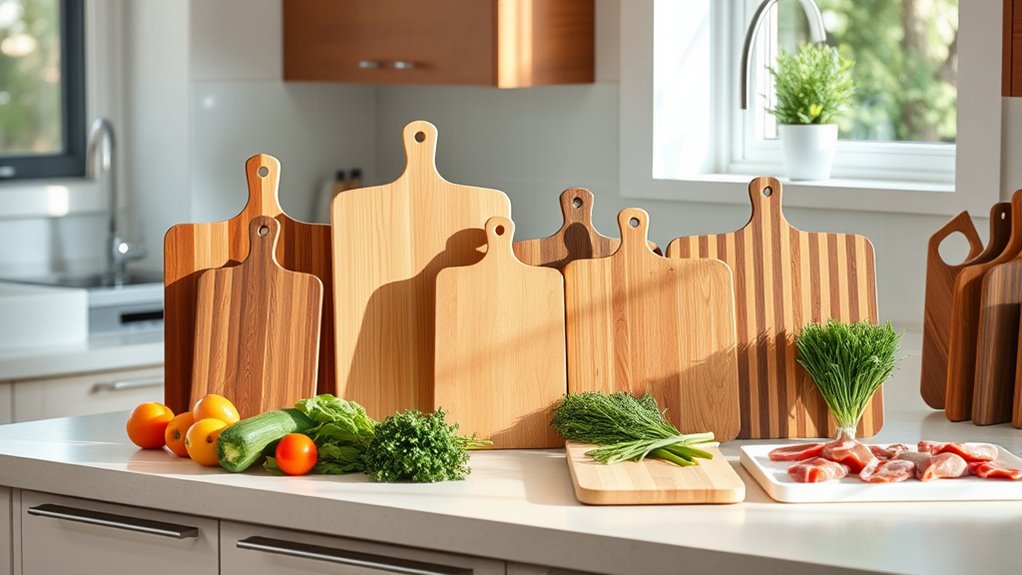
You should have at least two to three cutting boards to maintain a safe and hygienic kitchen environment. Knowing how many cutting boards you need helps prevent cross-contamination, especially when handling raw meat, vegetables, and cooked foods.
Using separate boards for each type of food is essential for food safety. Color-coded cutting boards help you stay organized and prevent mix-ups during meal preparation.
Choose materials wisely—plastic boards are ideal for meats, while wood or bamboo works well for vegetables. Clean and dry your boards thoroughly after every use to keep them in good condition.
Replace your cutting boards when they become damaged or worn out to avoid bacteria buildup. Following these tips keeps your kitchen safe and efficient.
Keep exploring and you’ll find even more ways to care for your boards properly.
Key Takeaways
- Use 2-3 cutting boards to separate raw meats, vegetables, and cooked foods, minimizing cross-contamination risks.
- Assign color-coded boards for quick identification and organized food preparation.
- Choose durable materials like wood for vegetables and plastic for raw meats for optimal hygiene and longevity.
- Clean and sanitize each board thoroughly after use, drying immediately to prevent bacteria and warping.
- Replace boards with deep grooves, cracks, or odors to maintain safe and hygienic kitchen practices.
Why You Need Multiple Cutting Boards for Food Safety

Because cross-contamination can lead to serious foodborne illnesses, you need multiple cutting boards to keep different foods separate. When you use one board for raw meat and then for vegetables without washing it thoroughly, bacteria can easily transfer and cause illness. You should assign specific boards for meats, fruits, vegetables, and cooked foods.
This way, you reduce the risk of harmful bacteria spreading. Using color-coded cutting boards helps you remember which board is for what, making your kitchen safer and more organized. By keeping your cutting boards separated by food type, you protect yourself and your family from foodborne pathogens.
It’s a simple step that has a big impact on food safety and hygiene in your kitchen.
How Many Cutting Boards Do You Need in Your Kitchen?
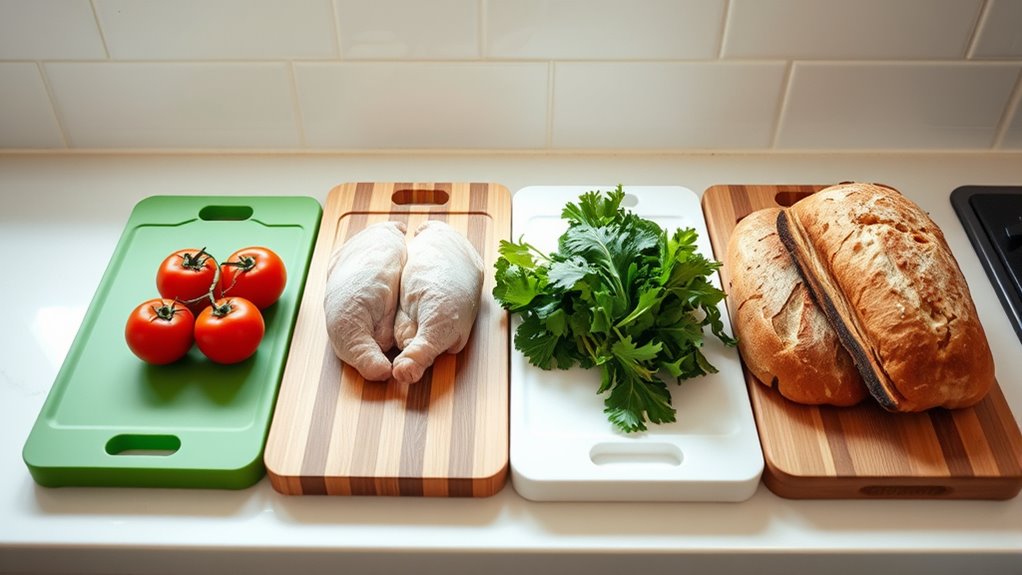
You’ll want to choose a few cutting boards based on the types you use most and how you handle different foods to keep everything safe. Consider having separate boards for meat, vegetables, and bread to avoid cross-contamination.
Also, think about your kitchen space so you can store them conveniently without clutter.
Types Of Cutting Boards
Choosing the right types of cutting boards can simplify your kitchen tasks and keep your food safe. You’ll find cutting boards made from wood, plastic, bamboo, and even glass. Wooden boards are durable and gentle on knives, perfect for chopping vegetables or slicing bread.
Plastic boards are lightweight, dishwasher-safe, and great for handling raw meat since you can easily sanitize them. Bamboo boards are eco-friendly and resist moisture, but they can dull knives faster. Glass boards look sleek but tend to be hard on blades and can cause slipping.
Ideally, you want a mix to suit different tasks—wood or bamboo for fruits and veggies, plastic for raw proteins, and maybe glass for serving. Picking the right board type helps you cook efficiently and maintain your tools longer.
Food Safety Considerations
How many cutting boards do you really need to keep your kitchen safe? The answer depends on preventing cross-contamination. You should have separate boards for raw meats, vegetables, and cooked foods.
Using one board for everything increases the risk of harmful bacteria spreading. Color-coded cutting boards help you easily identify which to use for each food group. Make sure to clean and sanitize boards thoroughly after each use, especially those that handled raw meat or poultry.
Plastic boards often withstand more rigorous cleaning, including dishwasher use, which helps kill bacteria. If you use wooden boards, dry them completely to prevent bacterial growth. By assigning specific cutting boards for different food types, you’ll protect yourself and your family from foodborne illnesses effectively.
Kitchen Space Management
Managing your kitchen space efficiently means balancing the number of cutting boards you keep without overcrowding your countertops or cabinets. You want enough boards to handle different food types safely, but not so many that storage becomes a hassle. Consider your kitchen size and storage options before buying multiple boards.
If you have limited space, opt for a few versatile boards that are easy to clean and store vertically or in drawer organizers. Prioritize boards that stack well or come with built-in storage solutions. Remember, keeping your kitchen organized helps you work faster and reduces clutter.
Ultimately, having two to three cutting boards—dedicated to meat, produce, and general use—strikes a good balance between safety and space management.
How to Choose Cutting Boards for Different Types of Food

Because different foods carry various bacteria and juices, you’ll want to pick cutting boards that help prevent cross-contamination. Choose boards made from materials that suit specific tasks, like plastic for raw meat, as they’re easy to sanitize, and wood for vegetables or bread because they’re gentle on knives. Color coding your boards can also make it easier to keep track of which to use.
| Food Type | Recommended Material | Suggested Color |
|---|---|---|
| Raw Meat | Plastic | Red |
| Vegetables | Wood or Bamboo | Green |
| Cooked Food | Plastic or Glass | White |
| Bread & Fruits | Wood | Yellow |
This system keeps your kitchen safer and your food prep efficient.
How to Keep Your Cutting Boards Organized and Easy to Find
When you have multiple cutting boards, keeping them organized saves you time and prevents mix-ups during food prep. Start by designating a specific storage spot, like a drawer or shelf, exclusively for your boards. Use vertical storage racks or dividers to keep them upright and separated, so you can grab the right one quickly.
Label each board based on its purpose—meat, veggies, or bread—to avoid cross-contamination. If labels aren’t an option, color-coded boards help you identify them at a glance. After washing, always dry and return each board to its assigned spot to maintain order.
How to Know When It’s Time to Replace Your Cutting Boards
Although cutting boards are durable kitchen tools, you’ll need to replace them once they show signs of wear that could compromise food safety or hygiene. Look out for deep grooves or cracks where bacteria can hide and multiply despite cleaning.
If your board has warped or developed an uneven surface, it’s time to get a new one, as cutting on an unstable board can be unsafe. Discoloration or persistent odors that don’t wash away are also red flags indicating your board’s lifespan is over.
For plastic boards, excessive knife marks or melting spots mean replacement is necessary. Regularly inspect your boards and trust your instincts—when in doubt, swapping an old board for a fresh one guarantees you maintain a clean, safe food prep environment.
Which Materials Work Best for Different Cutting Boards?
When choosing cutting boards, you’ll want to weigh the pros and cons of wood versus plastic. Each material has its benefits, like wood’s durability and plastic’s ease of cleaning.
Bamboo also stands out as a great option, offering a balance of strength and eco-friendliness.
Wood Vs Plastic
Choosing between wood and plastic cutting boards often depends on your cooking habits and cleaning preferences. Wood boards, like maple or walnut, offer durability and are gentle on your knives. They have natural antimicrobial properties, making them a safe choice if you maintain them well by oiling and hand washing.
Plastic boards, on the other hand, are lightweight, dishwasher-safe, and often come in color-coded sets to prevent cross-contamination. They’re ideal for raw meats since you can sanitize them thoroughly. However, plastic can scar easily, creating grooves that harbor bacteria if not replaced regularly.
If you want boards that last long and feel sturdy, wood is great. But if you prioritize easy cleaning and color-coding for different foods, plastic might be your best bet.
Benefits Of Bamboo
Because bamboo grows quickly and is naturally dense, it offers a durable and eco-friendly option for cutting boards. You’ll find bamboo boards resist knife marks better than softer woods, and they’re less prone to absorbing moisture, which helps prevent bacteria growth.
Plus, bamboo’s renewable nature makes it a sustainable choice in your kitchen.
Here’s a quick look at bamboo’s benefits:
| Benefit | Description |
|---|---|
| Durability | Dense, resists cuts and scratches |
| Eco-Friendly | Rapidly renewable and biodegradable |
| Hygiene | Naturally antimicrobial properties |
| Maintenance | Easy to clean, less warping |
Choosing bamboo means you get a tough, safe, and environmentally friendly cutting board that fits well alongside wood and plastic options.
How to Clean and Maintain Your Cutting Boards
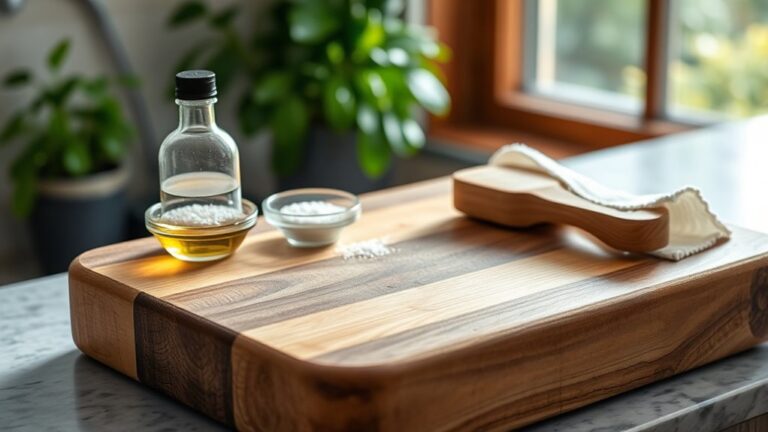
Properly cleaning and maintaining your cutting boards guarantees they stay safe and durable for years. After each use, wash them with hot, soapy water and rinse thoroughly. Avoid soaking wooden boards, as excess moisture can cause warping.
For deeper cleaning, sprinkle coarse salt or baking soda, then scrub with a lemon half to deodorize and remove stains. Dry boards immediately with a clean towel and stand them upright to air dry completely. Regularly oil wooden boards with food-grade mineral oil to prevent cracking and maintain a smooth surface.
Avoid dishwashers—they can damage wood and warp plastic boards over time. By following these simple steps, you’ll keep your cutting boards hygienic, extend their lifespan, and assure they remain reliable tools in your kitchen.
Frequently Asked Questions
Can I Use the Same Cutting Board for Raw Meat and Vegetables?
You shouldn’t use the same cutting board for raw meat and vegetables because it risks cross-contamination. Instead, use separate boards or thoroughly wash and sanitize the board between uses to keep your food safe and prevent illness.
Are Wooden Cutting Boards Better Than Plastic for Health Reasons?
Wooden cutting boards can be healthier because they naturally resist bacteria better than plastic. You’ll want to clean them properly and oil them regularly to prevent cracking and bacteria buildup, keeping your food safer and your board lasting longer.
How Do I Prevent My Cutting Boards From Slipping While Chopping?
Imagine your cutting board sliding like a skating rink—frustrating, right?
To stop this, place a damp towel or non-slip mat underneath.
You’ll keep your board steady and your chopping safe and precise every time.
Can Cutting Boards Be Safely Used in the Dishwasher?
You can safely use plastic cutting boards in the dishwasher, but avoid putting wooden ones in. Wood absorbs water and may warp or crack.
Instead, hand wash wooden boards with mild soap and dry them thoroughly.
What Size Cutting Board Is Ideal for Small Kitchens?
You’ll want a cutting board around 8×10 to 10×14 inches for small kitchens. It’s compact enough to save space but still gives you enough room to chop comfortably without crowding your countertop.
Conclusion
You might think one cutting board can handle it all, but the truth is, using multiple boards keeps your kitchen safer and your food tastier. By dedicating boards to different foods—like meat, veggies, and bread—you avoid harmful cross-contamination.
Plus, choosing the right materials and knowing when to replace them makes your prep smoother. So, don’t settle for just one; having a few boards is a small step that makes a big difference in your cooking.
In conclusion, understanding how many cutting boards do I need is essential for maintaining hygiene and enhancing flavor in your meals. Using multiple cutting boards tailored to specific food types ensures safety and efficiency in your kitchen.