How to Make Good Cutting Boards With Sapele Wood
To make a good cutting board with Sapele wood, start by selecting dense, straight-grained lumber with low moisture content to prevent warping. Sapele wood is prized for its durability and rich color, making it an excellent choice for cutting boards. Choosing the right wood is essential for a long-lasting, functional board.
Next, cut and flatten the wood strips carefully. Glue them together using a food-safe adhesive, then clamp evenly to ensure a strong bond. Proper clamping prevents gaps and weak spots in the board.
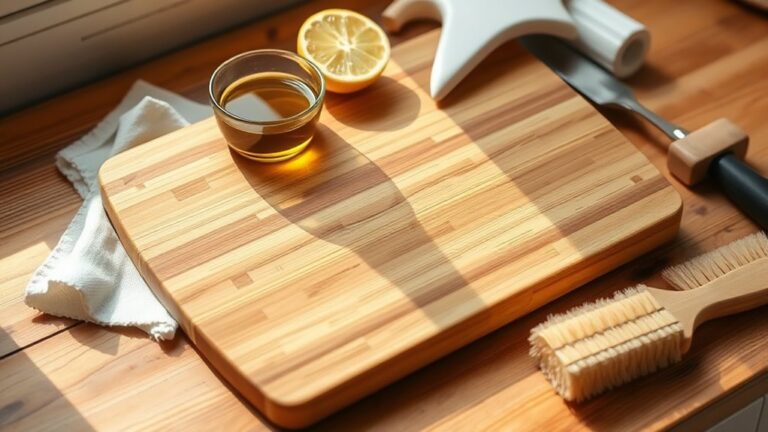
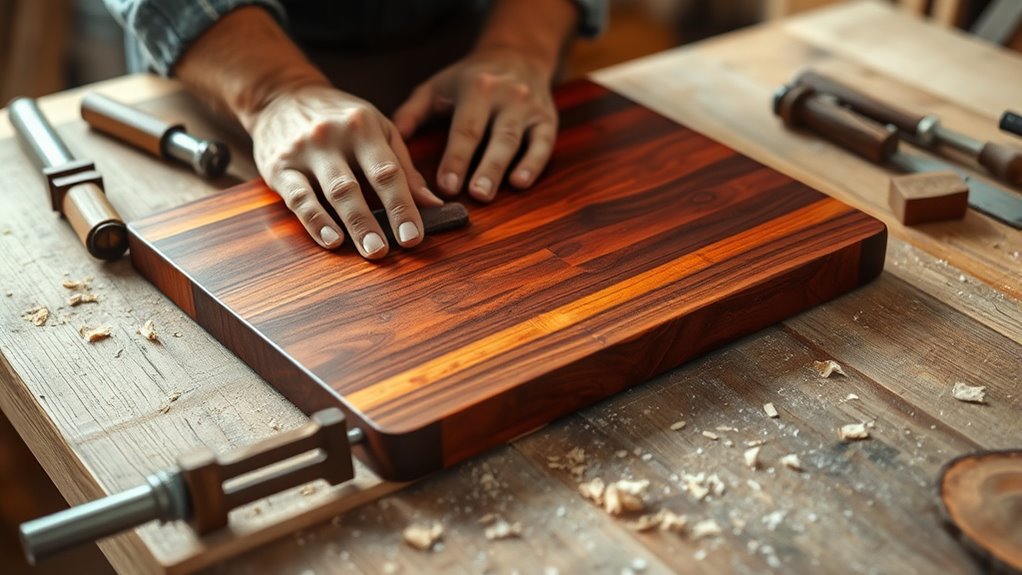
After the glue has dried, sand the surface smoothly to remove any roughness. Finish the board with mineral oil or beeswax to protect the wood and bring out its natural beauty.
Clean the board regularly without soaking it to maintain its durability and appearance. Follow these simple steps, and you’ll find tips to customize and restore your Sapele cutting board for lasting use.
Key Takeaways
- Select quality, well-dried Sapele wood with tight grain and 6-8% moisture to prevent warping and ensure durability.
- Cut, flatten, and plane wood strips precisely before gluing with food-safe adhesive for a strong, even surface.
- Clamp evenly with protective pads, allow 24 hours to dry, then sand progressively to a smooth finish.
- Apply food-safe finishes like mineral oil and beeswax regularly to hydrate, protect, and enhance Sapele’s natural beauty.
- Clean cutting boards properly, avoid soaking or harsh detergents, and maintain with regular oiling to extend lifespan.
Benefits of Using Sapele Wood for Cutting Boards
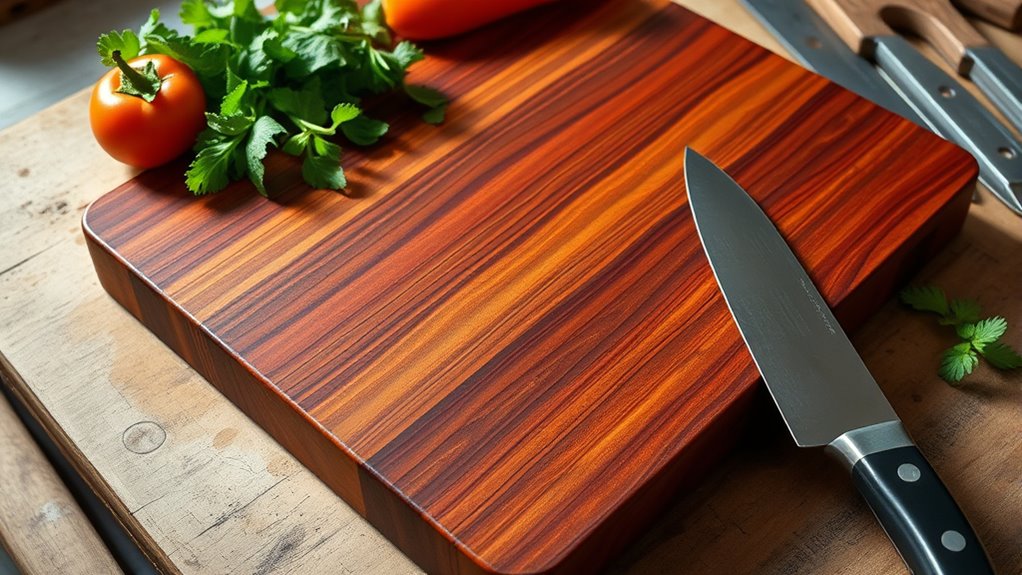
Though you might not be familiar with Sapele wood, you’ll appreciate its durability and beautiful grain when making cutting boards. This hardwood is dense and resistant to wear, meaning your board will withstand heavy chopping without warping or denting. Its tight grain structure also helps prevent bacteria from settling into the surface, keeping your cutting board hygienic.
Plus, Sapele’s rich reddish-brown color adds a warm, elegant look to your kitchen tools. Unlike softer woods, it won’t dull your knives quickly, preserving their sharpness longer. You’ll find it’s naturally resistant to moisture and decay, which extends the lifespan of your board.
How to Select Quality Sapele Lumber for Your Board
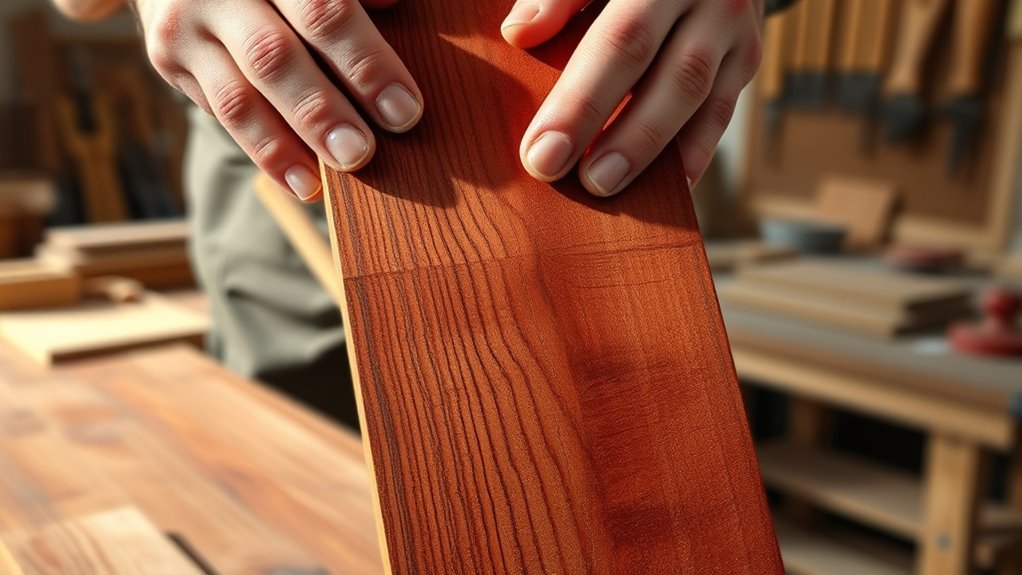
When choosing Sapele lumber for your cutting board, look for tight, consistent grain patterns that promise strength and beauty. You’ll also want to check the moisture content to guarantee the wood is properly dried and won’t warp later.
Paying attention to these details helps you pick high-quality wood that lasts.
Identifying Premium Grain
Since the grain pattern greatly influences both the strength and beauty of your cutting board, you’ll want to carefully examine each piece of Sapele lumber before making a selection. Look for grain that’s tight and consistent, as this guarantees durability and a polished finish. Avoid boards with excessive knots or irregular patterns that might weaken the wood or cause uneven wear.
Here are key traits to identify premium grain:
- Fine, interlocking grain for strength and resistance to splitting
- Uniform color with subtle, wavy figuring for visual appeal
- Minimal defects like cracks, checks, or insect damage
- Straight grain sections that allow for easier cutting and maintenance
- Smooth texture that responds well to sanding and finishing
Choosing the right grain sets the foundation for a stunning, long-lasting cutting board.
Checking Moisture Content
Before you start crafting your cutting board, you’ll want to guarantee the Sapele wood has the right moisture content. Wood with too much moisture can warp, crack, or shrink as it dries, ruining your project. Aim for a moisture content between 6% and 8%, which is ideal for indoor woodworking.
Use a moisture meter to check—just press the probes into the wood surface for an instant reading. If the moisture is above this range, let the wood acclimate in a dry, stable environment for several days or weeks. Avoid using wood that feels damp or heavy.
Proper moisture assures your cutting board stays flat, durable, and safe for kitchen use. Don’t skip this step—it’s vital for a quality build.
Designing Your Cutting Board Layout and Size
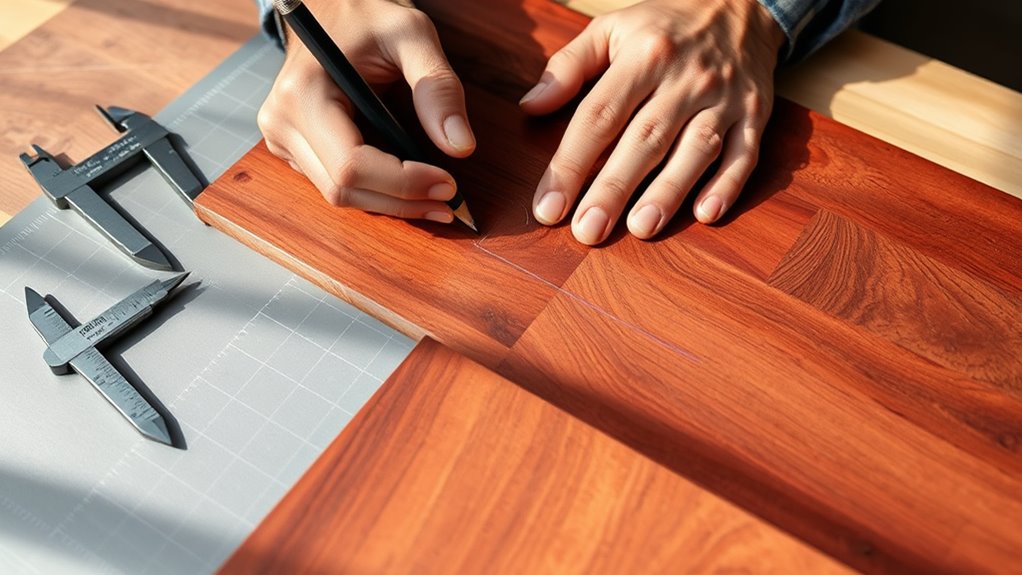
Although selecting quality Sapele wood is essential, crafting an effective cutting board starts with carefully planning its layout and size to suit your kitchen needs. Consider how much counter space you have and what tasks you’ll perform most often. Keep in mind the balance between portability and usability.
When designing your cutting board, focus on:
- Dimensions that fit your prep area comfortably
- Thickness to ensure durability without excess weight
- Edge treatments for safety and grip
- Orientation of the wood grain to enhance strength and aesthetics
- Inclusion of juice grooves or handles based on your preferences
Preparing Sapele Wood: Cutting and Flattening Your Boards
When you start preparing your Sapele wood, precise cutting and flattening are essential to guarantee a smooth, even surface for your cutting board. Begin by selecting well-dried boards free of cracks or knots. Use a table saw or circular saw to cut your boards into strips, following the dimensions you designed.
Accuracy here is key to ensure tight joints later. Next, flatten each strip using a jointer or hand plane to remove any warps or twists. After that, run them through a planer to achieve uniform thickness across all pieces.
Check for flatness by placing the edges against a straightedge; if you spot gaps, keep planing. This careful preparation sets the foundation for a sturdy, attractive cutting board.
How to Choose and Use Glue and Clamps for Your Sapele Cutting Board
When you’re ready to glue your Sapele boards, choosing the right adhesive is key for a strong bond. You’ll want to use clamps correctly to apply even pressure without damaging the wood.
Plus, knowing the proper drying time will guarantee your cutting board holds together perfectly.
Best Glue Types
Which glue works best for bonding Sapele wood in cutting boards? You’ll want a strong, waterproof adhesive to guarantee durability and safety.
Here are the top glue types you should consider:
- Titebond III Ultimate: Waterproof and FDA-approved for food contact.
- Gorilla Wood Glue: Water-resistant and strong, great for kitchen items.
- Epoxy Resin: Provides a tough, gap-filling bond but requires mixing.
- Hide Glue: Traditional and reversible, but less waterproof.
- Polyurethane Glue: Expands as it cures, good for tight joints but messy.
Make sure you apply glue evenly along the edges and wipe off excess immediately to avoid stains. Using the right glue will keep your Sapele cutting board sturdy and safe for years to come.
Clamping Techniques
Although selecting the right glue is crucial, applying consistent clamping pressure is just as important to guarantee a strong, seamless bond for your Sapele cutting board. Use clamps that distribute pressure evenly across the board’s surface. Avoid over-tightening, which can squeeze out glue and weaken the joint.
Bar clamps and pipe clamps work well for larger boards, while quick-release clamps suit smaller projects. Always protect the wood with scrap pieces to prevent clamp marks.
| Clamping Tip | Why It Matters |
|---|---|
| Even Pressure | Ensures seamless glue joints |
| Avoid Over-tightening | Prevents glue squeeze-out |
| Use Proper Clamps | Matches board size for stability |
| Protect Wood | Prevents clamp marks |
| Check Alignment | Keeps edges flush during drying |
Drying Time Tips
A proper drying time is essential for achieving a strong bond in your Sapele cutting board project. Once you’ve applied glue and clamped your boards, patience is key. Rushing the drying process can weaken the bond and lead to gaps or failures.
Keep these tips in mind to guarantee ideal drying:
- Use waterproof, food-safe glue designed for hardwoods.
- Clamp evenly to maintain consistent pressure across joints.
- Allow at least 24 hours for drying, even if the glue feels firm sooner.
- Avoid disturbing or removing clamps prematurely to prevent shifting.
- Work in a controlled environment with moderate temperature and humidity.
Following these guidelines will help you create a durable, long-lasting Sapele cutting board with strong, clean joints.
How to Sand Sapele Wood for a Smooth, Even Surface
Before you begin sanding, make sure the Sapele wood is dry and clean to avoid embedding dust or moisture into the surface. Start with a coarse grit sandpaper, around 80-100 grit, to remove any rough spots or uneven areas. Sand along the grain to prevent scratches.
Once the surface feels more even, switch to a medium grit like 150-180 to smooth out any scratches left by the coarse paper. Finally, use a fine grit, around 220-320, for a silky smooth finish. Use a sanding block or an orbital sander for even pressure, and wipe the board with a tack cloth between grits to remove dust.
Proper sanding reveals Sapele’s beautiful grain and prepares it perfectly for later steps.
Applying Food-Safe Finishes to Protect Your Sapele Cutting Board
Sanding brings out the rich grain of Sapele wood and creates a smooth surface ready for finishing. To protect your cutting board while keeping it food-safe, apply finishes that seal the wood without introducing harmful chemicals. Start by choosing one of these trusted options:
Sanding reveals Sapele’s rich grain and preps it for safe, chemical-free finishing options.
- Mineral oil: penetrates and hydrates the wood
- Beeswax: adds a natural, water-resistant layer
- Food-grade tung oil: provides a durable, non-toxic finish
- Walnut oil: enhances grain and is food-safe (check for allergies)
- A blend of mineral oil and beeswax: combines hydration with protection
Apply your chosen finish generously, let it soak in, then wipe off any excess. Reapply as needed to maintain protection and keep your Sapele cutting board looking great and safe for food prep.
Effective Maintenance and Cleaning Tips for Sapele Cutting Boards
Though Sapele cutting boards are naturally durable, you’ll want to clean and maintain them properly to guarantee they last and stay hygienic. After each use, wash your board with warm, soapy water and rinse thoroughly. Avoid soaking it or putting it in the dishwasher, as excess moisture can cause warping or cracking.
Dry your board immediately with a clean towel and let it air dry upright.
To maintain its finish, regularly apply a food-safe mineral oil or beeswax conditioner. This helps prevent drying and keeps the wood looking rich. If your board develops stains or odors, sprinkle baking soda, scrub gently, then rinse.
Common Mistakes to Avoid When Working With Sapele Cutting Boards
If you want your Sapele cutting board to perform well and last, you need to avoid some common mistakes that can compromise its quality. Here are key pitfalls to watch out for:
- Using harsh detergents or soaking the board, which can dry and crack the wood.
- Ignoring proper oiling; Sapele needs regular mineral oil applications to stay durable.
- Cutting on only one spot, which leads to uneven wear and warping.
- Skipping sanding between uses to remove deep knife marks and maintain a smooth surface.
- Exposing the board to extreme temperatures or direct sunlight, causing warping or discoloration.
Adding Decorative Touches to Your Sapele Cutting Board
While the natural beauty of Sapele wood stands out on its own, adding decorative touches can elevate your cutting board from functional to truly unique. Consider inlaying contrasting woods, like maple or walnut, to create striking patterns or borders. You can also use a wood-burning tool to etch simple designs or your initials for a personalized flair.
Another option is to shape the edges with decorative bevels or chamfers, giving your board a refined look and comfortable grip. Finally, applying a food-safe finish with a slight sheen enhances the wood’s rich color and highlights your decorative work. These small details not only boost aesthetics but also make your Sapele cutting board a standout piece in any kitchen.
When and How to Repair Your Sapele Cutting Board
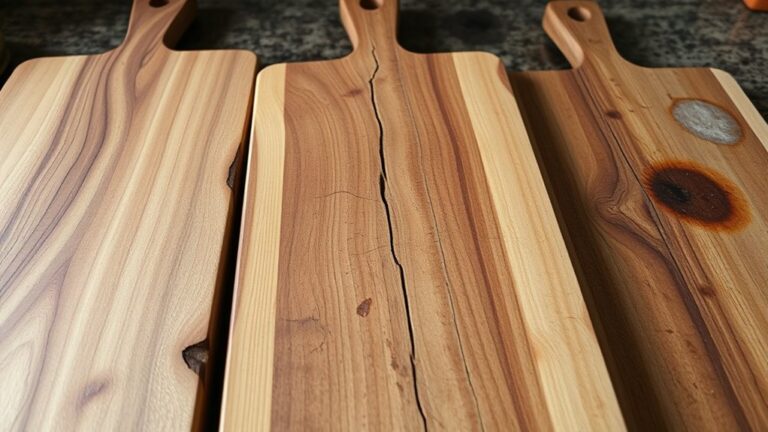
Adding decorative touches can make your Sapele cutting board stand out, but daily use will eventually cause wear and tear. You’ll want to repair it when you notice deep knife marks, splits, or a rough surface.
Here’s how you can restore your board effectively:
- Clean the board thoroughly with mild soap and water; let it dry completely.
- Sand the surface starting with 120-grit sandpaper, then progress to 220-grit for smoothness.
- Address any cracks by filling them with food-safe wood filler or a mixture of sawdust and mineral oil.
- Wipe the board clean to remove all dust after sanding.
- Apply a generous coat of mineral oil or beeswax finish to protect and nourish the wood.
Regular maintenance keeps your Sapele cutting board both functional and beautiful.
Frequently Asked Questions
Is Sapele Wood Sustainable and Eco-Friendly?
Sapele wood can be sustainable if sourced responsibly from well-managed forests. You should check for certifications like FSC to guarantee eco-friendly harvesting. Avoid illegal logging to help protect ecosystems and support sustainable wood practices.
Can Sapele Cutting Boards Be Used With All Types of Knives?
Yes, you can use sapele cutting boards with all types of knives. They’re durable and gentle enough to keep your blades sharp, but remember to avoid excessive force to prevent damage to both your knives and the board.
How Long Does a Sapele Cutting Board Typically Last?
Your Sapele cutting board can last decades if you care for it properly—like a trusty sidekick in your kitchen! Keep it oiled, avoid soaking, and it’ll stay strong and beautiful through countless meals.
Are Sapele Cutting Boards Dishwasher Safe?
You shouldn’t put sapele cutting boards in the dishwasher because the heat and water can warp or crack them. Instead, hand wash with mild soap and dry immediately to keep your board in great shape longer.
Does Sapele Wood Have Any Natural Antibacterial Properties?
Sapele wood doesn’t have strong natural antibacterial properties, so you shouldn’t rely on it alone to keep your cutting board hygienic. You’ll need to clean and maintain it properly to prevent bacterial buildup and guarantee safety.
Conclusion
You might worry that sapele’s rich color will fade with use, but its natural durability keeps your cutting board looking stunning for years. By selecting quality wood and maintaining it properly, you’ll craft a board that not only performs beautifully but also becomes a centerpiece in your kitchen.
Imagine slicing fresh herbs on that warm, reddish surface—each cut a reminder of the craftsmanship and care you put into your perfect sapele cutting board. Proper care and regular oiling ensure the wood’s beauty and longevity.
With good cutting boards made from sapele wood, you combine functionality with elegance, creating a lasting kitchen essential that highlights the unique grain and color of this exquisite hardwood.