
Are Metal Cutting Boards Bad for Knives?
Metal cutting boards can dull your knives faster because their hard, unforgiving surface wears down blade edges quickly. If you use high-carbon steel or thin-edged knives, expect more frequent sharpening. This makes metal cutting boards less ideal for maintaining sharpness over time.
While metal boards resist stains and are easy to sanitize, they’re best suited for heavy-duty tasks, not delicate cutting. Their durability comes at the cost of increased blade wear.
To keep your knives sharp longer, you might want to alternate with softer boards and use proper care techniques.
There’s more to take into account when choosing the right board for your kitchen.
Key Takeaways
- Metal cutting boards are harder and cause knives to dull faster compared to wood or plastic boards.
- Repeated cutting on metal surfaces can cause microscopic chips and dull spots on knife edges.
- Metal boards are best used for heavy-duty tasks where knife sharpness is less critical.
- Regular honing and sharpening are necessary when frequently using metal cutting boards.
- Alternating between metal and softer boards helps minimize knife edge wear and prolong sharpness.
Do Metal Cutting Boards Dull Knives?
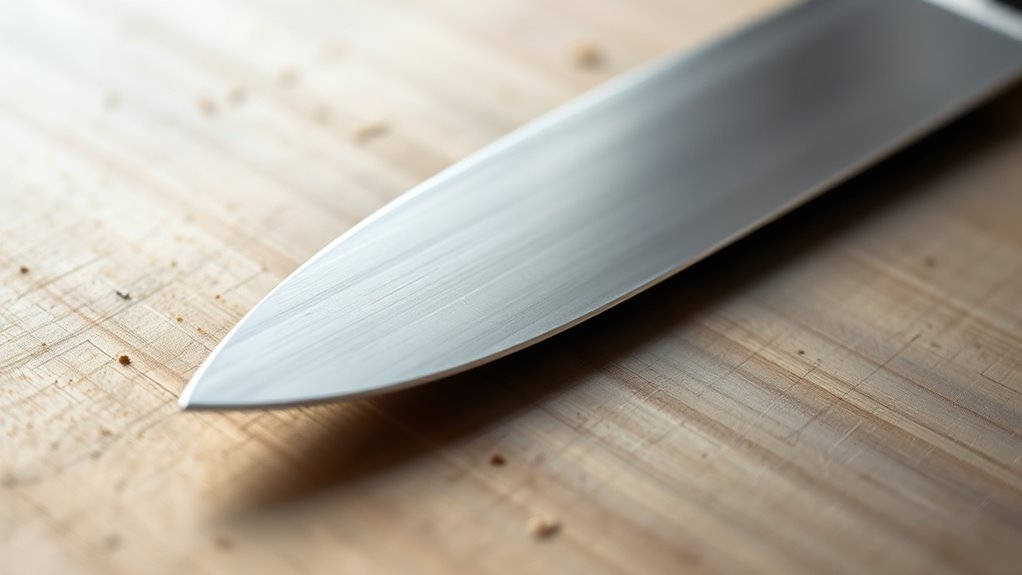
While metal cutting boards may seem durable, they can actually dull your knives faster than other materials. When you cut on metal, your knife’s edge repeatedly hits a hard surface, which wears down its sharpness more quickly. Unlike wood or plastic, metal offers little to no give, so your blade faces constant resistance.
If you want to keep your knives sharp longer, you’ll find that softer cutting surfaces help maintain their edge. Using metal boards means you’ll need to sharpen your knives more frequently, which can be time-consuming and costly. Choosing the right cutting board matters if you care about preserving your knives’ performance and lifespan.
Why Do Knives Dull Faster on Metal Cutting Boards?

If you’ve noticed your knives losing their sharpness faster on metal cutting boards, it’s because the hard surface causes more wear on the blade’s edge. When you cut on metal, the blade hits a tough, unforgiving surface that quickly chips and dulls the fine edge. Unlike wood or plastic, metal doesn’t give or absorb impact, so the knife’s edge takes the full force every time.
This constant abrasion wears down the blade’s microscopic teeth that help it slice cleanly. Over time, those tiny nicks and dull spots build up, making your knife feel blunt much sooner. To keep your knives sharper longer, it’s best to avoid cutting directly on metal surfaces and choose softer boards that protect the blade’s integrity.
Which Knives Dull Fastest on Metal Cutting Boards?
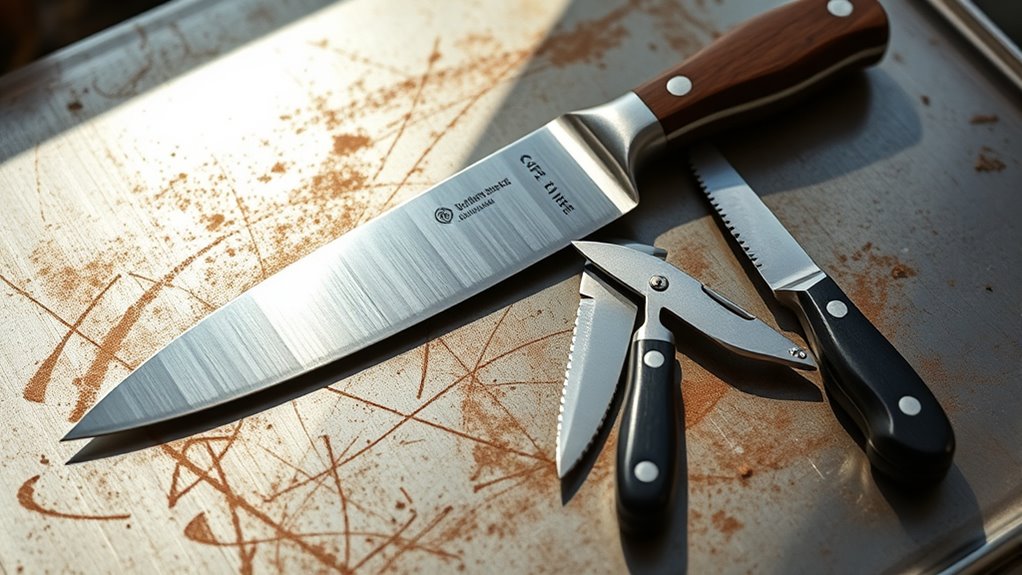
If you use high-carbon steel knives on metal cutting boards, you’ll notice they dull much faster because their edges are more vulnerable. The shape and angle of your knife’s edge also play a big role in how quickly it wears down.
Understanding these factors helps you protect your knives better.
High-Carbon Steel Vulnerability
Because high-carbon steel knives have a harder edge, you might expect them to resist dulling on metal cutting boards better than other knives. However, their hardness also makes them more brittle and prone to chipping when they hit hard surfaces like metal boards.
So, while they stay sharp longer during regular use, they can suffer sudden damage on metal cutting boards.
Here’s a quick comparison to help you understand:
| Knife Type | Dulling on Metal Boards |
|---|---|
| High-Carbon Steel | Sharp but chips easily |
| Stainless Steel | Dulls faster but tougher |
| Ceramic | Very brittle, chips fast |
If you use high-carbon steel knives, you’ll want to avoid metal cutting boards to keep your edges intact.
Edge Geometry Impact
Knives with thinner, more acute edge angles tend to dull faster on metal cutting boards since their sharp edges are more vulnerable to deformation and wear. If you use knives like Japanese-style sashimi blades or paring knives with very fine edges, you’ll notice they lose sharpness quicker when cutting on metal surfaces.
On the other hand, knives with more obtuse edge angles, such as cleavers or some Western chef’s knives, stand up better because their edges are sturdier. When you choose a knife for tasks involving metal cutting boards, consider the edge geometry carefully. Thinner edges deliver precision but need softer surfaces, while thicker edges tolerate harder cutting surfaces but sacrifice some sharpness.
Ultimately, protecting your knife’s edge means matching its geometry to the cutting surface.
How Do Metal Cutting Boards Compare to Wood and Plastic?
When you compare metal cutting boards to wood and plastic, you’ll notice they’re much harder and more durable. This toughness can wear down your knife edges faster than softer materials. Understanding these differences helps you choose the right board for your knives’ longevity.
Durability and Surface Hardness
Although metal cutting boards boast impressive durability, their hard surfaces can be tough on your knives compared to wood and plastic boards. Metal boards resist scratches, dents, and stains far better, making them last longer without showing wear. In contrast, wood and plastic offer softer surfaces that absorb impacts, which helps protect your blades.
Wood naturally has some give, reducing stress on your knife edges, while plastic’s slight flexibility also cushions cuts. Metal’s rigidity means it won’t deform, but this hardness creates a less forgiving cutting experience. If you prioritize a board that withstands heavy use and stays pristine, metal is a strong choice.
However, if you want to balance durability with a surface that’s gentler on your knives, wood or plastic might serve you better.
Impact on Knife Edges
Since metal cutting boards don’t absorb impact like wood or plastic, they tend to dull your knife edges faster. When you cut on metal, the blade hits a hard, unforgiving surface, which accelerates edge wear. Here’s how metal compares to wood and plastic:
- Metal boards cause quicker blade dulling due to their hardness.
- Wood offers a softer surface, which cushions the blade, preserving sharpness longer.
- Plastic falls between metal and wood, providing moderate edge protection.
- Over time, using metal boards means more frequent sharpening to maintain performance.
If you want your knives to stay sharp longer, it’s better to stick with wood or plastic cutting boards instead of metal ones.
What Materials Make Up Metal Cutting Boards?
If you’ve ever wondered what makes metal cutting boards unique, it’s their construction from various metals that sets them apart. Most metal cutting boards are made from stainless steel, prized for its durability, resistance to rust, and ease of cleaning. Some boards incorporate aluminum, which is lightweight but less common due to its softness.
You might also encounter boards made from anodized aluminum, which offers a harder surface and better corrosion resistance. In rare cases, copper is used for its antimicrobial properties, though it’s softer and less practical for heavy cutting. Each metal affects the board’s hardness, weight, and maintenance needs differently.
Understanding these materials helps you choose a metal cutting board that fits your kitchen style and durability expectations.
Can You Protect Your Knives When Using Metal Cutting Boards?
While metal cutting boards offer durability, you might worry about dulling your knives quickly. The good news is you can take steps to protect your blades even when using metal boards.
Metal cutting boards are durable, and with the right care, you can keep your knives sharp.
- Choose softer metals: Opt for stainless steel with a slightly softer finish to reduce blade wear.
- Use proper cutting techniques: Avoid pressing too hard and keep your knife’s edge gliding smoothly over the surface.
- Regularly sharpen your knives: Frequent honing and sharpening help maintain edge integrity despite tougher surfaces.
- Alternate cutting boards: Switch between metal and softer boards like wood or plastic to give your knives a break.
Benefits of Metal Cutting Boards Despite Blade Wear
Even though metal cutting boards can wear down your knives faster, they bring advantages that many cooks appreciate. For one, metal boards offer unmatched durability—you won’t have to worry about deep grooves or cracks where bacteria can hide. This makes them a hygienic choice, especially when you’re handling raw meat or seafood.
They’re also heat resistant, so you can place hot pots or pans on them without damage. If you value a sleek, modern look, metal boards add a stylish touch to your kitchen. Plus, they’re generally lightweight and easy to move around.
How Do You Clean and Maintain Metal Cutting Boards?
Because metal cutting boards can affect your knives, you’ll want to keep them clean and well-maintained to guarantee they last. Proper cleaning prevents rust and keeps your board sanitary, ensuring a safe prep surface.
Keep metal cutting boards clean and maintained to prevent rust and protect both your knives and prep surface.
Here’s how you can easily maintain your metal cutting board:
- Wash it with warm, soapy water immediately after use to remove food particles. Avoid abrasive scrubbers that can scratch the surface; use a soft sponge instead. Dry the board thoroughly with a towel to prevent moisture buildup and rust.
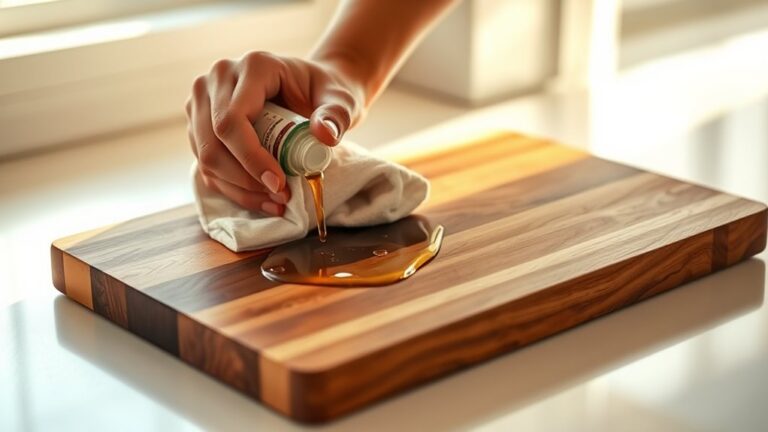
- Occasionally apply a light coat of food-safe mineral oil to protect the surface and maintain its finish.
Following these steps helps your metal cutting board stay in top shape and minimizes any negative impact on your knives.
When to Choose a Metal Cutting Board for Your Kitchen?
If you prioritize durability and hygiene in your kitchen, a metal cutting board might be the right choice for you. Metal boards resist deep scratches and stains, making them ideal if you’re prepping acidic or strong-smelling foods frequently. They’re also non-porous, so bacteria won’t hide in grooves like they can on wood or plastic.
Choose metal boards if you need something easy to sanitize quickly, especially in busy or commercial kitchens. However, keep in mind they can dull knives faster, so if you want to maintain blade sharpness, they might not be the best daily option. Use metal cutting boards when you require toughness and quick cleaning, especially for heavy-duty tasks.
Consider softer boards for delicate knife work.
Frequently Asked Questions
Are Metal Cutting Boards Safe for Food Preparation?
Yes, metal cutting boards are safe for food preparation. They’re easy to clean, resist bacteria, and don’t absorb odors.
Just be careful with your knives, as metal can dull them faster than wood or plastic.
Do Metal Cutting Boards Harbor Bacteria More Than Other Boards?
No, metal cutting boards don’t harbor bacteria more than other boards. You’ll find they’re actually easier to sanitize since they don’t absorb liquids or get scratched like wood or plastic, reducing bacteria buildup effectively.
Can Metal Cutting Boards Be Used for Both Meat and Vegetables?
You can use metal cutting boards for both meat and vegetables, but you’ll need to clean them thoroughly between uses to avoid cross-contamination. Metal boards are easy to sanitize, making them practical for handling different foods safely.
Are Metal Cutting Boards Dishwasher Safe?
Think of your metal cutting board as a sturdy knight—yes, you can toss it in the dishwasher, and it’ll survive unscathed.
How Heavy Are Typical Metal Cutting Boards?
Typical metal cutting boards weigh between 2 to 5 pounds, depending on size and material thickness.
You’ll find thinner aluminum ones are lighter, while thicker stainless steel boards feel noticeably heavier in your hands.
Conclusion
So, are metal cutting boards bad for your knives? They do dull blades faster, especially sharper ones, because metal offers little give.
But don’t toss your swords just yet—metal boards shine in durability and hygiene. Think of them like a trusty knight’s shield: tough and reliable, just needing some care to protect your blades.
Choose wisely based on your kitchen quests, and your knives will serve you well, no matter the era. When considering metal cutting boards, balance their durability and hygiene benefits against the faster blade dulling to keep your knives in top shape.