What Plastic Are Cutting Boards Made Of and How to Use Them Safely
Cutting boards are mostly made from polyethylene, such as high-density polyethylene (HDPE), and polypropylene. These plastics are popular because they’re durable, safe, and easy to clean, making them ideal for kitchen use.
Understanding what plastic cutting boards are made of helps you choose the right one for your needs and maintain food safety.
You’ll want to check for recycling codes or labels to identify the material. Use separate boards for different foods to prevent cross-contamination, and clean them thoroughly after each use.
Replace boards showing deep grooves or cracks to avoid bacteria buildup.
Following these tips keeps your kitchen safe and efficient. Keep going to discover more helpful practices for cutting board care and food safety.
Key Takeaways
- Cutting boards are commonly made from high-density polyethylene (HDPE) and polypropylene (PP) for durability and food safety.
- Identify plastic types using recycling codes (2 for HDPE, 5 for PP) and manufacturer labels for proper maintenance.
- Replace cutting boards showing deep grooves, cracks, or warping to prevent bacterial buildup and contamination.
- Use separate, color-coded boards for raw meats, vegetables, and cooked foods to avoid cross-contamination.
- Clean boards thoroughly with hot, soapy water or in a dishwasher, and allow them to air-dry completely after use.
Common Plastics Used in Cutting Boards
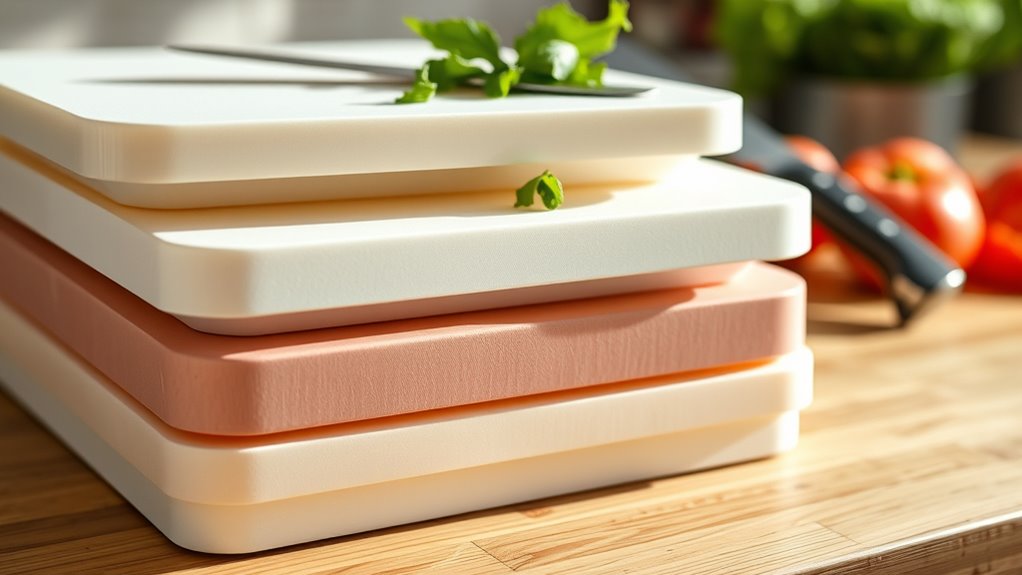
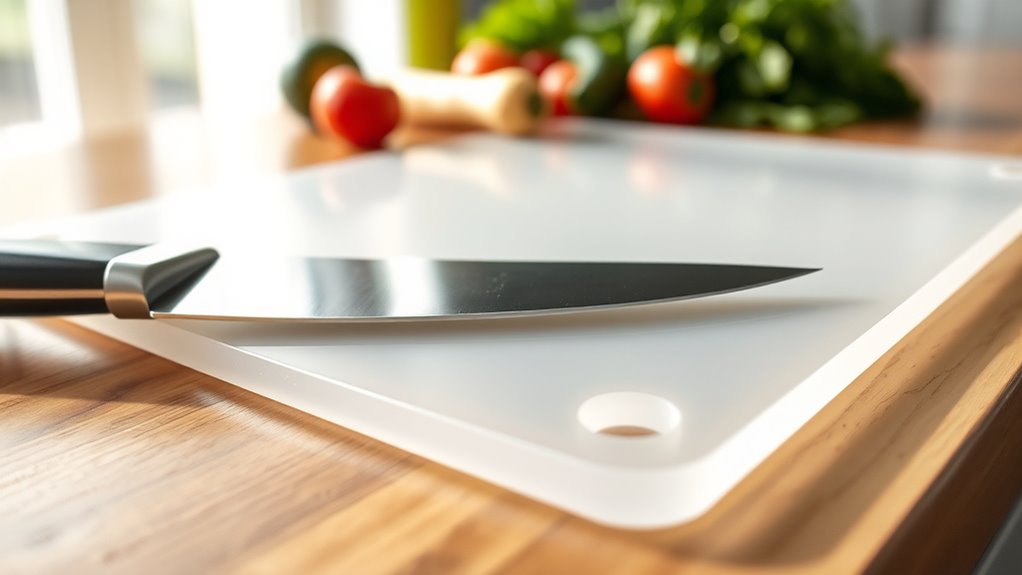
Plastic cutting boards commonly use materials like polyethylene and polypropylene because they’re durable, non-porous, and easy to clean. When you choose a cutting board made from these plastics, you’re selecting a surface that resists moisture and bacteria absorption, making food prep safer. High-density polyethylene (HDPE) is often favored for its toughness and resistance to knife marks, so your board lasts longer without harboring germs.
Polypropylene is another common option, offering flexibility and a slightly softer surface that’s gentle on your knives. You might also encounter other plastics like nylon or acrylic, but they’re less common due to varying durability and maintenance needs. Understanding these materials helps you pick a board that fits your kitchen habits and keeps your food prep hygienic.
Why Polyethylene and Polypropylene Are Top Choices

You want a cutting board that stands up to heavy use without compromising food safety. Polyethylene and polypropylene offer excellent durability and resist chemicals that could contaminate your food.
Let’s explore why these materials are trusted choices in kitchens everywhere.
Durability and Food Safety
Although many materials are available for cutting boards, polyethylene and polypropylene stand out because they balance durability with food safety. When you use cutting boards made from these plastics, you get a reliable surface that resists deep cuts, which means fewer places for bacteria to hide.
Plus, these materials are non-porous, so they don’t absorb liquids or odors, keeping your food safer.
Here’s why they’re excellent choices for your kitchen:
- They resist knife marks, reducing bacterial buildup.
- Their non-porous nature prevents contamination.
- They withstand repeated washing without degrading.
- They’re lightweight and easy to handle.
Choosing polyethylene or polypropylene helps you maintain a hygienic food prep environment every time.
Chemical Resistance Benefits
Because cutting boards frequently come into contact with acidic foods and cleaning chemicals, their ability to withstand chemical damage is essential. Polyethylene and polypropylene excel here—they don’t react with acids, oils, or detergents you commonly use in the kitchen.
This chemical resistance means these plastics won’t degrade, stain, or absorb odors over time, keeping your cutting board safe and hygienic. You won’t have to worry about harmful substances leaching into your food or the board breaking down after repeated cleaning.
Plus, their resistance helps maintain the board’s structural integrity, so you get long-lasting performance. Choosing polyethylene or polypropylene cutting boards ensures you’re using a material designed to handle everyday kitchen challenges without compromising your food’s safety or the board’s durability.
How to Identify Your Cutting Board’s Plastic Type
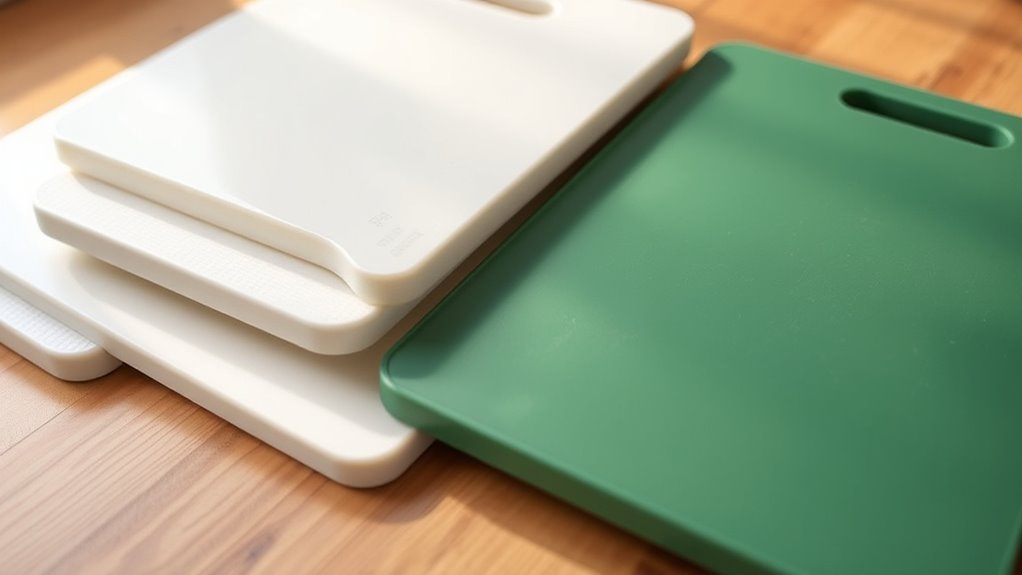
When selecting a plastic cutting board, identifying its material type helps guarantee safe and effective use. You can usually find this information printed or embossed on the board itself. Knowing the plastic type helps you understand its properties and care requirements.
Identifying your cutting board’s plastic type ensures safe use and helps you maintain it properly.
Here’s how to identify your cutting board’s plastic type:
- Look for recycling codes: Check for numbers like 1 (PET), 2 (HDPE), or 5 (PP) inside the recycling triangle.
- Read product labels: Packaging or tags often state the plastic type.
- Check for manufacturer details: Visit their website or contact customer support.
- Observe the texture and color: Some plastics have distinct looks; for example, HDPE boards are usually white and smooth.
This quick check can help you use your cutting board safely and maintain it properly.
How Plastic Types Impact Durability and Food Safety
You’ll find cutting boards made from various plastics like polyethylene and polypropylene, each affecting durability and safety differently. Choosing the right plastic type helps prevent deep grooves that can harbor bacteria.
Understanding these differences guarantees your board stays both sturdy and hygienic over time.
Common Plastic Materials
Although plastic cutting boards come in various materials, not all plastics offer the same level of durability or food safety. Recognizing the common types helps you pick the right one for your kitchen needs.
Here are four popular plastics used in cutting boards:
- Polypropylene (PP): Lightweight, affordable, and resistant to moisture and stains.
- High-Density Polyethylene (HDPE): Durable, impact-resistant, and FDA-approved for food contact.
- Polycarbonate (PC): Hard and clear but less common due to potential BPA concerns.
- Polystyrene (PS): Rigid but prone to cracking, making it less ideal for heavy kitchen use.
Each material affects how your cutting board handles wear and food safety, so choosing wisely guarantees a safer, longer-lasting tool.
Safety and Durability
Since different plastics vary in strength and chemical composition, they directly affect your cutting board’s durability and food safety. You want a board that resists deep cuts and won’t harbor bacteria. For example, HDPE is tough and non-porous, making it safe and long-lasting.
Softer plastics may scratch easily, increasing contamination risk. Also, some plastics can warp or degrade with frequent washing or heat exposure, which compromises safety.
| Plastic Type | Durability | Food Safety |
|---|---|---|
| HDPE | High | Excellent (non-porous) |
| Polypropylene | Moderate | Good |
| PVC | Low | Fair (more porous) |
| Acrylic | Moderate | Good |
| Nylon | High | Good |
Choosing a resilient, non-porous plastic ensures your cutting board stays safe and functional longer.
Preventing Bacterial Growth on Plastic Cutting Boards
How can you keep your plastic cutting boards free from harmful bacteria? It’s essential to take proactive steps to prevent bacterial growth, ensuring your food prep stays safe. Here’s what you can do:
- Use separate boards for raw meat, vegetables, and cooked foods to avoid cross-contamination.
- Store boards in a dry, well-ventilated area to discourage bacterial moisture buildup.
- Avoid deep knife grooves where bacteria can hide by replacing worn-out boards promptly.
- Allow boards to air-dry completely after use; don’t stack or cover them while damp.
Cleaning and Maintaining Plastic Cutting Boards
To keep your plastic cutting boards safe and durable, you need to clean and maintain them properly after each use. Rinse off food debris immediately, then wash the board with hot, soapy water. Use a scrub brush or sponge to remove stuck-on bits.
For thorough disinfection, soak the board in a solution of one tablespoon of bleach per gallon of water for a few minutes, then rinse well. Avoid using harsh abrasives or putting your board in the dishwasher unless the manufacturer says it’s dishwasher-safe. After cleaning, dry the board completely to prevent moisture buildup, which can encourage bacteria growth.
Store your cutting boards upright in a well-ventilated area. Regular maintenance, like sanding minor cuts, helps keep your board smooth and extends its lifespan.
When to Replace Your Plastic Cutting Board
Proper cleaning and maintenance can prolong your plastic cutting board’s life, but eventually, it will show signs that it’s time for a replacement. Knowing when to replace it helps prevent contamination and keeps your kitchen safe.
Look out for these signs:
- Deep grooves and cuts that don’t smooth out with washing.
- Persistent stains or discoloration that won’t come off.
- Warping or cracking that affects stability during use.
- A lingering odor even after thorough cleaning.
If you notice any of these, it’s best to swap in a new plastic cutting board. This simple step helps keep your food preparation hygienic and reduces the risk of harmful bacteria buildup.
Safe Use Tips for Plastic Cutting Boards With Different Foods
When you use plastic cutting boards with different types of food, keeping them separate is essential to avoid cross-contamination. Assign specific boards for meats, vegetables, fruits, seafood, and cooked foods. Label or color-code them to make this easier.
Clean each board thoroughly after use with hot, soapy water or in the dishwasher. Avoid using boards with deep grooves as bacteria can hide there. Store them upright to allow drying.
Here’s a simple guide to help you:
| Food Type | Recommended Board Color/Label |
|---|---|
| Raw Meat | Red |
| Vegetables | Green |
| Fruits | Yellow |
| Seafood | Blue |
| Cooked Foods | White |
Following these tips keeps your kitchen safer and your food healthier.
Frequently Asked Questions
Can Plastic Cutting Boards Be Recycled After Disposal?
Yes, you can recycle plastic cutting boards, but it depends on your local recycling program and the type of plastic. Check for recycling symbols, clean the board thoroughly, and confirm with your facility before disposal to guarantee proper recycling.
Are Colored Plastic Cutting Boards Safer Than Plain Ones?
Colored plastic cutting boards aren’t inherently safer than plain ones, but they help you avoid cross-contamination by designating colors for different foods.
You should still clean and maintain them properly to keep them safe for use.
How Do Plastic Cutting Boards Compare to Wooden Ones in Cost?
Back in the days of knights, you’d find plastic cutting boards generally cheaper than wooden ones. You’ll save money upfront with plastic, but wooden boards, while pricier, often last longer and develop a charming patina over time.
Can Plastic Cutting Boards Be Used in Microwave or Dishwasher?
You shouldn’t use most plastic cutting boards in the microwave, as they can warp or release chemicals.
However, you can usually put them in the dishwasher for easy cleaning, but check the manufacturer’s instructions first.
Do Plastic Cutting Boards Emit Harmful Chemicals When Cut?
Cutting plastic boards isn’t a smoke signal of harmful chemicals if you use quality, food-grade types. Just like a calm river, they stay safe unless damaged—so replace boards with deep grooves to avoid risks.
Conclusion
When choosing a cutting board, knowing that over 70% of plastic boards are made from polyethylene or polypropylene can help you pick a safe, durable option. These materials resist bacteria and last longer when cleaned properly.
To keep your cutting board safe, always clean it thoroughly and replace it once deep grooves appear. By following these simple tips, you’ll protect your food and maintain a hygienic kitchen environment every time you cook.
Using plastic cutting boards made of polyethylene or polypropylene ensures safety and durability. Proper cleaning and timely replacement are key to preventing bacteria buildup and maintaining food safety.