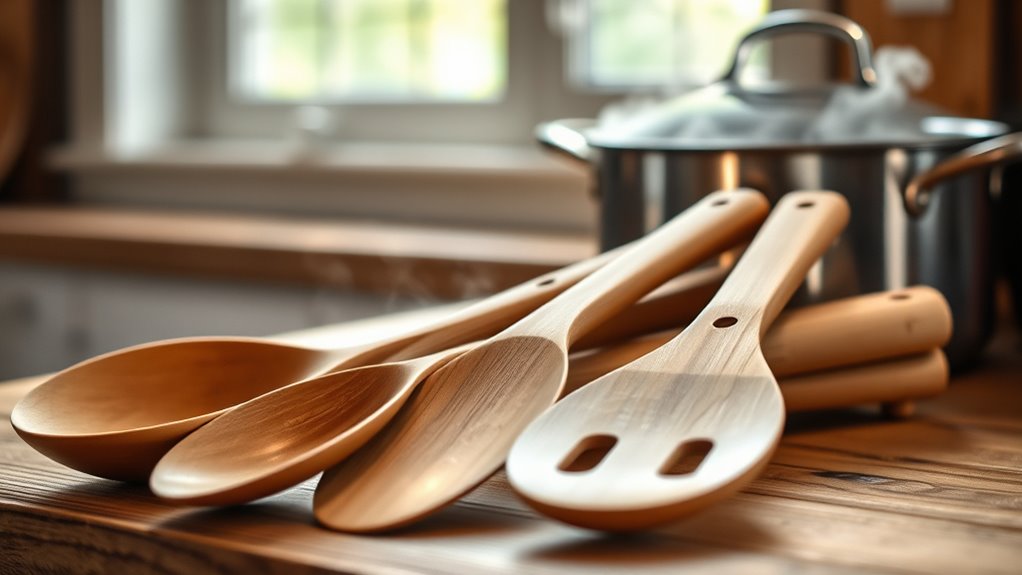
Are Bamboo Cooking Utensils Safe
You can confidently use bamboo cooking utensils because they’re naturally resistant to bacteria and don’t leach harmful chemicals into your food. Bamboo cooking utensils are an excellent choice for those seeking safe, eco-friendly kitchen tools.
They handle heat well, won’t warp or crack easily when cared for properly, and won’t scratch your cookware.
Just wash them by hand, dry thoroughly, and oil occasionally to keep them safe and durable. If you want to discover how bamboo compares to other utensils and when to replace them, there’s more to explore.
Key Takeaways
- Bamboo utensils are naturally antimicrobial and do not leach harmful chemicals into food, making them safe for cooking. Proper cleaning with warm, soapy water and thorough drying prevents bacterial growth and maintains hygiene. Avoid soaking or dishwasher use to prevent warping, cracking, or damage that could compromise safety.
- Periodic oiling with food-grade mineral or bamboo oil preserves durability and prevents splinters or cracks. Replace utensils if they develop cracks, stains, odors, or splinters to ensure continued safe use.
Are Bamboo Cooking Utensils Safe to Use?
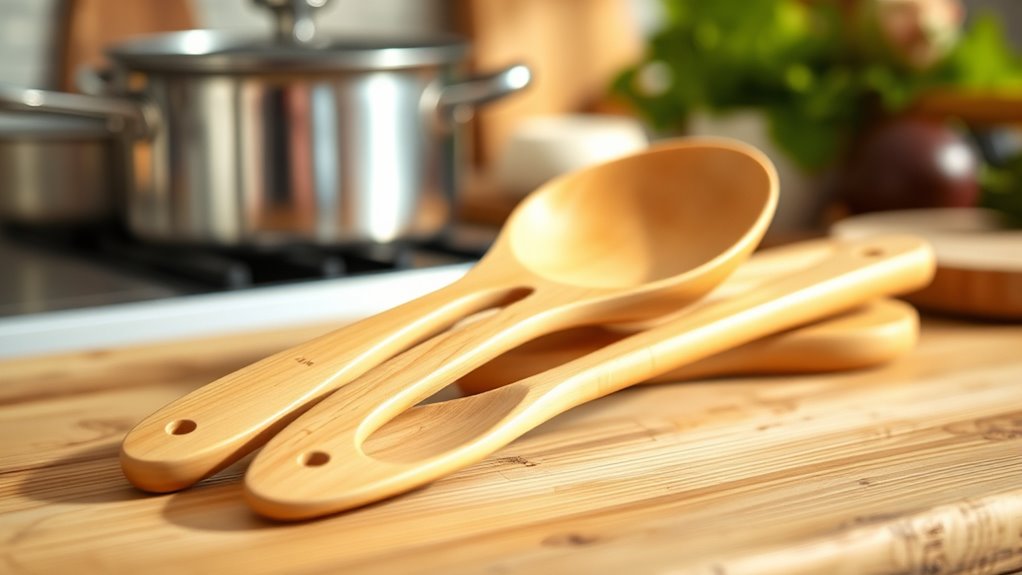
Although you might wonder about their safety, bamboo cooking utensils are generally safe to use. You won’t have to worry about harmful chemicals leaching into your food because bamboo is naturally resistant to bacteria and doesn’t require harsh treatments. When you cook with bamboo utensils, you avoid scratches on your non-stick pans, which helps keep your cookware in good shape and safe.
Just be sure to clean them properly after each use, and don’t leave them soaking in water for too long to prevent warping or cracking. If you take care of your bamboo utensils, they’ll last a long time and remain safe for everyday cooking. Overall, they’re a reliable and eco-friendly choice for your kitchen.
What Materials Are Bamboo Cooking Utensils Made From?
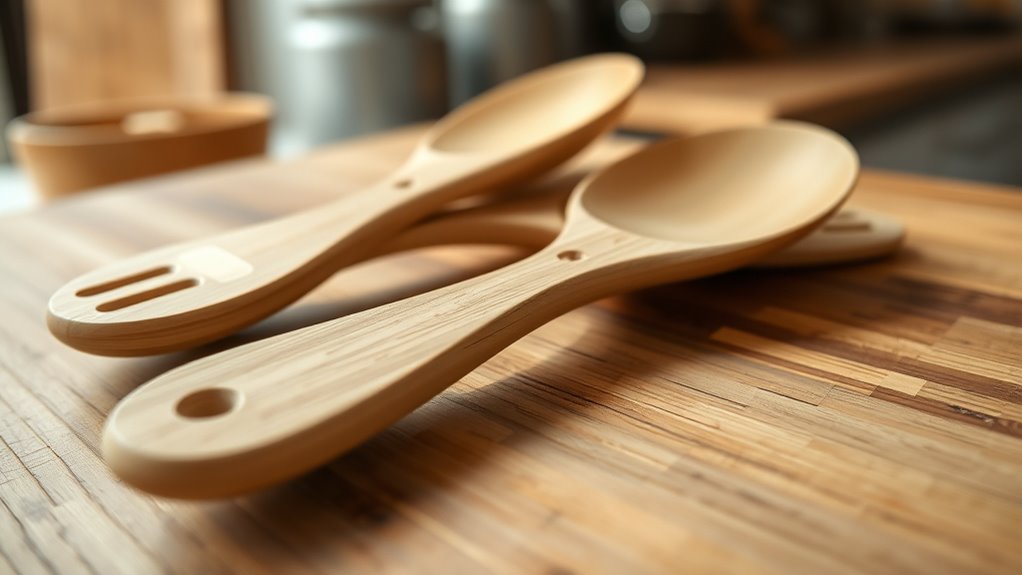
When you choose bamboo cooking utensils, you’re getting tools made primarily from the fast-growing bamboo plant, known for its strength and sustainability. Bamboo fibers are tightly packed, giving the utensils durability and a smooth finish without relying on synthetic materials. Often, these utensils are crafted from a single piece of bamboo or laminated strips glued together to enhance stability and prevent warping.
Besides bamboo, some manufacturers may use natural adhesives or food-safe finishes to protect the surface. Unlike plastic or metal utensils, bamboo is naturally resistant to stains and odors, making it a practical choice. Overall, you’re handling utensils made from a simple, renewable material that blends functionality with eco-friendliness, offering a natural alternative in your kitchen tools.
Do Bamboo Cooking Utensils Contain Harmful Chemicals?
Because bamboo cooking utensils are made from natural materials, many people assume they’re free from harmful chemicals. Generally, bamboo itself is non-toxic, but some manufacturers use adhesives, finishes, or coatings that might contain chemicals.
To stay safe, check if your utensils are labeled food-grade or chemical-free. Here’s a quick comparison of common factors:
| Factor | Potential Chemical | Safety Note |
|---|---|---|
| Natural Bamboo | None | Safe when untreated |
| Adhesives | Formaldehyde | Avoid if not food-grade |
| Finishes/Coatings | VOCs, BPA | Look for FDA-approved |
| Cleaning | Detergents | Use mild, non-toxic soap |
| Storage | Mold Risk | Keep dry to prevent growth |
You can reduce risk by choosing untreated bamboo or utensils certified free of harmful substances.
How Durable Are Bamboo Cooking Utensils?
You’ll find bamboo utensils are stronger than many wooden ones, making them less likely to crack under pressure. They hold up well with regular use, resisting wear and tear over time.
Let’s explore just how long they can last in your kitchen.
Strength Compared To Wood
Although bamboo may look delicate, it actually offers impressive strength compared to traditional wood utensils. When you handle bamboo utensils, you’ll notice they’re lightweight yet sturdy, making them less prone to bending or breaking during regular use. Bamboo’s natural fibers are tightly packed, giving it a higher tensile strength than many hardwoods used in kitchen tools.
This means your bamboo spatulas or spoons can withstand daily cooking tasks without warping or snapping easily. Plus, bamboo’s fast growth cycle contributes to its strength, as the plant’s dense structure ensures durability. So, if you’re worried about whether bamboo can hold up in your kitchen, rest assured it stands strong alongside, and sometimes even surpasses, wooden alternatives.
Resistance To Cracking
When you use bamboo cooking utensils regularly, you’ll find they resist cracking far better than many other materials. Bamboo’s natural fibers are tightly woven, creating a sturdy structure that handles heat and moisture well without splitting. Unlike plastic or some woods, bamboo doesn’t become brittle over time, so it holds up under frequent stirring, flipping, and scraping.
However, to keep them crack-free, avoid soaking bamboo utensils in water for long periods and dry them promptly after washing. This care prevents swelling and drying cycles that might cause cracks.
Longevity With Regular Use
Because bamboo is both strong and flexible, your cooking utensils can withstand daily use without wearing down quickly. They resist cracking, splintering, and warping much better than many other wooden utensils. However, how long they last depends on your care routine and cooking habits.
Regular cleaning and avoiding prolonged soaking will extend their life. Here’s a quick look at bamboo utensil durability over time:
| Usage Frequency | Expected Longevity | Maintenance Tips | Durability Notes |
|---|---|---|---|
| Light (1-2 times/week) | 3-5 years | Hand wash, dry promptly | Minimal wear |
| Moderate (3-5 times/week) | 2-4 years | Avoid soaking, oil occasionally | Slight surface wear |
| Heavy (daily use) | 1-3 years | Regular oiling, gentle cleaning | Possible minor cracks |
| Intensive (commercial) | <1 year | Frequent replacement recommended | High wear and tear |
Can Bamboo Cooking Utensils Harbor Bacteria or Mold?
You might wonder if bamboo’s natural pores can trap bacteria or mold. Moisture and food residue create the perfect environment for these to grow if you don’t clean your utensils properly.
Let’s look at how porosity affects bacterial growth and what you can do to keep your bamboo tools safe.
Porosity And Bacterial Growth
Although bamboo is naturally porous, it doesn’t mean your cooking utensils will easily harbor bacteria or mold. The pores in bamboo are small and tightly packed, which limits how much moisture and food particles can get trapped inside. If you clean your utensils properly and let them dry completely between uses, you reduce the risk of bacterial growth considerably.
Unlike plastic or metal, bamboo’s natural properties can actually resist bacteria to some extent. However, if you leave bamboo utensils wet or store them in damp environments, bacteria and mold have a better chance to develop in those tiny pores. So, you need to be mindful about drying and cleaning to keep your bamboo tools safe and hygienic for everyday cooking.
Mold Formation Conditions
Keeping bamboo utensils dry and clean plays a big role in preventing mold growth, but understanding the specific conditions that encourage mold is just as important. Mold thrives in warm, moist environments, so if your bamboo utensils stay damp for long periods, they become prime spots for mold to develop. Poor ventilation and storage in dark, humid places also increase the risk.
Additionally, food residues left on the utensils can feed mold spores, accelerating their growth. You should be aware that once mold starts forming, it can penetrate the bamboo’s porous surface, making it harder to remove. While bamboo is naturally resistant to some microbial growth, these environmental factors create an ideal setting for mold if you’re not careful.
Cleaning And Maintenance Tips
Because bamboo utensils have porous surfaces, they can harbor bacteria or mold if not cleaned properly. To keep them safe, wash your bamboo tools by hand with warm, soapy water immediately after use. Avoid soaking them, as prolonged moisture encourages mold growth.
Rinse thoroughly and dry them completely using a clean towel or air dry in an upright position. Every few weeks, treat your utensils with food-safe mineral oil to maintain their moisture balance and prevent cracking. Never put bamboo utensils in the dishwasher, as high heat and water exposure can damage the wood and promote bacterial buildup.
How Do You Clean and Maintain Bamboo Cooking Utensils?
When you clean and maintain bamboo cooking utensils properly, you extend their lifespan and keep them safe for food use. Start by washing them with warm, soapy water immediately after use. Avoid soaking or putting them in the dishwasher, as excess moisture can cause warping or cracking.
After washing, dry them thoroughly with a towel and let air dry completely. Periodically, rub them with food-grade mineral oil or bamboo conditioning oil to prevent drying out and maintain smoothness.
| Step | Action | Tip |
|---|---|---|
| Wash | Use warm, soapy water | Avoid soaking |
| Dry | Towel dry + air dry | Prevents mold |
| Condition | Apply mineral oil | Keeps bamboo smooth |
Following these steps helps keep your bamboo utensils durable and hygienic.
Why Are Bamboo Cooking Utensils Eco-Friendly?
You’ll appreciate that bamboo is a fast-growing, renewable resource that doesn’t harm the environment when harvested responsibly. Since bamboo utensils are biodegradable, they break down naturally without adding waste to landfills.
Choosing bamboo means you’re making a greener, more sustainable choice in your kitchen.
Renewable Resource Benefits
Although many cooking utensils come from non-renewable materials, bamboo stands out as an eco-friendly choice because it grows rapidly and regenerates without needing replanting. When you choose bamboo utensils, you support a renewable resource that matures in just three to five years, unlike hardwood trees that can take decades. Bamboo’s fast growth means less strain on forests and reduced deforestation.
Plus, harvesting bamboo doesn’t kill the plant, so it continues to absorb carbon dioxide and produce oxygen. By using bamboo utensils, you help conserve natural resources and promote sustainable farming practices. This renewable cycle benefits the environment and encourages responsible consumption, making bamboo a smart and sustainable option for your kitchen.
Biodegradable Material Impact
Why does choosing bamboo cooking utensils make a difference for the environment? When you pick bamboo, you’re opting for a material that naturally breaks down without leaving harmful residues. Unlike plastic utensils, bamboo decomposes quickly, reducing landfill waste and preventing toxic chemicals from seeping into the soil.
You’re also cutting down on pollution since bamboo doesn’t require energy-intensive manufacturing or harsh chemicals for production. By using bamboo utensils, you support a cycle where products return harmlessly to the earth, promoting healthier ecosystems.
How Do Bamboo Utensils Compare to Plastic and Metal?
Three key factors set bamboo utensils apart from plastic and metal: safety, durability, and environmental impact. You’ll find bamboo utensils are naturally free of harmful chemicals like BPA, common in some plastics, making them safer for cooking. Unlike metal, bamboo won’t scratch your non-stick pans or conduct heat, so your hands stay protected.
Bamboo is quite durable—resisting cracking or warping if properly cared for, though it’s less sturdy than metal. Environmentally, bamboo grows quickly and biodegrades, unlike plastic, which lingers in landfills, or metal, which requires energy-intensive mining. If you want utensils that balance safety, functionality, and eco-friendliness, bamboo offers a compelling alternative to traditional plastic and metal options without compromising your kitchen’s performance.
Do Bamboo Cooking Utensils Affect Food Taste or Cooking?
When you cook with bamboo utensils, you’ll find they don’t alter the taste of your food. Bamboo is a natural, neutral material that won’t impart any flavors, unlike some metal utensils that can react with acidic ingredients. You can confidently stir sauces, sauté vegetables, or serve dishes without worrying about unwanted tastes.
Bamboo utensils also handle heat well, so they won’t warp or melt like plastic tools might, allowing you to cook more effectively. Their smooth surface prevents food from sticking, making stirring and flipping easier. Plus, bamboo is gentle on your cookware, so it won’t scratch non-stick pans or delicate surfaces.
Common Myths About Bamboo Cooking Utensils Debunked
Although bamboo cooking utensils have gained popularity for their eco-friendliness and durability, many misconceptions about their safety and performance still persist. You might hear that bamboo utensils absorb harmful bacteria, but their natural antimicrobial properties actually help reduce bacterial growth. Some say they scratch cookware easily, yet bamboo is gentle enough for non-stick surfaces.
Another myth is that bamboo utensils splinter or break quickly; with proper care, they remain sturdy and long-lasting. People also worry about chemical treatments, but most bamboo utensils on the market are made without toxic finishes or adhesives. By understanding these facts, you can confidently use bamboo utensils knowing they’re safe, practical, and environmentally friendly for your kitchen.
When Should You Replace Bamboo Cooking Utensils?
Even though bamboo utensils are known for their durability, you should keep an eye out for signs that indicate it’s time to replace them. If you notice cracks, splinters, or deep grooves, it’s best to stop using the utensil as bacteria can hide in those imperfections.
Also, if your bamboo tools start to smell musty or develop stains that won’t wash off, it’s a clear sign they’ve absorbed too much moisture or food residue. Over time, frequent exposure to water and heat can weaken bamboo, making it less safe and effective.
To keep your cooking safe and hygienic, replace your bamboo utensils as soon as they show visible damage or persistent odors that don’t disappear after thorough cleaning.
Frequently Asked Questions
Are Bamboo Utensils Dishwasher Safe?
You shouldn’t put bamboo utensils in the dishwasher because the heat and water can cause them to crack or warp. Hand washing with mild soap and drying them thoroughly will keep your utensils lasting longer and looking great.
Can Bamboo Utensils Be Used With Non-Stick Cookware?
You can gently stir your favorite dishes with bamboo utensils on non-stick cookware without worry. Their smooth, natural surface won’t scratch coatings, letting you savor every meal while keeping pans pristine and long-lasting.
How Long Do Bamboo Cooking Utensils Typically Last?
Bamboo cooking utensils typically last about one to two years with regular use. You can extend their life by hand-washing and oiling them occasionally. Avoid soaking or putting them in the dishwasher, and they’ll serve you well.
Are Bamboo Utensils Suitable for High-Heat Cooking?
You might be surprised, but bamboo utensils aren’t ideal for high-heat cooking. They can scorch or crack when exposed to intense temperatures.
You’ll want to save them for stirring or serving instead, keeping them safe and durable.
Can Bamboo Utensils Be Recycled or Composted?
You can compost bamboo utensils since they’re biodegradable and break down naturally. Recycling isn’t usually an option, but tossing them in your compost or green waste bin helps reduce landfill waste and benefits your garden soil.
Conclusion
Using bamboo cooking utensils is like having a trusty garden tool in your kitchen—you get natural, durable, and safe performance without the worry of harmful chemicals. They resist bacteria well and won’t alter your food’s taste, making them a smart choice over plastic or metal.
Just remember to replace them when they start to crack or wear down, ensuring your cooking remains as fresh and reliable as ever. Bamboo utensils are not only safe but also eco-friendly and long-lasting, making them an excellent addition to any kitchen.
In conclusion, bamboo cooking utensils provide a natural, safe, and durable option that supports healthy cooking habits and sustainable living.