How to Make Beet Juice in a Blender
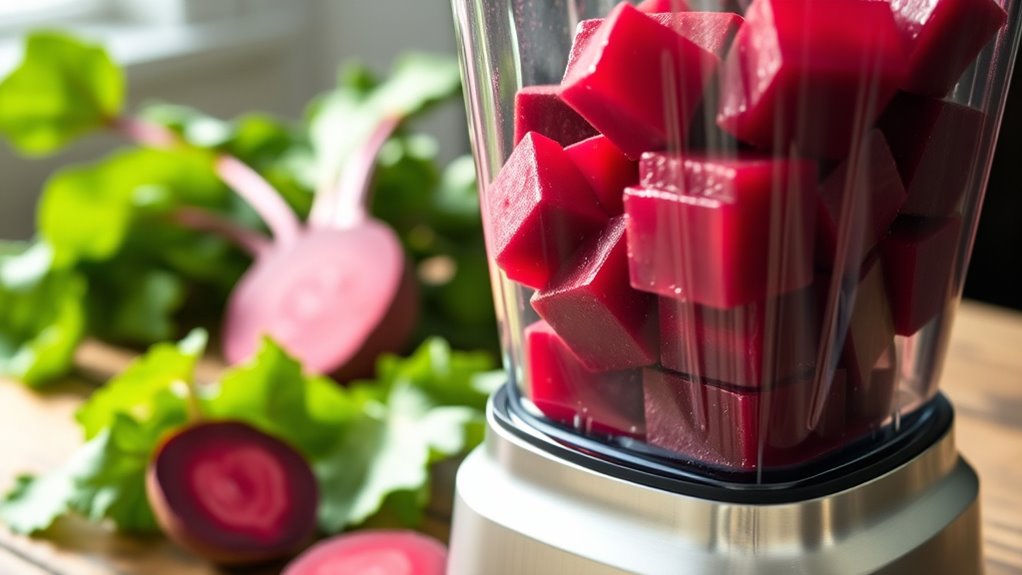
To make beet juice in a blender, start by washing, peeling, and cutting fresh beets into small chunks.
Using a blender is a quick and efficient way to extract juice from beets, making it a popular method for homemade beet juice recipes.
Adding about ½ cup of water helps the blending process run smoothly and prevents the motor from overheating.
Blend the beets on high speed until the mixture is uniform and smooth.
Next, strain the blended mixture through a fine mesh sieve or cheesecloth to remove the pulp, resulting in a silky texture.
For enhanced flavor, consider adding ingredients like apples, ginger, or honey.
Store your freshly made beet juice in glass jars and refrigerate promptly to maintain freshness.
Follow these simple steps, and you’ll soon discover helpful tips to perfect your juice experience.
Key Takeaways
- Wash and peel beets, then cut into small chunks for easier blending and smoother juice.
- Add beet chunks and about ½ cup water to a blender, blending on high until uniform.
- Strain the blended mixture through a fine mesh or cheesecloth to remove pulp for a smooth texture.
- Store juice in airtight glass containers in the refrigerator and consume within 24-48 hours.
- Clean the blender immediately after use by blending warm soapy water and rinsing thoroughly.
What You Need to Make Beet Juice in a Blender

Before you start blending, gather the essential ingredients and tools you’ll need to make beet juice in a blender. You’ll need fresh beets as the main ingredient. To enhance flavor, consider adding apples, carrots, or ginger.
Have some water or a liquid base like coconut water ready to help the blending process. You’ll also want a high-powered blender to assure smooth juice without chunks. A knife and cutting board are necessary for prepping your ingredients, though you’ll learn more about that next.
Finally, prepare a fine mesh strainer or cheesecloth if you want to remove pulp for a smoother juice. Having a container or glass ready will make transferring and serving easier. With these items, you’re all set to start blending your nutritious beet juice.
How to Prepare Beets for Blending

Once you’ve gathered your fresh beets, start by washing them thoroughly to remove any dirt or debris. Use a vegetable brush under cold running water to scrub the skin gently. After washing, trim off the beet greens and stems, but don’t discard them—they’re great for smoothies or salads.
Next, peel the beets using a vegetable peeler or a paring knife; this helps reduce the earthy flavor and makes blending smoother. Then, cut the beets into small chunks, about 1 to 2 inches, so your blender can process them easily without straining. If your beets are large, consider cutting them into even smaller pieces.
Preparing beets this way guarantees you get a smooth, vibrant juice with minimal effort during blending.
How to Blend Beet Juice in Simple Steps

After preparing your beets by washing, peeling, and chopping them into manageable pieces, you’re ready to blend them into juice. Start by placing the beet pieces into your blender. Add a small amount of water to help the blending process and achieve a smooth texture.
Blend on high for about 1-2 minutes until the mixture is consistent. If needed, pause and scrape down the sides to guarantee even blending.
Here’s a quick guide:
| Step | Action |
|---|---|
| 1 | Add chopped beets to blender |
| 2 | Pour in ½ cup water |
| 3 | Blend on high for 1-2 mins |
| 4 | Scrape sides if necessary |
Now, your fresh beet juice is ready for straining or serving!
How to Naturally Sweeten and Enhance Beet Juice Flavor
You can naturally sweeten your beet juice by adding ingredients like honey or maple syrup to balance its earthiness. Citrus elements like lemon or orange juice brighten the flavor and add a revitalizing twist. Fresh herbs such as mint or basil also bring a unique, aromatic boost to your drink.
Adding Natural Sweeteners
How can you naturally sweeten beet juice without overpowering its earthy flavor? Start by adding a small piece of fresh ginger or a few slices of apple to your blender. These ingredients introduce subtle sweetness while complementing the beet’s natural taste.
You can also toss in a handful of carrots; their natural sugars blend smoothly and enhance the juice’s overall flavor. If you prefer something simpler, a teaspoon of raw honey or pure maple syrup works well—just add them sparingly to keep the balance. Steer clear of refined sugars, as they can mask the beet’s character.
Incorporating Citrus Elements
Natural sweeteners like ginger, apple, and carrots add a gentle touch of sweetness, but incorporating citrus elements can brighten your beet juice with a fresh, tangy kick.
Citrus fruits not only enhance flavor but also add vitamin C, balancing the earthiness of beets. Try blending lemon, lime, or orange juice for a lively twist.
Here’s a quick guide to help you choose the right citrus and adjust quantities for your perfect blend:
| Citrus Fruit | Flavor Profile | Suggested Amount per 2 Beets |
|---|---|---|
| Lemon | Sharp, tangy | 1 tablespoon |
| Lime | Tart, zesty | 1 tablespoon |
| Orange | Sweet, mellow | 2 tablespoons |
| Grapefruit | Bitter-sweet, bold | 1 tablespoon |
Experiment with these to find your favorite zing!
Using Fresh Herbs
Although beets have a rich, earthy flavor, fresh herbs can lift your juice with unexpected brightness and subtle sweetness. Adding herbs like mint, basil, or parsley to your blender not only enhances the taste but also brings natural sweetness without extra sugar. Mint adds a revitalizing coolness, while basil offers a slightly peppery note that complements the beet’s earthiness.
Parsley provides a clean, crisp flavor that balances the juice beautifully. Start with a small handful and adjust to taste, blending thoroughly to release the herbs’ essential oils. Using fresh herbs keeps your beet juice vibrant and flavorful, making it more enjoyable and nutritious.
Experiment with different herbs to find your perfect blend and naturally sweeten your juice every time.
Best Fruits and Veggies to Add for Flavor and Nutrition
You can boost both flavor and nutrition by adding sweet fruits like apples or oranges to your beet juice. Nutrient-packed veggies such as carrots and spinach complement beets well and offer extra health benefits.
Finding the right balance between these ingredients will make your juice taste great and keep it nutritious.
Sweet Fruits To Blend
When adding sweet fruits to your beet juice, you’ll enhance both the flavor and nutritional value, making it more enjoyable and healthful. Sweet fruits balance the earthy taste of beets and provide natural sugars, vitamins, and antioxidants.
Here are some top picks you can blend in:
- Apples: They add crisp sweetness and vitamin C, boosting immunity.
- Oranges: Their citrusy zing brightens the flavor and adds a dose of vitamin D and potassium.
- Pineapple: It gives a tropical twist with bromelain, which supports digestion.
Experiment with these fruits to find your perfect blend. They not only improve taste but also contribute essential nutrients, making your beet juice both invigorating and nourishing.
Nutrient-Packed Vegetables
Why settle for just sweet fruits when you can boost your beet juice with nutrient-packed vegetables? Adding veggies not only enhances flavor but also amps up vitamins and minerals. Spinach brings iron and a mild taste, while carrots add beta-carotene and natural sweetness.
Celery provides hydration and a subtle salty note. Ginger packs antioxidants and a zesty kick, and cucumber offers invigorating lightness with extra water content.
| Vegetable | Benefit |
|---|---|
| Spinach | Iron, mild flavor |
| Carrots | Beta-carotene, sweetness |
| Celery | Hydration, subtle salt |
| Ginger | Antioxidants, zing |
| Cucumber | Invigorating, hydrating |
Incorporate these veggies to make your beet juice both delicious and nutrient-rich.
Balancing Flavors Perfectly
Adding nutrient-packed vegetables sets a strong foundation, but balancing flavors takes your beet juice to the next level. To create a juice that’s both delicious and nutritious, you want to pair beets with fruits and veggies that complement their earthy sweetness without overpowering it.
Here are some top picks to consider:
- Apples: Add natural sweetness and a crisp, invigorating taste.
- Carrots: Enhance the juice with subtle sweetness and a boost of beta-carotene.
- Ginger: Introduce a zesty kick that balances the earthiness and aids digestion.
How to Strain Beet Juice for a Smoother Drink
To achieve a smoother beet juice, you’ll want to strain out the pulp and any fibrous bits that can make the texture gritty. Start by placing a fine mesh strainer or cheesecloth over a large bowl or pitcher. Pour your blended beet mixture slowly into the strainer.
Use a spoon or spatula to press the pulp gently, extracting as much juice as possible without forcing solids through. If using cheesecloth, gather the edges and twist to squeeze out the juice. This step removes the coarse fibers, leaving you with a silky, invigorating drink.
Straining not only improves texture but also makes the juice easier to digest. Once strained, your beet juice is ready to enjoy or mix with other ingredients for added flavor.
Tips for Blending Beet Juice Smoothly Without a Juicer
To blend beet juice smoothly without a juicer, start by peeling and chopping the beets into small pieces. Add a bit of water to help your blender process the beets evenly.
Once blended, strain the mixture well to remove any pulp for a silky texture.
Preparing Beets Properly
Although you might not have a juicer, you can still prepare beets properly to achieve a smooth, delicious juice. Start by thoroughly washing the beets to remove dirt and any residues. Peel the beets to avoid bitterness and guarantee a cleaner flavor.
Cut them into smaller chunks to make blending easier and more efficient.
Here are some tips to prepare your beets right:
- Wash the beets under cold running water, scrubbing off any dirt.
- Peel the skin using a vegetable peeler or a knife for a smoother taste.
- Chop the beets into 1-2 inch pieces to help your blender work better.
Proper preparation helps you get the best texture and flavor from your beet juice without a juicer.
Using Water For Blending
Once your beets are properly prepared and chopped, adding water becomes key to blending them smoothly without a juicer. Start by pouring a small amount of water into the blender—about half a cup—to help the blades move freely. You can always add more if the mixture feels too thick or isn’t blending well.
Using water prevents the blender from overheating and reduces strain on the motor. It also helps break down the beet fibers, resulting in a smoother texture. Avoid adding too much water at once, as this can dilute the flavor.
Instead, blend in stages, gradually increasing water until you reach your desired consistency. This method guarantees your beet juice stays vibrant and flavorful while blending efficiently.
Straining Juice Effectively
While blending your beets with water creates a smooth mix, you’ll need to strain the juice to remove pulp and achieve a clean, revitalizing drink. Straining guarantees your juice is silky and easy to sip, free from fibrous bits that can affect texture.
Here’s how to strain effectively without a juicer:
- Use a fine mesh strainer or nut milk bag to catch pulp while letting juice flow through.
- Press the pulp gently with a spoon or squeeze the bag to extract every last drop.
- Strain over a large bowl to avoid spills and make pouring easier.
How to Store Fresh Beet Juice Properly
Because fresh beet juice can lose its vibrant flavor and nutrients quickly, you’ll want to store it properly to maintain its quality. Start by pouring the juice into an airtight glass container, like a mason jar, leaving a little space at the top to allow for expansion. Keep it refrigerated immediately to slow down oxidation and nutrient loss.
For best taste and freshness, consume the juice within 24 to 48 hours. Avoid plastic containers, as they may absorb the juice’s color and flavor. If you notice any off smells or changes in color, discard the juice to be safe.
Finally, give the container a gentle shake before drinking, as natural settling might occur. Proper storage guarantees you enjoy your beet juice at its best.
Health Benefits of Drinking Beet Juice Daily
If you drink beet juice daily, you’ll quickly notice its powerful impact on your overall health. This vibrant juice is packed with essential nutrients that support your body in multiple ways. Regular consumption can boost your energy, improve your digestion, and enhance cardiovascular health.
Here are some key benefits you’ll enjoy:
- Improved blood flow: Beet juice contains nitrates that help relax blood vessels, lowering blood pressure.
- Increased stamina: The natural nitrates also enhance oxygen use during exercise, giving you more endurance.
- Rich in antioxidants: Beets fight inflammation and protect your cells from damage.
Incorporating beet juice into your daily routine can be a simple yet effective way to promote long-term health and crucial.
Mistakes to Avoid When Making Beet Juice
Even though making beet juice seems straightforward, you can easily make mistakes that affect its taste, texture, and nutritional value. Avoid using unwashed or unpeeled beets, as dirt and bitterness can spoil your juice.
Don’t forget to cut beets into smaller pieces to help your blender work efficiently and prevent a chunky texture. Lastly, over-blending can cause heat buildup, reducing some nutrients and altering flavor.
| Mistake | Effect on Juice |
|---|---|
| Using unwashed beets | Gritty, unpleasant taste |
| Skipping chopping | Poor blending, uneven texture |
| Over-blending | Nutrient loss, warm, off-flavor |
How to Make Beet Juice Recipes for Different Tastes
Avoiding common mistakes sets a solid foundation for making beet juice, but customizing your juice to suit your taste can make the experience even better. You can easily adjust flavors and add nutrients by mixing in different ingredients. Try these ideas to create your perfect blend:
- Sweet and Tangy: Add an apple or orange for natural sweetness and a citrus zing.
- Spicy Boost: Include a small piece of ginger or a dash of cayenne pepper for a warming kick.
- Green Detox: Blend in spinach or kale to increase vitamins without overpowering the beet flavor.
Experiment with these combinations until you find what you like best. Remember, you control the balance between earthy, sweet, and spicy, so don’t hesitate to tweak your recipe!
How to Clean Your Blender After Making Beet Juice
Since beet juice can leave stubborn stains and strong odors, cleaning your blender promptly is vital to keep it fresh and ready for your next use. Start by rinsing the blender jar immediately after use to prevent stains from setting.
Next, fill it halfway with warm water and add a few drops of dish soap. Secure the lid and blend on high for 30 seconds to loosen any residue. Empty the soapy water, then rinse thoroughly with clean water.
For lingering odors or stains, blend a mixture of equal parts water and white vinegar or lemon juice, then rinse well. Finally, dry all parts completely before reassembling your blender to avoid mold and guarantee it’s ready for your next beet juice adventure.
Frequently Asked Questions
Can Beet Juice Interfere With Medications?
Yes, beet juice can interfere with some medications, especially blood pressure drugs and blood thinners. You should check with your doctor before regularly drinking it to avoid any harmful interactions or side effects.
Is It Safe to Drink Beet Juice Every Day?
Drinking beet juice daily is generally safe, like a gentle breeze invigorating your body. Just don’t overdo it—too much can lower your blood pressure or interact with medications, so check with your doctor first.
How Long Does Beet Juice Stay Fresh in the Fridge?
Beet juice stays fresh in the fridge for about 3 to 5 days. To keep it fresh longer, store it in an airtight container and give it a good shake before drinking since it tends to separate.
Can Beet Juice Cause Allergic Reactions?
Yes, beet juice can cause allergic reactions in some people. If you notice itching, swelling, or difficulty breathing after drinking it, stop immediately and see a doctor.
Always start with a small amount to test your tolerance.
What Are Signs of Beet Juice Intolerance?
You might notice stomach cramps, nausea, or diarrhea if you have a beet juice intolerance. Some people also experience headaches, skin rashes, or a rapid heartbeat.
If symptoms appear, stop drinking it and consult your doctor.
Conclusion
Now that you know how to make beet juice in a blender, you’re set to enjoy its vibrant flavor and health perks. Did you know drinking just one cup of beet juice can boost your stamina by up to 16% during exercise? It’s a simple way to fuel your body naturally.
Keep experimenting with different fruits and veggies, and you’ll never get bored of this nutritious, delicious drink. Making beet juice in a blender is quick and easy, perfect for a healthy lifestyle. Cheers to your health and the benefits of fresh beet juice!