How to Clean Aluminum Cookware
To clean your aluminum cookware effectively, start with mild dish soap and warm water. Using a soft sponge is key to avoiding scratches or discoloration on the surface.
Aluminum cookware requires gentle care to maintain its shine and durability.
Avoid harsh chemicals like bleach or oven cleaners, as these can damage the aluminum.
For stubborn stains or tarnish, soak the cookware in hot water mixed with lemon juice or cream of tartar. After soaking, gently scrub the area to remove any discoloration.
Always dry your aluminum cookware promptly to prevent water spots.
Store it carefully to keep it looking bright and new.
If you want to discover more effective cleaning and maintenance tips, keep exploring.
Key Takeaways
- Clean aluminum cookware after each use with mild dish soap and a soft sponge to prevent stains and surface damage.
- Remove discoloration by soaking with hot water and cream of tartar or lemon juice, then gently scrub with a non-abrasive sponge.
- For stubborn stains, use a paste of salt, flour, and lemon juice, letting it sit before rinsing thoroughly.
- Brighten and polish by applying lemon juice or a baking soda paste, rubbing gently in circular motions, then rinsing and drying immediately.
- Avoid harsh chemicals, abrasive scrubbers, and bleach; always dry cookware promptly and store with protective layers to maintain shine.
Why You Should Clean Aluminum Cookware Differently
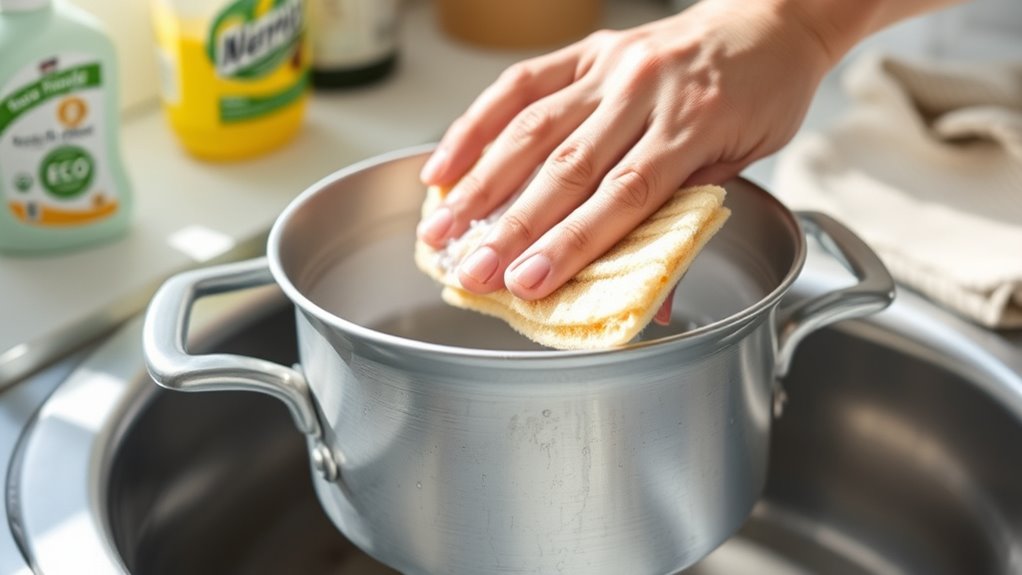
Although aluminum cookware is lightweight and conducts heat well, you need to clean it differently because its surface reacts easily with certain cleaning agents. If you use harsh chemicals or abrasive scrubbers, you risk damaging the cookware’s finish, leading to discoloration or pitting. You should avoid bleach, oven cleaners, and strong detergents since they can corrode aluminum.
Instead, stick to gentle dish soap and warm water to preserve the surface. Also, aluminum is prone to discoloration from acidic or alkaline substances, so handle stains carefully without scrubbing aggressively. By adjusting your cleaning routine, you protect your cookware’s appearance and performance, ensuring it lasts longer and continues heating evenly without unwanted damage.
How Often Should You Clean Aluminum Cookware?
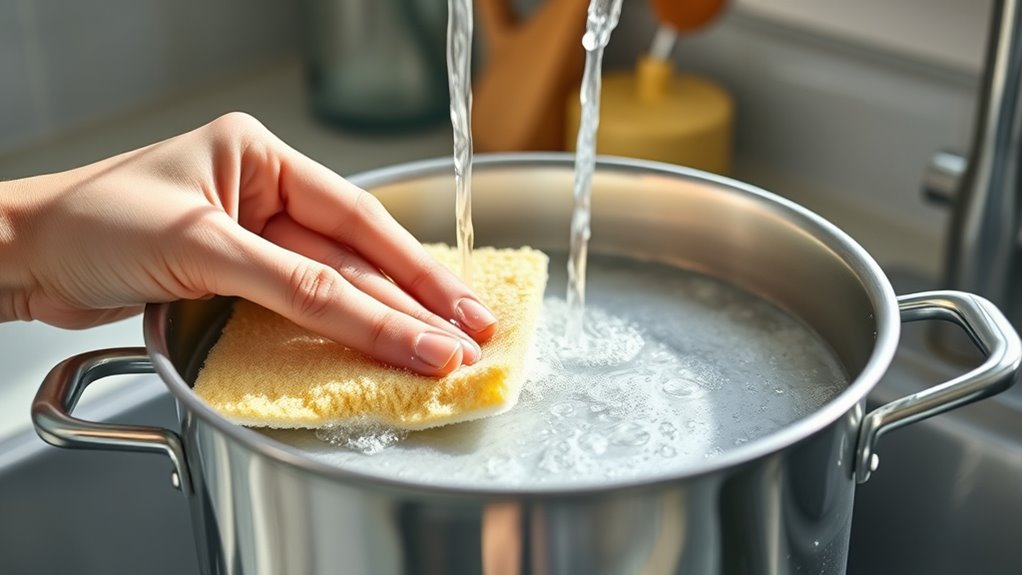
Since aluminum cookware requires gentle cleaning methods to prevent damage, knowing how often to clean it helps maintain its condition without unnecessary wear. You should clean your aluminum pots and pans after every use to remove food residue and prevent buildup. Skipping cleaning can lead to stubborn stains and affect cooking performance.
However, avoid harsh scrubbing or abrasive cleaners each time, as they can scratch the surface. Instead, use mild dish soap and a soft sponge regularly. If you cook acidic foods occasionally, rinse the cookware promptly to prevent corrosion.
How to Remove Stains and Discoloration From Aluminum Cookware
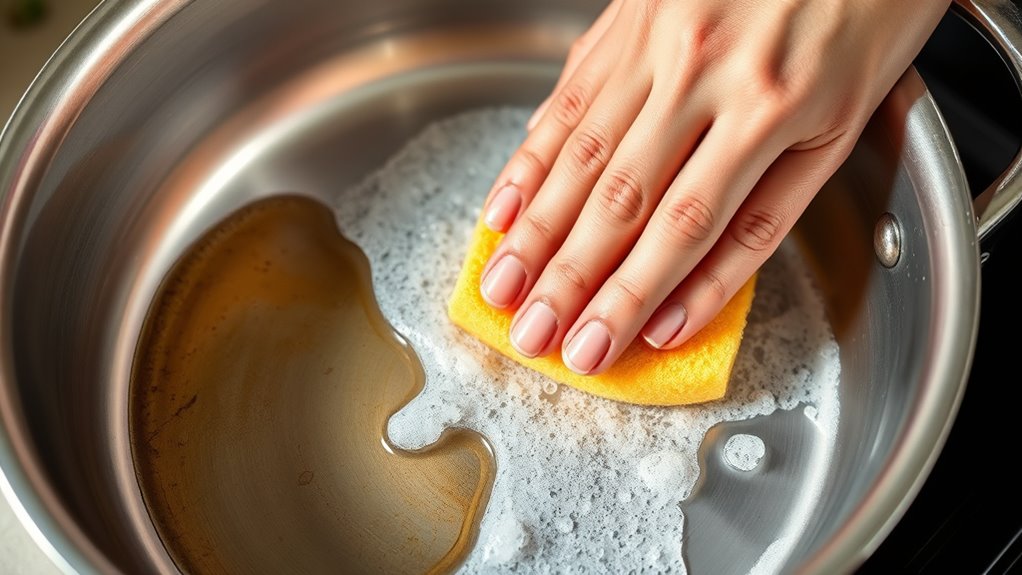
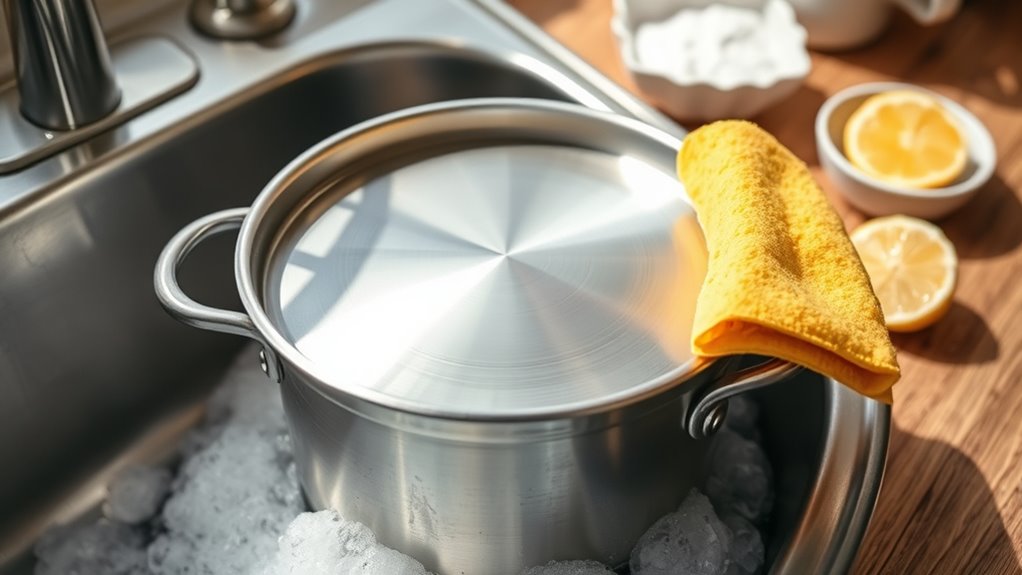
When stains and discoloration appear on your aluminum cookware, you can restore its shine using simple household ingredients. Start by filling the cookware with hot water and adding a few tablespoons of cream of tartar or lemon juice. Let it soak for an hour to loosen stains.
Then, gently scrub the surface with a soft cloth or non-abrasive sponge. For stubborn discoloration, make a paste from equal parts salt and flour mixed with lemon juice; apply it to the affected areas and let it sit for 15 minutes before scrubbing.
Rinse thoroughly with warm water and dry immediately to prevent water spots. Avoid harsh abrasives or steel wool, as they can scratch the aluminum and worsen the appearance. This method keeps your cookware looking bright and clean without damaging it.
How to Clean Aluminum Cookware With Baking Soda and Vinegar
If you want a natural and effective way to clean your aluminum cookware, baking soda and vinegar make a powerful duo. Start by sprinkling a generous amount of baking soda over the cookware’s surface. Then, slowly pour white vinegar over the baking soda—this will cause a fizzing reaction that helps lift grime and stains.
Let it sit for about 10 minutes to break down residue. Afterward, use a soft sponge or cloth to gently scrub the pot or pan, focusing on any stubborn spots. Rinse thoroughly with warm water and dry completely to prevent water spots.
This method not only cleans but also deodorizes your aluminum cookware without harsh chemicals, keeping it safe and shiny for your next meal prep.
How to Brighten Aluminum Cookware Using Lemon Juice
You can brighten your aluminum cookware naturally with lemon juice, which effectively removes stains and restores shine. To get the best results, apply lemon juice carefully and let it sit before rinsing.
Just be sure to follow safety tips to avoid any damage to your cookware.
Benefits of Lemon Juice
Although aluminum cookware can dull over time, lemon juice offers a natural and effective way to restore its shine. Its acidic properties break down oxidation and stubborn stains without harsh chemicals, making it safe for your cookware and the environment.
You’ll appreciate how lemon juice not only brightens aluminum but also helps eliminate lingering odors, leaving your pots and pans smelling fresh. Plus, it’s readily available and affordable, so you don’t need special cleaning products.
Using lemon juice also avoids scratching or damaging the metal, unlike abrasive cleaners. Overall, lemon juice provides a gentle, eco-friendly, and inexpensive solution that keeps your aluminum cookware looking polished and well-maintained with minimal effort.
It’s a smart, simple choice for everyday cleaning.
Application Techniques
When brightening aluminum cookware with lemon juice, start by cutting a fresh lemon in half to maximize juice release. Squeeze the lemon halves directly onto the cookware’s surface or into a small bowl for easier application. Then, follow these steps:
- Rub the lemon juice onto the dull areas using a soft cloth or sponge, applying gentle pressure to lift stains and discoloration.
- Let the juice sit for 5–10 minutes to allow its natural acidity to break down tarnish.
- Rinse the cookware thoroughly with warm water and dry it immediately with a clean towel to prevent water spots.
This simple process restores shine and removes buildup without harsh chemicals, leaving your aluminum cookware looking refreshed and bright.
Safety Precautions
Since lemon juice is acidic, it’s important to handle it carefully to avoid skin irritation or damage to your cookware’s surface. Always wear gloves to protect your hands from prolonged exposure, especially if you have sensitive skin. Work in a well-ventilated area to avoid inhaling any strong citrus fumes.
Avoid using lemon juice on aluminum cookware with non-stick coatings, as the acidity can degrade the coating. Test a small, hidden area first to ensure no discoloration or surface damage occurs. After applying lemon juice, rinse thoroughly with water to neutralize the acid and prevent corrosion.
Never leave lemon juice on the cookware for too long—10 to 15 minutes max is enough to brighten without harm. Following these precautions will keep both you and your cookware safe.
How to Clean Burnt Food Off Aluminum Cookware
If you’ve ever left food on aluminum cookware a little too long, you know how tough burnt residue can be to remove. To tackle this, start by soaking the pan in warm, soapy water for about 30 minutes. This softens the burnt bits, making them easier to lift.
Next, sprinkle baking soda over the burnt areas. Add a bit of water to form a paste, then gently scrub with a soft sponge or cloth. Finally, rinse thoroughly and dry immediately to prevent water spots.
- Soak in warm, soapy water for 30 minutes
- Apply a baking soda paste and gently scrub
- Rinse well and dry promptly
This method restores your cookware without damaging the aluminum surface.
What Not to Use on Aluminum Cookware to Avoid Damage
Although aluminum cookware is durable, using harsh materials or cleaners can quickly cause damage. Avoid abrasive scrubbers like steel wool or rough scouring pads, as they scratch the surface and lead to pitting. Stay away from strong chemical cleaners containing bleach or ammonia because they can corrode aluminum and dull its finish.
Never use dishwasher detergent, which is often too harsh and may discolor your cookware. Avoid acidic or alkaline substances like lemon juice or baking soda in high concentrations, as they can react with aluminum and cause etching. Instead, opt for gentle sponges and mild dish soap to preserve your cookware’s appearance and performance.
Taking care not to use damaging materials will help your aluminum cookware last longer and maintain its quality.
How to Restore Heavily Tarnished Aluminum Cookware
If your aluminum cookware is heavily tarnished, you’ll need to focus on effectively removing the buildup before restoring its shine. Using gentle polishing techniques can bring back the metal’s natural luster without causing damage.
Let’s explore the best methods to clean and polish your cookware for a fresh, bright finish.
Removing Heavy Tarnish
When your aluminum cookware has developed heavy tarnish, simple cleaning methods won’t cut it—you’ll need a more intensive approach to restore its shine. Start by filling the cookware with water and adding a tablespoon of cream of tartar or white vinegar. Bring it to a boil, then let it simmer for 10 minutes.
This loosens tough tarnish and stains. Next, carefully pour out the water and use a soft sponge with a paste made from baking soda and water to scrub the surface gently. Finally, rinse thoroughly and dry with a clean cloth.
Here’s a quick summary:
- Boil water with cream of tartar or vinegar in the cookware.
- Simmer and let cool.
- Scrub with baking soda paste, rinse, and dry.
Polishing Techniques for Shine
Since heavy tarnish can dull aluminum cookware beyond basic cleaning, polishing becomes essential to restore its original shine. You can use a few simple techniques and materials to bring back that gleam. Start with a gentle abrasive like baking soda mixed with water to form a paste.
Rub it gently using a soft cloth in circular motions. For stubborn spots, try aluminum polish or a mixture of cream of tartar and water. After polishing, rinse thoroughly and dry immediately to prevent water spots.
Here’s a quick guide:
| Technique | Material Needed | Result |
|---|---|---|
| Baking Soda Paste | Baking soda + water | Removes light tarnish |
| Aluminum Polish | Commercial polish | Deep shine |
| Cream of Tartar Mix | Cream of tartar + water | Tackles tough spots |
This restores your cookware’s bright, polished look efficiently.
Tips to Maintain the Shine on Your Aluminum Cookware
Although aluminum cookware is durable, it can lose its shine over time without proper care. To keep your pots and pans looking bright and polished, you need to be proactive. Here are three key tips to maintain their gleam:
Aluminum cookware stays bright and polished with proper care and proactive maintenance.
- Avoid Abrasive Cleaners: Use gentle, non-abrasive sponges and mild detergents to prevent scratching the surface.
- Dry Immediately: After washing, dry your cookware promptly with a soft cloth to prevent water spots and oxidation.
- Store Properly: Stack your cookware with protective layers like cloth or paper towels between pieces to avoid surface damage.
Simple Daily Habits to Keep Aluminum Cookware Looking New
To keep your aluminum cookware looking new, you should adopt a few simple daily habits that prevent buildup and damage. Always clean your cookware promptly after use to avoid stains and discoloration. Avoid using harsh abrasives that can scratch the surface.
Instead, opt for soft sponges and mild detergents. Dry your cookware thoroughly to prevent water spots and oxidation. Store items in a dry place and avoid stacking heavy pots to prevent dents.
| Habit | Why It Helps |
|---|---|
| Clean immediately | Prevents food residue buildup |
| Use soft sponges | Avoids scratching the surface |
| Mild detergent | Protects the aluminum finish |
| Dry thoroughly | Stops water spots and oxidation |
| Store carefully | Prevents dents and damage |
Frequently Asked Questions
Can Aluminum Cookware Be Used on Induction Cooktops?
No, aluminum cookware won’t work on induction cooktops because it’s not magnetic. You’ll need cookware made of ferrous materials like cast iron or stainless steel for induction to heat it properly.
Is Aluminum Cookware Safe for Acidic Foods?
Think of aluminum cookware as a shy dancer around acidic foods—it’s not the best partner. You’ll want to avoid long cooking with acids because it can react, altering taste and appearance, so use caution to keep flavors true.
How Do I Prevent Aluminum Cookware From Reacting With Salt?
You can prevent aluminum cookware from reacting with salt by adding salt only after the water boils, avoiding prolonged contact.
Also, rinse and dry your cookware promptly after cooking salty dishes to minimize corrosion and pitting.
Can I Put Aluminum Cookware in the Dishwasher?
Don’t treat aluminum cookware like a spoiled royal in the dishwasher—it won’t appreciate the harsh detergents and high heat. You’ll likely see discoloration or damage, so hand wash it gently to keep it shining longer.
Does Aluminum Cookware Affect Food Taste or Nutrition?
No, aluminum cookware doesn’t affect your food’s taste or nutrition. You might notice slight discoloration or a metallic smell, but it won’t change flavor or nutrient content, so you can cook confidently with it.
Conclusion
Now that you know how to clean aluminum cookware properly, you’re just a few simple steps away from keeping it shining like a million-dollar treasure. Avoid harsh cleaners, stick to gentle methods like baking soda and lemon juice, and don’t forget regular maintenance.
With these easy habits, your aluminum pots and pans will stay stunning and ready for every meal. Trust me, your cookware will thank you—and so will your taste buds!
By following these cleaning tips, you can ensure your aluminum cookware remains durable, stain-free, and safe for cooking. Regular care not only preserves the appearance but also enhances the performance of your pots and pans. Keep your kitchen essentials spotless and enjoy the best cooking experience every time.