Is Padauk Good for Cutting Boards
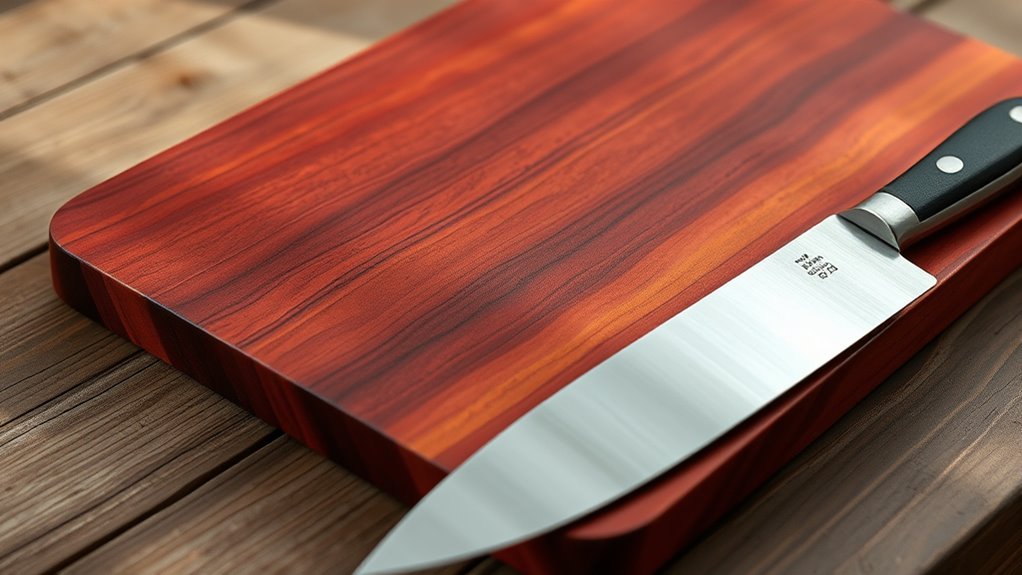
Padauk is a great choice for cutting boards due to its durability, moisture resistance, and natural antibacterial properties. This hardwood is hard enough to resist knife marks, making it ideal for regular kitchen use.
Additionally, Padauk won’t warp easily when cared for properly, ensuring longevity.
Its rich reddish-orange color adds a unique and attractive look that ages beautifully over time. To keep the cutting board looking vibrant and prevent uneven darkening, you’ll need to oil it regularly.
Keep reading to discover how Padauk stacks up against other woods and learn the best maintenance tips to extend the life of your cutting board.
Key Takeaways
- Padauk is durable and moderately hard, resisting dents and knife marks, making it suitable for cutting board use. Its dense grain and natural oils provide good moisture resistance and help prevent warping and cracking. The wood’s antimicrobial properties enhance hygiene, reducing bacterial growth on cutting board surfaces.
- Padauk offers vibrant reddish-orange color that darkens with age, adding aesthetic appeal but requiring regular oiling. Some users may experience mild skin irritation from raw Padauk, so proper finishing and handling precautions are recommended.
Is Padauk a Good Wood for Cutting Boards?
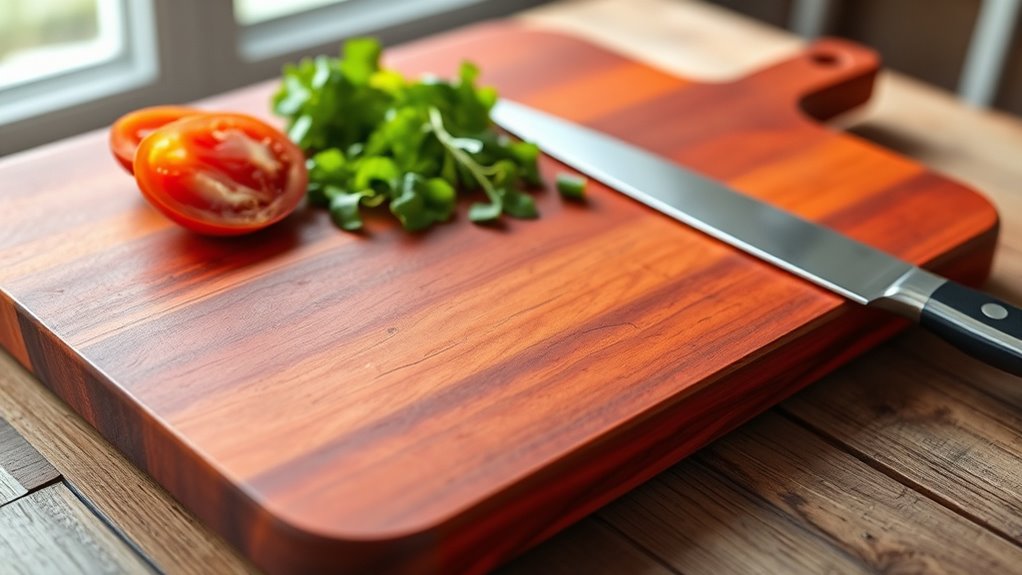
Although you might not have considered it before, Padauk is actually an excellent choice for cutting boards. When you pick Padauk, you get a wood that’s naturally durable and resistant to wear, which means your cutting board will last longer and stand up well to daily use. You’ll also appreciate how it holds up against moisture better than many other woods, reducing the risk of warping or cracking.
Plus, Padauk’s natural oils give it some resistance against bacteria, making your cutting surface safer. While it’s dense enough to prevent deep knife marks, it’s not so hard that it dulls your blades quickly. Choosing Padauk means you’re opting for a practical, long-lasting cutting board that handles kitchen tasks efficiently.
What Are Padauk’s Key Features for Cutting Boards?
You’ll appreciate Padauk’s impressive durability and hardness, which help it withstand daily cutting tasks. Its natural antibacterial properties keep your cutting board more hygienic without extra effort.
Plus, the rich color and unique grain give your kitchen a striking, stylish touch.
Durability and Hardness
When you choose padauk for your cutting board, you get a wood that stands out for its impressive durability and hardness. This wood resists dents and scratches, making it perfect for everyday kitchen use. You won’t have to worry about your board wearing down quickly.
Padauk’s natural density guarantees it holds up against knife marks while maintaining a smooth surface.
Here’s what makes padauk durable and hard:
- High Janka hardness rating, meaning strong resistance to wear
- Dense grain structure that prevents deep cuts
- Excellent impact resistance, reducing chip risk
- Stable under moisture changes, minimizing warping
With padauk, your cutting board stays reliable and long-lasting, handling tough kitchen tasks without compromising quality.
Natural Antibacterial Properties
Beyond its toughness, padauk offers natural antibacterial properties that make it an excellent choice for cutting boards. When you use a cutting board made from padauk, you benefit from its ability to resist harmful bacteria growth, helping keep your food preparation safer. The wood contains natural oils and compounds that inhibit microbial activity, reducing the risk of contamination.
This means fewer worries about lingering bacteria compared to some other woods or synthetic materials. Additionally, padauk’s dense grain structure limits moisture absorption, which further discourages bacterial buildup. So, if you want a cutting board that not only stands up to wear but also supports better kitchen hygiene, padauk is a smart pick thanks to these natural antibacterial qualities.
Aesthetic Appeal and Color
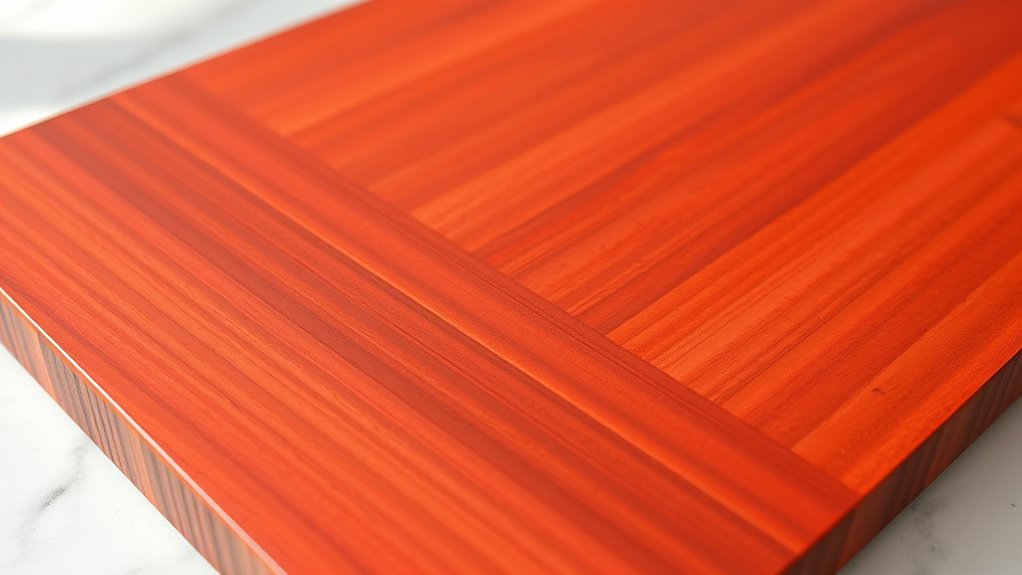
Although padauk is prized for its durability and antibacterial properties, its striking aesthetic appeal and vibrant color truly set it apart as a stunning cutting board material. When you choose padauk, you’re not just getting function—you’re adding beauty to your kitchen. Its rich hues and unique grain patterns make every board one of a kind.
Here’s what you’ll notice:
- Deep reddish-orange tones that age to a warm, dark brown
- Bold, straight grain with occasional interlocking patterns
- Smooth texture that feels pleasant under your hands
- Natural luster that enhances with regular oiling
These features mean your padauk cutting board won’t just perform well—it’ll also become a mesmerizing focal point in your culinary space.
How Durable Is Padauk Against Daily Knife Use?
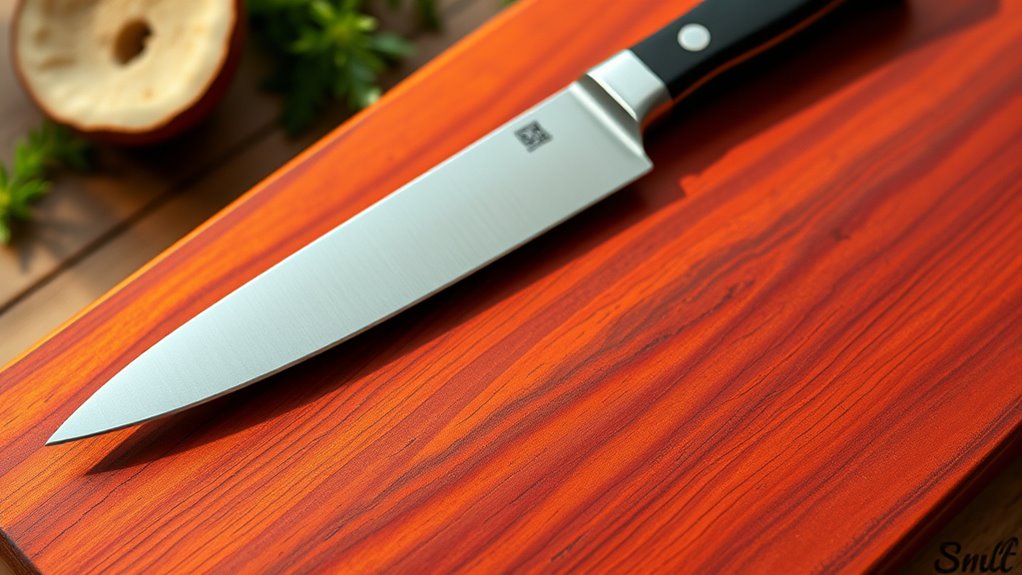
Because you use your cutting board daily, its resistance to knife marks matters a lot. Padauk wood stands out for its impressive hardness and durability, which helps it withstand frequent chopping and slicing without significant damage.
While no wood is completely immune to knife marks, Padauk’s dense grain structure minimizes deep cuts and gouges, keeping your board looking better longer. You’ll notice that minor scratches may appear over time, but they’re typically easy to sand out during maintenance.
This resilience means your Padauk cutting board can handle regular kitchen tasks without quickly wearing down. So, if you want a cutting surface that balances toughness with easy upkeep, Padauk offers solid durability against daily knife use.
Is Padauk Safe and Food-Friendly for Kitchen Use?
When choosing a cutting board, you want to be sure the wood won’t introduce harmful substances to your food. Padauk is generally considered safe and food-friendly, but you should keep a few things in mind. The wood is naturally dense and contains oils that resist bacteria growth, making it a hygienic choice.
Choosing Padauk ensures a dense, naturally oily wood that helps resist bacteria for a hygienic cutting board.
However, some people may experience mild skin irritation when handling raw Padauk, so wearing gloves during initial use is wise.
Here’s what you should know about Padauk’s safety for kitchen use:
- It’s non-toxic once finished with food-safe oils.
- Naturally antimicrobial properties help reduce bacteria.
- Avoid using harsh chemical finishes on the board.
- Proper sealing keeps it safe and easy to clean.
With care, Padauk can be a safe, beautiful cutting surface.
How Well Does Padauk Resist Moisture and Warping?
Beyond its safety and antimicrobial qualities, Padauk also performs well in resisting moisture and warping—key factors to take into account for any cutting board. You’ll find that Padauk’s dense grain structure naturally repels water, making it less prone to absorbing moisture compared to softer woods. This helps keep your cutting board stable and less likely to warp or crack over time.
However, no wood is completely impervious, so you should still avoid soaking it or leaving it in damp conditions for extended periods. Regular oiling will further protect the wood and maintain its moisture resistance. If you take these simple precautions, Padauk cutting boards will retain their shape and functionality, standing up well to the everyday demands in your kitchen.
Does Padauk Stain or Discolor Easily Over Time?
You’ll find that Padauk’s natural color holds up well over time, but prolonged exposure to liquids can cause some staining. Keep in mind, UV light can also change its vibrant hue if your cutting board sits in direct sunlight.
Understanding these factors helps you maintain Padauk’s beautiful appearance longer.
Natural Color Stability
Although padauk’s vibrant reddish-orange hue can catch your eye immediately, its natural color stability will determine if it stays that way over time. You’ll find that padauk tends to darken to a deeper brownish-red with exposure to light, especially sunlight. This shift is natural and doesn’t mean the wood is damaged—it simply ages gracefully.
Here’s what to expect regarding its color stability:
- Initial bright color fades to richer, darker tones
- UV exposure accelerates color change
- Color change is uniform, not patchy or blotchy
- Finishing with oil or varnish can slow color shifts
You’ll appreciate that padauk maintains a beautiful, warm tone without developing unsightly stains or discoloration as it ages naturally.
Exposure to Liquids
Padauk’s natural aging process affects its color in predictable ways, but how it responds to liquids is a different matter. When you use Padauk for cutting boards, you’ll notice it resists staining better than many softer woods. Its dense grain limits liquid absorption, so spills don’t soak in quickly.
However, prolonged exposure to strongly pigmented liquids like red wine or beet juice can leave some discoloration if you don’t clean it promptly. You can minimize this by wiping up spills immediately and regularly oiling the board to maintain its protective layer. While Padauk isn’t completely immune to stains, it performs well under normal kitchen use, providing durability and a stable appearance over time with proper care.
Effects of UV Light
When exposed to UV light, Padauk tends to change color noticeably over time. You’ll see its vibrant orange-red hue gradually shift to a deeper, more muted brownish tone. This natural darkening is common and doesn’t indicate damage, but it does alter the board’s original appearance.
To help you understand, here’s what you can expect:
- Initial bright reddish-orange color fades within weeks to months
- Gradual darkening to a rich brown or reddish-brown shade
- Uneven discoloration if parts of the board get more sunlight
- Potential for a warm, aged patina that some find appealing
If you want to keep Padauk’s fresh look, limit direct sunlight exposure or apply UV-protective finishes regularly.
What Are the Downsides of Padauk Cutting Boards?
Even though Padauk makes a beautiful and durable cutting board, you might encounter some downsides that could affect your experience. For one, Padauk’s vibrant reddish-orange color tends to darken over time, especially when exposed to sunlight, which might not appeal to everyone.
You may also notice that Padauk can be somewhat oily, leaving a slight residue that can be tricky to clean thoroughly. Additionally, Padauk is a hardwood, but it’s not as hard as some other cutting board woods like maple or walnut, so it may show knife marks more quickly.
Finally, if you have sensitive skin, be cautious—some people report mild allergic reactions when handling Padauk due to its natural oils and compounds.
How Do You Maintain a Padauk Cutting Board?
Although Padauk is durable, you’ll need to maintain it regularly to keep its vibrant color and smooth surface. Proper care prevents drying, cracking, or dulling, ensuring your cutting board lasts longer and stays beautiful.
To maintain your Padauk cutting board, follow these steps:
- Clean with mild soap and warm water immediately after use; avoid soaking.
- Dry thoroughly with a towel and stand it upright to air dry.
- Apply food-safe mineral oil or beeswax every few weeks to nourish the wood.
- Avoid extreme temperatures like dishwashers or direct sunlight that can warp or fade the wood.
How Does Padauk Compare to Other Cutting Board Woods?
When choosing a cutting board, you’ll want to evaluate how Padauk stacks up against other woods in durability and hardness. You’ll also need to think about the maintenance each type requires to keep it in great shape.
Let’s compare these key factors so you can pick the best board for your kitchen.
Durability and Hardness
While choosing a cutting board, you’ll want a wood that balances durability with hardness to withstand daily use. Padauk stands out because it offers impressive toughness without being overly hard, which can dull knives quickly. Compared to other popular woods:
- It ranks around 1,750 on the Janka hardness scale, making it harder than maple but softer than walnut.
- Its dense grain resists deep cuts, reducing knife marks over time.
- Padauk’s natural oils enhance its resistance to moisture and bacteria.
It maintains structural integrity, so cracks and warping are less likely.
This balance means you get a board that’s resilient yet gentle on blades, ideal for everyday kitchen tasks. Padauk’s durability and hardness make it a strong contender among traditional cutting board woods.
Maintenance and Care
Since cutting boards face frequent exposure to moisture and food residues, you’ll want a wood that’s easy to maintain and clean. Padauk compares favorably here because it resists water absorption better than softer woods like pine or maple, reducing warping and cracking over time.
You can clean Padauk boards with mild soap and warm water, then dry them promptly to keep their surface in good shape. Unlike some exotic woods that require special oils or treatments, Padauk responds well to regular mineral oil applications to maintain its rich color and prevent drying out.
Where Can You Buy Quality Padauk Cutting Boards or Lumber?
If you’re looking to buy quality Padauk cutting boards or lumber, you’ll find several reliable sources both online and in specialty woodworking stores. Many sellers focus on sustainable, well-seasoned Padauk that’s perfect for kitchen use. You can explore options tailored to your needs, whether you want a finished board or raw slabs for your own projects.
Here are some places to check out:
- Specialty woodworking shops near you often carry premium hardwoods, including Padauk.
- Online marketplaces like Etsy or eBay feature handmade cutting boards and lumber from trusted artisans.
- Lumber suppliers such as Woodcraft or Rockler provide kiln-dried Padauk suitable for cutting boards.
- Local craft fairs or woodworking clubs can connect you with skilled makers and quality materials.
This should help you find the best Padauk for your kitchen.
Frequently Asked Questions
Can Padauk Cutting Boards Be Used for Both Food Prep and Serving?
Yes, you can use padauk cutting boards for both food prep and serving. They’re durable, naturally antibacterial, and have a beautiful color that makes them great for presentation too.
Just remember to oil them regularly!
Is Padauk Wood Environmentally Sustainable for Cutting Boards?
Padauk wood isn’t the most environmentally sustainable choice because it’s often harvested from tropical forests with limited regulation. You should check for FSC certification or reclaimed sources to guarantee your cutting board is eco-friendly and responsibly sourced.
How Heavy Are Padauk Cutting Boards Compared to Others?
You’ll find padauk cutting boards moderately heavy, denser than softwoods but lighter than some hardwoods like maple. They offer a good balance of weight, making them sturdy without feeling overly bulky or hard to handle.
Can Padauk Boards Be Customized or Engraved Easily?
Yes, you can easily customize or engrave padauk boards. The wood’s fine grain and hardness hold details well, letting you add personalized designs or text that stand out beautifully without compromising the board’s durability or function.
Do Padauk Cutting Boards Require Special Oil or Finish Types?
Think of finishing padauk like dressing a vibrant sunset—you don’t need anything exotic. You can use food-safe mineral oil or beeswax; they protect the wood while letting its rich color shine without any special treatment required.
Conclusion
If you’re considering Padauk for your cutting board, you’ll be pleased to know it’s not only durable but also naturally resistant to moisture and bacteria. In fact, Padauk’s hardness rating of around 2,200 on the Janka scale means it stands up well to daily knife use, reducing wear and tear. Just remember proper maintenance to keep it looking great.
Overall, Padauk offers a stylish, long-lasting option that’s both functional and safe for your kitchen. Its durability and natural resistance make Padauk an excellent choice for cutting boards. Choosing Padauk ensures you get a cutting board that is both beautiful and practical.