How to Pan Fry Haddock
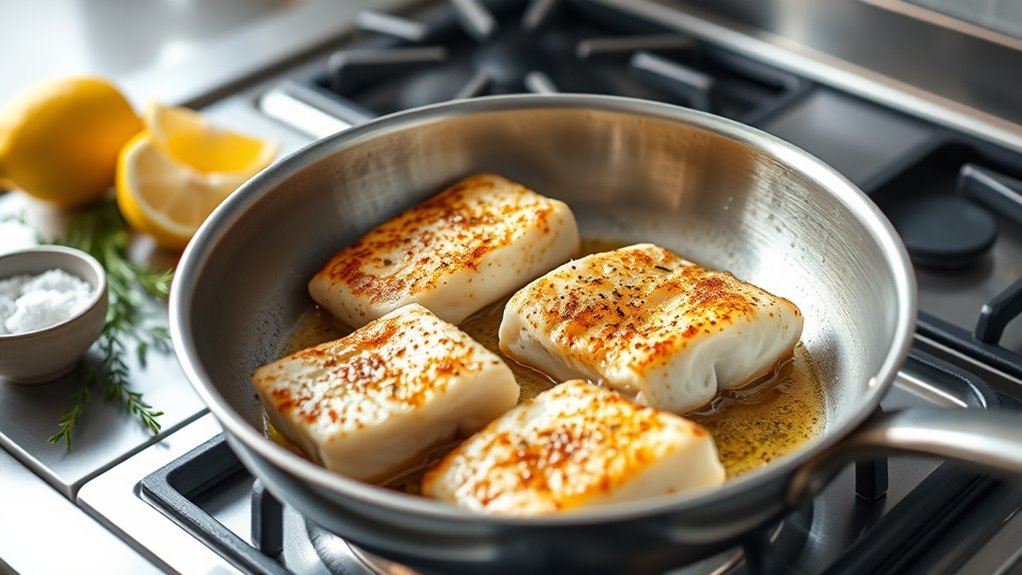
To pan fry haddock perfectly, start by selecting fresh, firm fillets with a mild ocean scent. Proper preparation is key to achieving a delicious, flaky texture and rich flavor. This simple cooking method highlights the natural taste of the fish.
Pat the fillets dry and remove any bones before seasoning them lightly with salt and pepper.
Heat a heavy pan over medium-high heat, adding a high smoke point oil such as canola or vegetable oil.
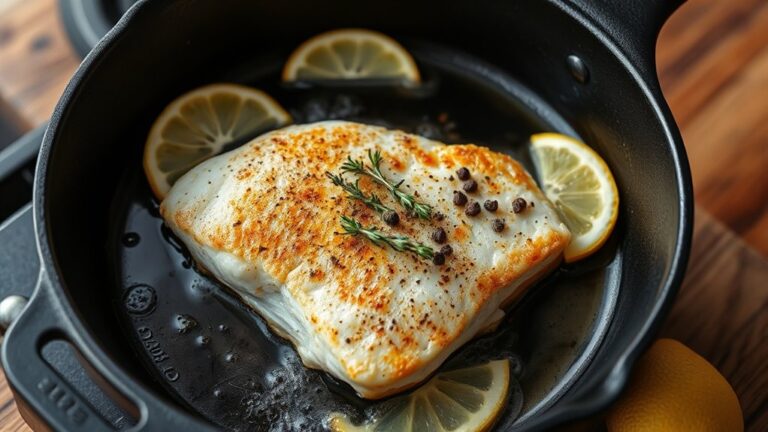
Place the fish skin-side down in the hot oil and cook until the skin is crisp and golden brown. Flip the fillets carefully and cook until the flesh turns opaque and flakes easily.
Let the haddock rest briefly to seal in the juices. Serve with light, complementary sides to enjoy a balanced and satisfying meal.
Keep reading for additional tips to perfect your pan-fried haddock’s texture and flavor.
Key Takeaways
- Choose fresh haddock with firm, moist, translucent flesh and a mild ocean scent for best results.
- Pat fillets dry, remove bones, and season lightly with salt, pepper, and simple herbs before cooking.
- Heat a heavy skillet over medium-high, add high smoke point oil, and wait until shimmering before adding fish.
- Cook fillets skin-side down undisturbed for 3-4 minutes, then flip and cook until opaque and flakes easily.
- Rest cooked haddock 3-5 minutes on a warm plate covered loosely with foil to lock in juices before serving.
How to Choose Fresh Haddock for Pan Frying
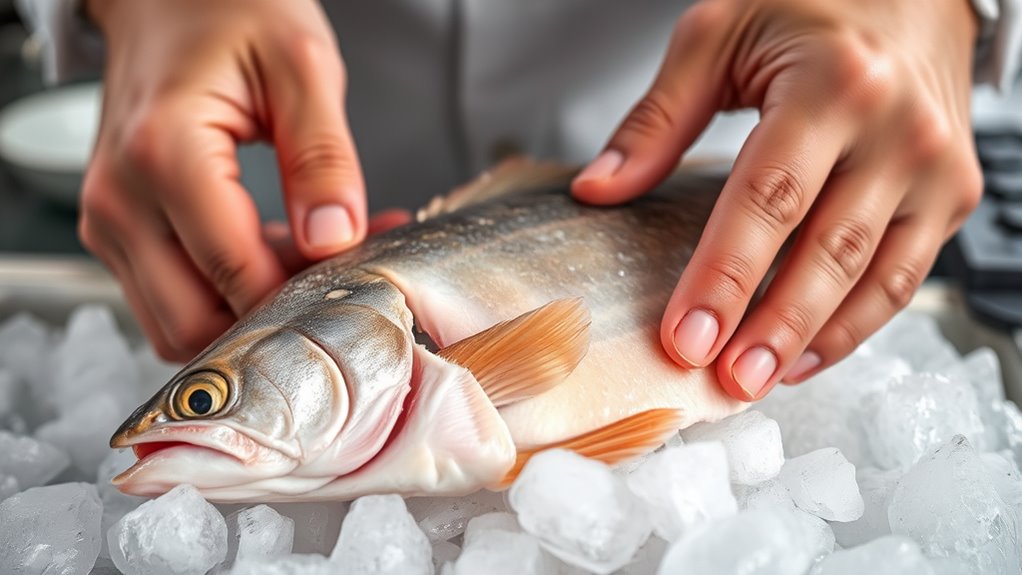
When choosing fresh haddock for pan frying, look for firm flesh that springs back when pressed and has a mild, ocean-like scent. Avoid any fillets with discoloration or a strong fishy odor, as these signs indicate the fish isn’t fresh. You’ll want bright, translucent flesh rather than dull or dry-looking pieces.
Check the skin if it’s attached—it should be shiny and moist, not slimy. Don’t hesitate to ask your fishmonger when the haddock was caught or delivered; fresher fish always tastes better. If you’re buying frozen, pick fillets without ice crystals or freezer burn, which can affect texture.
Choosing quality haddock guarantees your pan-fried dish turns out tender and flavorful every time.
Essential Tools and Ingredients for Pan Fried Haddock
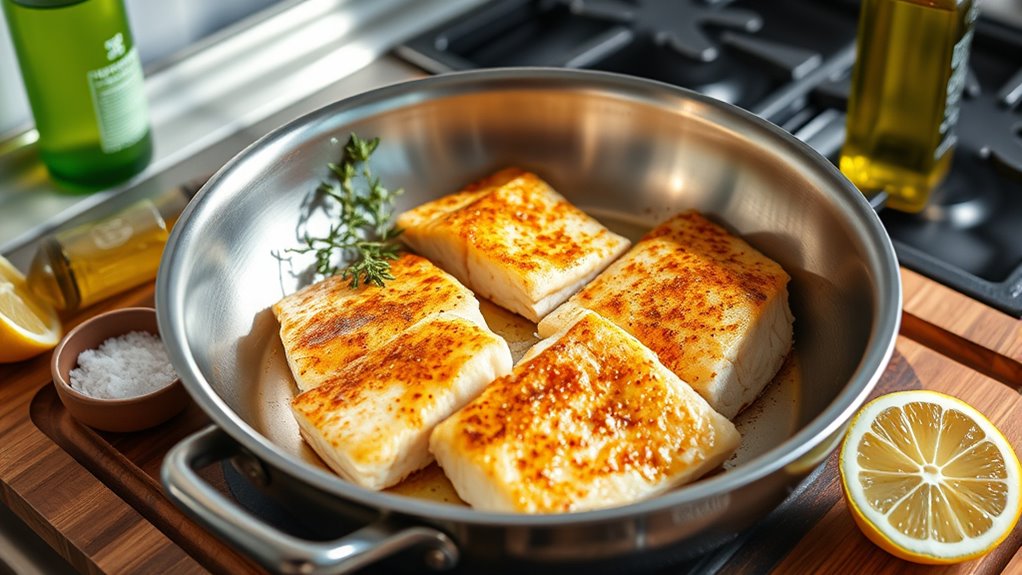
Selecting fresh haddock sets the foundation for a great pan-fried meal, but having the right tools and ingredients will bring your dish to life. To achieve that perfect golden crust and tender inside, you’ll want to prepare thoughtfully.
Here’s what you need:
- A heavy-bottomed skillet or non-stick pan to guarantee even heat distribution
- Fresh haddock fillets, properly thawed if frozen
- Cooking oil with a high smoke point, like canola or grapeseed oil
- Simple seasonings such as salt, pepper, and optional herbs for flavor
With these essentials at hand, you’ll be ready to pan fry haddock that’s crispy on the outside and flaky within, making your cooking experience smooth and enjoyable.
Prepping Haddock Fillets for Pan Frying
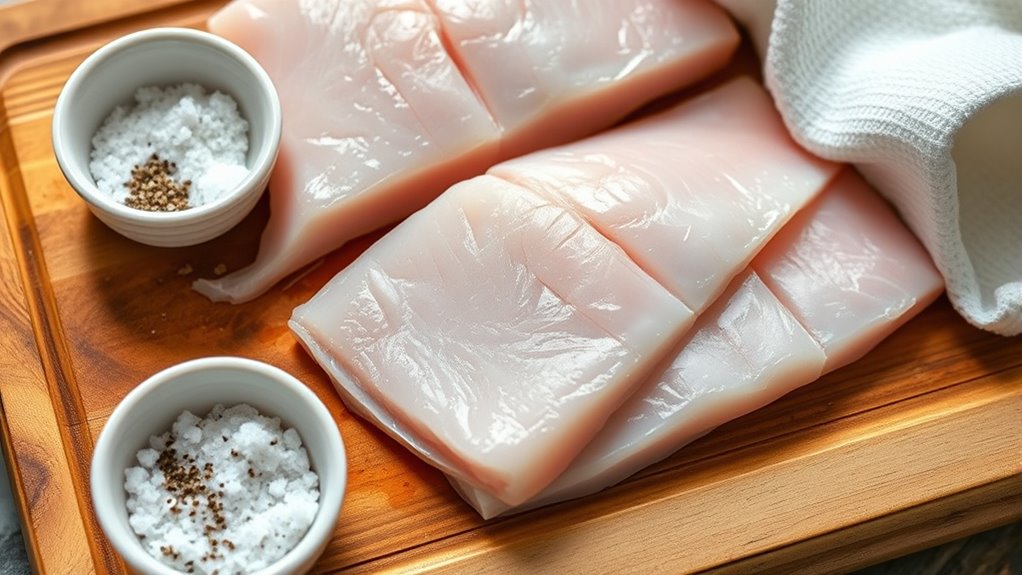
Before you start cooking, make sure you choose fresh haddock with firm, moist flesh and a mild scent. Properly prepping the fillets by patting them dry and trimming any bones will help you get the best results.
These simple steps set the foundation for a perfect pan-fried haddock.
Choosing Fresh Haddock
Although it might seem straightforward, choosing fresh haddock requires a keen eye for quality to guarantee the best flavor and texture in your pan-fried fillets. When selecting your fish, pay close attention to these key indicators:
- Look for fillets with a firm texture that bounce back when pressed.
- Confirm the flesh is moist and translucent, not dry or dull.
- Check for a clean, ocean-like smell—avoid any fishy or sour odors.
- Choose fillets with bright, white flesh and avoid any discoloration or brown spots.
Preparing Fillets Properly
Once you’ve chosen fresh haddock, you’ll want to properly prepare the fillets to guarantee even cooking and a delicious crust. Start by patting the fillets dry with paper towels; moisture prevents browning and causes splattering. Check for any remaining bones by running your fingers gently along the flesh, removing any with tweezers.
Trim off any ragged edges to ensure uniform thickness. If the fillets vary in thickness, use a meat mallet or your fingers to gently pound them evenly, helping them cook at the same rate. Season the fillets lightly with salt and pepper just before cooking to enhance flavor without drawing out moisture.
Proper prep sets the stage for perfectly pan-fried haddock every time.
How to Season Haddock for Pan Frying
When you season haddock for pan frying, you want to enhance its natural flavor without overpowering the delicate fish. Start by patting the fillets dry to help the seasoning stick better. Use simple, fresh ingredients that complement haddock’s mild taste.
To season haddock for pan frying, keep it simple and fresh to enhance its delicate, natural flavor.
Here’s how you can season your haddock effectively:
- Lightly sprinkle kosher salt and freshly ground black pepper for basic seasoning.
- Add a pinch of garlic powder or finely minced garlic for subtle depth.
- Use a touch of paprika or smoked paprika to bring a gentle warmth and color.
- Finish with a few flakes of dried thyme or fresh herbs like parsley for brightness.
Keep your seasoning balanced to allow the haddock’s natural flavor to shine through during pan frying.
Which Oil Is Best for Pan Frying Haddock
After seasoning your haddock to highlight its natural flavor, choosing the right oil for pan frying can make a big difference in the final texture and taste. You’ll want an oil with a high smoke point to prevent burning and imparting bitterness. Canola, vegetable, or grapeseed oil are excellent choices—they handle heat well and have neutral flavors that won’t overpower your fish.
Olive oil, especially extra virgin, has a lower smoke point, so it’s better for lower-heat cooking or finishing touches. Avoid butter alone, as it burns quickly, but you can combine it with oil for flavor once the pan is hot. Selecting the right oil guarantees your haddock cooks evenly and crisps up beautifully without any unwanted aftertaste.
Heating Your Pan for Crispy Haddock
To get that perfect crispy haddock, you need the right pan and the right heat. A heavy-bottomed skillet works best to distribute heat evenly without hot spots.
Heat your pan over medium-high heat until it’s hot but not smoking before adding the oil and fish.
Choosing The Right Pan
Selecting the right pan plays a crucial role in achieving perfectly crispy haddock. You want a pan that heats evenly and holds temperature well to get that golden crust.
Here’s what to take into account when choosing your pan:
- Material: Opt for stainless steel or cast iron for even heat distribution.
- Size: Choose a pan large enough to fit your fillets without crowding.
- Non-stick coating: Useful but not necessary if you manage heat and oil correctly.
- Weight: A heavier pan retains heat better, preventing temperature drops when adding fish.
Optimal Heat Settings
Once you’ve chosen the right pan, the next step is heating it to the perfect temperature for frying haddock. Set your stove to medium-high heat and let the pan warm up for about 2-3 minutes. To test if it’s ready, sprinkle a few drops of water onto the surface; they should sizzle and evaporate quickly.
Avoid overheating the pan, as too much heat can burn the fish’s exterior before cooking it through. If you’re using oil, add it once the pan is hot, and wait until it shimmers but doesn’t smoke. This guarantees a crispy, golden crust without sticking.
Maintaining consistent medium-high heat throughout cooking helps achieve that perfect balance of crispiness and tenderness in your haddock.
Step-by-Step Guide to Pan Frying Haddock
Although pan frying haddock might seem straightforward, following a clear process guarantees you get a crispy, golden crust and tender, flaky fish every time. Start by seasoning your haddock fillets with salt and pepper.
Next, heat oil in a skillet over medium heat until shimmering. Then, carefully place the fillets skin-side down, pressing gently to prevent curling. Cook without moving them for 3-4 minutes to develop that perfect crust.
Here’s a quick checklist to guide you:
- Season fillets evenly with salt and pepper
- Heat oil until it shimmers but doesn’t smoke
- Place fillets skin-side down, pressing gently
- Cook undisturbed for 3-4 minutes before flipping
Following these steps guarantees a delicious pan-fried haddock every time.
How to Tell When Pan Fried Haddock Is Cooked Through
After you’ve cooked the haddock skin-side down and flipped it, you’ll need to know exactly when it’s done to avoid undercooking or drying it out. Look for the flesh to turn opaque and pearly white instead of translucent. The edges should start to flake easily when you gently press with a fork.
If the fish resists flaking or looks shiny and raw in the center, it needs more time. Keep your heat moderate to prevent overcooking the outside while the inside finishes. You can also use a food thermometer—145°F (63°C) is the safe internal temperature for cooked fish.
Once these signs align, your haddock is perfectly cooked, juicy, and ready for the next step.
How to Rest and Serve Pan Fried Haddock
Once your haddock is cooked, let it rest for a few minutes to lock in the juices and enhance the flavor.
While it rests, you can prepare simple sides like steamed vegetables or a fresh salad to complement the fish.
Serving it with a squeeze of lemon or a light sauce will bring out the best in your pan-fried haddock.
Resting Time Importance
Even though you’ve perfectly cooked your haddock, letting it rest briefly before serving makes a big difference. This simple pause allows the juices to redistribute, keeping the fish moist and flavorful. When you skip resting, those precious juices can run out the moment you cut into the fish, leaving it dry.
To rest your haddock properly, follow these tips:
- Transfer the fish to a warm plate to retain heat without continuing to cook it.
- Cover loosely with foil to keep it warm and prevent drying out.
- Rest for about 3 to 5 minutes; longer resting risks cooling too much.
- Avoid stacking or pressing the fish to maintain its delicate texture.
Taking these steps ensures your pan-fried haddock stays tender and delicious when you serve it.
Serving Suggestions
While letting your haddock rest, you can prepare complementary sides that enhance its delicate flavor. Consider light, fresh options that won’t overpower the fish. A squeeze of lemon juice or a sprinkle of fresh herbs like parsley brightens the dish beautifully.
To serve, place the haddock on a warm plate and add your chosen sides. Drizzle with a little melted butter or a simple tartar sauce for extra richness. Pair your meal with a crisp white wine or a light beer to complete the experience.
| Side Dish | Why It Works |
|---|---|
| Steamed Asparagus | Adds a fresh, slightly crunchy texture |
| Garlic Mashed Potatoes | Provides creamy comfort without heaviness |
| Mixed Green Salad | Offers crispness and acidity |
| Lemon Rice Pilaf | Infuses subtle citrus notes |
Simple Sides That Complement Pan Fried Haddock
When you pan fry haddock, choosing the right sides can elevate the meal without overpowering the delicate flavor of the fish. You’ll want sides that are light, invigorating, and complementary. Consider these simple options to round out your plate:
- Steamed Asparagus: Its crisp texture and subtle earthiness balance the fish perfectly.
- Lemon-Dill Rice: Adds a citrusy brightness that enhances the haddock’s mild taste.
- Garlic Mashed Potatoes: Creamy and comforting, they pair well without overshadowing the fish.
- Mixed Green Salad: A lively contrast with a light vinaigrette to keep things vibrant.
These sides keep your meal balanced and flavorful, letting the pan fried haddock shine as the star.
Common Mistakes to Avoid and Tips for Crispy Haddock
Although pan frying haddock seems straightforward, overlooking a few key details can lead to soggy or unevenly cooked fish. Don’t overcrowd your pan; giving each fillet space ensures even cooking and crispiness. Avoid flipping the fish too often—let it cook undisturbed until the crust forms, then flip gently once.
Using too much oil can cause your haddock to steam rather than fry, so use just enough to coat the pan. Pat your fish dry before seasoning to help the coating stick and crisp up. Finally, maintain medium-high heat; too low and your fish will be greasy, too high and it might burn.
Follow these tips, and you’ll enjoy perfectly crispy, delicious pan-fried haddock every time.
Frequently Asked Questions
Can I Freeze Haddock Before Pan Frying?
Yes, you can freeze haddock before pan frying. Just make sure to thaw it properly in the fridge overnight to maintain texture and flavor.
Avoid refreezing after thawing to keep it fresh and tasty.
Is Pan Frying Healthier Than Deep Frying?
You might find it no surprise that pan frying is healthier than deep frying because you use less oil, which means fewer calories and less fat.
How Long Does Cooked Pan Fried Haddock Last in the Fridge?
You can keep cooked pan-fried haddock in the fridge for 3 to 4 days.
Make sure to store it in an airtight container to maintain freshness and prevent it from absorbing other odors.
Can I Use Frozen Haddock Directly for Pan Frying?
Sure, you *can* throw frozen haddock straight into the pan—but don’t expect a crispy masterpiece. You’ll get soggy, unevenly cooked fish.
What Sauces Pair Well With Pan Fried Haddock?
You’ll love tartar sauce, lemon butter, or a simple garlic aioli with pan-fried haddock. Try a fresh salsa or dill yogurt sauce too—they’ll brighten the flavors and complement the fish perfectly.
Conclusion
Now that you know how to pan fry haddock perfectly, remember that freshness is key—over 90% of seafood buyers agree fresh fish makes all the difference. By choosing quality haddock, seasoning it well, and using the right oil, you’ll get that crispy, flavorful finish every time.
Avoid common mistakes, and don’t forget to rest your fish before serving. With these tips, your pan-fried haddock will always impress! Incorporating these essential pan frying haddock techniques ensures a delicious and satisfying meal every time.