How to Polish Silver Utensils
To polish your silver utensils effectively, start by washing them in warm, soapy water and drying thoroughly. Polishing silver utensils regularly helps maintain their shine and prevents tarnish buildup. Using the right techniques and products is key to keeping your silver looking its best.
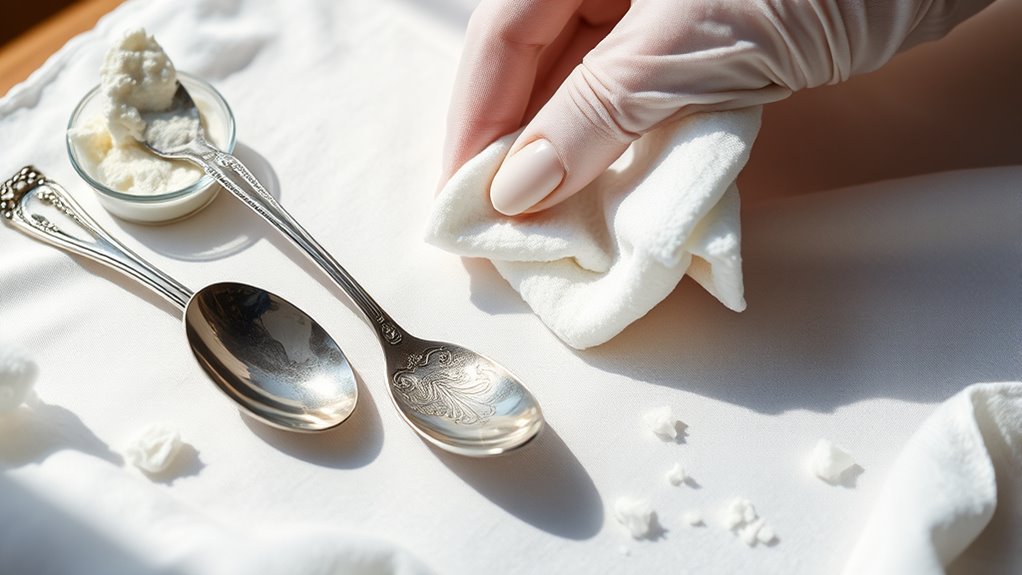
Use a gentle silver polish or a homemade baking soda paste, applying it with a soft cloth. Rub back-and-forth on tarnished areas, then rinse and dry immediately to avoid water spots. Buff with a clean, soft cloth for extra shine.
Handle delicate or intricate pieces carefully to prevent scratches. Keep following for tips on polishing frequency, storage, and avoiding common mistakes. Proper care ensures your silver utensils remain beautiful for years to come.
Key Takeaways
- Clean silver utensils with warm, soapy water and dry thoroughly before polishing to remove dirt and grime.
- Use a soft silver polishing cloth, rubbing gently back-and-forth to lift tarnish without scratching.
- Apply a baking soda paste or gentle silver polish for stubborn tarnish, then rinse and dry immediately.
- Polish regularly based on usage: every 1-2 weeks for daily use, or before storage to maintain shine.
- Store silver wrapped in acid-free cloth and keep in tarnish-resistant bags to prevent future tarnish.
Why Silver Utensils Tarnish and How to Spot Tarnish
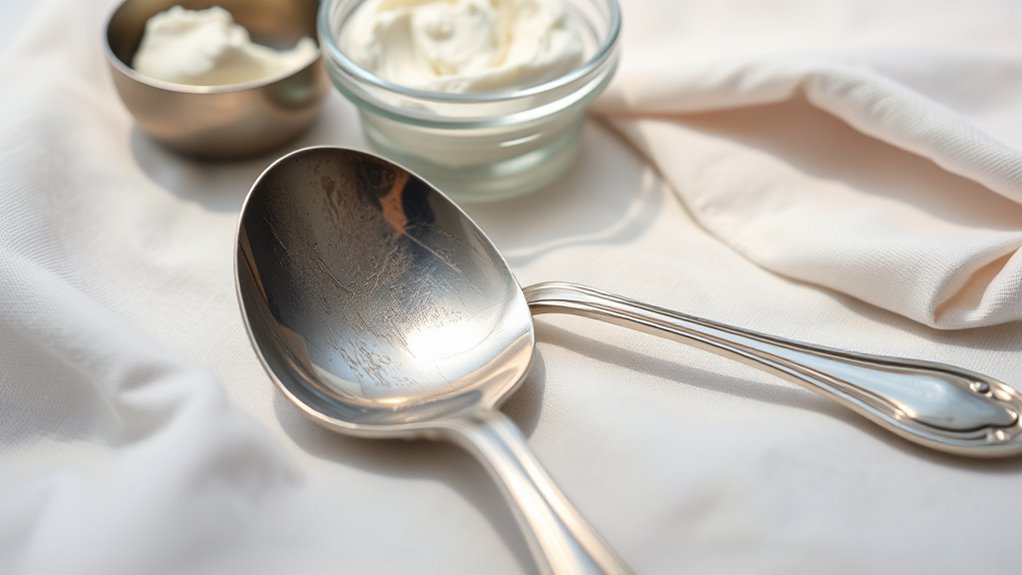
Although silver utensils look beautiful when polished, they tend to tarnish over time because they react with sulfur compounds in the air. This chemical reaction forms silver sulfide, creating a dull, dark layer on the surface. You’ll notice tarnish as a grayish or blackish discoloration, often starting in spots or along edges.
Sometimes, the tarnish appears as a yellowish hue before darkening. It’s important to spot tarnish early because it can be easier to remove before it deeply settles into the silver. Tarnish not only affects the appearance but can also dull the metal’s reflective shine.
Supplies Needed to Polish Silver Utensils
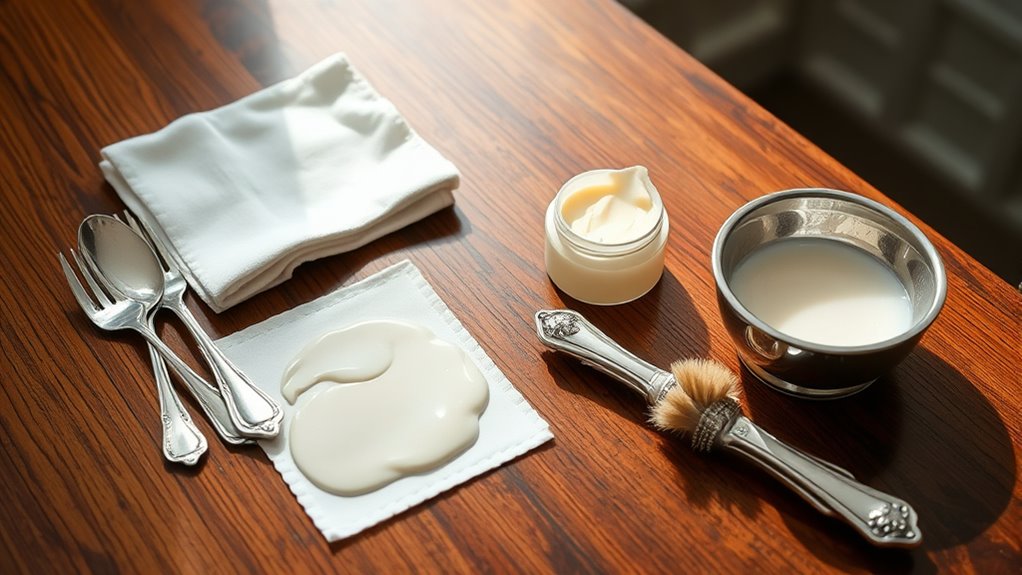
To polish your silver utensils effectively, you’ll need a few essential cleaning materials like a gentle silver polish, soft cloths, and warm water.
You might also want to gather some optional tools, such as a soft-bristle brush or polishing gloves, to make the process easier.
Let’s go over what each supply does and why it’s helpful.
Essential Cleaning Materials
Before you begin polishing your silver utensils, gather the right cleaning materials to guarantee the best results. You’ll need a mild dish soap to remove surface dirt and grease without harming the silver. A soft, lint-free cloth or microfiber towel works well for applying polish and buffing shine.
Choose a quality silver polish or a gentle homemade alternative, like a baking soda paste, to tackle tarnish effectively. Have a bowl of warm water ready for rinsing, and make sure you have soft cotton gloves or a clean cloth to handle the utensils afterward to prevent fingerprints. Avoid abrasive sponges or harsh chemicals, as they can scratch or damage your silver.
With these essentials on hand, you’ll be set for a smooth, effective polishing process.
Optional Polishing Tools
Gathering the right cleaning materials sets the stage for effective silver polishing, but having the right tools can make the process easier and more efficient. While you don’t necessarily need specialized equipment, certain optional polishing tools can enhance your results and save time. Consider these:
- Microfiber Cloths – Soft and lint-free, they prevent scratching and provide a smooth finish.
- Silver Polishing Mitts – These gloves let you polish directly with your hands, offering control and reducing mess.
- Soft-bristle Toothbrush – Perfect for reaching intricate patterns and crevices without damaging the silver.
- Polishing Pads or Sponges – Designed specifically for silver, they help evenly distribute polish and remove tarnish effectively.
Using these tools can simplify the process and help you achieve a brilliant shine on your silver utensils.
How to Prepare Your Silver Utensils for Polishing
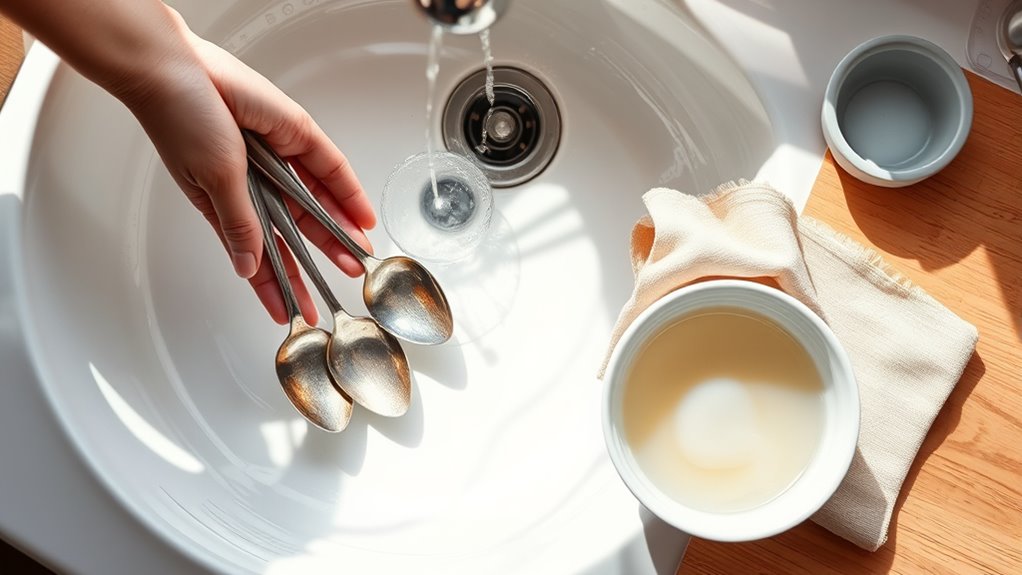
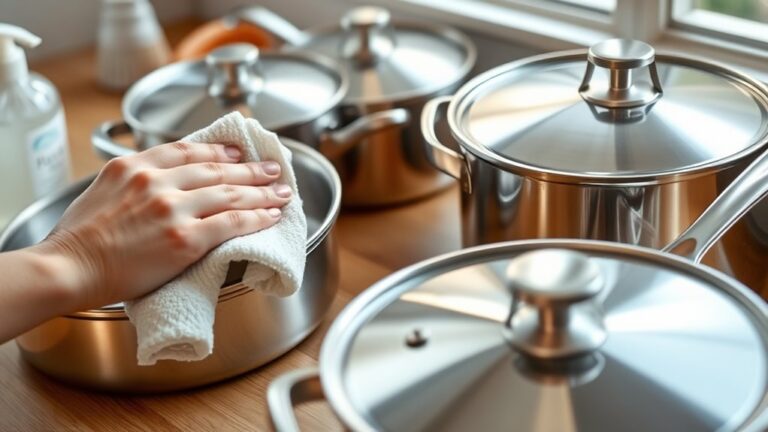
Although polishing silver can restore its shine, you’ll want to prepare your utensils properly to avoid damage. Start by gently washing each piece in warm, soapy water to remove dust and grime. Rinse thoroughly and dry them with a soft cloth to prevent water spots.
Next, inspect your utensils for any loose parts or damage—polishing can exacerbate these issues. Make sure to separate heavily tarnished items from those with light tarnish so you can tailor your approach. Avoid using abrasive materials or harsh chemicals during cleaning, as they can scratch or corrode the silver.
Finally, work in a well-lit area with a clean, soft surface to prevent accidental dents or scratches during polishing. Proper prep ensures the best results and protects your silver’s finish.
Using a Silver Polishing Cloth on Silver Utensils
When you use a silver polishing cloth on your utensils, you’ll quickly notice how effectively it removes tarnish without damaging the surface. These cloths are specially treated to gently lift oxidation and restore shine. To get the best results, follow these steps:
- Make sure your utensils are clean and dry before you start.
- Gently rub the cloth over the silver in a back-and-forth motion, focusing on tarnished areas.
- Avoid circular motions, which can cause scratches on delicate silver.
- Use a fresh section of the cloth for each utensil to prevent transferring tarnish back.
After polishing, buff your utensils with a soft, dry cloth to enhance their luster. Using a silver polishing cloth is a quick, efficient way to keep your silverware looking bright and beautiful.
How to Polish Silver Utensils With Homemade Solutions
You can easily polish your silver utensils using simple homemade solutions made from common ingredients. I’ll guide you through the step-by-step process to bring back their shine.
Plus, I’ll share some tips to help you get the best results every time.
Ingredients Needed
To polish silver utensils with homemade solutions, you’ll need a few common ingredients that are likely already in your kitchen. These simple items work together to remove tarnish effectively and restore your silver’s shine without harsh chemicals.
- Baking Soda – Acts as a gentle abrasive to lift tarnish.
- White Vinegar – Helps dissolve tarnish and brighten silver.
- Aluminum Foil – Creates a chemical reaction that aids in cleaning.
- Salt – Enhances the reaction between baking soda and aluminum foil for better results.
With these ingredients, you can create an effective, natural polishing solution. They’re inexpensive, easy to find, and safe for your silver utensils, making your polishing routine both practical and efficient.
Step-by-Step Process
Gathering the ingredients is just the beginning; the real magic happens in the steps you take to polish your silver utensils. First, mix your homemade solution—usually a blend of baking soda and water—into a paste. Next, gently apply the paste to each utensil with a soft cloth, rubbing in circular motions to lift tarnish.
Let it sit for a few minutes to break down stubborn spots. Then, rinse the utensils thoroughly with warm water to remove all residue. Finally, dry each piece completely with a clean, soft towel to prevent water spots.
Tips For Best Results
Although homemade solutions offer a gentle way to restore your silver utensils’ shine, following a few key tips will guarantee the best results. First, always test your solution on a small, inconspicuous area to avoid damage. Second, use soft cloths or sponges to prevent scratching the delicate surface.
Third, rinse utensils thoroughly with warm water after polishing to remove any residue that might dull the finish. Finally, dry each piece immediately with a clean towel to prevent water spots. By paying attention to these details, you’ll keep your silver looking brilliant without harsh chemicals.
Using Commercial Silver Polish Safely
When you choose to use commercial silver polish, it’s important to follow the instructions carefully to protect your utensils from damage. Always work in a well-ventilated area and wear gloves to avoid skin irritation. Apply a small amount of polish with a soft cloth, gently rubbing in circular motions.
Don’t use abrasive materials, as they can scratch the silver. After polishing, rinse the utensils thoroughly with warm water to remove any residue, then dry them immediately with a clean, soft towel to prevent water spots. Store the polish out of reach of children and pets.
If your utensils have any coatings or plating, test the polish on a small, inconspicuous area first to ensure it won’t harm the finish. Following these steps keeps your silver shining safely.
How to Clean Intricate or Embossed Silver Utensils
Because intricate or embossed silver utensils have detailed designs, cleaning them requires extra care to avoid damaging delicate patterns. You should focus on gentle methods that reach into crevices without harming the silver’s surface. Here’s how to clean them effectively:
Cleaning intricate silver utensils demands gentle care to protect delicate patterns and reach every crevice safely.
- Use a soft-bristle toothbrush to gently scrub dirt from the grooves.
- Mix mild dish soap with warm water and soak the utensils briefly.
- Rinse thoroughly with clean water to remove soap residue.
- Dry immediately with a soft, lint-free cloth to prevent water spots.
Avoid abrasive materials or harsh chemicals that can scratch or erode your silver’s intricate details. This careful approach preserves both the beauty and craftsmanship of your embossed utensils.
How to Remove Stubborn Tarnish Without Scratching
If stubborn tarnish won’t come off with gentle cleaning, you’ll need to use specialized methods that protect your silver’s surface. Start by applying a silver polish designed specifically for tarnish removal, using a soft, non-abrasive cloth. Work gently in small circular motions, focusing on tarnished areas without pressing too hard.
For intricate spots, use a soft-bristled toothbrush dipped in the polish to reach crevices safely. Avoid abrasive materials or harsh chemicals, as they can scratch or damage your silver. If you prefer a homemade solution, try a paste made from baking soda and water, applied gently with a soft cloth.
Always rinse thoroughly with lukewarm water afterward to remove residue, preventing further tarnish buildup. This careful approach guarantees your silver regains shine without scratches.
Drying and Buffing Polished Silver Utensils
How do you guarantee your silver utensils shine brilliantly after polishing? The key lies in thorough drying and careful buffing. Once you rinse off the polish, avoid air drying to prevent water spots.
Instead, follow these steps:
- Use a soft, lint-free cloth to gently pat the utensils dry.
- Let them air for a few minutes in a low-humidity area to ensure no moisture remains.
- Buff the silver using a clean microfiber cloth, applying light pressure in circular motions.
- Focus on crevices and detailed areas where moisture and polish residues tend to linger.
This method removes any leftover dampness and enhances the silver’s natural luster, ensuring your utensils dazzle with every use.
How Often to Polish Silver Utensils to Prevent Tarnish
How often you polish your silver utensils depends largely on how often you use them and how you store them. Keeping a seasonal polishing routine can help prevent stubborn tarnish from building up.
Let’s explore how usage and storage impact the frequency of polishing.
Frequency Based on Usage
Since silver tarnishes faster with frequent use, you’ll want to adjust your polishing routine based on how often you use your utensils.
Here’s a simple guide to help you decide when to polish:
- Daily Use: Polish every 1-2 weeks to keep tarnish at bay and maintain shine.
- Weekly Use: A monthly polish should suffice to prevent buildup and dullness.
- Occasional Use: Every 3-4 months is fine, as less handling means slower tarnishing.
- Rare Use or Storage: Polish before storing and once every 6 months if left unused to avoid heavy tarnish.
Tailoring your polishing frequency like this ensures your silver utensils always look their best without overdoing it.
Seasonal Polishing Routine
Adjusting your polishing routine to the changing seasons can help keep your silver utensils looking their best year-round. In humid summer months, tarnish tends to form faster, so you’ll want to polish your silver every 4 to 6 weeks.
During drier winter months, tarnish develops more slowly, allowing you to extend polishing intervals to about every 8 to 10 weeks. Keep an eye on your utensils’ appearance, and polish as soon as you notice dullness or discoloration.
Storage Impact on Tarnish
Where you store your silver utensils plays a crucial role in how quickly they tarnish. To keep tarnish at bay and reduce how often you polish, consider these storage tips:
- Store silver in a cool, dry place to minimize moisture exposure.
- Use anti-tarnish cloth or bags designed specifically for silver storage.
- Avoid storing silver near rubber, latex, or newspaper, which emit sulfur causing tarnish.
- Keep silver separate from other metals to prevent chemical reactions.
How to Store Silver Utensils to Keep Them Shiny Longer
To keep your silver utensils shining longer, you need to store them properly right after cleaning. Start by drying each piece thoroughly to prevent moisture from causing tarnish. Wrap your utensils individually in acid-free tissue paper or soft cotton cloth to shield them from air exposure.
Store them in a tarnish-resistant bag or a lined silverware chest designed to block humidity and pollutants. Avoid plastic bags that can trap moisture and accelerate tarnishing. Keep your silver in a cool, dry place away from direct sunlight and heat sources, which can speed up discoloration.
Finally, consider placing anti-tarnish strips or silica gel packets in your storage area to absorb excess moisture. These simple steps will help your silver utensils stay polished and beautiful for longer.
Avoid These Common Silver Polishing Mistakes
Although polishing silver can seem straightforward, many people make avoidable mistakes that actually damage their utensils or dull the finish. To keep your silver gleaming, avoid these common errors:
- Using abrasive cleaners or rough cloths that scratch the surface.
- Applying polish too aggressively, which removes the protective layer.
- Ignoring tarnish buildup, letting it harden and become tougher to remove.
- Failing to rinse and dry thoroughly after polishing, leading to water spots or residue.
Frequently Asked Questions
Can Silver Utensils Be Safely Polished in a Dishwasher?
You can’t safely polish silver utensils in a dishwasher because harsh detergents and high heat can cause tarnishing or damage.
Instead, hand-polish them gently with a suitable silver cleaner to keep them shiny and protected.
Are There Any Foods That Cause Silver to Tarnish Faster?
Imagine you leave lemon juice on your silver fork overnight—it’ll tarnish faster. Yes, acidic foods like citrus, vinegar, and eggs speed up tarnishing by reacting with silver’s surface,
so you’ll want to clean utensils promptly after use.
Is It Safe to Use Silver Polish on Silver-Plated Items?
Yes, you can use silver polish on silver-plated items, but you should choose a polish specifically made for silver plating to avoid damaging the thin layer. Always test on a small area first to be safe.
Using the wrong polish can wear away the plating, so careful selection is important. Follow the product instructions closely to achieve the best results. Regular gentle cleaning helps maintain the finish longer.
Can Polishing Silver Utensils Affect Their Value or Finish?
Yes, polishing silver utensils can affect their value and finish. If you polish too often or use harsh methods, you might wear down the silver or remove plating, so handle them gently to preserve their appearance and worth.
What Should I Do if My Silver Utensils Have Scratches After Polishing?
If scratches mar your silver’s shine like tiny roadmaps, don’t fret. Gently buff them with a soft cloth and silver polish, or use a professional restorer to smooth the surface without stealing its luster.
Conclusion
Now that you know how to polish your silver utensils, remember that regular care really pays off. Did you know silver tarnishes up to 30% faster in humid environments? Polishing every few months and storing utensils properly can keep them shining longer.
With the right tools and techniques, your silver will stay beautiful and last for generations. So, keep up with these simple steps, and enjoy your gleaming silverware every day! Proper silver polishing and maintenance are key to preserving the elegance of your silver utensils.