7 Tips to Help You Safely Store Clean Cutting Boards
To safely store clean cutting boards, it is essential to follow proper hygiene and maintenance tips. Always dry your cutting boards fully before putting them away to prevent mold and bacteria growth.
Storing clean cutting boards properly helps maintain their cleanliness and prolongs their lifespan. Store boards vertically in a dry, well-ventilated spot to keep air flowing and avoid moisture buildup.
Keep wooden and plastic boards separate to prevent cross-contamination. Use a dedicated rack for easy access and better hygiene.
Check your boards regularly for damage or stains to maintain safety.
Following these simple steps will help keep your cutting boards clean, safe, and long-lasting—there’s more helpful advice to explore.
Key Takeaways
- Store cutting boards vertically in a dry, well-ventilated area to promote airflow and prevent moisture buildup.
- Ensure boards are completely dry before storing to avoid mold, mildew, and bacterial growth.
- Separate boards by type and material to prevent cross-contamination and allow proper ventilation.
- Regularly inspect boards for damage, stains, or mold, and replace or sanitize as needed.
- Apply food-safe mineral oil to wooden boards after drying to maintain condition and prevent cracking.
Why Proper Storage Matters for Cutting Boards
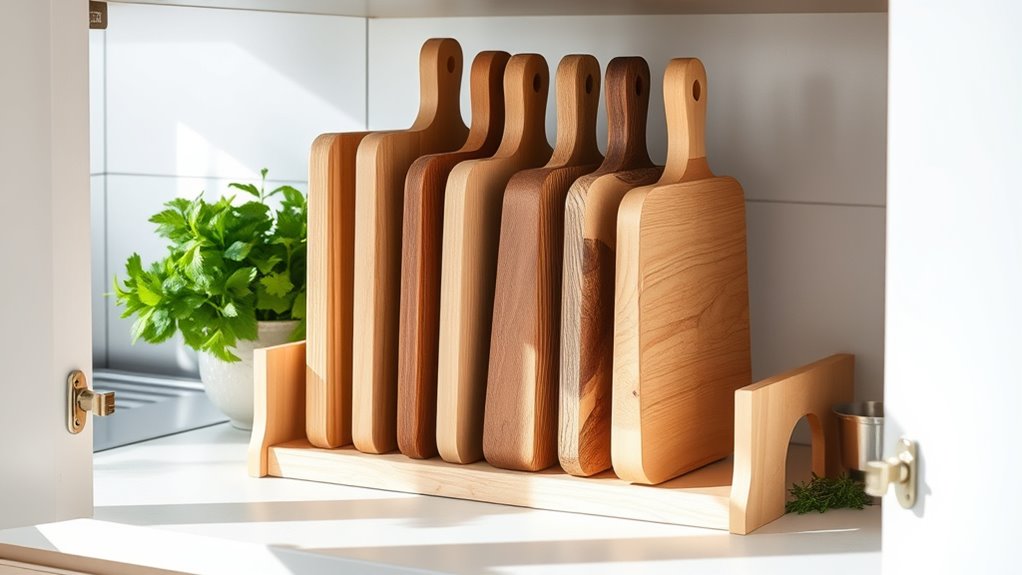
Although you might think storing cutting boards is simple, proper storage plays an essential role in keeping them clean and safe. When you store your cutting boards correctly, you reduce the risk of bacterial growth by preventing moisture buildup and cross-contamination.
Leaving boards stacked or in damp areas encourages mold and bacteria, which can compromise your food’s safety. You want to guarantee your cutting boards stay dry and well-ventilated to maintain their condition and hygiene. Proper storage also helps avoid warping or cracking, extending the life of your boards.
Dry Cutting Boards Completely Before Storing
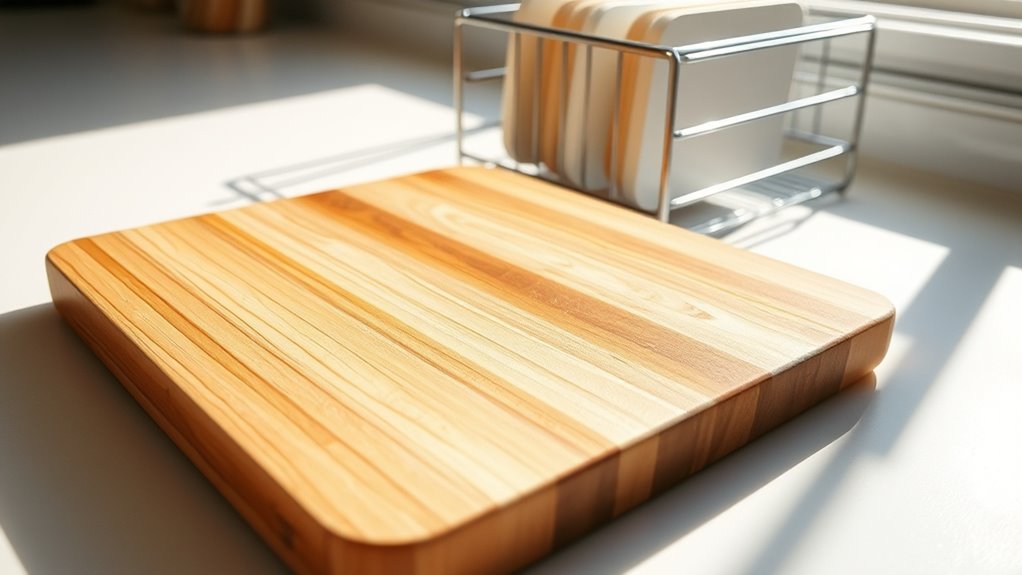
You should always dry your cutting boards completely before storing them to prevent moisture buildup. Using a clean towel or letting them air dry in a well-ventilated area works best.
Leaving boards damp can lead to warping, mold, or bacteria growth, so don’t skip this step.
Importance Of Thorough Drying
Since moisture encourages bacteria and mold growth, drying your cutting boards thoroughly before storing them is essential for food safety. When you leave any dampness on the surface, you create a perfect environment for harmful microorganisms to thrive. This not only risks cross-contamination but can also cause unpleasant odors and degrade the board’s material over time.
Ensuring your cutting boards are fully dry helps maintain their integrity and extends their lifespan. Plus, it keeps your kitchen hygienic, protecting your family’s health. Remember, even a small amount of retained water can lead to problems, so never rush this step.
Prioritizing thorough drying before storing sets a strong foundation for safe food preparation every time you cook.
Best Drying Techniques
When you want to keep your cutting boards safe and long-lasting, drying them completely before storage is essential. Start by wiping your boards with a clean towel to remove excess water. Then, stand them upright or lean them against a wall to allow air to circulate freely around all surfaces.
Avoid stacking boards while they’re still damp, as this traps moisture. If possible, place them near a fan or in a well-ventilated area to speed up drying. For wooden boards, occasionally use a food-safe mineral oil after they’re dry to maintain their condition.
Using these techniques guarantees your cutting boards dry thoroughly, preventing damage and preparing them for safe storage.
Risks Of Moisture Retention
Although it might seem harmless, storing cutting boards while they’re still damp can lead to serious problems. Moisture trapped in or on the board creates a perfect environment for bacteria and mold to thrive. To keep your cutting boards safe and hygienic, dry them completely before storing.
Here’s why moisture retention is risky:
- Bacterial growth accelerates in damp conditions, increasing contamination risk.
- Mold and mildew can develop, causing unpleasant odors and health hazards.
- Wood boards may warp or crack, shortening their lifespan.
- Plastic boards can retain odors and stains more easily.
Drying your cutting boards thoroughly helps maintain their integrity and keeps your kitchen safe. Don’t rush—air dry or towel dry completely before putting them away.
Store Cutting Boards Vertically to Prevent Moisture
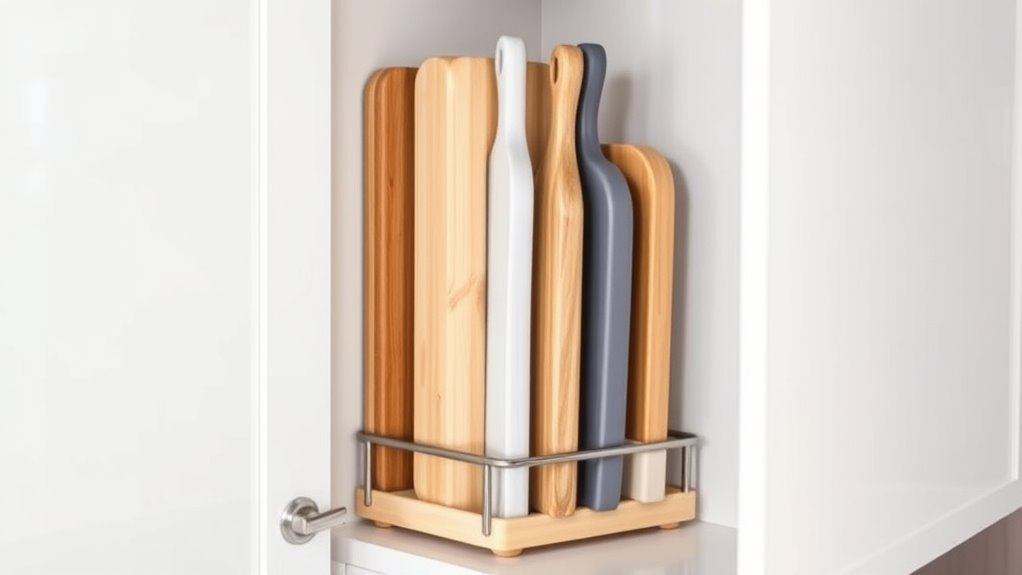
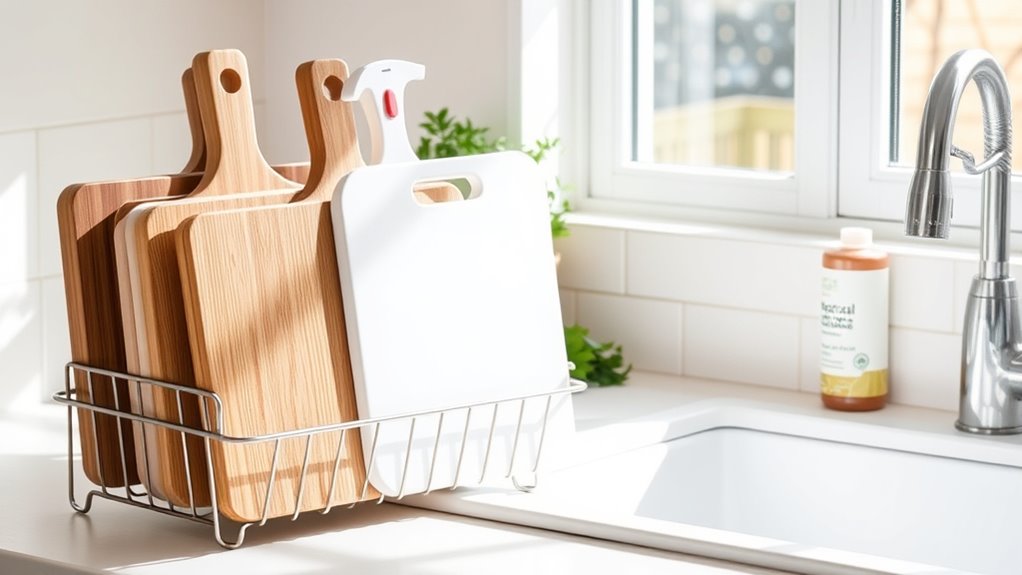
To keep your cutting boards dry and free from bacteria, store them vertically rather than stacking them flat. When you stack boards on top of each other, moisture can get trapped between surfaces, creating an ideal environment for mold and bacteria growth. By placing boards upright, you allow air to circulate around each one, speeding up the drying process.
Vertical storage also makes it easier to access and organize your cutting boards, so you can quickly grab the right one without disrupting the others. Use a rack or a sturdy stand designed for vertical storage, or simply lean them securely against a wall. This simple adjustment helps maintain your cutting boards in a sanitary condition, preventing moisture buildup and prolonging their lifespan.
Choose a Dry, Ventilated Spot to Store Cutting Boards
You’ll want to pick a dry, well-ventilated spot to store your cutting boards to prevent moisture buildup. Proper airflow helps them dry completely and stops bacteria from growing.
Avoid cramped or damp areas to keep your boards safe and fresh.
Importance Of Proper Ventilation
When storing cutting boards, selecting a dry, well-ventilated spot prevents moisture buildup that can lead to mold and bacteria growth. Proper ventilation helps your boards dry thoroughly and stay hygienic between uses.
To guarantee good airflow and maintain cleanliness:
- Store boards upright or on racks to expose surfaces to air.
- Avoid stacking boards tightly, which traps moisture.
- Place boards away from enclosed cabinets or damp areas.
- Use spaces near windows or vents to promote natural air circulation.
Avoid Moisture Accumulation
Although it might seem simple, avoiding moisture accumulation is essential for keeping your cutting boards safe and long-lasting. When you store them in a damp or poorly ventilated area, moisture can linger, promoting mold growth and warping. Always choose a dry, well-ventilated spot to store your cutting boards.
If possible, stand them upright to allow air to circulate around each board, speeding up drying and preventing water from pooling. Avoid stacking wet boards, as trapped moisture accelerates damage. After washing, dry your boards thoroughly with a clean towel before storing.
Taking these small steps helps you maintain hygiene and extend your cutting boards’ lifespan, ensuring they stay in good condition for every meal prep.
Keep Wooden and Plastic Cutting Boards Separate
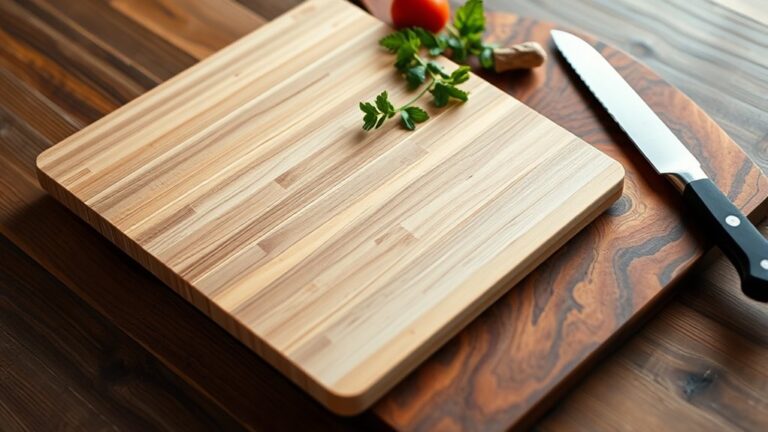
Because wooden and plastic cutting boards have different care requirements and levels of porosity, keeping them separate helps prevent cross-contamination and extends their lifespan.
You’ll want to:
- Store wooden boards in a dry, ventilated area to avoid warping and cracking.
- Keep plastic boards away from heat sources to prevent melting or warping.
- Label or color-code each board for specific tasks—like raw meat for plastic, vegetables for wood—to reduce contamination risks.
- Avoid stacking wooden and plastic boards together to allow proper air circulation and drying for each type.
Use a Dedicated Rack or Holder for Easy Access
To keep your cutting boards organized and easily accessible, invest in a dedicated rack or holder designed specifically for them. This helps prevent clutter and keeps your boards dry, reducing the risk of bacteria growth. Choose a rack with slots that allow air to circulate around each board, which speeds up drying after washing.
Wall-mounted or countertop racks work well depending on your kitchen space. Make sure the rack is easy to clean, so it doesn’t become a breeding ground for germs. By having a designated spot, you’ll quickly grab the right board when cooking, saving time and hassle.
A dedicated holder also reduces the chance of boards rubbing together, which can cause damage or contamination. This simple addition keeps your kitchen tidy and your cutting boards safe.
Check Cutting Boards Often to Keep Them in Good Shape
Keeping your cutting boards properly stored helps maintain their condition, but regular checks are just as important to keep them in good shape. You should inspect your boards frequently to catch any signs of wear or damage early. Here’s what to look for:
Proper storage and regular inspections are key to keeping your cutting boards in top condition.
- Check for deep cuts or grooves where bacteria can hide.
- Look for cracks or warping that compromise the board’s integrity.
- Make sure the surface remains smooth; sand it down if it gets rough.
- Confirm the board is completely dry before storing to prevent mold growth.
Frequently Asked Questions
Can I Store Cutting Boards in the Dishwasher?
Yes, you can store cutting boards in the dishwasher if it has enough space and proper racks.
Just make sure they’re fully dry afterward to prevent bacteria growth and warping before you put them away.
Is It Safe to Store Cutting Boards Near the Stove?
It’s not safe to store cutting boards near the stove because heat and steam can warp or damage them. Keep them in a cool, dry spot to maintain their shape and prevent bacteria growth.
Storing cutting boards away from heat sources also helps them last longer. Proper storage reduces the risk of contamination and ensures food safety. Always choose a well-ventilated area for your cutting boards.
How Often Should I Replace My Cutting Boards?
You might think cutting boards last forever, but you should replace them every 1-2 years or sooner if deep grooves or cracks appear.
Those can harbor bacteria, making your food less safe and your kitchen less healthy.
Can I Use the Same Cutting Board for Meat and Vegetables?
You shouldn’t use the same cutting board for meat and vegetables to avoid cross-contamination. Use separate boards or thoroughly clean and sanitize between uses. This keeps your food safe and prevents harmful bacteria from spreading.
Should I Oil My Wooden Cutting Boards Regularly?
Imagine Sarah’s wooden board cracking after weeks of neglect. Yes, you should oil your wooden cutting boards regularly to keep them hydrated, prevent cracks, and extend their lifespan.
Natural oils like mineral oil work best for this.
Conclusion
By following these tips, you’ll keep your cutting boards safe and sound, just like knights guarding their castle. Dry them thoroughly, store them vertically in a well-ventilated spot, and keep wooden and plastic boards apart.
Using a dedicated rack makes access easier and helps you spot wear early. With a little care, your cutting boards will stay clean, fresh, and ready for your next culinary adventure—no jousting required!
Proper storage and maintenance are key to prolonging the life of your cutting boards. Safe storage ensures hygiene and prevents damage, keeping your kitchen tools in top shape. Remember, these simple steps help you maintain clean cutting boards for every meal.