How Do You Make Powdered Sugar Using a Blender?
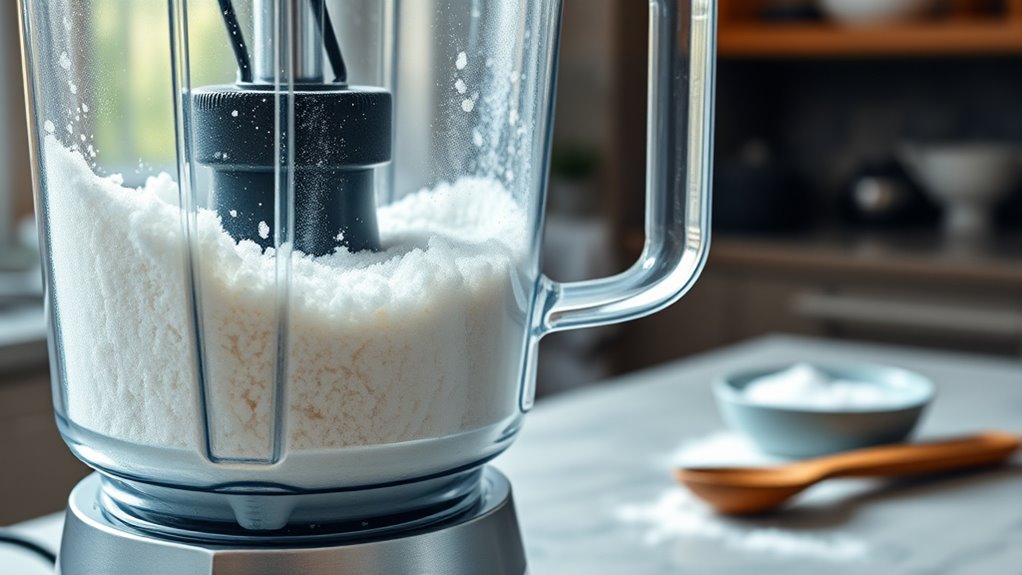
You can easily make powdered sugar using a blender by pouring granulated sugar into the jar halfway. Securing the lid is essential before pulsing in short bursts to avoid heat buildup. This method is quick and efficient for creating fine, silky powdered sugar at home.
Blend the sugar for about 30 seconds, then check the texture. Pulse more if needed until the sugar reaches a smooth, fine consistency.
Once done, sift the powdered sugar to remove any lumps. Store it in an airtight container to maintain freshness.
Keep these simple steps in mind, and you’ll get perfect powdered sugar every time with a few extra tips ahead.
Key Takeaways
- Use a high-speed blender, filling it no more than halfway with dry granulated sugar for effective grinding.
- Pulse the sugar in short bursts of 20-30 seconds to prevent heat buildup and achieve a fine powder.
- Check the sugar texture frequently and continue blending until it feels silky and light.
- Sift the powdered sugar through a fine-mesh sieve to remove lumps and ensure uniform fineness.
- Store the powdered sugar in an airtight container in a cool, dry place to prevent clumping.
Ingredients and Equipment Needed for Homemade Powdered Sugar
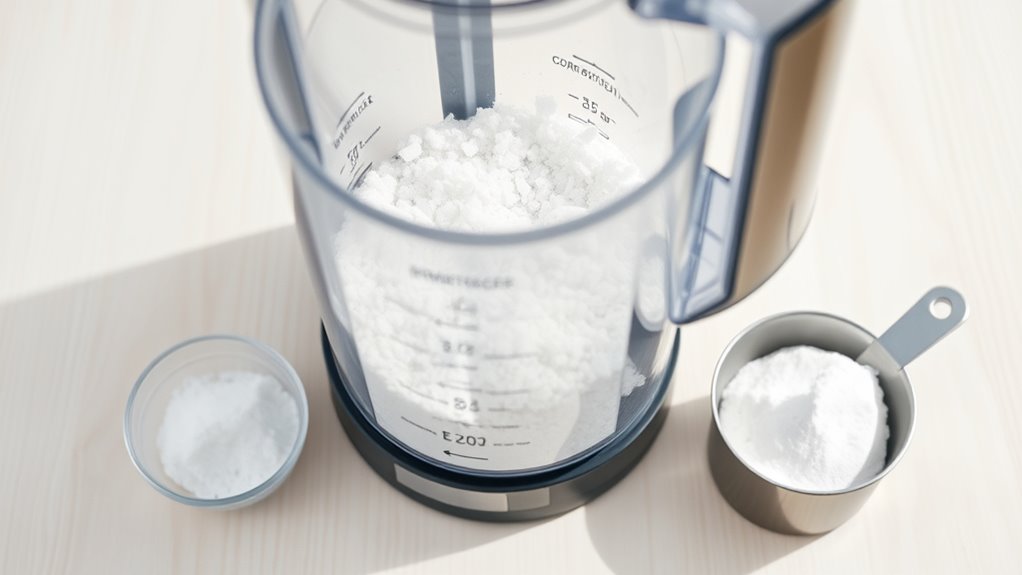
Before you start making powdered sugar in your blender, you’ll need just two basic ingredients and a few simple tools. First, grab some granulated sugar—this is the main ingredient you’ll transform into powdered sugar. Optionally, you can add a small amount of cornstarch to prevent clumping, especially if you plan to store your powdered sugar for a while.
For equipment, you’ll need a high-speed blender or food processor capable of pulverizing sugar into a fine powder. A fine-mesh sieve or sifter is also handy to catch any larger sugar crystals after blending. Finally, have an airtight container ready to store your homemade powdered sugar once it’s smooth and powdery.
With these ingredients and tools, you’re all set to make your own powdered sugar easily at home.
Preparing Granulated Sugar for Blending

Once you have your granulated sugar ready, give it a quick stir or shake to break up any clumps that might have formed. This helps guarantee that when you blend the sugar, it processes evenly without leaving chunks behind. Measure the exact amount you need before preparing it for the blender, as precision will affect your final powdered sugar’s texture.
If your sugar has been stored for a while or feels damp, spread it out on a clean surface to air dry for a bit. Dry sugar blends more smoothly and results in a finer powder. Avoid adding any moisture or additives at this stage since pure, dry granulated sugar is the best starting point to achieve that light, fluffy powdered sugar you want.
Step-by-Step Guide to Making Powdered Sugar in a Blender
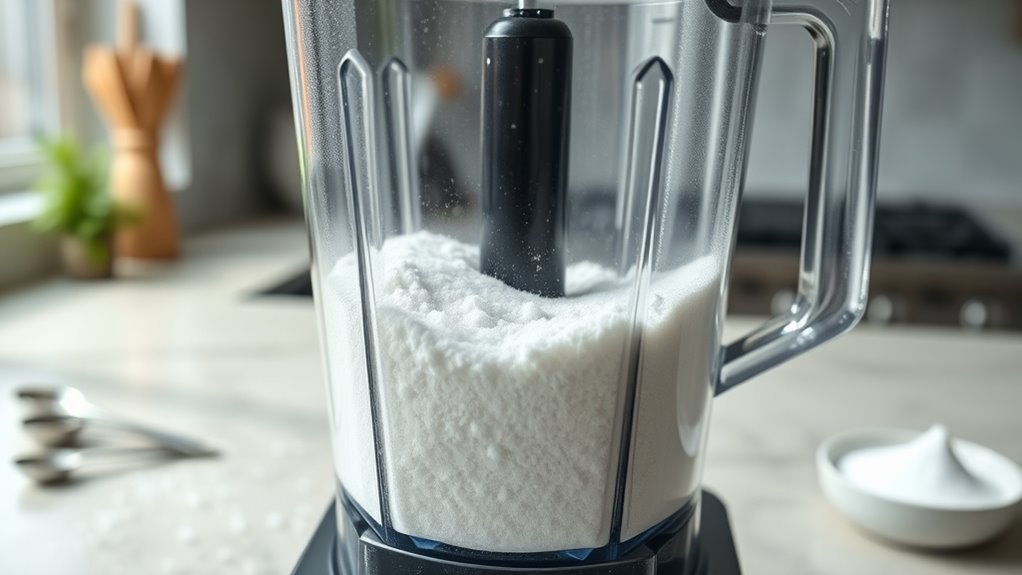
Now that your granulated sugar is dry and free of clumps, you can start turning it into powdered sugar using your blender. Pour the sugar into the blender jar, filling it no more than halfway to allow room for blending. Secure the lid tightly to prevent any sugar dust from escaping.
Pulse the blender on high for about 30 seconds, then stop and check the texture. If needed, blend for additional 15-second intervals until the sugar reaches a fine, powdery consistency. Avoid blending too long in one go to prevent overheating.
Once done, carefully open the lid and use a spoon to transfer your freshly made powdered sugar into an airtight container. Your homemade powdered sugar is now ready to use in any recipe.
How to Check and Adjust Your Powdered Sugar’s Texture
After blending, check the fineness of your powdered sugar by rubbing a small amount between your fingers. If it feels gritty, blend it a bit longer to reach that smooth texture.
For extra consistency, sift the sugar before using it in your recipes.
Assessing Sugar Fineness
Although you might think powdered sugar looks uniform straight from the blender, you’ll want to check its fineness to make certain it suits your recipe. Start by rubbing a small pinch between your fingers; it should feel soft and smooth without any gritty texture. If you notice granules or a sandy feel, the sugar isn’t fine enough.
You can also hold some up to the light—coarse particles will be more visible. For baking or delicate frostings, a finer texture ensures better dissolution and a smoother finish. If you need to adjust the fineness, keep in mind that how you blend affects the outcome.
Evaluating the sugar’s texture now helps you decide if it’s ready or if you need to blend longer for the perfect consistency.
Adjusting Blend Duration
If your powdered sugar still feels grainy or looks coarse, you’ll want to blend it a bit longer to reach the ideal smoothness. Stop the blender every 20 to 30 seconds to check the texture. This prevents overheating and lets you assess whether the sugar has reached that fine, powdery consistency.
If it’s not quite there, pulse the blender in short bursts rather than running it continuously. This approach helps you control the texture more precisely. Remember, blending too long can cause the sugar to clump due to heat buildup, so it’s better to add a few extra pulses than one long blend.
Keep adjusting the blend duration until the sugar feels silky and light between your fingers, signaling you’ve achieved perfect powdered sugar texture.
Sifting for Consistency
While blending gets your sugar close to the right texture, sifting guarantees your powdered sugar is perfectly fine and clump-free. After blending, pour your sugar through a fine-mesh sieve into a clean bowl. Gently tap or shake the sieve to push the sugar through.
If you notice any lumps or larger granules left behind, discard or re-blend them. This step assures your powdered sugar is smooth and ideal for recipes like frostings or glazes. If the texture still feels gritty, sift again or blend for a few more seconds before sifting once more.
Tips to Prevent Clumps in Homemade Powdered Sugar
To keep your homemade powdered sugar smooth and free of clumps, you need to control moisture and blend thoroughly. Start by using completely dry sugar and a dry blender container. Blend in short bursts, pausing to scrape down the sides to guarantee even grinding.
Adding a small amount of cornstarch helps absorb any residual moisture, preventing clumping.
| Tip | Reason | Result |
|---|---|---|
| Use dry sugar | Prevent moisture buildup | Powdery, smooth texture |
| Blend in short bursts | Avoid overheating | Fine, consistent powder |
| Add cornstarch | Absorbs moisture | Clump-free sugar |
How to Store Your Homemade Powdered Sugar Properly
To keep your homemade powdered sugar fresh, store it in an airtight container to block out moisture. Make sure you keep it in a cool, dry place to prevent clumping and spoilage.
These simple steps will help maintain its fine texture and sweetness.
Airtight Container Importance
Why does storing your homemade powdered sugar in an airtight container matter? It keeps your sugar fresh and prevents it from absorbing odors or contaminants from the environment. When exposed to air, powdered sugar can clump or harden, making it difficult to use.
By sealing it tightly, you maintain its fine texture and ensure it blends smoothly in recipes. An airtight container also protects your sugar from pests and dust, preserving its quality over time. Choose a container with a secure lid, like a plastic or glass jar, to keep moisture and air out.
Proper storage means your homemade powdered sugar stays ready for whenever you need it, saving you the hassle of remaking or buying new batches too soon.
Moisture Prevention Tips
Although powdered sugar is naturally prone to clumping, you can prevent moisture from ruining your homemade batch by storing it correctly. Always make sure your container is completely dry before transferring the sugar. Any lingering moisture will cause clumps and spoil the texture.
Avoid opening the container with wet or damp hands, as this introduces humidity. You might also consider adding a small food-safe desiccant packet or a few grains of uncooked rice to absorb excess moisture inside the container. Keep the container sealed tightly after each use to minimize exposure to air.
If you notice any clumps, gently break them apart with a spoon rather than shaking the container vigorously, which can introduce more air and moisture. These simple steps help keep your powdered sugar fresh and smooth.
Ideal Storage Conditions
Where you store your homemade powdered sugar can make all the difference in maintaining its fine texture and preventing clumps. Keep it in an airtight container to block moisture and odors from affecting it. Glass jars with tight-fitting lids or plastic containers designed for food storage work well.
Store the container in a cool, dry place away from direct sunlight, like a pantry or cupboard. Avoid storing it near the stove, dishwasher, or any humid area to prevent moisture buildup. If you notice clumping, simply sift the sugar before use.
Blender Mistakes to Avoid When Making Powdered Sugar
If you don’t pay attention to a few key details, your blender might not produce the fine, powdery texture you want when making powdered sugar. First, avoid overfilling the blender jar; too much sugar limits blade movement and results in uneven grinding.
Next, don’t skip pulsing—continuous blending can heat the sugar, causing clumps. Use short bursts instead to keep it cool and fluffy. Also, make sure your blender blades are sharp; dull blades won’t break down granules effectively.
Avoid using low-powered blenders, as they struggle to create a fine powder. Finally, don’t forget to sift the powdered sugar after blending to remove any larger particles. Following these tips ensures smooth, homemade powdered sugar every time.
Creative Ways to Use Homemade Powdered Sugar
When you have homemade powdered sugar on hand, you can easily elevate your baking and cooking projects with its fresh, fine texture. Sprinkle it over desserts for a delicate finish, blend it into frostings for smoothness, or mix it into beverages for quick sweetness without graininess.
You can even dust it on pancakes or waffles for an elegant touch.
| Use Case | Description |
|---|---|
| Dusting | Lightly sprinkle over cakes or fruit |
| Frosting Mix-in | Blend for creamy, smooth icing |
| Beverage Sweetener | Stir into coffee or hot chocolate |
These creative uses help you make the most of your homemade powdered sugar, adding flavor and flair effortlessly.
How to Customize Sweetness and Texture to Your Taste
Although powdered sugar provides a smooth sweetness by default, you can easily adjust both its sweetness level and texture to suit your preferences. To control sweetness, simply blend less sugar or mix in small amounts of other sweeteners like stevia or erythritol. For a milder taste, reduce the amount of granulated sugar before blending.
If you prefer a coarser texture, pulse the blender briefly instead of running it continuously. Adding a pinch of cornstarch can prevent clumping and slightly thicken the sugar, which is useful for frosting. Experiment with blending times and ingredient ratios until you nail the perfect balance for your recipes.
Customizing powdered sugar this way lets you tailor it exactly to your baking or decorating needs.
Frequently Asked Questions
Can Powdered Sugar Made in a Blender Replace Store-Bought in Baking Recipes?
Yes, you can replace store-bought powdered sugar with homemade blender sugar in baking. Just make sure it’s finely ground and sifted to avoid clumps, so your recipes turn out smooth and delicious every time.
Is Homemade Powdered Sugar Safe for People With Dietary Restrictions?
You absolutely can trust homemade powdered sugar—it’s like a superhero for dietary restrictions! You control the ingredients, avoiding additives or allergens, making it safer than many store-bought options.
Just keep your blender clean and allergen-free!
How Long Does Powdered Sugar Keep Its Freshness After Blending?
You can keep powdered sugar fresh for about 6 months if stored in an airtight container. Make sure to keep it in a cool, dry place to prevent clumping and maintain its fine texture for your recipes.
Can Other Sweeteners Be Used to Make Powdered Sugar in a Blender?
Yes, you can use other sweeteners like coconut sugar or stevia to make powdered sugar in a blender. Just blend them until fine, but keep in mind the texture and sweetness level might differ from regular powdered sugar.
What Is the Difference Between Homemade and Commercial Powdered Sugar?
You’ll find homemade powdered sugar is less fine and might clump, while commercial versions include anti-caking agents for smoothness and shelf life.
Homemade works well but isn’t as perfectly powdery or consistent as store-bought.
Conclusion
Now that you know how to make powdered sugar using your blender, you can save money and customize sweetness anytime. Did you know that powdered sugar typically contains about 3% cornstarch to prevent clumping? Making it at home lets you adjust that to your liking.
Just blend granulated sugar until fine, store it properly, and enjoy smoother, fresher results for your baking. Give it a try—you’ll be amazed at how easy and versatile it is! Using a blender to make powdered sugar is a simple method that ensures you always have fresh, homemade powdered sugar ready for all your baking needs.