7 Easy Ways to Tell the Difference Between Induction and Electric Cooktops
You can easily tell induction and electric cooktops apart by how they heat, look, and handle cookware. Understanding the key differences between induction and electric cooktops helps you choose the right appliance for your kitchen.
Induction uses magnetic fields to heat pans directly, so the surface stays cooler and heats up fast, while electric warms the cooktop surface itself, which gets hot and heats slower.
Induction cooktops have sleek, outlined zones and need magnetic pans, unlike electric ones that work with almost any cookware. This makes induction more energy-efficient and safer to use.
If you want to know all the key differences and safety tips, keep exploring.
Key Takeaways
- Induction cooktops have smooth glass surfaces with outlined cooking zones, while electric cooktops feature exposed or glowing coil elements.
- Induction heats cookware directly and cools quickly, whereas electric cooktops heat the surface and stay hot longer after use.
- Induction requires magnetic cookware like cast iron, while electric cooktops work with almost any flat-bottomed pan.
- Induction cooktops automatically shut off when cookware is removed; electric cooktops often use indicator lights to warn of hot surfaces.
- Induction surfaces remain cool to touch during cooking; electric cooktops glow red or feel hot, signaling active or residual heat.
How Do Induction and Electric Cooktops Heat Pans Differently?

How exactly do induction and electric cooktops heat your pans? With induction, you’ll notice it uses magnetic fields to directly heat the cookware. When you place a ferromagnetic pan on the induction surface, an electromagnetic coil underneath generates a magnetic field, causing the pan itself to heat up.
Induction cooktops use magnetic fields to directly heat ferromagnetic pans quickly and efficiently.
This means the cooktop stays relatively cool, and heat transfers quickly and efficiently to your food.
Electric cooktops, on the other hand, heat up a metal coil or a smooth ceramic surface that then transfers heat to your pan. Here, the cooktop itself gets hot, and the heat moves from the element to the pan through direct contact.
This method generally heats slower and can waste energy compared to induction. You’ll feel a clear difference in how quickly and precisely each heats your pans.
What Are the Visual Differences Between Induction and Electric Cooktops?
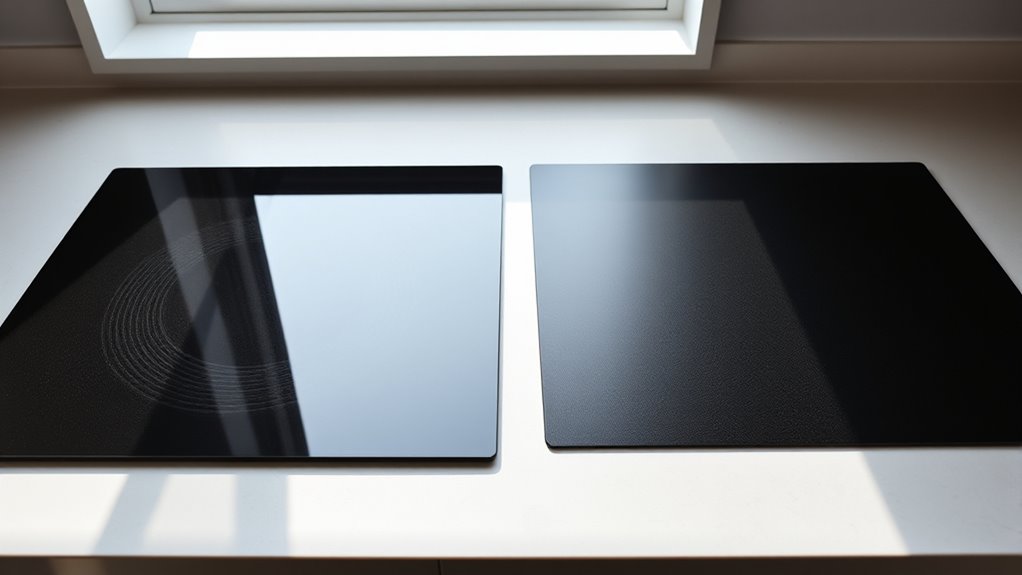
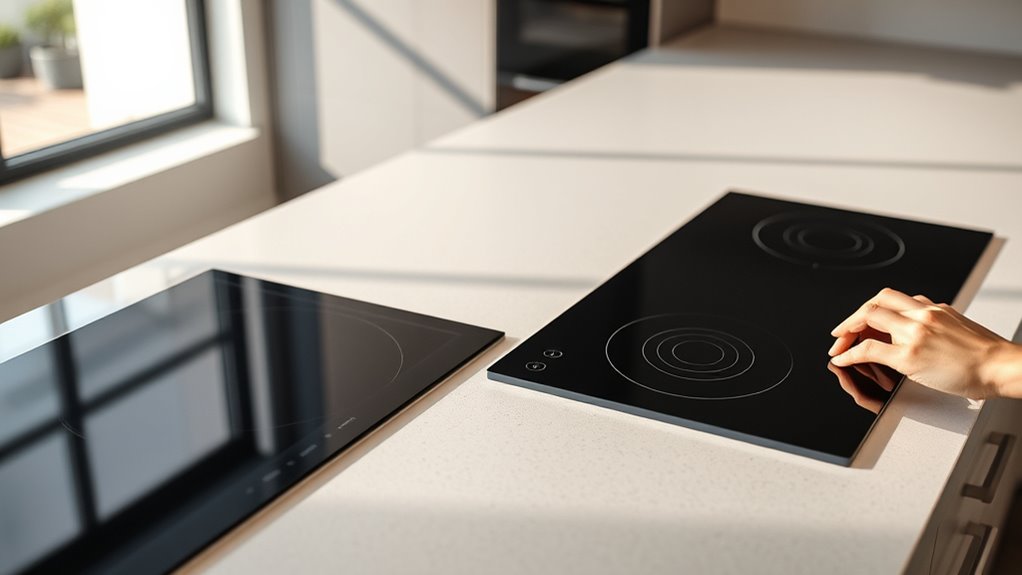
Spotting the difference between induction and electric cooktops is easier than you might think once you know what to look for. Induction cooktops usually have a smooth, sleek glass-ceramic surface with clearly marked cooking zones, often outlined by circles or subtle patterns. They lack visible heating coils or coils underneath a raised element.
Electric cooktops, on the other hand, tend to show exposed coil burners or have coil elements hidden beneath a smooth glass surface. If you see a coil that glows red when on, that’s a telltale sign of an electric cooktop. Induction surfaces stay cool to the touch except where the pan sits, so you won’t see glowing coils or red-hot rings.
These distinct visual cues help you quickly identify which type you’re dealing with.
Which Cookware Works Best With Induction and Electric Cooktops?
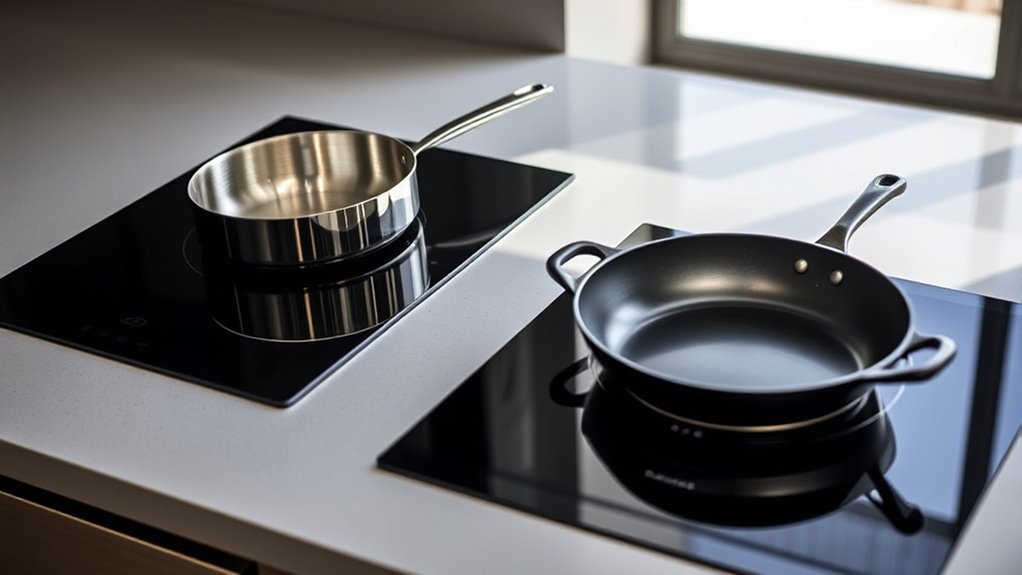
Once you’ve identified whether you have an induction or electric cooktop, the next step is choosing the right cookware to get the best performance. For induction cooktops, your pots and pans must be magnetic. Cast iron, enameled cast iron, and many stainless steel options work well because they contain iron, which induction uses to generate heat.
You can test your cookware with a simple magnet—if it sticks firmly, it’s compatible. On the other hand, electric cooktops are more forgiving. They can work with almost any cookware, including aluminum, copper, glass, and ceramic.
However, flat-bottomed pans ensure even contact and better heat distribution on electric surfaces. Keep in mind, using the proper cookware not only boosts efficiency but also prolongs your cooktop’s lifespan.
Which Cooktop Responds Faster to Temperature Changes?
You’ll notice induction cooktops heat up much faster than electric ones, giving you quicker results. They also offer precise temperature adjustments, so you can control your cooking with ease.
Understanding these response time differences helps you pick the right cooktop for your needs.
Heat-Up Speed Comparison
How quickly does your cooktop heat up when you adjust the temperature? Induction cooktops heat up almost instantly because they use electromagnetic energy to directly warm the cookware. You’ll notice your pot or pan getting hot within seconds, making it perfect for quick cooking or boiling water.
On the other hand, electric cooktops rely on heating elements that must warm up and transfer heat to the cookware, which takes more time. This delay means you’ll wait longer for the surface and your food to reach the desired temperature. If speed matters to you, induction cooktops clearly have the edge.
They respond faster and cut down your cooking time, while electric cooktops heat up slower and feel less immediate in response.
Temperature Adjustment Precision
Although both cooktops allow temperature adjustments, induction models respond much faster and with greater precision. When you tweak the heat on an induction cooktop, the magnetic field instantly changes, directly affecting the cookware’s temperature. This means you get immediate, accurate control over your cooking.
On the other hand, electric cooktops rely on heating elements that take time to warm up or cool down, causing a delay in temperature changes. This lag makes it harder for you to maintain exact heat levels, especially for delicate tasks like simmering or melting chocolate.
Response Time Differences
When does a cooktop react to your temperature changes? Induction cooktops respond almost instantly, thanks to their electromagnetic heating method. Electric cooktops, however, rely on heating elements that take longer to warm up and cool down.
This means when you adjust the heat, induction cooktops change temperature much faster, giving you better control while cooking.
| Feature | Induction Cooktop |
|---|---|
| Heat-up Time | Seconds |
| Cool-down Time | Seconds |
| Temperature Response | Almost immediate |
| Control Precision | Very high |
If you want quick adjustments and precise heat control, induction cooktops are your best bet. Electric cooktops lag behind, making them less responsive during cooking.
Which Cooktop Surface Gets Hotter During Cooking?
When you cook on an electric cooktop, the surface gets hotter because it heats up directly. With induction, the cooktop itself stays cooler since it transfers heat straight to your pot or pan. Understanding this difference helps you know which surface is safer to touch during cooking.
Surface Temperature Comparison
How hot does the surface of your cooktop get while cooking? With electric cooktops, the surface can get very hot since the heating element beneath directly heats the glass or ceramic surface. You can often feel residual heat even after turning it off, so be cautious.
Induction cooktops, on the other hand, stay relatively cool because they use magnetic fields to heat only the cookware. The surface heats up slightly from the pot’s warmth but never as intensely as electric cooktops. This means induction surfaces cool down faster and reduce the risk of burns.
When comparing, electric cooktops generally have hotter surfaces during and after cooking, while induction cooktops keep their surfaces much cooler throughout the process.
Heat Transfer Efficiency
Although both induction and electric cooktops heat your food effectively, their heat transfer efficiency differs particularly, impacting which surface gets hotter during cooking. With an electric cooktop, the heating element warms the entire surface, so the cooktop itself gets very hot. This means you’ll feel a lot of residual heat even after you turn it off.
Induction cooktops, on the other hand, use magnetic fields to heat only the cookware directly. The cooktop surface stays relatively cool because it’s not generating heat itself—just the pot or pan is heating up. This makes induction more efficient and safer, as less heat is lost to the cooktop surface.
How Energy Efficient Are Induction and Electric Cooktops?
Energy efficiency plays a key role in choosing between induction and electric cooktops, especially if you want to save on your utility bills. Induction cooktops are more energy efficient because they directly heat the cookware using electromagnetic fields, minimizing wasted heat. This means your food cooks faster, and less energy escapes into the air.
On the other hand, electric cooktops use radiant heat from coils or elements, which heats the cooktop surface first, causing some energy loss. While electric models are generally less efficient, they still provide consistent heating. If you’re focused on cutting energy use and cooking time, induction cooktops are the smarter choice.
Plus, their faster response times help you avoid overheating, which also conserves energy over time.
What Safety Features Should You Know About Induction and Electric Cooktops?
What makes induction and electric cooktops safe to use in your kitchen? Induction cooktops only heat the pan, not the surface itself, reducing burn risks. They automatically shut off when you remove the cookware, adding an extra layer of safety.
Plus, their surface cools quickly after cooking. Electric cooktops, meanwhile, have indicator lights that warn you when the surface is hot, helping you avoid accidental burns. Many models include automatic shut-off features if left on for too long.
Both types often come with child lock settings to prevent unintended use. Knowing these safety features helps you choose a cooktop that fits your lifestyle while keeping your kitchen safe and efficient. Always check your model’s specific safety options before buying.
Frequently Asked Questions
Can Induction Cooktops Interfere With Medical Devices?
Yes, induction cooktops can interfere with some medical devices like pacemakers. You should keep a safe distance and consult your doctor to make certain your device isn’t affected before using an induction cooktop in your kitchen.
How Do Induction and Electric Cooktops Affect Kitchen Ventilation Needs?
You’ll need similar kitchen ventilation for both cooktops since they produce heat and steam. Induction generates less ambient heat, so your ventilation might work more efficiently, but proper airflow remains essential to clear odors and moisture.
Are There Any Noise Differences Between Induction and Electric Cooktops?
Think of induction cooktops as whispering winds, mostly silent but sometimes humming softly when cooling fans kick in.
Electric cooktops, like steady crackling embers, produce a gentle buzzing or clicking sound as they heat up and cool down.
What Is the Typical Lifespan of Induction vs. Electric Cooktops?
You’ll find induction cooktops typically last around 10-15 years, while electric cooktops can last 13-20 years. Both depend on usage and care, but electric models generally have a slightly longer lifespan.
How Do Repair Costs Compare Between Induction and Electric Cooktops?
Repair costs for induction cooktops can be like steering through a maze—more complex and pricier due to advanced technology. Electric cooktops usually cost less to fix, since their simpler parts make repairs quicker and cheaper for you.
The intricate design of induction cooktops often requires specialized technicians and parts. This adds to both the time and expense involved in repairs.
In contrast, electric cooktops have fewer components that are easier to access and replace. This generally results in lower repair costs and faster service.
Conclusion
When choosing between induction and electric cooktops, it’s fascinating to know induction cooktops can heat pans up to 50% faster than electric ones. This means you’ll save time and energy while cooking.
Plus, induction’s surface stays cooler, making it safer for your kitchen. By understanding these key differences, you can pick the best cooktop that fits your cooking style and keeps your kitchen efficient and safe.
In conclusion, knowing the difference between induction and electric cooktops helps you make an informed choice. Whether you prioritize speed, safety, or energy efficiency, selecting the right cooktop ensures a better cooking experience.