How to Determine if Made Cookware Is Non-Toxic
You can determine if your cookware is non-toxic by first checking its materials. Favor options like stainless steel, cast iron, ceramic, or glass, as these are generally safer choices. Avoid pans with PFAS or PFOA coatings, which may release harmful chemicals.
Look for safety certifications such as FDA approval, NSF certification, or Prop 65 compliance to ensure the cookware meets health standards.
Regularly inspect your cookware for signs of wear like discoloration, peeling, or odd odors. These could indicate chemical leaks or degradation.
Understanding these basics helps you choose safer cookware options and care for them properly. This knowledge protects your health and enhances your cooking experience.
More insights on this topic can guide you well in making informed decisions.
Key Takeaways
- Check for certifications like FDA approval, NSF certification, PFOA-free, and Prop 65 compliance to ensure cookware safety.
- Verify the cookware material is stainless steel, cast iron, ceramic, enamel-coated, or glass, avoiding synthetic non-stick coatings with PFAS.
- Inspect cookware for signs of peeling, flaking, discoloration, or unusual odors after heating, which indicate chemical degradation or leaks.
- Confirm proper manufacturing processes such as quality control, surface finishing, and heat treatment to reduce toxic contamination risks.
- Avoid cookware with Teflon or other non-stick coatings that can release toxic fumes if overheated or damaged.
Key Materials for Truly Non-Toxic Cookware

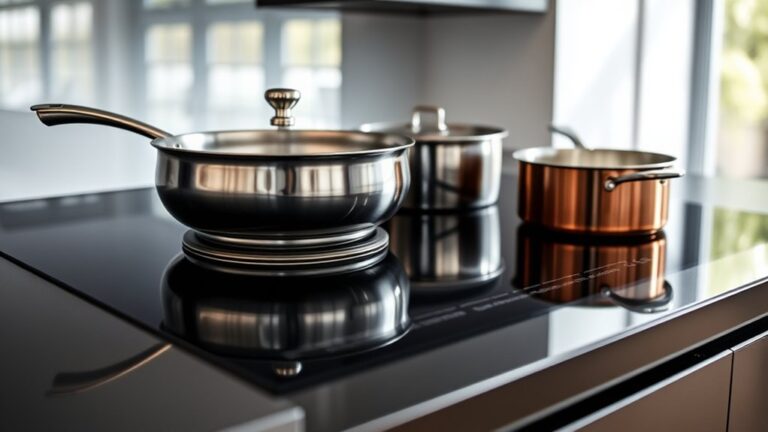
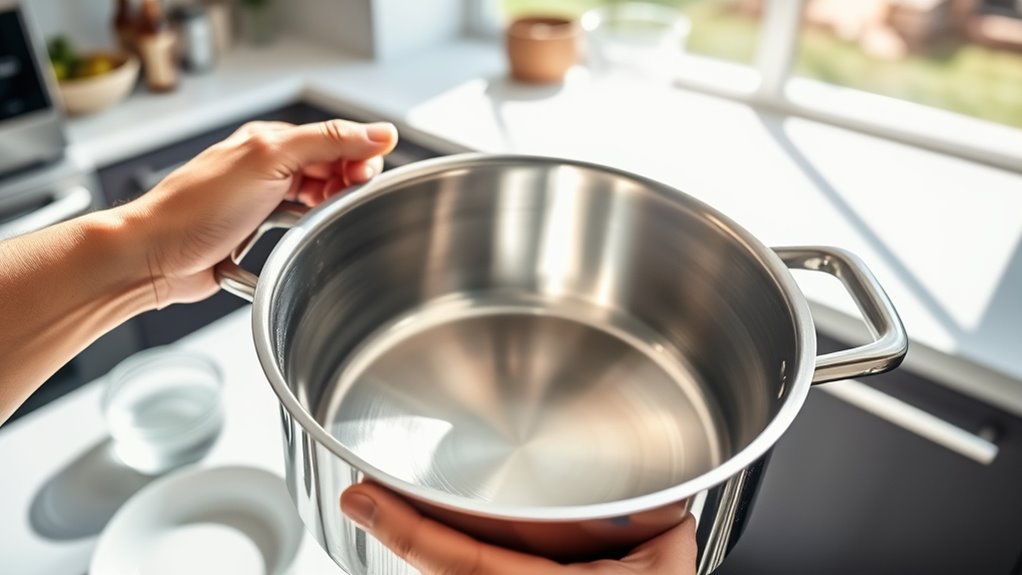
When choosing cookware, you want materials that won’t leach harmful chemicals into your food. Stainless steel is a solid option because it’s durable, non-reactive, and doesn’t release toxins.
Cast iron is another great choice; it can add beneficial iron to your meals without harmful side effects, though it requires seasoning to maintain its non-stick surface. Ceramic cookware, especially those made from 100% natural clay without synthetic coatings, offers a truly non-toxic experience and good heat distribution.
Glass cookware is inert and won’t react with your food or release chemicals, making it safe for baking. Avoid materials with Teflon or other non-stick coatings that may degrade over time.
How Manufacturing Processes Impact Cookware Toxicity
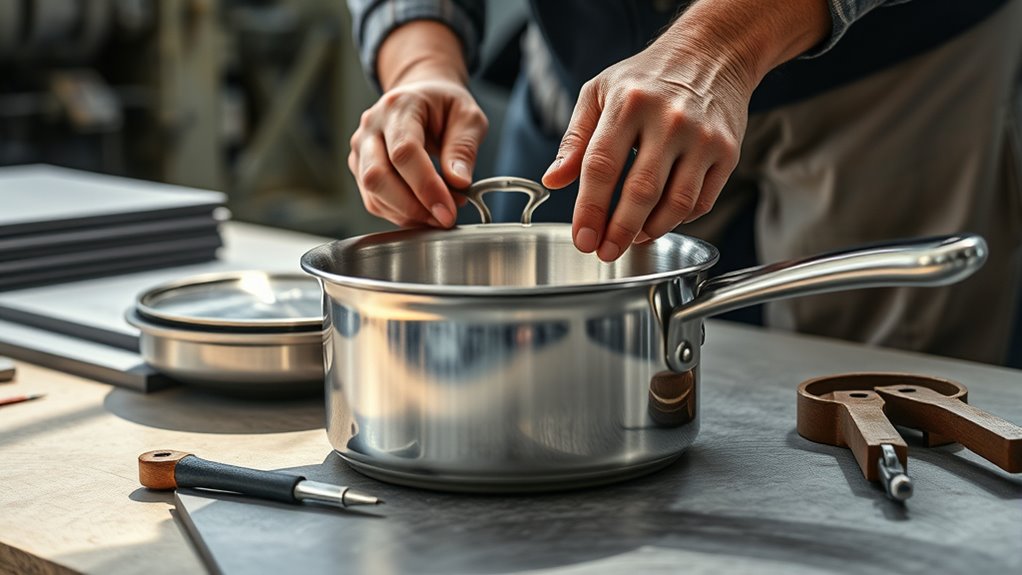
Choosing safe materials is only part of the equation; how cookware is made can also affect its safety. The manufacturing process influences whether harmful substances leach into your food. When evaluating cookware, consider these factors:
Safe cookware depends not just on materials but also on careful manufacturing processes.
- Quality Control: Consistent inspections ensure no toxic contaminants slip through.
- Surface Treatment: Proper finishing prevents rough spots where bacteria and chemicals can hide.
- Welding and Sealing: Flawless joins reduce the risk of metal leaching or corrosion.
- Heat Treatment: Controlled heating stabilizes materials, minimizing chemical breakdown during cooking.
Harmful Chemicals in Non-Stick Cookware Coatings
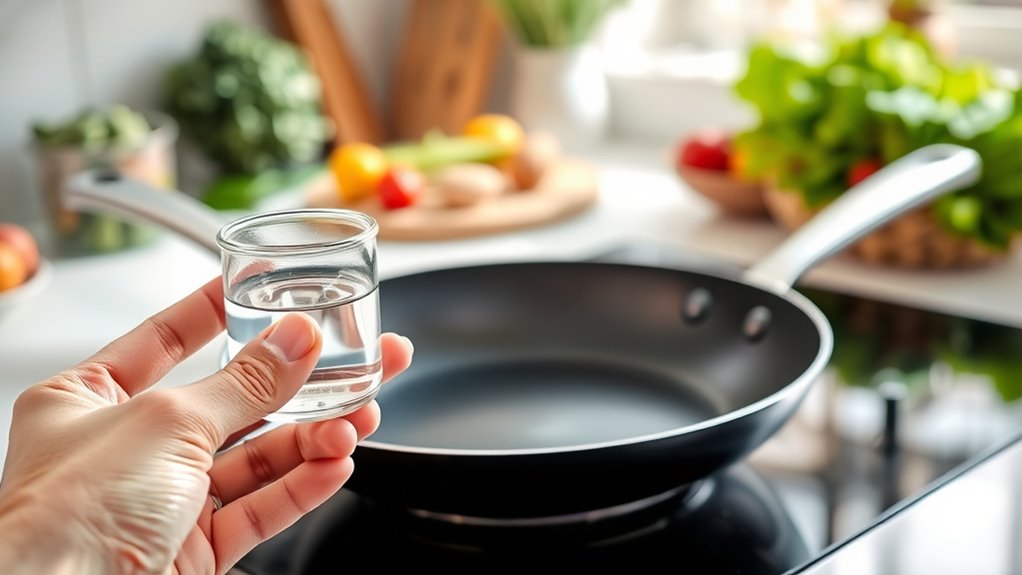
You should watch out for common toxic chemicals like PFOA and PFOS in non-stick coatings, as they can release harmful fumes when heated. These substances have been linked to serious health risks, including hormonal disruptions and cancer.
Knowing which chemicals to avoid helps you choose safer cookware for your kitchen.
Common Toxic Non-Stick Chemicals
What chemicals lurk beneath the slick surface of non-stick cookware? You might not realize it, but some coatings contain substances that raise concerns due to their persistence and potential toxicity. Here are common toxic non-stick chemicals you should watch out for:
- Perfluorooctanoic acid (PFOA): Once widely used, it’s now mostly phased out but may still be present in older cookware.
- Perfluorooctanesulfonic acid (PFOS): Similar to PFOA, it’s persistent and harmful.
- Polytetrafluoroethylene (PTFE): Known as Teflon, safe under normal use but can release toxic fumes if overheated.
- Perfluorinated compounds (PFCs): A broad group including PFOA and PFOS, known for environmental persistence.
Knowing these chemicals helps you make safer cookware choices and avoid hidden toxins.
Health Risks of Coatings
Understanding the chemicals in non-stick coatings reveals more than just their names—it uncovers the health risks they pose. When you use cookware with harmful coatings, you expose yourself to toxic substances like PFOA, PFAS, and PTFE byproducts. These chemicals can release dangerous fumes when overheated, potentially causing flu-like symptoms known as “polymer fume fever.”
Long-term exposure may increase your risk of cancer, hormone disruption, and immune system damage. Even if the cookware isn’t overheated, tiny amounts can leach into your food, especially if the surface is scratched or degraded. To protect your health, you should avoid cookware with these coatings or choose those labeled as free from harmful chemicals.
Being aware helps you make safer choices in your kitchen every day.
Cookware Labels and Certifications Explained
You’ll want to look for common non-toxic certifications when choosing cookware to guarantee safety. Understanding the labels on your pots and pans helps you spot harmful chemicals and trusted materials.
Let’s go over what those certifications mean and how to read the labels correctly.
Common Non-Toxic Certifications
How can you quickly tell if cookware is truly non-toxic? Look for trusted certifications that guarantee safety and chemical-free materials. These labels have strict standards to protect your health.
Here are some common non-toxic certifications to watch for:
- FDA Approved: Ensures materials meet U.S. safety regulations for food contact.
- PFOA-Free: Confirms the absence of harmful perfluorooctanoic acid in non-stick coatings.
- NSF Certified: Indicates the product has been tested for harmful contaminants and meets public health standards.
- Prop 65 Compliant: Shows the cookware does not contain chemicals known to cause cancer or reproductive harm in California.
Understanding Cookware Labels
Although cookware labels might seem confusing at first, they provide essential information about the materials and safety of your pots and pans. When you read these labels carefully, you can identify whether the cookware is free from harmful chemicals like PFOA, lead, or cadmium.
Look for certifications such as FDA approval or third-party testing marks, which indicate the product meets health and safety standards. Labels also reveal the type of coating—ceramic, stainless steel, or non-stick—and if it’s safe for high heat. Don’t overlook symbols about dishwasher safety or oven use, as incorrect handling can release toxins.
How to Read Cookware Ingredient Lists
When checking cookware ingredient lists, focus on identifying materials and coatings that are safe and free from harmful chemicals. Look for well-known non-toxic substances and avoid those linked to health risks. Here’s what to watch for:
Prioritize cookware made from safe, non-toxic materials and avoid harmful chemicals for healthier cooking.
- Safe materials: Stainless steel, cast iron, ceramic, and glass are generally non-toxic.
- Non-stick coatings: Seek ceramic-based or PTFE-free options, as traditional non-stick coatings may release toxins.
- Avoid harmful additives: Steer clear of PFOA, PFAS, lead, cadmium, and other heavy metals.
- Check for certification: Look for labels like FDA-approved, food-grade, or other safety certifications.
How to Test Your Cookware for Chemical Leaks
After checking the ingredient list and certifications on your cookware, you’ll want to make certain it doesn’t release harmful chemicals during use. To test for chemical leaks, start by heating your cookware with water or oil at typical cooking temperatures. Avoid using abrasive cleaners or metal utensils that might damage the surface during testing.
After heating, let it cool, then smell and inspect the contents for any unusual odors or discoloration, which could indicate chemical release. You can also use a pH strip to check for acidity changes in the water or oil after heating. For more accurate testing, consider sending samples to a lab for chemical analysis.
Regularly performing these tests helps ensure your cookware remains safe and non-toxic over time.
Signs Your Cookware Is Leaking Harmful Chemicals
If you notice strange odors, discoloration, or a metallic taste in your food, your cookware might be leaking harmful chemicals. These signs suggest that the coating or metal is breaking down and contaminating your meals.
Pay close attention to:
Pay close attention to signs that your cookware may be leaking harmful chemicals or breaking down.
- Peeling or flaking surfaces inside pots and pans
- Unusual discoloration or stains that don’t wash off
- Food sticking excessively despite proper seasoning or non-stick claims
- Irritation or unusual reactions after eating meals cooked in the cookware
If any of these occur, it’s a strong indication that your cookware isn’t safe anymore. Using such cookware can expose you to toxic substances like heavy metals or synthetic chemicals.
It’s best to replace or thoroughly test the cookware before continuing to use it.
Comparing Popular Non-Toxic Cookware Types
Why choose one type of non-toxic cookware over another? It comes down to your cooking style, maintenance preferences, and budget. Stainless steel is durable, resists corrosion, and won’t react with foods, making it great for searing and sautéing.
Ceramic cookware offers excellent non-stick properties without synthetic chemicals, perfect if you want easy cleanup. Cast iron retains heat well and adds iron to your diet, but it requires seasoning and careful care to prevent rust. Glass cookware is inert and safe but less versatile for stovetop use.
Each type has unique benefits and limitations, so understanding these helps you pick cookware that fits your needs while keeping your kitchen toxin-free.
Tips for Choosing Safe, Non-Toxic Cookware
When selecting safe, non-toxic cookware, you’ll want to take into account materials that don’t leach harmful chemicals into your food. Focus on durability, ease of cleaning, and heat distribution to guarantee both safety and performance. Here are some tips to help you choose wisely:
- Prioritize cookware made from stainless steel, cast iron, or ceramic, as they’re generally free from toxic coatings.
- Avoid non-stick pans containing PFAS or PFOA, which can release toxins at high temperatures.
- Check for certifications or labels that verify non-toxic manufacturing processes.
- Consider your cooking habits: if you often cook acidic foods, opt for non-reactive materials like glass or enamel-coated cast iron.
Frequently Asked Questions
How Should I Clean Non-Toxic Cookware to Maintain Safety?
You should clean non-toxic cookware gently with warm, soapy water and a soft sponge. Avoid harsh abrasives or metal scrubbers to prevent damage. Rinse thoroughly and dry completely to maintain safety and cookware longevity.
Can Non-Toxic Cookware Be Used on All Stovetops?
You can usually use non-toxic cookware on all stovetops, but always check the manufacturer’s instructions. Some materials like cast iron work on induction, while others might not. Avoid high heat to preserve safety and durability.
Does Non-Toxic Cookware Affect Cooking Times or Food Taste?
Non-toxic cookware usually won’t change cooking times much, but you might notice your food tastes fresher or cleaner since there aren’t harmful chemicals leaching in.
You’ll enjoy healthier meals without compromising flavor or efficiency.
Are There Specific Brands Known for Non-Toxic Cookware?
Yes, brands like GreenPan, Caraway, and Lodge are known for non-toxic cookware. You’ll find they prioritize safe materials like ceramic, cast iron, and stainless steel, so you can cook confidently without worrying about harmful chemicals.
How Long Does Non-Toxic Cookware Typically Last?
You’ll be thrilled to know non-toxic cookware usually lasts around 5 to 10 years—but only if you treat it well.
If you don’t, ironically, it might outlast your patience and your kitchen’s sanity instead.
Conclusion
Choosing non-toxic cookware is like planting a strong, healthy tree in your kitchen garden. When you pick materials free from harmful chemicals and understand the signs of toxicity, you’re nurturing your well-being with every meal.
Remember, your cookware isn’t just a tool—it’s the foundation of safe, nourishing food. By investing in truly non-toxic options, you’re ensuring that what you cook is as pure as the roots of the tree, supporting your health long-term.
To determine if your cookware is non-toxic, look for materials like stainless steel, cast iron, and ceramic that are free from harmful coatings. Avoid cookware with PTFE, PFOA, lead, and cadmium to keep your kitchen safe.
Choosing non-toxic cookware is essential for a healthy lifestyle, as it helps you avoid exposure to toxic substances and supports your overall well-being.