7 Reasons to Choose Better Bamboo or Acacia Cutting Boards
You’ll love bamboo and acacia cutting boards for their unmatched durability and wear resistance—they won’t warp or crack easily.
These eco-friendly boards are made from fast-growing, renewable materials, making them a sustainable choice for your kitchen.
Naturally antimicrobial, they help keep your kitchen more hygienic by resisting bacteria buildup.
With easy care, these cutting boards stay looking great and remain gentle on your knives.
Their warm tones add a stylish, natural touch to any kitchen decor.
Keep exploring to see why bamboo and acacia cutting boards outshine plastic and other wood options in every way.
Key Takeaways
- Bamboo and acacia cutting boards are highly durable and resist scratches, warping, and cracking for long-lasting use. Their natural antibacterial properties reduce bacteria growth and minimize cross-contamination risks in the kitchen.
- Both materials are eco-friendly, sustainably harvested, and help lower environmental impact compared to plastic boards. Easy maintenance with hand washing, drying, and occasional oiling ensures board longevity and hygiene.
- Attractive grain patterns and smooth finishes add natural elegance while protecting knife blades from dulling.
How Bamboo and Acacia Compare to Wood and Plastic Boards
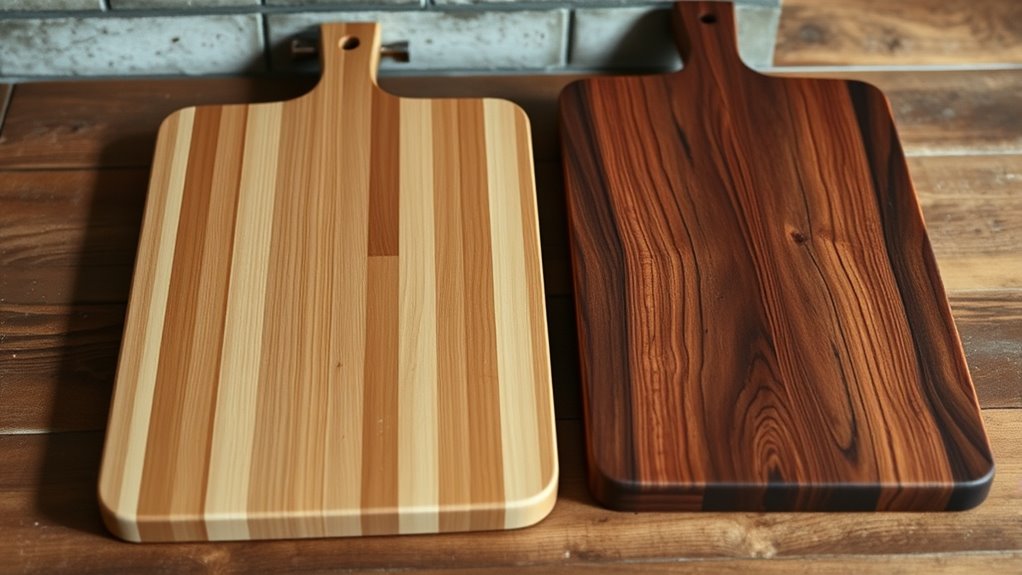
Although traditional wood and plastic cutting boards have been kitchen staples for years, bamboo and acacia offer distinct advantages that you might not have considered. Bamboo is naturally antimicrobial and less porous than many woods, so it resists bacteria and absorbs less moisture.
Acacia, meanwhile, boasts a beautiful grain and durability that often surpasses standard hardwoods. You’ll find bamboo boards lighter and easier to handle, while acacia provides a slightly harder surface, making it great for heavy chopping. Unlike plastic, both materials avoid deep knife grooves that harbor germs.
Plus, they’re eco-friendly choices—bamboo regenerates quickly, and acacia is sustainably harvested. When you switch to these boards, you’re not just upgrading your kitchen tools; you’re making smarter, healthier decisions for your cooking space.
Why Bamboo and Acacia Boards Are Built to Last
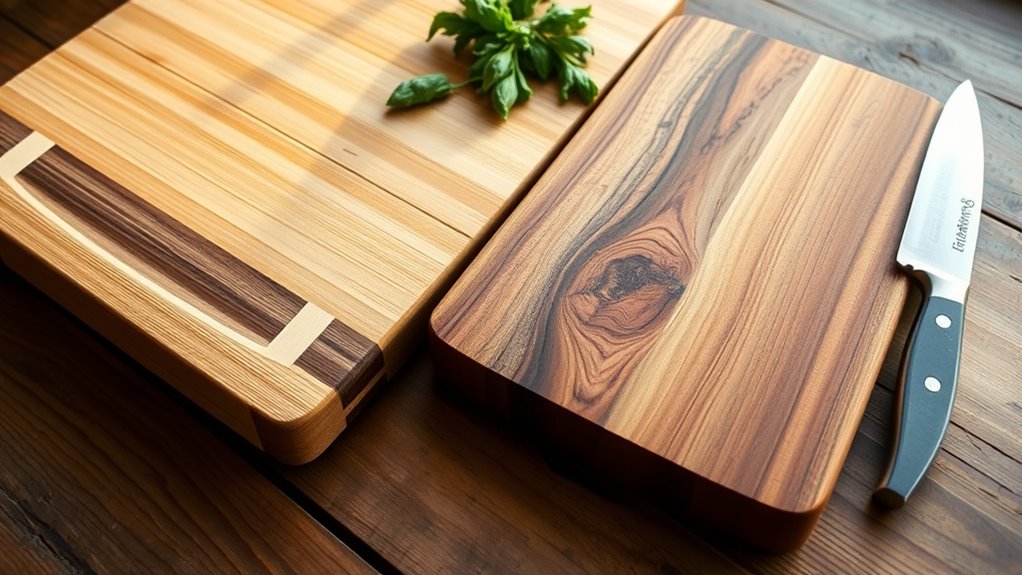
You want a cutting board that stands up to daily use without wearing down quickly. Bamboo and acacia offer durable hardwood properties that resist scratches and dents better than many other materials.
Choosing these boards means you’re investing in long-lasting kitchen tools that keep their quality over time.
Durable Hardwood Properties
Because bamboo and acacia are naturally dense and resilient, their cutting boards stand up to heavy use without warping or cracking. You’ll notice that these hardwoods have tight fibers, which give them exceptional strength and structural integrity. That means your board won’t easily dent or split, even after frequent chopping or slicing.
Plus, bamboo grows quickly but still forms a hard surface, while acacia’s natural oils help maintain its toughness and moisture resistance. When you choose a bamboo or acacia board, you’re investing in a durable tool that won’t degrade or lose shape over time. This robustness ensures your cutting board stays reliable, making meal prep smoother and safer without needing frequent replacements.
Resistance to Wear
When you rely on a cutting board daily, it needs to withstand constant wear without losing its quality. Bamboo and acacia cutting boards excel here because their dense, tightly packed fibers resist scratches and dents better than softer woods. This means you won’t see deep grooves forming quickly, which can harbor bacteria and degrade the board’s surface.
Both materials maintain their smooth finish even after repeated chopping, slicing, and cutting. Plus, their natural hardness helps prevent warping and cracking over time. So, when you choose bamboo or acacia, you’re picking a board that stays reliable despite heavy use, saving you money and hassle in the long run.
Your kitchen tools should keep up with you, and these boards do just that.
Natural Antibacterial Benefits of Bamboo and Acacia
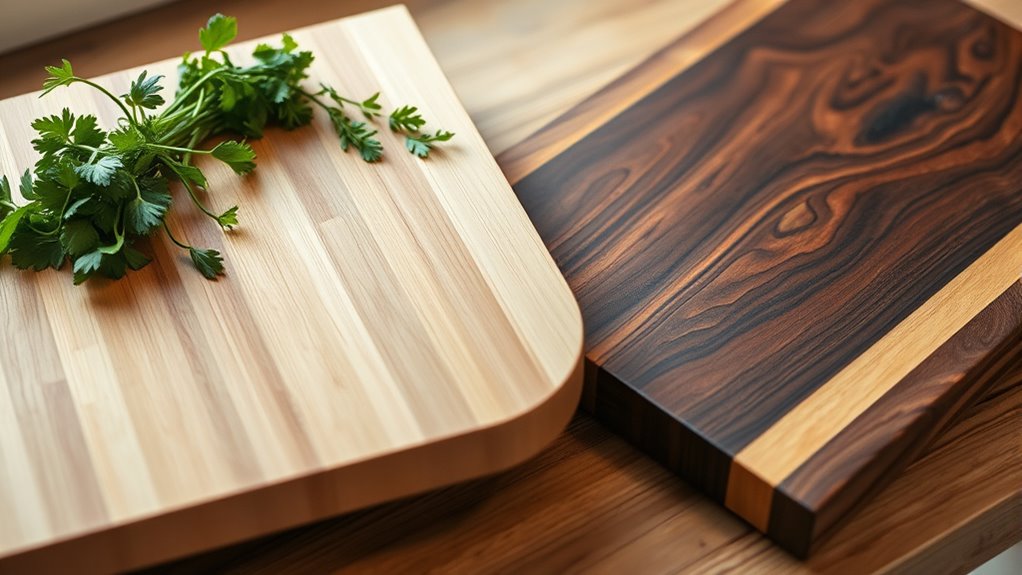
Although many cutting boards offer durability, bamboo and acacia stand out due to their natural antibacterial properties. When you use these boards, you reduce the risk of harmful bacteria lingering on the surface, making your food preparation safer. Bamboo contains natural antimicrobial agents called phytochemicals, which inhibit bacterial growth.
Similarly, acacia wood’s dense grain helps prevent moisture absorption, discouraging bacteria from thriving. This means you don’t have to worry as much about cross-contamination compared to plastic or softer woods. Plus, both materials resist odors and stains, keeping your kitchen cleaner.
Why Bamboo and Acacia Are Better for the Planet
You’ll appreciate that bamboo and acacia are renewable resources that grow quickly without harming the environment. Choosing these cutting boards means you’re reducing your carbon footprint and supporting sustainable harvesting.
It’s an easy way to make a positive impact on the planet with the products you use daily.
Renewable Resource Benefits
Because bamboo and acacia grow quickly and regenerate naturally, choosing cutting boards made from these materials helps reduce deforestation and environmental strain. When you pick bamboo or acacia boards, you’re supporting renewable resources that can be harvested sustainably without harming ecosystems. Bamboo, for example, can mature in just a few years, unlike hardwood trees that take decades.
Acacia also grows fast and thrives in diverse climates, making it a reliable, renewable option. By opting for these materials, you encourage the use of resources that replenish themselves, ensuring forests remain intact for future generations. This means you’re not only getting a durable cutting board but also playing a part in preserving natural habitats and promoting responsible forestry practices.
Reduced Environmental Impact
Choosing bamboo or acacia cutting boards can reduce your kitchen’s environmental footprint considerably. Both materials grow quickly and require fewer pesticides and less water than traditional hardwoods. By opting for these boards, you support sustainable harvesting practices that protect forests and wildlife habitats.
Plus, these boards naturally resist bacteria, meaning you’ll use fewer harsh cleaning chemicals. This all adds up to a greener choice for your home and the planet.
Simple Care Tips to Keep Bamboo and Acacia Boards Like New
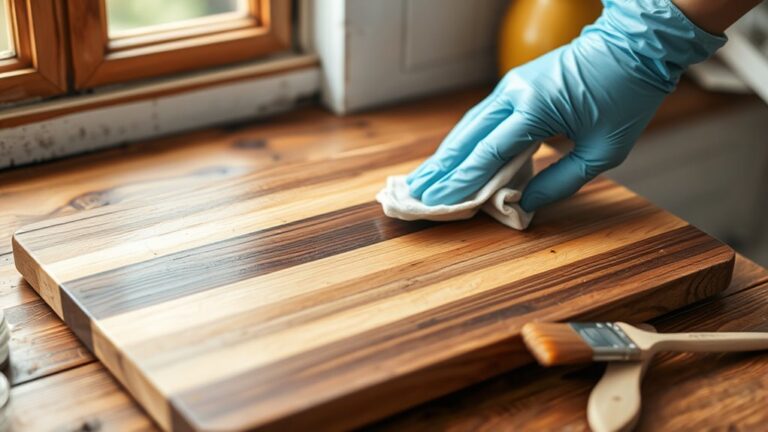
Although bamboo and acacia cutting boards are durable, proper care extends their lifespan and maintains their appearance. Always hand wash your board with warm, soapy water immediately after use. Avoid soaking it or putting it in the dishwasher, as excess moisture can cause warping or cracking.
Dry your board thoroughly with a towel, then let it air dry standing up. To keep the wood hydrated and prevent drying out, regularly apply food-safe mineral oil or a specialized cutting board conditioner. This nourishes the fibers and helps maintain a smooth surface.
You can also use coarse salt and lemon to remove odors and stains. Following these simple steps guarantees your bamboo or acacia board stays functional and beautiful for years.
The Stylish Look of Bamboo and Acacia in Modern Kitchens
When you incorporate bamboo or acacia cutting boards into your kitchen, you immediately add a touch of natural elegance that complements modern design. Their warm tones and unique grain patterns create a striking contrast against sleek countertops and stainless steel appliances. You’ll notice how these boards serve not just as functional tools but as decorative elements that enhance your kitchen’s overall aesthetic.
Whether you choose the light, uniform look of bamboo or the rich, varied hues of acacia, you bring in organic beauty that pairs well with minimalist or contemporary styles. Plus, their smooth finishes and clean lines contribute to a polished, sophisticated vibe. With bamboo or acacia cutting boards, you effortlessly combine style and practicality in your cooking space.
Why Bamboo and Acacia Boards Are Gentle on Your Knives
Beyond their visual appeal, bamboo and acacia cutting boards offer practical benefits that protect your knives. These woods are naturally softer than plastic or glass, which means your blades won’t dull as quickly. When you cut on bamboo or acacia, the fibers give slightly, reducing the wear on your knife edges.
Plus, their dense yet resilient surfaces prevent deep grooves that can trap bacteria and damage knives.
Here’s a quick comparison:
| Feature | Bamboo | Acacia |
|---|---|---|
| Hardness Level | Moderate | Slightly Softer |
| Knife Wear | Minimal | Minimal |
| Surface Durability | High | High |
Choosing either board means you’re caring for both your kitchen and your knives efficiently.
Frequently Asked Questions
Can Bamboo or Acacia Cutting Boards Be Used for Serving Food?
Yes, you can use bamboo or acacia cutting boards for serving food. They’re sturdy, visually appealing, and add a natural touch to your presentation.
Just make sure to clean them properly after each use to keep them safe.
Are Bamboo and Acacia Boards Safe for Cutting Raw Meat?
Yes, you can safely cut raw meat on bamboo and acacia boards if you clean them thoroughly after each use. Their dense surfaces resist bacteria, but you should avoid soaking them to prevent warping and cracking.
Regular maintenance, such as oiling, can help extend the life of the boards. Always sanitize the boards properly to reduce the risk of contamination. Using separate boards for raw meat and other foods is also recommended.
How Heavy Are Bamboo and Acacia Cutting Boards Compared to Others?
Bamboo and acacia cutting boards feel surprisingly sturdy yet lighter than many hardwoods like maple or walnut. You’ll notice they’re easier to handle but still durable, making prep work less tiring without sacrificing quality.
Do Bamboo and Acacia Boards Warp or Crack in High Humidity?
Bamboo and acacia boards can warp or crack in high humidity if not cared for properly. You’ll want to avoid soaking them and regularly oil them to keep moisture balanced and prevent damage over time.
Can Bamboo and Acacia Boards Be Customized With Engravings or Designs?
You can definitely make your bamboo or acacia cutting board your own by adding engravings or designs—they’re like blank canvases waiting for your personal touch.
Just choose a skilled artist to bring your vision to life!
Conclusion
Choosing bamboo or acacia cutting boards means you’re picking durability, natural antibacterial properties, and eco-friendliness—all while adding style to your kitchen. They’re gentle on your knives and built to last, saving you money and hassle.
Plus, caring for them is easy, so they stay looking great.
So, why settle for less when you can have a cutting board that works smarter and looks better every day?
By choosing bamboo or acacia cutting boards, you’re investing in quality, sustainability, and timeless kitchen beauty.