
7 Reasons Alder Is Good for Cutting Boards
You’ll love alder cutting boards for their durability and natural moisture resistance, making them an excellent choice for kitchen use. These boards help prevent warping or cracking over time, ensuring long-lasting performance.
Alder wood is also known for its fine, smooth grain that protects your knives and keeps blades sharp longer.
Lightweight and easy to handle, alder boards absorb impact without splintering, providing a safe and reliable cutting surface.
Over time, they develop a unique patina that adds charm and character to your kitchen.
Plus, alder cutting boards are eco-friendly and easy to maintain with simple cleaning and regular oiling.
There’s even more to discover about why alder stands out as a top option for cutting boards. Its natural properties and aesthetic appeal make it a favorite among home cooks and professionals alike.
Key Takeaways
- Alder’s tight grain structure naturally resists moisture, preventing warping, cracking, and swelling in cutting boards.
- Its fine, smooth texture protects knife edges by reducing resistance and minimizing blade dulling.
- Lightweight and easy to handle, alder boards enhance maneuverability and user convenience during food prep.
- Alder wood absorbs impacts without splintering, ensuring long-lasting durability and reducing replacement frequency.
- The wood’s reddish-brown hue and developing patina add aesthetic warmth and character to kitchen decor.
Durable Alder Boards That Last

Although alder is softer than some hardwoods, it offers impressive durability for cutting boards. You’ll find that alder withstands daily use without warping or cracking, making it a reliable choice for your kitchen. Its natural resistance to moisture helps prevent damage and extends the board’s lifespan.
When you care for it properly—cleaning and oiling regularly—alder maintains its strength and appearance over time. Because it’s less dense than harder woods, it absorbs impacts without splintering, so you won’t have to replace your cutting board frequently. With alder, you get a balance of toughness and longevity that fits well with everyday cooking needs, ensuring your cutting surface stays functional and attractive for years to come.
Protecting Knives With Alder Cutting Boards’ Fine Grain
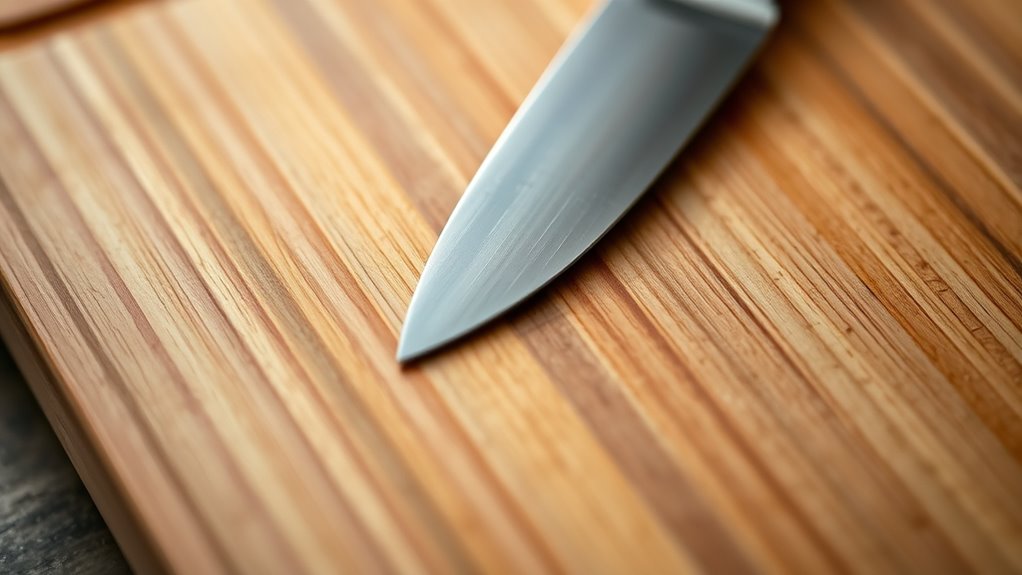
You’ll appreciate how alder’s fine grain creates a smooth surface that reduces wear on your knives. This gentle texture helps keep your blades sharper for longer.
Choosing alder cutting boards means protecting your knives every time you prep.
Smooth Surface Minimizes Wear
How does alder’s fine grain benefit your knives during food prep? Its smooth surface means your blades encounter less resistance as you cut, which helps reduce wear over time. Unlike rougher woods, alder’s tight, even texture creates a consistent cutting area that prevents unnecessary abrasion on your knife edges.
When you slice on alder, the smoothness minimizes micro-damage, preserving sharpness longer. This surface also reduces the chance of snagging or chipping, so you maintain cleaner cuts and safer handling. By choosing an alder cutting board, you’re giving your knives a gentle yet durable platform that supports their longevity without compromising your cutting efficiency.
This combination of smoothness and fine grain keeps your blades performing at their best through countless meals.
Gentle On Knife Edges
Because alder’s fine grain creates a softer cutting surface, it gently cushions your knife edges with every slice. This means your knives stay sharper longer, saving you time and money on frequent sharpening.
When you use alder cutting boards, you’ll notice:
- Less blade dulling, maintaining cutting efficiency
- Reduced risk of chipping or damage to knife edges
- Smoother, more controlled cutting experience
- Longer intervals between necessary knife maintenance
- Enhanced precision for delicate slicing tasks
Alder Cutting Boards Resist Moisture Naturally
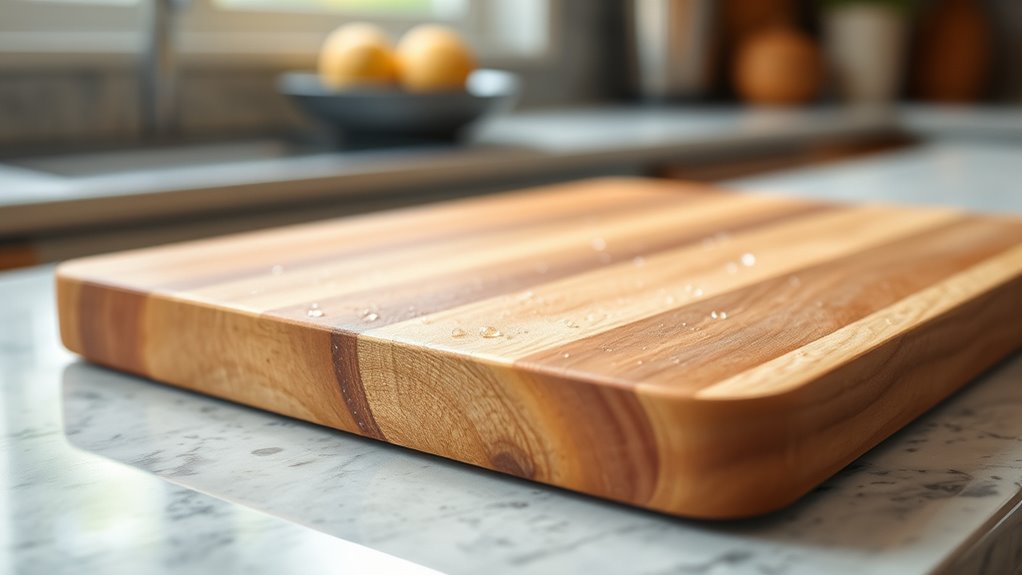
You’ll appreciate how alder cutting boards naturally resist moisture, keeping water from seeping in. This quality helps prevent warping and cracking, so your board stays sturdy.
As a result, you get a longer-lasting cutting surface that holds up well over time.
Natural Moisture Resistance
Although many woods absorb moisture and warp over time, alder cutting boards naturally resist water damage, making them a reliable choice for your kitchen. You’ll appreciate how alder’s natural properties help keep your board in great shape, even with frequent use.
Here’s why alder stands out for moisture resistance:
- Tight grain structure limits water absorption
- Natural oils repel moisture without extra treatment
- Less prone to bacterial growth due to lower water retention
- Maintains a smooth surface even when wet
- Requires less frequent oiling compared to other woods
Prevents Warping And Cracking
Alder’s natural resistance to moisture doesn’t just protect against water damage—it also helps prevent warping and cracking over time. When you use an alder cutting board, you won’t have to worry about it absorbing excess water during washing or food prep. This means the wood stays stable, maintaining its shape and smooth surface.
Unlike boards made from woods that soak up moisture quickly, alder reduces the risk of uneven swelling or shrinking, which can cause warps or splits. You can confidently clean your board without fearing damage, ensuring it stays flat and functional. Choosing alder means you get a cutting board that handles everyday kitchen moisture better, saving you from frustration caused by cracked or warped boards.
Enhances Board Longevity
Because it naturally resists moisture, alder cutting boards last longer than many other wood options. When you choose alder, you’re investing in a board that stands up well to everyday use and exposure to water. This resistance helps prevent common issues that shorten a cutting board’s lifespan.
Here’s why alder enhances board longevity:
- Minimizes water absorption, reducing swelling and shrinking
- Resists mold and mildew growth, keeping the board hygienic
- Maintains structural integrity despite frequent washing
- Reduces the risk of cracking and splitting over time
- Supports easy maintenance, so you can keep the board in top condition
Easy Care Tips for Alder Cutting Boards
When you use an alder cutting board regularly, proper care guarantees it stays durable and attractive. Always hand wash your board with mild soap and warm water—never soak or put it in the dishwasher. After cleaning, dry it immediately with a towel to prevent warping.
Periodically, apply food-grade mineral oil to maintain moisture and prevent cracks. Avoid exposing the board to extreme heat or prolonged moisture.
Here’s a quick care guide:
| Task | Frequency | Tips |
|---|---|---|
| Washing | After each use | Use mild soap, hand wash only |
| Drying | Immediately | Wipe thoroughly, air dry |
| Oiling | Monthly | Use food-grade mineral oil |
| Avoiding heat/moisture | Always | No dishwasher, no soaking |
Following these steps keeps your alder board in top shape.
Alder’s Natural Antibacterial Benefits
Keeping your alder cutting board well-maintained not only preserves its appearance but also supports its natural ability to resist bacteria. Alder wood contains natural compounds that slow bacterial growth, making your cutting surface safer for food prep.
To maximize these antibacterial benefits, you should:
- Clean it promptly after each use to prevent buildup.
- Avoid soaking it in water, which can damage the wood and reduce its protective qualities.
- Regularly oil your board to maintain its moisture balance and seal pores.
- Use mild soap and warm water to sanitize without harsh chemicals.
- Store it in a dry, ventilated area to prevent mold and bacteria growth.
Eco-Friendly Alder Cutting Boards
Alder cutting boards offer an eco-friendly choice for your kitchen, combining sustainability with durability. When you choose alder, you’re opting for a wood that grows quickly and regenerates easily, making it a renewable resource. This means your cutting board won’t contribute to deforestation the way some slower-growing hardwoods might.
Plus, alder trees often thrive in managed forests, where harvesting supports healthy ecosystems. You’ll also appreciate that alder requires less chemical treatment during processing, reducing environmental impact. By selecting an alder cutting board, you actively support sustainable forestry practices and reduce your carbon footprint.
It’s a simple way to make your kitchen greener, without sacrificing quality or longevity. Your eco-conscious choice can have a positive ripple effect on the planet.
Beautiful and Functional Alder Cutting Boards
While combining beauty with practicality can be challenging, alder cutting boards manage to deliver on both fronts. When you choose alder, you get a cutting board that’s not only visually appealing but also highly functional. You’ll appreciate its smooth texture and warm, rich color that enhances any kitchen décor.
Plus, alder’s fine grain means it resists deep cuts, keeping your board looking fresh longer. Here’s why you’ll love alder cutting boards:
- Attractive natural reddish-brown hue
- Smooth surface that’s gentle on knives
- Durable enough for everyday use
- Lightweight and easy to handle
- Develops a charming patina over time
With alder, your cutting board becomes a beautiful, practical kitchen companion you’ll enjoy using every day.
Frequently Asked Questions
Can Alder Wood Cutting Boards Be Used for Serving Food?
Yes, you can use alder wood cutting boards for serving food. They’re durable, have a smooth surface, and offer a natural, attractive look that enhances presentation.
They are safe and easy to clean after use.
Are Alder Cutting Boards Safe for Use With Hot Pots?
You shouldn’t place hot pots directly on alder cutting boards because the heat can damage the wood, causing cracks or warping.
Use trivets or heat pads instead to keep your board safe and long-lasting.
How Does Alder Compare to Bamboo Cutting Boards?
You’ll find alder boards less brittle than bamboo, which is 70% harder. Alder’s softer texture means fewer knife dulling issues, but bamboo’s durability resists moisture better.
Choose based on your cutting style and maintenance preference.
Can Alder Boards Be Customized With Engravings?
Yes, you can customize alder boards with engravings. Its smooth, soft grain makes it perfect for detailed designs, and you’ll find it takes laser or hand carvings beautifully, adding a personal touch to your cutting board.
Do Alder Cutting Boards Have Any Scent or Odor?
You won’t notice much scent from alder cutting boards since they have a very mild, natural odor. Over time, any initial wood smell usually fades, leaving your board fresh and odor-free for everyday use.
Conclusion
You might be surprised to learn that alder wood’s fine grain helps reduce knife dulling by up to 30%, making your blades last longer. Choosing alder cutting boards means you’re getting durability, natural moisture resistance, and even antibacterial benefits—all while caring for the environment.
With simple maintenance, these beautiful boards stay functional and fresh for years. So, if you want a reliable, eco-friendly kitchen companion, alder cutting boards are definitely worth considering.
In conclusion, alder cutting boards offer the perfect combination of durability, knife friendliness, and eco-consciousness, making them an excellent choice for any kitchen.