What Are 7 Must-Have Oils for Cutting Boards?
You’ll want to protect your cutting board with the right oils for cutting boards to keep it durable and safe. Using the best oils for cutting boards ensures long-lasting care and prevents damage like cracking and warping.
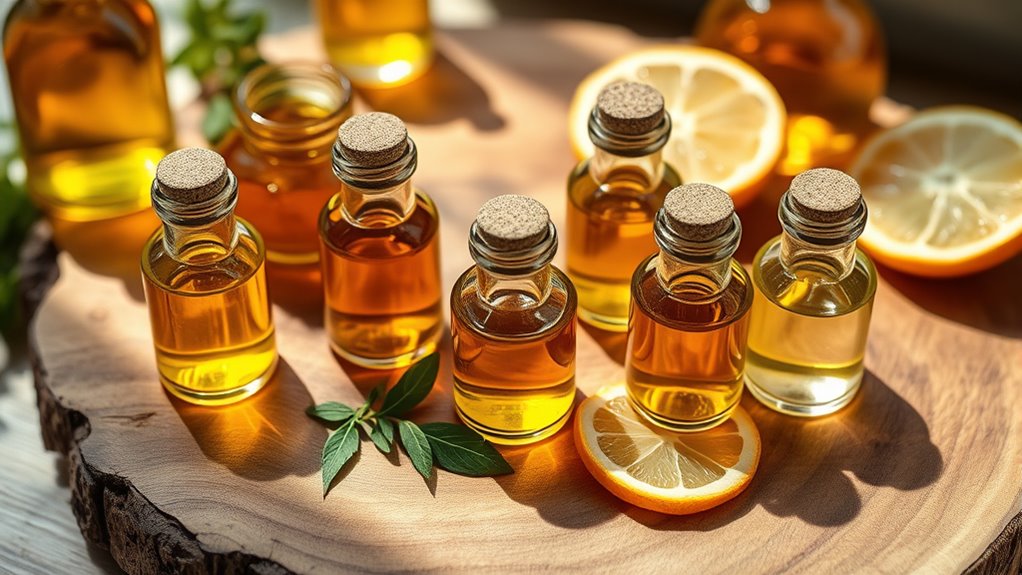
Must-haves include mineral oil for deep wood penetration, beeswax blends for a water-repellent barrier, and walnut oil for a natural, chemical-free finish.
Coconut oil moisturizes wood fibers, tung oil adds a tough, flexible layer, and grapeseed oil offers reliable maintenance. These oils help prevent bacteria buildup and maintain the board’s strength.
Keep going to discover how each benefits your board’s care.
Key Takeaways
- Food-safe oils like mineral, walnut, coconut, and tung oil prevent cracking and keep cutting boards conditioned. Mineral oil penetrates wood deeply and pairs well with beeswax for a protective, water-repellent surface.
- Walnut oil enhances wood grain while maintaining a non-sticky, long-lasting finish. Coconut oil moisturizes wood fibers and reduces bacteria buildup without leaving residue. Tung oil forms a durable, flexible, water-resistant layer that prolongs cutting board life.
Why Choosing the Right Oil Protects and Extends Your Cutting Board’s Life
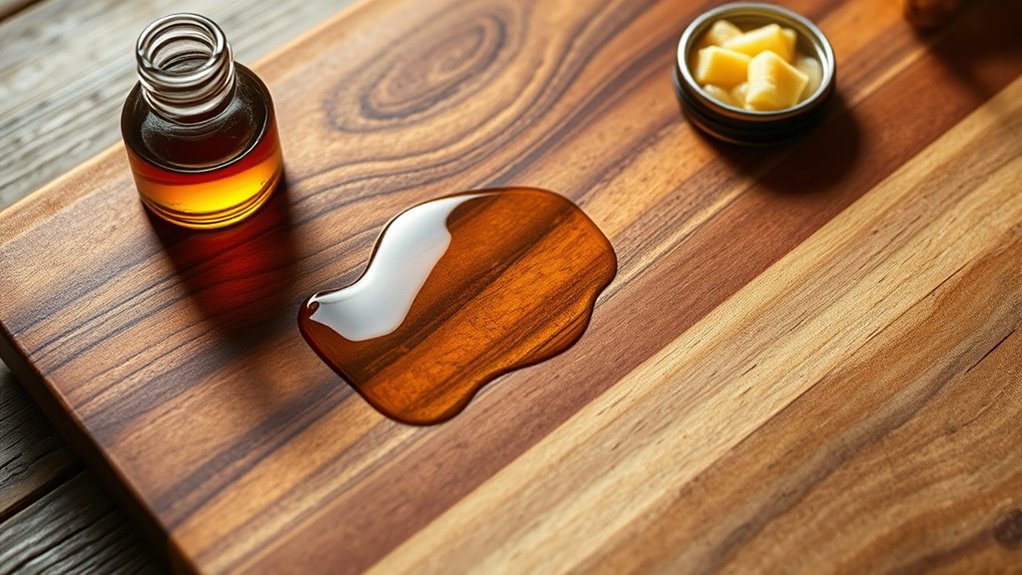
Although it might seem simple, choosing the right oil can make a big difference in protecting your cutting board from cracks, warping, and bacteria. When you apply the correct oil, it soaks into the wood, creating a barrier that repels moisture. This prevents water from seeping in, which could otherwise cause the wood to swell and eventually crack or warp.
Plus, a well-oiled board resists bacteria growth because it limits the wood’s exposure to food particles and moisture, two prime breeding grounds for germs. Using the wrong oil, like mineral or vegetable oils that can go rancid, might damage the board instead.
How to Choose and Apply Oil for Cutting Board Care
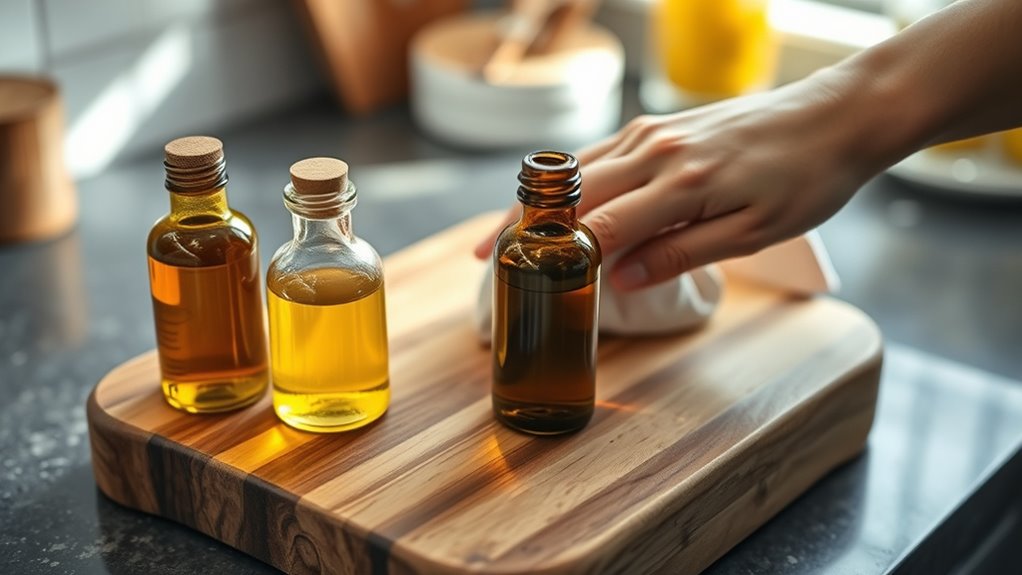
Now that you understand why choosing the right oil matters, let’s focus on how to pick the best one and apply it properly. First, look for a food-safe oil that won’t go rancid, such as coconut or walnut oil. Avoid vegetable or olive oils since they can spoil and leave your board sticky.
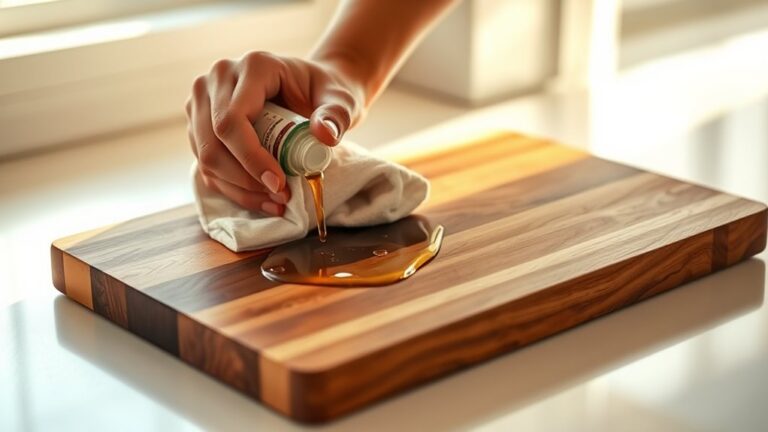
Next, make sure your cutting board is clean and dry before oiling. Use a soft cloth or paper towel to apply a generous amount of oil in a circular motion, covering all surfaces. Let it soak in for several hours or overnight, then wipe off any excess.
Regular application, about once a month depending on use, keeps your board hydrated and protected, preventing cracks and warping over time.
Why Mineral Oil and Beeswax Blends Are Popular for Cutting Boards
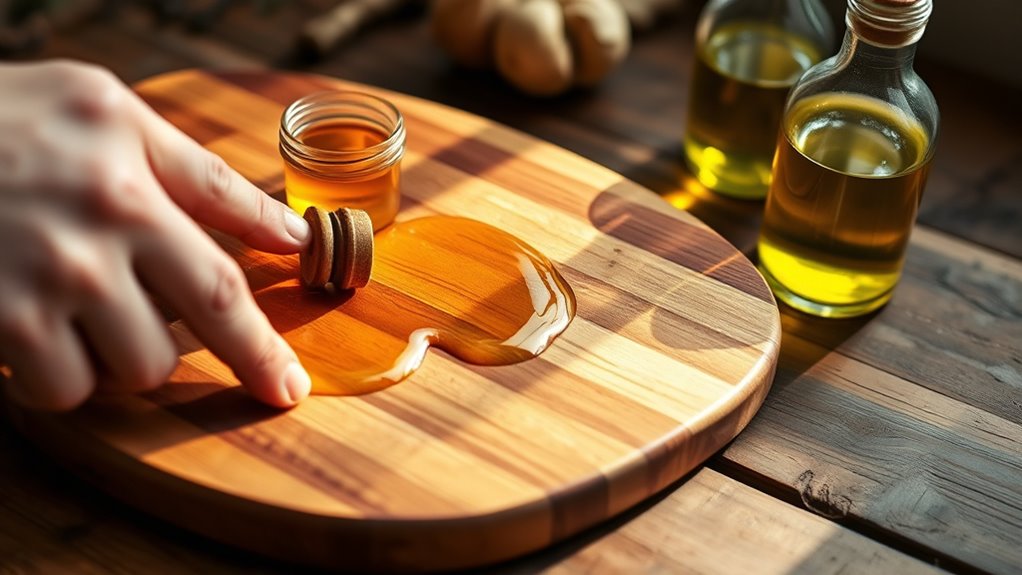
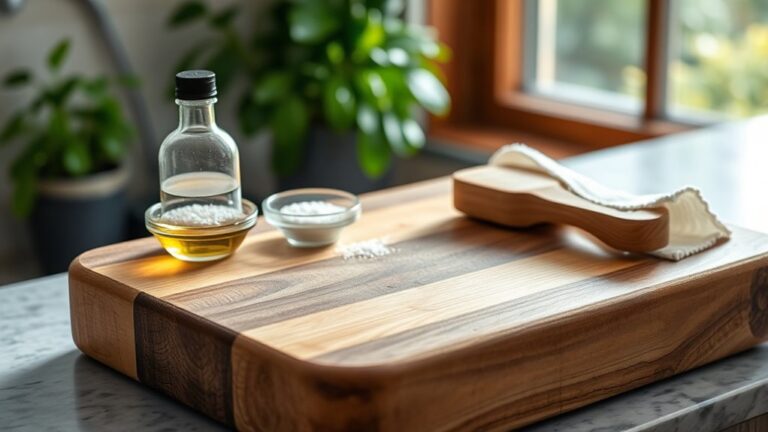
When you want a reliable way to protect and condition your cutting board, mineral oil and beeswax blends offer an excellent solution. Mineral oil soaks into the wood, preventing it from drying out and cracking, while beeswax creates a protective barrier on the surface, repelling water and stains.
This combination keeps your board looking fresh and durable without leaving a sticky residue. You’ll appreciate how easy these blends are to apply and how they enhance the wood’s natural beauty with a subtle shine. Plus, since mineral oil is odorless and tasteless, it won’t affect your food’s flavor.
Using a mineral oil and beeswax blend regularly helps maintain your cutting board’s longevity, making it a popular choice among home cooks and professionals alike.
Why Walnut Oil Is a Safe, Natural Choice for Cutting Boards
Because walnut oil penetrates deeply without leaving a sticky surface, it’s a safe and natural choice for conditioning your cutting board. When you apply walnut oil, it soaks into the wood fibers, protecting against moisture and preventing cracking or warping. Unlike some oils that can go rancid, walnut oil has a longer shelf life, meaning your cutting board stays fresh and well-maintained longer.
It’s also a food-safe option, so you don’t have to worry about harmful chemicals leaching into your food. Plus, walnut oil enhances the wood’s natural grain, giving your cutting board a beautiful, rich finish. If you’re looking for an effective, non-toxic way to care for your wooden kitchen tools, walnut oil fits the bill perfectly.
How Coconut Oil Nourishes and Maintains Your Cutting Board
You’ll love how coconut oil moisturizes your cutting board, keeping the wood from drying out and cracking. This natural oil soaks deep into the fibers, enhancing the board’s durability and lifespan.
Regularly applying coconut oil helps maintain your cutting board’s strength and appearance over time.
Moisturizing Properties Explained
How does coconut oil keep your cutting board in top shape? It penetrates deep into the wood fibers, delivering essential moisture that prevents your board from drying out and cracking. When you apply coconut oil, it soaks in rather than sitting on the surface, which helps maintain the wood’s natural flexibility and strength.
This oil’s moisturizing effect also reduces the risk of warping caused by frequent washing and exposure to water. Plus, coconut oil forms a subtle barrier that repels excess moisture, keeping your cutting board less prone to bacteria buildup. By regularly hydrating your board with coconut oil, you ensure it stays smooth, durable, and ready for all your chopping tasks without the worry of damage or dryness.
Enhancing Wood Longevity
Keeping your cutting board well-moisturized with coconut oil not only preserves its surface but also extends its overall lifespan. Coconut oil penetrates deep into the wood fibers, preventing them from drying out and cracking.
When you regularly apply coconut oil, you:
- Seal and protect the wood against water damage and stains.
- Maintain flexibility, reducing the chances of warping or splitting.
- Inhibit bacterial growth because coconut oil has natural antimicrobial properties.
How Tung Oil Keeps Your Cutting Board Durable and Water-Resistant
Although many oils can protect your cutting board, tung oil stands out for its durability and water resistance. When you apply tung oil, it penetrates the wood fibers deeply, creating a tough, flexible layer that resists cracking and peeling. This natural polymerization forms a water-resistant barrier, preventing moisture from soaking into the wood and reducing the risk of warping or swelling.
Using tung oil regularly helps maintain your cutting board’s strength, even with frequent washing and heavy use. Plus, it’s non-toxic once cured, so it’s safe for food contact. By choosing tung oil, you’re investing in a long-lasting finish that keeps your cutting board looking great and performing well over time, saving you from frequent replacements or repairs.
Why Grapeseed Oil Works Well for Cutting Board Maintenance
Tung oil offers excellent protection for your cutting board, but grapeseed oil brings its own set of benefits that make it a popular choice for maintenance. You’ll appreciate its light texture and quick absorption, which won’t leave your board sticky or greasy.
Plus, grapeseed oil is food-safe and has a neutral scent, so it won’t affect your food’s flavor.
Here’s why grapeseed oil works well for your cutting board maintenance:
- Non-toxic and natural – Safe for frequent use around food.
- Resistant to rancidity – It doesn’t spoil quickly, keeping your board fresh longer.
- Moisturizes wood effectively – Prevents cracking and warping by penetrating deeply.
Using grapeseed oil regularly guarantees your cutting board stays smooth, durable, and ready for any meal prep.
Frequently Asked Questions
Can I Use Olive Oil on My Cutting Board?
You shouldn’t use olive oil on your cutting board because it can go rancid and leave a sticky residue.
Instead, use mineral oil or specialized cutting board oil to keep it conditioned and safe for food prep.
How Often Should I Oil My Cutting Board?
You should oil your cutting board once a month or whenever it looks dry and dull. Regular oiling keeps the wood from cracking, prevents bacteria buildup, and maintains a smooth, safe surface for your food prep.
This routine helps extend the life of your cutting board and ensures it remains hygienic. Neglecting to oil it can lead to warping and splitting over time.
Is It Safe to Use Cooking Oils on Cutting Boards?
Don’t put all your eggs in one basket—using cooking oils on cutting boards isn’t safe because they can go rancid. You’ll want food-safe mineral oil instead to keep your board protected and fresh without odors.
Can I Mix Different Oils for Cutting Board Care?
You can mix different oils for cutting board care, but avoid cooking oils that can go rancid.
Stick to food-safe mineral oil and beeswax blends for the best protection and longevity of your cutting board.
What Signs Indicate My Cutting Board Needs Oiling?
When your cutting board starts looking thirsty with dullness or tiny cracks, it’s asking for oiling. Don’t ignore those subtle cries; regular oiling keeps it healthy, vibrant, and ready for your kitchen adventures.
Conclusion
You want to protect, nourish, and extend your cutting board’s life. You want to choose oils that soak in, seal out moisture, and keep your board looking fresh. You want mineral oil for safety, beeswax for shine, walnut oil for natural care, coconut oil for nourishment, tung oil for durability, and grapeseed oil for easy maintenance.
By picking the right oils and applying them regularly, you’ll keep your cutting board ready for every meal, every time. These 7 must-have oils for cutting boards ensure your board stays protected, nourished, and durable. Incorporating mineral oil, beeswax, walnut oil, coconut oil, tung oil, and grapeseed oil into your care routine is key to maintaining a fresh, long-lasting cutting board.