Is Mineral Oil Safe for Cutting Boards?
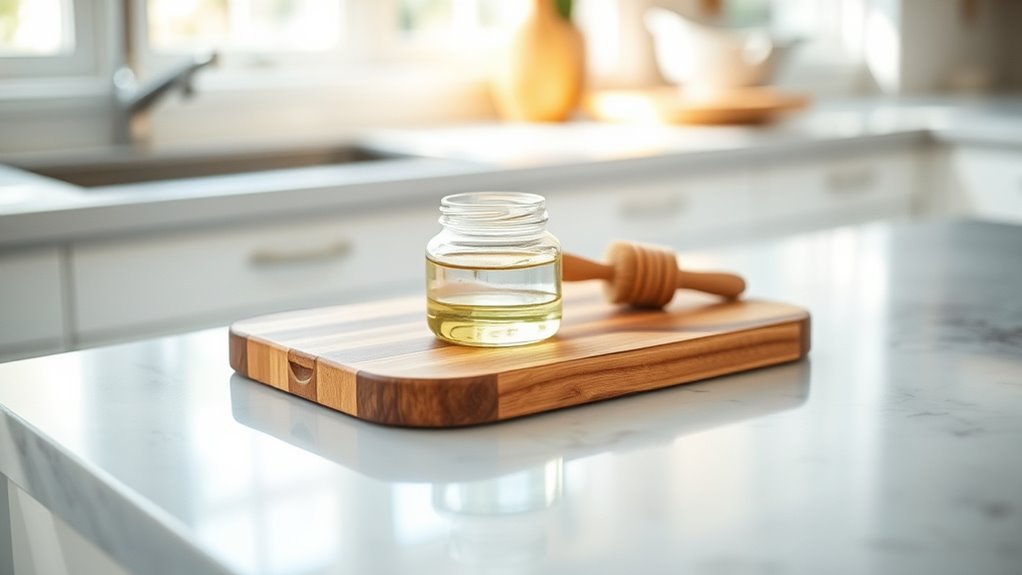
You can safely use food-grade mineral oil for cutting boards because it is non-toxic, odorless, and tasteless. This makes mineral oil safe for cutting boards without affecting your food’s flavor. Using food-grade mineral oil helps protect your wooden cutting boards effectively.
It seals the wood to prevent moisture absorption, cracking, and bacteria growth. This protective barrier extends the life of your cutting board and maintains its hygiene. Just avoid overapplying mineral oil or using non-food-grade oils.
Non-food-grade oils can leave harmful residues and pose health risks. To keep your boards in top condition, explore more useful information about proper mineral oil use and alternative treatments. This ensures your cutting boards remain safe and durable over time.
Key Takeaways
- Food-grade mineral oil is non-toxic, odorless, and safe for sealing wooden cutting boards without affecting food flavor. Regular application protects boards from cracking, warping, and bacterial growth by sealing out moisture and food particles.
- Overapplication can cause sticky surfaces that attract dirt and bacteria, so use a thin, even coat and wipe off excess. Reapply mineral oil monthly for daily use or when the board appears dry to maintain hygiene and board integrity.
- Avoid non-food-grade oils and never apply mineral oil to moldy or damaged cutting boards for safety reasons.
What Is Mineral Oil?
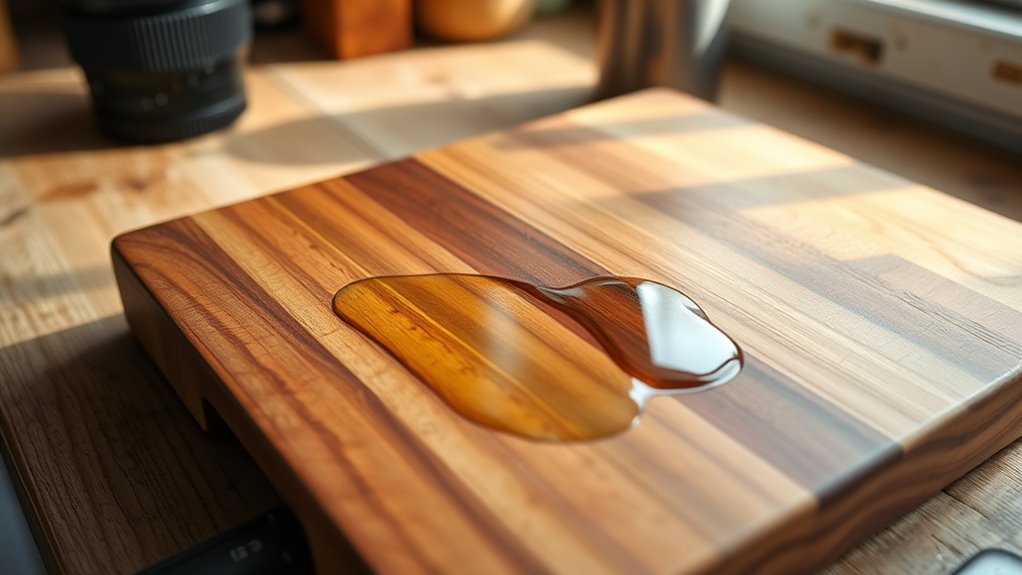
Although you might have heard of mineral oil in various contexts, it’s a simple, clear oil derived from petroleum that’s commonly used to treat and protect wooden cutting boards. You apply it to seal the wood’s surface, which helps prevent moisture absorption and cracking. Mineral oil doesn’t go rancid like some natural oils, so it won’t spoil or smell over time.
When you use it on your cutting board, it enhances the wood’s appearance by giving it a smooth, polished finish. Since it’s odorless and tasteless, it won’t affect the flavor of your food. You’ll find mineral oil is easy to apply and maintain, requiring only occasional reapplication to keep your cutting board in good condition and extend its lifespan.
Is Food-Grade Mineral Oil Safe for Cutting Boards?
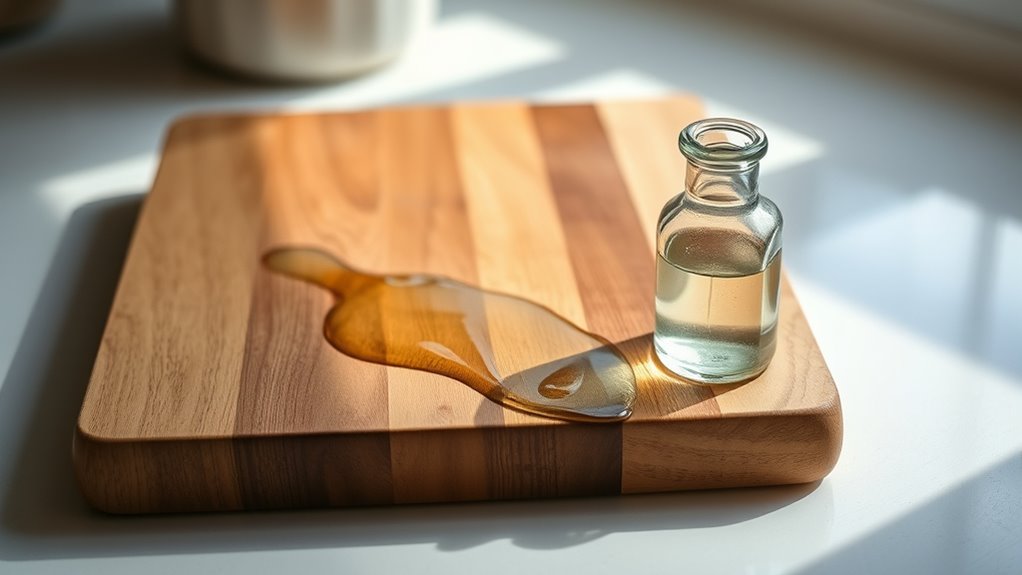
You want to keep your cutting board in great shape, and food-grade mineral oil can help by protecting the wood and preventing cracks. It’s safe to use because it’s non-toxic and won’t spoil or go rancid.
However, you should apply it properly and regularly to maintain both safety and effectiveness.
Food-Grade Mineral Oil Benefits
When you treat your cutting board with food-grade mineral oil, you create a protective barrier that repels moisture and prevents cracking or warping. This simple step extends your board’s lifespan and keeps it looking fresh.
Here are four key benefits you’ll notice:
- Enhances durability – Mineral oil soaks into the wood, strengthening it against daily wear.
- Prevents staining – It blocks liquids from penetrating, so your board resists discoloration.
- Improves hygiene – By sealing the surface, it reduces the chance of bacteria settling in.
- Restores appearance – The oil enriches the wood’s natural grain, giving it a polished, vibrant look.
Regularly applying food-grade mineral oil keeps your cutting board functional and attractive, making it a must-have for kitchen care.
Safety Considerations for Use
Since cutting boards come into direct contact with food, ensuring the products you use on them are safe is essential. You should only use food-grade mineral oil, which is refined and purified specifically for kitchen use. This type of mineral oil is non-toxic, odorless, and won’t go rancid, making it safe for both you and your family.
Avoid using non-food-grade oils, as they may contain harmful additives or chemicals. When applying, make sure your cutting board is clean and dry to prevent trapping moisture or bacteria. Reapply regularly to maintain the board’s condition and safety.
How Does Mineral Oil Protect Cutting Boards?
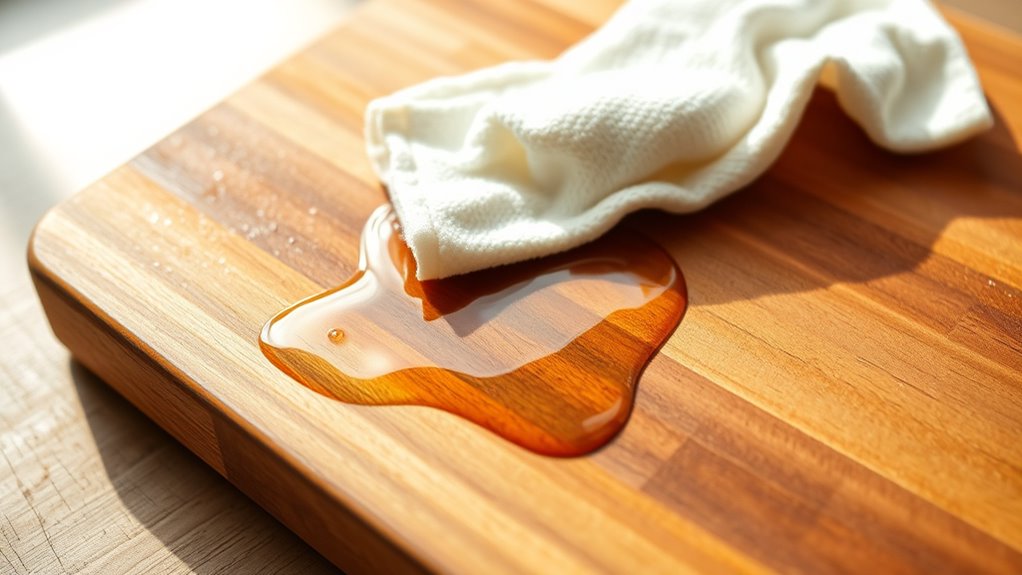
Although cutting boards endure constant contact with moisture and food, mineral oil forms a protective barrier that keeps the wood from absorbing water and bacteria. When you apply mineral oil, it soaks into the wood’s pores, creating a shield that repels liquids and food particles. This barrier helps maintain your cutting board’s cleanliness and longevity.
Here’s how mineral oil protects your cutting board:
- Prevents water absorption, reducing the risk of bacterial growth.
- Creates a smooth surface that’s easier to clean.
- Enhances the wood’s natural grain and appearance.
- Keeps the wood from drying out, maintaining its strength.
Can Mineral Oil Prevent Cracks and Warping?
If you want to keep your cutting board in good shape, applying mineral oil regularly can help prevent cracks and warping. Wood naturally absorbs moisture and then dries out, which causes it to expand and contract. Over time, this cycle leads to cracks and warping.
Mineral oil soaks into the wood, creating a barrier that slows down moisture absorption and evaporation. This helps maintain the board’s moisture balance, reducing stress on the wood fibers. While mineral oil won’t make your cutting board completely immune to damage, it considerably extends its lifespan by keeping it stable and resilient.
How Often Should You Apply Mineral Oil to Your Cutting Board?
Maintaining your cutting board’s stability with mineral oil means knowing how often to reapply it. Regular application keeps the wood hydrated and prevents damage. How often you oil your board depends on use and condition.
Knowing when to reapply mineral oil is key to keeping your cutting board hydrated and damage-free.
Consider these guidelines:
- Oil your cutting board once a month if you use it daily.
- For occasional use, every 2-3 months is sufficient.
- Reapply immediately if the board looks dry or feels rough.
- After washing, wait until the board is completely dry before oiling.
Staying consistent guarantees your cutting board remains in top shape, extending its life and keeping it safe for food preparation.
How Do You Apply Mineral Oil Correctly?
When you apply mineral oil correctly, you protect your cutting board from drying out and cracking, ensuring it stays durable and safe for food prep. Start by cleaning and drying your board thoroughly. Pour a generous amount of mineral oil onto the surface, then use a clean, soft cloth or paper towel to spread it evenly.
Make sure to cover all sides and edges. Let the oil soak in for several hours or overnight to penetrate the wood deeply. After soaking, wipe off any excess oil with a clean cloth to prevent a sticky residue.
Repeat this process regularly—especially when the board looks dry—to maintain its condition and extend its lifespan.
What Are Common Mistakes When Oiling Cutting Boards?
Although oiling your cutting board is essential, many people make mistakes that reduce its effectiveness or even damage the wood. When you’re caring for your board, avoid these common errors to keep it in top shape.
- Using too much oil – Over-saturating can cause sticky residue and attract dirt.
- Skipping cleaning before oiling – Applying oil on a dirty board traps bacteria.
- Not letting oil absorb fully – Rushing the process leaves the surface unprotected.
- Oiling too infrequently – Neglecting regular oiling causes the wood to dry out and crack.
What Are Alternatives to Mineral Oil for Cutting Boards?
If you want to keep your cutting board in great shape but are concerned about mineral oil, there are several effective alternatives to think about. Food-grade beeswax is a popular choice; it creates a protective barrier and adds moisture without soaking in too deeply.
Another option is fractionated coconut oil, which resists rancidity and keeps wood conditioned longer. Walnut oil is also good, but be cautious if anyone using the board has nut allergies. You might consider tung oil, which hardens to protect the surface, but make sure it’s labeled food-safe.
Finally, you can try a blend of beeswax and mineral oil for better durability. These alternatives can maintain your cutting board’s longevity while avoiding concerns tied to mineral oil.
How Do You Spot Unsafe Mineral Oils?
Because not all mineral oils are created equal, you need to know how to identify unsafe options before using them on your cutting board. Unsafe mineral oils may contain harmful additives or be of poor quality, which can damage your board or pose risks.
Here’s how you can spot them:
- Check the label for “food-grade” certification to ensure it’s safe for kitchen use.
- Avoid mineral oils labeled as “industrial” or “lubricant,” as they often contain toxic additives.
- Steer clear of products with added fragrances, colors, or other chemicals.
- Look for reputable brands with transparent ingredient lists and positive reviews.
Are There Any Health Risks Using Mineral Oil on Cutting Boards?
You might worry about potential toxicity when using mineral oil on your cutting board, but choosing a food-grade product can keep you safe. It’s important to follow proper application guidelines to avoid any health risks.
Let’s look at how to use mineral oil safely and what to watch out for.
Potential Toxicity Concerns
How safe is mineral oil when used on cutting boards? Generally, food-grade mineral oil is considered non-toxic and safe for kitchen use. However, you should be aware of some potential toxicity concerns:
- Non-food-grade mineral oil may contain harmful additives, so always use food-grade versions.
- Overapplication can lead to a greasy surface that attracts bacteria.
- Mineral oil breakdown over time may produce residues; regular reapplication prevents this.
- Allergic reactions are rare but possible; if you notice irritation, discontinue use.
Safe Usage Guidelines
While food-grade mineral oil is generally safe, following proper usage guidelines helps minimize any health risks. You should only apply mineral oil labeled as “food-grade” to avoid contaminants. Before applying, clean and dry your cutting board thoroughly to prevent trapping moisture, which can promote bacteria growth.
Apply a thin, even coat using a clean cloth or paper towel, allowing the oil to soak in overnight. Avoid over-oiling; excess oil can create a sticky surface that attracts dirt and bacteria. Reapply regularly, especially after washing, to maintain the board’s condition and prevent cracking.
Never use mineral oil if the cutting board shows signs of mold or damage. By following these simple steps, you guarantee your cutting board stays safe and hygienic for daily use.
Why Is Mineral Oil Recommended for Wooden Cutting Boards?
Because wooden cutting boards absorb moisture and food particles, applying mineral oil helps protect them from cracking, warping, and bacterial growth. When you regularly oil your cutting board, you maintain its integrity and hygiene. Mineral oil is food-safe, odorless, and colorless, making it ideal for this purpose.
Here’s why you should use it:
- Seals the wood to prevent water absorption and damage.
- Creates a smooth surface that’s easier to clean.
- Reduces bacteria growth by minimizing moisture retention.
- Extends the board’s lifespan by preventing drying and splitting.
Frequently Asked Questions
Can Mineral Oil Be Used on Plastic Cutting Boards?
Yes, you can use mineral oil on plastic cutting boards. It helps prevent cracking and keeps the surface smooth. Just apply a thin layer regularly, let it soak, and wipe off any excess for best results.
Does Mineral Oil Affect the Taste of Food?
No, mineral oil won’t affect your food’s taste because it’s odorless and tasteless. When you apply it properly, it just soaks into the board, protecting it without leaving any flavor behind.
How Long Does Mineral Oil Take to Dry on Cutting Boards?
Mineral oil mainly soaks silently; it doesn’t truly dry. You’ll wait 15 to 20 minutes before wiping off excess.
This guarantees your cutting board stays smooth, sealed, and sturdy, safeguarding surfaces for slicing success.
Can Mineral Oil Be Used on Bamboo Cutting Boards?
Yes, you can use mineral oil on bamboo cutting boards. It helps protect and condition the surface, preventing cracking and dryness.
Just apply it regularly, letting it soak in thoroughly for the best results.
Is Mineral Oil Safe for Use on Cutting Boards With Food Residue?
Think of mineral oil as a gentle rain, washing into wood’s thirsty pores. You can safely use it on cutting boards with food residue, but make sure to clean the board thoroughly first to avoid trapping harmful bacteria.
Conclusion
You might worry that mineral oil feels unnatural on your cutting board, but food-grade mineral oil is completely safe and non-toxic. It seeps deep into the wood, keeping it well-moisturized and preventing cracks or warping.
By regularly applying it, you’ll protect your board’s beauty and longevity, making your kitchen safer and more inviting. Don’t let doubts hold you back—your cutting board deserves this simple care to stay strong and hygienic.
Using mineral oil on cutting boards ensures safety and maintains the wood’s quality, proving that mineral oil is indeed safe for cutting boards.