How to Clean Plastic Cutting Boards in 10 Easy Steps
Start by rinsing your plastic cutting board with warm water to remove loose food and debris. Cleaning plastic cutting boards properly is essential to maintain hygiene and prevent cross-contamination in your kitchen.
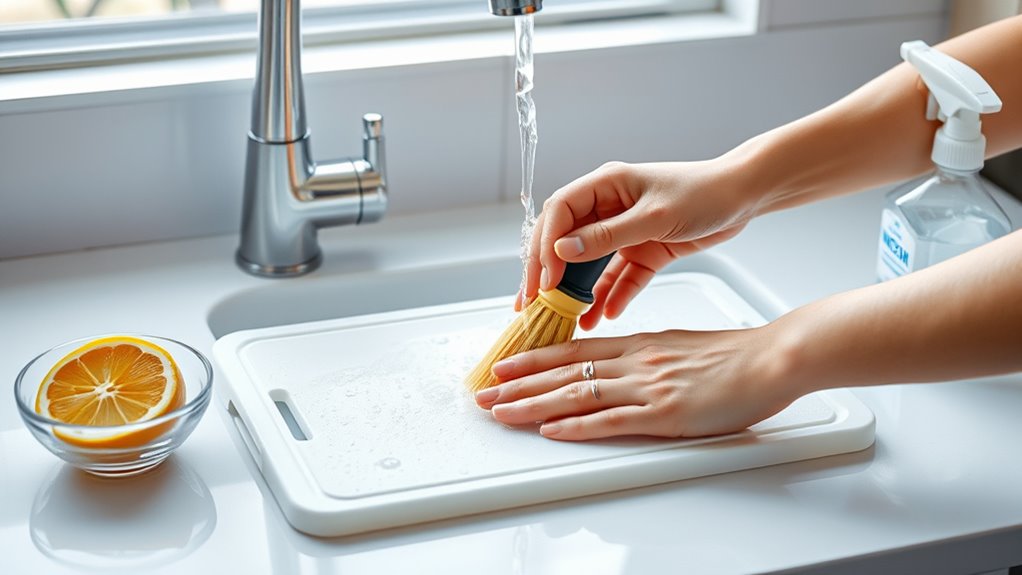
Use mild, degreasing dish soap with a soft brush, scrubbing grooves in circular motions for effective cleaning. Rinse thoroughly with hot water, then sanitize with diluted bleach or vinegar to kill bacteria.
Remove odors by rubbing lemon halves over the surface, which also helps keep the board fresh. Dry your board completely upright to prevent mold growth and moisture buildup.
Store it in a dry, ventilated spot to maintain cleanliness and extend its lifespan. Replace the board when deep grooves or stains appear, as these can harbor harmful bacteria.
Keep going to discover more tips for lasting cleanliness and safe food preparation.
Key Takeaways
- Rinse the board with warm water to remove loose food particles before cleaning.
- Scrub with mild dish soap and a soft sponge, focusing on grooves and cuts.
- Sanitize using a diluted bleach solution or undiluted white vinegar, then rinse thoroughly.
- Remove stains and odors by scrubbing with baking soda and vinegar or rubbing lemon halves.
- Dry immediately with a clean towel and air dry upright in a well-ventilated area to prevent mold.
Pick the Best Soap for Your Plastic Cutting Board

When choosing soap for your plastic cutting board, you want something that cuts through grease and food residue without damaging the surface. Opt for a mild dish soap with degreasing properties to tackle stubborn oils effectively. Avoid harsh chemicals or abrasive cleaners, as these can wear down the plastic and create grooves where bacteria hide.
Antibacterial soaps can be helpful but are not always necessary if you follow proper cleaning techniques. You’ll find most common dish soaps work well, especially those designed for kitchen use. Make sure the soap is safe for food contact surfaces, so you don’t risk contamination.
Rinse Off Food Residue When Cleaning Plastic Cutting Boards

Before you apply soap, make sure to rinse off any loose food particles from your plastic cutting board. This step removes debris that can trap bacteria and guarantees a more effective cleaning process. Use warm running water to help loosen stuck-on bits without spreading them around.
Here’s a quick guide to rinsing off food residue:
| Step | Action |
|---|---|
| 1 | Hold the board under warm water |
| 2 | Use your hand to wipe away bits |
| 3 | Tilt to let water drain debris |
| 4 | Check both sides thoroughly |
| 5 | Prep for soap application |
Rinsing properly helps maintain hygiene and prepares the board for a deeper clean.
Scrub Thoroughly With a Soft Brush or Sponge

Although rinsing removes loose debris, you’ll need to scrub your plastic cutting board thoroughly with a soft brush or sponge to eliminate stubborn food particles and bacteria. Grab a brush or sponge that won’t scratch the surface but is firm enough to get into grooves.
Here’s how to scrub effectively:
- Apply dish soap directly to the board or sponge for better cleaning power.
- Use circular motions, focusing on deep cuts or grooves where food often hides.
- Rinse the brush or sponge frequently to avoid spreading residue back onto the board.
This thorough scrubbing helps remove hidden particles and prevents bacteria buildup. By giving your board this extra attention, you keep it cleaner and safer for your next meal prep.
Use Hot Water to Kill Bacteria on Cutting Boards
You should rinse your plastic cutting board with hot water to effectively kill bacteria. Make sure the water is at least 140°F (60°C) to maximize its cleaning power. Using water that’s too cool won’t eliminate germs as well, so keep it hot for the best results.
Benefits of Hot Water
When you rinse your plastic cutting board with hot water, you help eliminate harmful bacteria that can linger after food preparation. Hot water not only cleans but also sanitizes, reducing the risk of foodborne illnesses.
Here are three key benefits you’ll notice:
- Enhanced Bacteria Removal – Hot water breaks down grease and grime, flushing away bacteria more effectively than cold water.
- Quicker Drying Time – The heat speeds up evaporation, helping your board dry faster and preventing bacterial growth caused by moisture.
- Improved Stain Reduction – Hot water loosens food particles and stains, making your cutting board look fresher and more hygienic with less scrubbing.
Using hot water consistently ensures your plastic cutting board stays safe and clean for every meal you prepare.
Proper Water Temperature
Since bacteria thrive in warm, damp environments, using properly hot water is essential to effectively kill germs on your plastic cutting board. You should aim for water that’s at least 110°F (43°C) or hotter, but not so hot that it damages the board or is unsafe to handle.
Hot water loosens food particles and dissolves grease, making it easier to wash away bacteria. When you scrub your cutting board with soap and rinse it under hot water, you’re actively breaking down microbial buildup. If you have a dishwasher, use its hottest setting to sanitize your board thoroughly.
Just remember, consistently using the right water temperature during cleaning guarantees your plastic cutting board stays hygienic and safe for food prep every time.
How to Sanitize Your Plastic Cutting Board Safely
Although plastic cutting boards are easier to clean than wooden ones, they still require proper sanitizing to prevent harmful bacteria from lingering. To sanitize your board safely, follow these steps:
Plastic cutting boards need proper sanitizing to effectively prevent harmful bacteria from lingering.
- Use a diluted bleach solution: Mix 1 tablespoon of unscented bleach with 1 gallon of water. Apply it to the board, let it sit for a few minutes, then rinse thoroughly with hot water.
- Try white vinegar: Spray undiluted white vinegar on the board, let it sit for several minutes, then rinse well. Vinegar naturally kills many bacteria.
- Run it through the dishwasher: If your cutting board fits, use the dishwasher’s sanitize cycle with hot water to kill germs effectively.
Remove Stains With Baking Soda and Vinegar
If stains have settled into your plastic cutting board, you can tackle them effectively using a simple combination of baking soda and vinegar. First, sprinkle a generous amount of baking soda over the stained areas. Then, pour white vinegar onto the baking soda; you’ll notice it fizz as it starts to break down the stains.
Let this mixture sit for about 10 minutes to work its magic. Afterward, scrub the board gently with a soft brush or sponge, focusing on stubborn spots. Rinse thoroughly with warm water to remove any residue.
This natural method is safe, affordable, and environmentally friendly, making it a great choice for keeping your cutting board looking fresh without harsh chemicals. Repeat as needed for tough stains.
Eliminate Odors Using Lemon and Bleach Solutions
After tackling stains with baking soda and vinegar, you might notice lingering odors that need attention. To freshen your plastic cutting board, lemon and bleach solutions work wonders. First, cut a lemon in half and rub it firmly over the board’s surface, squeezing juice as you go.
You’ll see the citrus neutralize foul smells and brighten the board. Next, prepare a bleach solution by mixing one tablespoon of bleach with one gallon of water. Then, soak or carefully wipe the board with this mixture for a few minutes.
Finally, rinse thoroughly with hot water to remove any bleach residue. These steps will leave your cutting board smelling fresh and sanitized, ready for your next meal prep without any stubborn odors hanging around.
Dry Your Plastic Cutting Board Completely to Prevent Mold
You need to dry your plastic cutting board completely to stop mold from growing. Let it air dry standing upright in a well-ventilated area to avoid moisture buildup.
Make sure you don’t leave it lying flat or stacked, which can trap dampness.
Importance Of Thorough Drying
Because moisture lingers on plastic cutting boards, drying them thoroughly is essential to prevent mold growth. If you skip this step, tiny water droplets trap bacteria and create the perfect environment for mold to thrive.
You want your cutting board clean and safe, not a breeding ground for germs.
To guarantee thorough drying:
- Wipe the surface with a clean, dry towel immediately after washing to remove excess water.
- Stand the board upright to let air circulate around all sides.
- Avoid stacking or covering the board while it’s still damp, which can trap moisture.
Best Air-Drying Techniques
Although drying might seem straightforward, using the best air-drying techniques guarantees your plastic cutting board dries completely and stays mold-free. After washing, place your board upright in a dish rack or lean it against a clean surface to allow air to circulate around all sides. Make sure the area is well-ventilated—open a window or turn on a fan to speed up drying.
Avoid stacking your board flat on the counter, as trapped moisture encourages mold. If possible, position the board so both the front and back get exposure to air. Give it enough time—rushing the process by wiping with a damp cloth won’t fully dry it.
Avoiding Moisture Traps
When moisture lingers on your plastic cutting board, it creates the perfect environment for mold to develop. To prevent this, you need to dry your board completely after washing. Leaving it damp invites bacteria and mold to grow, which can contaminate your food and shorten the board’s lifespan.
Here’s how to avoid moisture traps:
- Use a clean, dry towel to wipe off excess water immediately after washing.
- Stand the board upright in a well-ventilated area so air circulates around all sides.
- Avoid stacking wet boards or placing them flat on the counter where moisture can get trapped underneath.
Following these steps ensures your plastic cutting board stays clean, dry, and mold-free.
Store Plastic Cutting Boards Properly to Keep Them Clean
To keep your plastic cutting boards clean, you need to store them in a way that allows air circulation and prevents moisture buildup. After washing and drying your boards thoroughly, place them upright in a dish rack or on a shelf where air can flow freely around each board. Avoid stacking wet boards or storing them flat in a damp environment, as this encourages bacteria growth and mold.
If you have limited space, consider using a vertical organizer designed for cutting boards. Also, keep your storage area clean and dry, wiping it regularly to stop dust and grime from accumulating. By storing your plastic cutting boards properly, you’ll maintain their cleanliness and extend their lifespan while ensuring they’re ready for safe use every time.
Replace Your Plastic Cutting Board When It’s Worn Out
If your plastic cutting board shows deep grooves, cracks, or persistent stains, it’s time to substitute it. These imperfections can harbor bacteria, making your board unsafe even after thorough cleaning. Don’t wait until it’s too worn out—swapping it out guarantees your food prep stays hygienic and safe.
Here are signs that your board needs replacing:
- Deep cuts or grooves where food particles get trapped.
- Cracks or splits that compromise the board’s structure.
- Stubborn stains or discoloration that won’t come out despite cleaning.
Frequently Asked Questions
Can Plastic Cutting Boards Be Cleaned in a Dishwasher?
Yes, you can clean plastic cutting boards in a dishwasher.
Just place them on the top rack to avoid warping, and the hot water and detergent will effectively remove bacteria and stains, keeping your boards sanitary.
Are Plastic Cutting Boards Safer Than Wooden Ones?
You’ll find plastic cutting boards safer because they’re non-porous, so they don’t absorb bacteria like wood can. You can easily sanitize them in the dishwasher, reducing contamination risks during food prep.
How Often Should I Replace My Plastic Cutting Board?
You should replace your plastic cutting board every 1-2 years or sooner if it develops deep grooves, cracks, or stains that don’t clean well.
These can harbor bacteria, making your board unsafe for food prep.
Can Plastic Cutting Boards Cause Cross-Contamination?
Yes, plastic cutting boards can cause cross-contamination like a sponge soaking up germs. You need to clean them thoroughly after each use and avoid mixing raw meat with veggies to keep your kitchen safe and healthy.
What Are the Best Brands for Plastic Cutting Boards?
You’ll love brands like OXO, Joseph Joseph, and Epicurean for durable, easy-to-clean plastic cutting boards. They offer sturdy, non-porous surfaces that resist stains and odors, helping you prevent cross-contamination in your kitchen.
These brands focus on quality materials that stand up to regular use. Their cutting boards are designed to be both functional and long-lasting. You’ll find them ideal for everyday kitchen tasks.
Conclusion
Cleaning your plastic cutting board is like giving your kitchen a fresh start every time. By choosing the right soap, scrubbing well, and sanitizing properly, you keep it safe and odor-free.
Don’t forget to dry and store it right to prevent mold and bacteria. When it’s worn out, replacing it guarantees your food prep stays hygienic.
Follow these steps, and your cutting board will always be ready for your next culinary adventure! Proper cleaning, sanitizing, and maintenance of your plastic cutting board ensure a safe and hygienic food preparation environment.