Is Poplar Good for Cutting Boards?
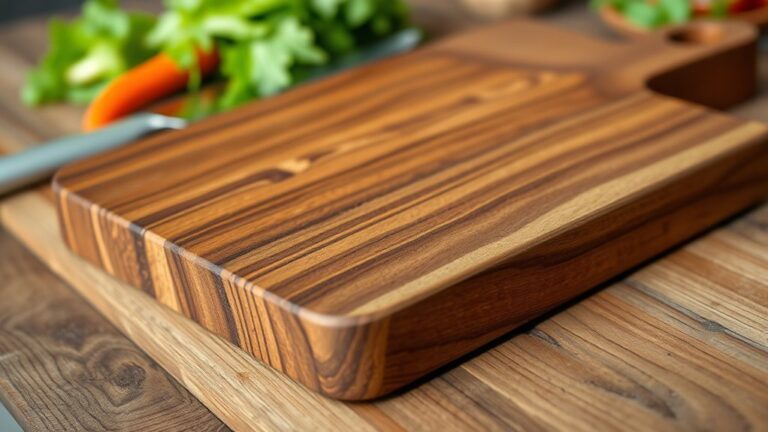
You can use poplar for cutting boards if you want an affordable and knife-friendly option. Poplar wood is softer than traditional hardwoods commonly used for cutting boards, which makes it gentle on your knives but more prone to showing knife marks and scratches.
This softness means it isn’t ideal for heavy-duty chopping or frequent, rough use.
Poplar is fairly moisture-resistant when properly cared for, but it requires regular oiling and cleaning to prevent warping and stains.
Unlike some hardwoods, poplar lacks strong natural antibacterial properties, so maintaining cleanliness is especially important.
Keep reading to discover how poplar compares to other woods and whether it fits your kitchen needs.
Key Takeaways
- Poplar is softer than hardwoods, making it gentle on knives but prone to scratches and dents.
- It requires regular oiling and maintenance to prevent warping and moisture damage.
- Poplar has a fine, even grain that minimizes bacterial buildup but lacks strong natural antibacterial properties.
- It is affordable and lightweight, providing a balance of durability and ease of handling.
- Food-safe finishes like mineral oil improve poplar’s water resistance and prolong cutting board lifespan.
What Makes Poplar and Other Woods Durable and Safe for Cutting Boards?
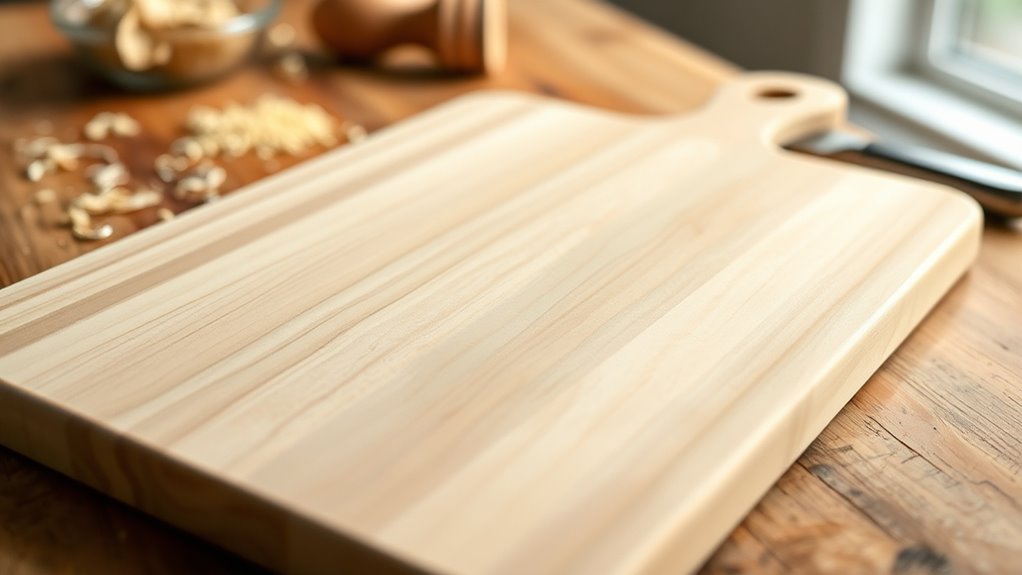
Although many factors determine a wood’s suitability for cutting boards, durability and safety are the most important. When you pick a wood, you want something that resists deep cuts and doesn’t splinter easily. Durable woods keep your board intact longer and prevent bacteria from hiding in cracks.
You also want a wood that’s naturally antimicrobial or at least won’t harbor germs. Hardwoods like maple or walnut are great because they’re dense, yet gentle on your knives. Safety also means the wood shouldn’t release toxins or strong odors into your food.
Poplar, for example, is softer than traditional cutting board woods, which affects its durability. Understanding these qualities helps you choose a board that lasts and stays food-safe.
How Hard Is Poplar Compared to Traditional Cutting Board Woods?
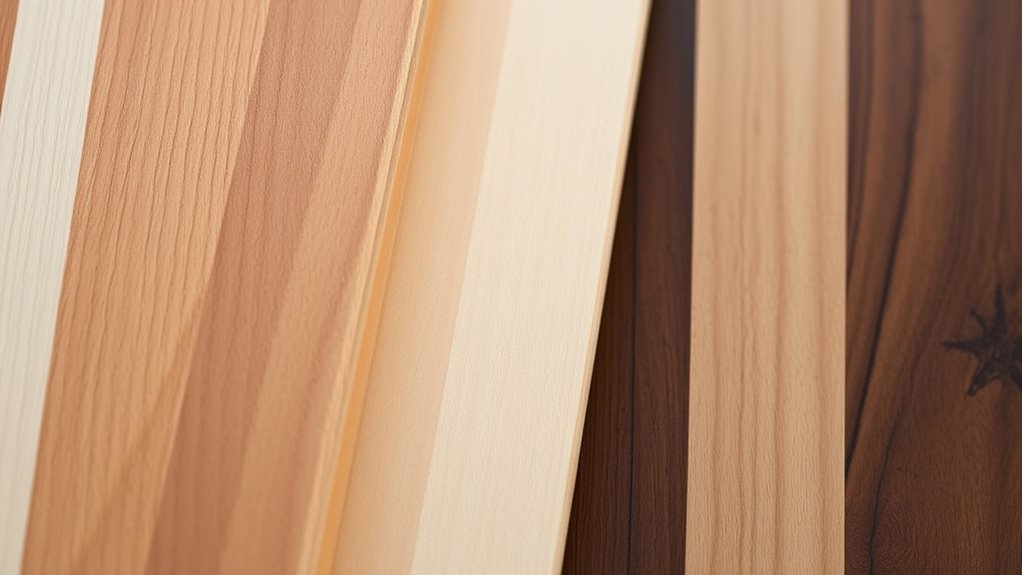
You might wonder how poplar measures up in hardness compared to traditional cutting board woods. Poplar ranks lower on the Janka hardness scale than maple or walnut, common choices for boards.
Knowing this helps you decide if poplar’s softness fits your kitchen needs.
Poplar Hardness Rating
When comparing poplar to traditional cutting board woods, its hardness plays a crucial role in determining its suitability. Poplar has a Janka hardness rating of about 540 pounds-force (lbf), which means it’s relatively soft compared to many hardwoods commonly used for cutting boards. This lower hardness makes poplar easier to dent and scratch, so you might notice knife marks more quickly.
However, its softness also means it’s gentler on your knives, reducing dulling over time. While poplar’s hardness isn’t as high as maple or walnut, it still offers decent durability for light to moderate kitchen use. Keep in mind that the wood’s hardness influences how well it resists wear, so you’ll want to weigh how much cutting and chopping your board will endure before choosing poplar.
Comparison With Common Woods
Since poplar ranks lower on the hardness scale, it feels noticeably softer than traditional cutting board woods like maple, walnut, and cherry. This softness means poplar is more prone to dents and scratches, which can affect your board’s durability.
Here’s how poplar stacks up:
- Maple: Hard and dense, resists knife marks well
- Walnut: Slightly softer than maple but still durable
- Cherry: Moderately hard with a smooth grain
- Poplar: Softer, easier to dent but lightweight
- Bamboo: Technically grass, very hard and tough
If you prioritize a cutting board that withstands heavy use, poplar might not be your best bet. However, if you want a budget-friendly, lightweight option and don’t mind replacing it sooner, poplar could work for you.
Is Poplar Resistant to Moisture and Warping in the Kitchen?

You’ll want to know how poplar handles moisture since cutting boards often get wet. Poplar tends to absorb water more than harder woods, which can lead to warping over time.
Let’s look at how this affects its performance in a busy kitchen.
Moisture Absorption Properties
Although poplar is a softer hardwood, it offers moderate resistance to moisture absorption, which affects how it handles kitchen conditions. You’ll find that poplar cutting boards don’t soak up water as quickly as some softwoods, but they’re not as moisture-resistant as denser hardwoods like maple.
This means you should be mindful of how you care for your board to keep it in good shape.
Here’s what you need to know about poplar’s moisture absorption:
- Absorbs moisture slower than pine but faster than maple
- Prone to surface darkening with prolonged wet exposure
- Requires regular oiling to maintain moisture barrier
- Drying quickly after use helps prevent water damage
- Moderate porosity means it’s somewhat vulnerable to bacteria if not cleaned properly
With proper care, poplar can hold up reasonably well in a moist kitchen environment.
Warping Tendencies in Use
Moisture absorption directly influences how poplar boards handle changes in humidity and water exposure, which can lead to warping. When you use a poplar cutting board in the kitchen, it’s important to realize that poplar isn’t as moisture-resistant as harder woods like maple or walnut. If you leave it wet or expose it to fluctuating humidity, the wood fibers can swell and shrink unevenly, causing the board to warp or cup over time.
To minimize this, you should dry your poplar cutting board thoroughly after each use and avoid soaking it. Regularly oiling the board also helps create a moisture barrier. While poplar can warp under certain conditions, proper care will keep it relatively stable in your kitchen.
How Well Does Poplar Hold Up Against Knife Marks and Scratches?
When you use a poplar cutting board, you’ll notice it shows knife marks more quickly than harder woods like maple or walnut. Poplar’s softness means your knives leave visible scratches, which can affect the board’s appearance over time. However, these marks don’t necessarily compromise its functionality.
Here’s what you should know about how poplar holds up against knife marks and scratches:
- Scratches appear sooner but remain shallow
- Easier to sand and refinish compared to harder woods
- Knife edges may dull slightly faster on poplar
- Requires more frequent maintenance to keep smooth
- Marks don’t affect food safety if cleaned properly
Understanding these points helps you decide if poplar suits your cutting board needs despite its susceptibility to marks.
Does Poplar Cutting Board Wood Have Natural Antibacterial Properties?
Since poplar is a softer hardwood, you might wonder if it naturally resists bacteria like some other woods do. Poplar doesn’t have strong natural antibacterial properties compared to woods like maple or bamboo, which contain natural compounds that inhibit bacterial growth.
This means you’ll need to clean your poplar cutting board carefully to keep it hygienic. Here’s a quick comparison:
| Wood Type | Natural Antibacterial Properties | Common Use in Cutting Boards |
|---|---|---|
| Poplar | Low | Less common |
| Maple | High | Very common |
| Bamboo | High | Common |
| Walnut | Moderate | Common |
While poplar is affordable and easy to work with, it won’t naturally fight bacteria, so proper maintenance is essential.
Is Poplar Finish Safe for Food Contact?
Keeping your poplar cutting board clean is important because the wood itself doesn’t naturally resist bacteria. When it comes to finishes, you want to make sure the one you use is safe for food contact. Not all finishes are created equal, so choose carefully to protect both your board and health.
Poplar wood doesn’t naturally resist bacteria, so choose a food-safe finish to protect your cutting board and health.
Look for finishes that are:
- Food-safe and non-toxic
- FDA-approved for direct food contact
- Water-resistant but breathable
- Easy to reapply and maintain
- Free from harmful chemicals like VOCs or heavy metals
Common safe options include mineral oil, beeswax, and certain food-grade oils. Avoid polyurethane or varnishes that might contain toxins. Applying the right finish guarantees your poplar board stays safe and lasts longer with regular use.
How Does Maintenance of Poplar Cutting Boards Compare to Hardwood Alternatives?
You’ll need to oil your poplar cutting board regularly to keep it in good shape, similar to hardwood options. Poplar isn’t as resistant to moisture, so proper cleaning and thorough drying are essential.
Let’s look at how these maintenance steps compare to those for hardwood boards.
Oil Treatment Frequency
Although poplar is a softer wood compared to typical hardwoods like maple or walnut, it doesn’t require more frequent oil treatments to stay in good condition. You can maintain a poplar cutting board just as easily as you would hardwood boards by regularly applying food-safe mineral oil. Here’s what you need to keep in mind:
- Oil your board once a month or when it looks dry.
- Use a generous amount of mineral oil for deep penetration.
- Let the oil soak in for several hours or overnight.
- Wipe off excess oil before use to avoid sticky surfaces.
- Avoid vegetable oils, as they can go rancid and damage the wood.
With consistent oiling, your poplar board will stay smooth and protected, comparable to hardwood alternatives.
Resistance to Moisture
While poplar is softer than many hardwoods, it still handles moisture reasonably well when properly maintained. You’ll find that poplar’s closed grain structure helps limit water absorption, reducing the risk of warping or cracking compared to some softer woods. However, it’s not as naturally resistant as denser hardwoods like maple or walnut, so staying on top of its upkeep is essential.
If you keep your poplar cutting board regularly oiled, you’ll create a protective barrier that repels moisture and prevents the wood from swelling. Compared to hardwood alternatives, poplar demands a bit more frequent attention to maintain this defense but rewards you with a durable surface if you’re consistent. Neglecting maintenance, though, will noticeably reduce its moisture resistance over time.
Cleaning and Drying Tips
Since poplar is softer and less dense than many hardwoods, it requires a bit more careful cleaning and drying to keep it in good shape. Unlike dense hardwoods, poplar absorbs moisture more easily, making prompt and proper maintenance vital. To maintain your poplar cutting board effectively, follow these tips:
- Wash immediately after use with mild soap and warm water
- Avoid soaking or putting it in the dishwasher
- Dry thoroughly with a clean towel right after washing
- Air dry upright to guarantee all sides get airflow
- Regularly apply food-safe mineral oil to seal and protect the wood
What Are the Benefits of Using Poplar for Cutting Boards?
When you choose poplar for your cutting board, you get a wood that balances affordability with durability. Poplar is relatively soft compared to hardwoods, reducing wear on your knives and helping them stay sharper longer. Its fine, even grain means fewer grooves where bacteria can hide, making it easier to clean.
You’ll also appreciate how lightweight poplar cutting boards are, making them simple to handle and store. Plus, poplar takes finishes well, so you can oil or seal it to enhance water resistance and extend its lifespan. Its subtle, light color fits nicely in most kitchens, offering a clean and fresh look.
What Are the Main Drawbacks of Poplar Cutting Boards?
Poplar’s affordability and ease of use make it appealing, but you should also consider its limitations. While poplar can work for cutting boards, it may not be the best choice if you want long-lasting durability or resistance to wear. Here are the main drawbacks you should know:
- Softer wood, prone to scratches and dents
- Less resistant to moisture, increasing the risk of warping
- Can absorb odors and stains more easily
- Not as naturally antibacterial as hardwoods like maple or walnut
- May require more frequent maintenance and replacement
If you’re after a cutting board that withstands heavy use and lasts years, poplar might fall short. Keep these points in mind when deciding if poplar suits your kitchen needs.
How Does Poplar Cutting Board Cost Compare to Other Woods?
Many people choose poplar cutting boards because they offer a budget-friendly option compared to hardwoods like maple or walnut. If you’re shopping on a budget, poplar typically costs less per board foot, making it an economical choice without completely sacrificing durability.
While premium woods like walnut command higher prices due to their density and aesthetic appeal, poplar gives you a solid cutting surface at a fraction of the cost. You won’t spend as much replacing poplar boards either, since they’re affordable to begin with.
However, keep in mind that the lower price also reflects its softer nature, which might mean more frequent replacement if you use your board heavily. Overall, poplar fits well if you want a cost-effective alternative to pricier hardwood options.
Which Kitchen Uses Are Best for Poplar Cutting Boards?
If you’re considering poplar cutting boards for your kitchen, it helps to know where they perform best. Poplar’s softer nature means it’s ideal for light to moderate kitchen tasks. You’ll want to avoid heavy chopping or tasks that could damage the surface quickly.
Poplar cutting boards work best for light to moderate kitchen tasks, avoiding heavy chopping to prevent surface damage.
Instead, poplar cutting boards shine in uses like:
- Slicing soft fruits and vegetables
- Preparing sandwiches and light snacks
- Serving as a cheese or charcuterie board
- Cutting herbs and garnishes
- Light-duty food prep where knife marks aren’t a big concern
These uses take advantage of poplar’s affordability and smooth surface without demanding high durability. By using poplar cutting boards for these tasks, you keep your kitchen functional while avoiding premature wear.
Poplar vs. Traditional Hardwoods: Which Cutting Board Wood Should You Choose?
When choosing a cutting board, you’ll want to weigh the benefits of poplar against traditional hardwoods like maple or walnut. Poplar is softer and more affordable, making it easy on your knives and wallet. However, it’s less durable and more prone to dents and scratches.
Traditional hardwoods, such as maple and walnut, offer superior hardness and longevity, resisting deep cuts and bacterial buildup better. They also tend to have tighter grain patterns, which means less chance of absorbing moisture. If you want a cutting board that lasts years with minimal wear, hardwoods are your best bet.
But if you’re looking for an economical option for light use, poplar can work well. Ultimately, your choice depends on how often and intensely you’ll use the board.
Frequently Asked Questions
Can Poplar Cutting Boards Be Customized With Engravings or Designs?
Yes, you can customize poplar cutting boards with engravings or designs. Poplar’s soft texture makes it easy to carve, letting you add personal touches or intricate patterns without much effort.
How Environmentally Sustainable Is Poplar Compared to Other Wood Options?
You’ll find poplar quite sustainable since it grows quickly and requires less energy to harvest than hardwoods. Compared to slower-growing woods, poplar reduces environmental impact, making it a greener choice for your cutting board projects.
Are Poplar Cutting Boards Dishwasher Safe?
You definitely shouldn’t toss your poplar cutting board in the dishwasher—it’ll warp faster than you can say “cleanup.”
Instead, hand wash it gently and oil it regularly to keep it looking great and lasting longer.
Do Poplar Cutting Boards Have a Noticeable Scent or Odor?
Poplar cutting boards usually don’t have a strong or noticeable scent. You might detect a mild, fresh wood smell when new, but it fades quickly.
Can Poplar Be Used for Other Kitchen Utensils Besides Cutting Boards?
Just like Da Vinci’s versatility, you can craft poplar into spoons, spatulas, or bowls. It’s soft but workable, so you’ll want to seal it well to keep your utensils durable and food-safe in the kitchen.
Conclusion
Choosing a cutting board is like picking the right tool for your kitchen dance. Poplar, with its moderate hardness and affordability, can step in for light chopping or serving.
But remember, it’s not as tough or moisture-resistant as maple or walnut, so it might wear out faster under heavy use. Think of poplar as your casual dance partner—great for easy moves but not for the roughest routines.
Choose wisely for your kitchen’s rhythm! When considering a cutting board, poplar is good for light tasks, but for durability and moisture resistance, harder woods like maple or walnut are better options.