How to Cook Salmon in a Frying Pan
To cook salmon in a frying pan, start with fresh fillets or steaks for the best flavor and texture. Pat the salmon dry and season simply with salt and pepper to enhance its natural taste.
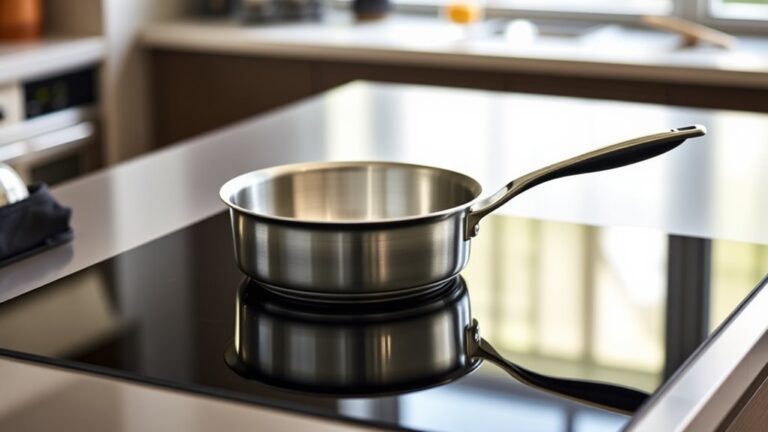
Using a stainless steel or cast iron pan ensures even heat distribution and a perfect sear.
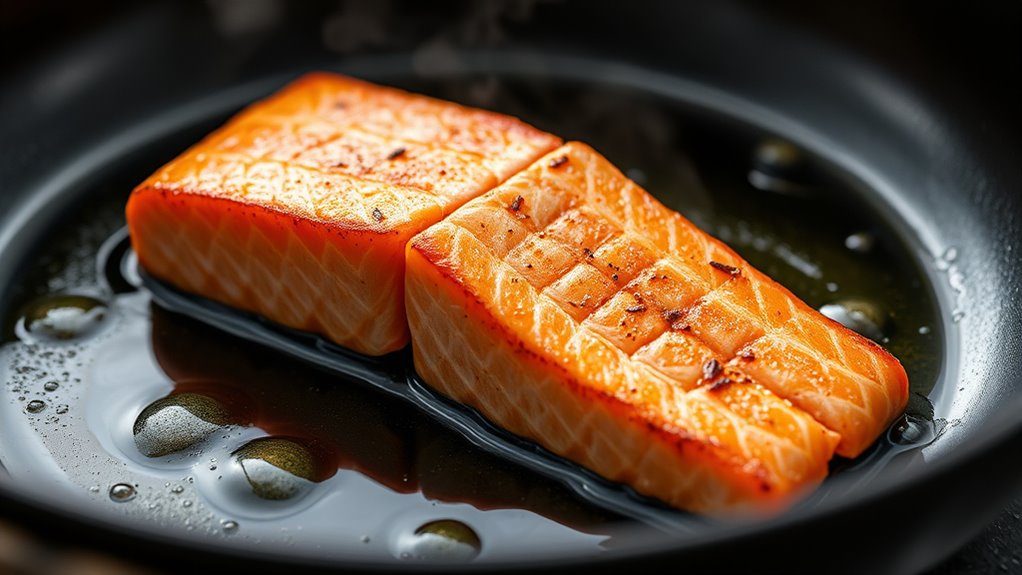
Choose a high-smoke-point oil like avocado or grapeseed oil to prevent burning. Place the salmon skin-side down over medium heat and cook until the skin is crispy, about 4-5 minutes.
Flip the salmon gently to avoid breaking the fillet.
Continue cooking until the salmon is opaque and tender inside. Look for a golden crust and slight flaking as signs of doneness.
Keep reading for tips on achieving perfect salmon every time and delicious serving ideas.
Key Takeaways
- Choose fresh salmon fillets with skin on, pat dry, season simply, and let sit at room temperature for even cooking.
- Use a stainless steel or cast iron pan with high smoke point oil like avocado, cooking over medium to medium-high heat.
- Cook skin-side down first, pressing gently to prevent curling, until skin is crispy and golden, about 4-5 minutes.
- Flip gently with a thin spatula once the salmon releases easily, cooking the other side until opaque and flaky.
- Check doneness by visual cues or a thermometer aiming for 130°F, and serve with complementary sides like roasted asparagus or quinoa.
Choose the Right Salmon Cut for Pan Cooking
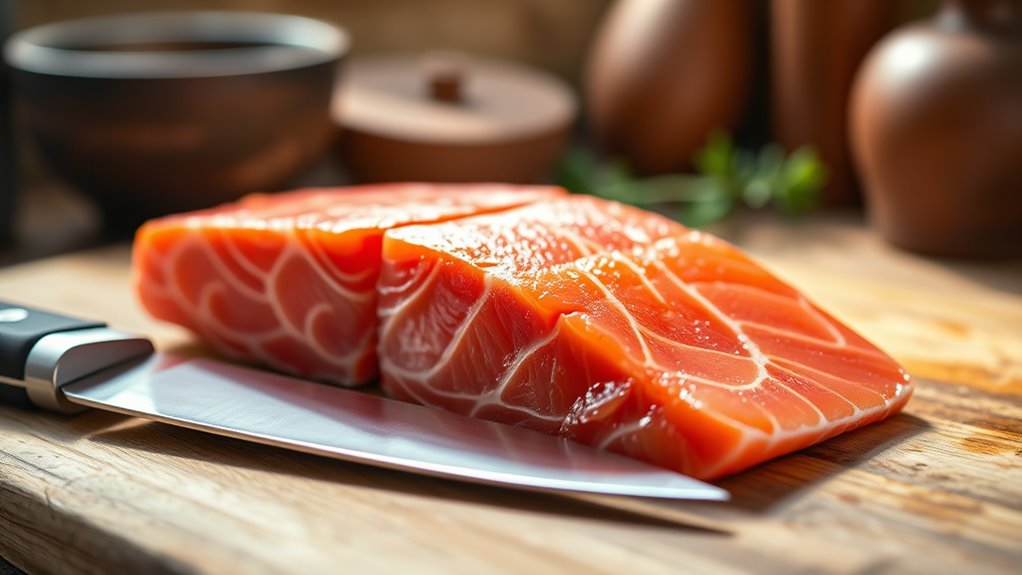
When you cook salmon in a frying pan, picking the right cut makes all the difference. Fillets and steaks work best because they cook evenly and fit nicely in your pan. Fillets come from the side of the fish and are thinner, so they cook quickly and crisp up well.
Steaks, cut crosswise, are thicker and hold moisture better, giving you a juicy result. Avoid thin or uneven pieces—they can overcook or dry out fast. Also, look for salmon with the skin on; it helps hold the fish together while frying and adds a delicious crisp texture.
Whether you choose wild-caught or farmed, fresh salmon with a vibrant color and firm texture ensures the best flavor and cooking experience.
How to Prepare Salmon Before Cooking
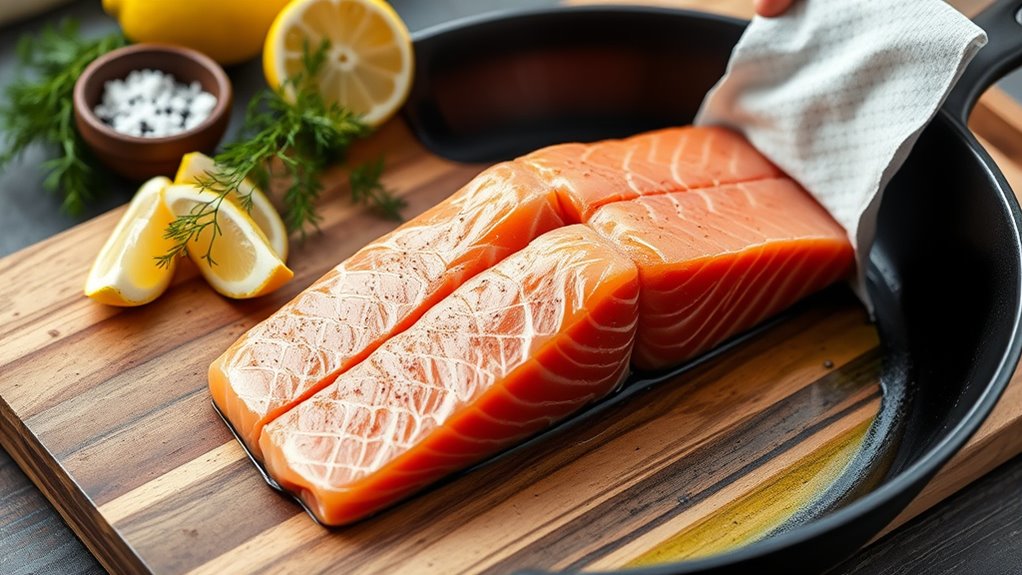
Although choosing the right salmon cut is crucial, properly preparing the fish before cooking is just as important to guarantee a flavorful and evenly cooked result. Start by patting your salmon dry with paper towels to remove excess moisture, which helps achieve a crispier sear. If the fillet has skin, check for any remaining pin bones by running your fingers along the flesh; use tweezers to pull them out carefully.
Season your salmon simply with salt and pepper, or add herbs and spices to your taste, but avoid over-seasoning. Let the salmon sit at room temperature for about 15 minutes before cooking; this assures even cooking throughout. Proper preparation sets the foundation for a delicious pan-seared salmon every time.
Choosing the Best Pan and Oil for Pan-Seared Salmon
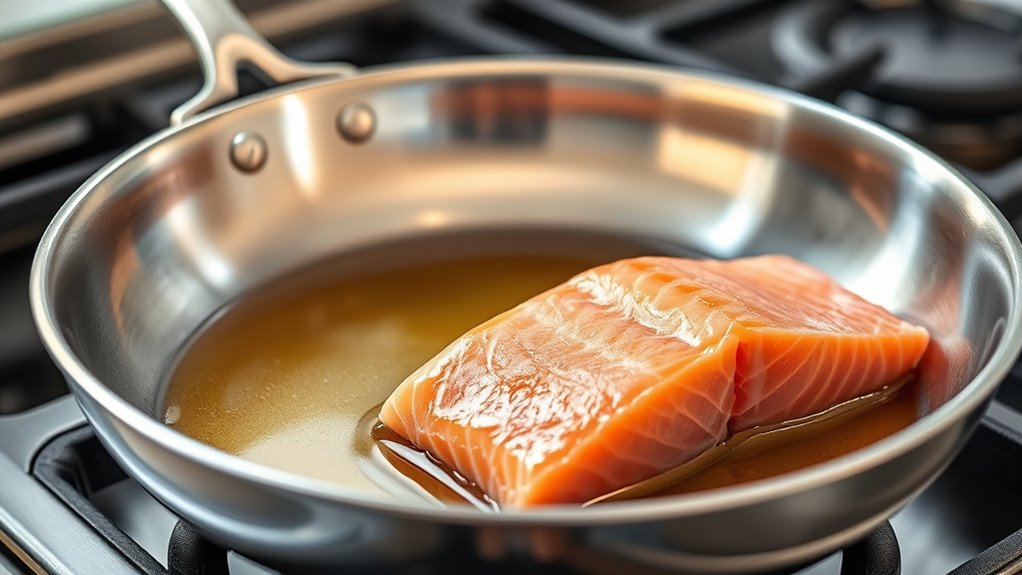
You’ll want to pick a pan that heats evenly, like stainless steel or cast iron, to get that perfect sear on your salmon. Choosing the right oil is just as important—look for oils with high smoke points, such as avocado or canola oil, to avoid burning.
Using the best combination guarantees your salmon cooks beautifully without any off flavors.
Best Pan Materials
Selecting the right pan and oil plays a crucial role in achieving perfectly seared salmon with a crispy exterior and tender interior. When it comes to pan materials, you want excellent heat conduction and non-stick properties to prevent sticking and guarantee even cooking.
| Pan Material | Heat Conductivity | Non-Stick Quality |
|---|---|---|
| Stainless Steel | Medium | Low (needs oil) |
| Cast Iron | High | Medium (seasoned) |
| Non-Stick Coated | Medium | High |
| Copper | Very High | Low (needs oil) |
| Carbon Steel | High | Medium (seasoned) |
Choose a pan that suits your cooking style and maintenance preference for the best searing results.
Ideal Oil Types
When you’re cooking salmon in a frying pan, the type of oil you use can make all the difference in flavor and texture. You want an oil that complements the fish without overpowering it. Neutral oils like canola, vegetable, or grapeseed work well because they let the salmon’s natural flavors shine.
Olive oil adds a subtle fruity note, especially extra virgin varieties, which is great if you want a bit more character. For a richer taste, try clarified butter or ghee—they offer a buttery flavor and help achieve a beautiful crust. Avoid heavily flavored oils like sesame or coconut, as they can clash with salmon’s delicate taste.
Choosing the right oil guarantees your salmon cooks evenly and tastes delicious every time.
Oil Smoke Points
Picking the right oil is just part of the equation; understanding its smoke point helps you get the best results in your frying pan. The smoke point is the temperature at which oil starts to burn and break down, producing smoke and off-flavors. For pan-seared salmon, you want an oil with a high smoke point—around 400°F or higher—to guarantee a clean, crisp sear without burning.
Oils like avocado, grapeseed, and refined canola are great choices because they withstand high heat. Avoid oils with low smoke points, like extra virgin olive oil or butter, unless you cook at lower temperatures. Using the right oil, combined with a heavy-bottomed pan that distributes heat evenly, guarantees your salmon cooks perfectly without unpleasant smoke or bitterness.
Best Heat Level for Pan-Cooking Salmon
Although it might be tempting to crank up the heat for a quick sear, you’ll get the best results by cooking salmon over medium to medium-high heat. This temperature lets the fish cook evenly without burning the outside or leaving the inside undercooked.
Too high heat risks scorching the salmon or causing uneven cooking, while too low heat makes it dry out and lose flavor. Aim for a steady sizzle when the salmon hits the pan—that’s your cue the temperature is just right.
Adjust the heat as needed to maintain this sound. Keeping the heat in this range helps the salmon cook through gently, preserving its moist, tender texture and rich flavor. This balance is key to perfectly cooked pan-seared salmon every time.
How to Get Perfectly Crispy Salmon Skin
To get perfectly crispy salmon skin, you’ll want to start by choosing the right cut with skin that’s fresh and dry. Preparing the skin properly, like patting it dry and scoring if needed, sets the stage for crispiness.
Then, using the right cooking techniques, such as cooking skin-side down over medium heat, will seal the deal.
Choosing the Right Salmon
What makes salmon skin perfectly crispy starts with the type of salmon you choose. Opt for fresh, wild-caught salmon when possible, as it usually has firmer, thicker skin that crisps up better than farmed varieties. Look for fillets with the skin still attached and intact—avoid pieces where the skin is torn or damaged.
Thicker skin ensures a better barrier against the pan’s heat, helping you achieve that sought-after crunch. Choose cuts that are evenly sized so they cook uniformly. Also, check for vibrant color and a fresh, mild smell to guarantee quality.
Preparing the Skin Properly
Before you start cooking, make sure the salmon skin is dry and free of excess moisture. Pat it gently with paper towels to remove any dampness, which helps achieve that crispy texture.
Next, check for any stubborn scales and carefully scrape them off with the back of a knife if needed. This step prevents a tough, unpleasant bite. Lightly score the skin with shallow cuts, about an inch apart, but avoid cutting into the flesh.
Scoring prevents the skin from curling up during cooking, ensuring even contact with the pan. Finally, season the skin with a pinch of salt, which draws out moisture and enhances crispiness. Taking these simple steps prepares your salmon skin perfectly before you move on to cooking.
Cooking Techniques for Crispiness
Although achieving perfectly crispy salmon skin may seem tricky, mastering a few key techniques will make it straightforward. First, make sure your salmon is dry by patting the skin thoroughly with paper towels before cooking. Heat your frying pan over medium-high heat and add a small amount of oil with a high smoke point, like canola or grapeseed oil.
Place the salmon skin-side down and press gently with a spatula to prevent curling. Avoid moving the fillet too soon; let it cook undisturbed for about 4-5 minutes until the skin turns golden and crisp. Once crispy, flip the salmon carefully to finish cooking the flesh for another 2-3 minutes depending on thickness.
These steps guarantee that crisp, flavorful skin you want every time.
How Long to Cook Salmon for Flaky Texture
When you cook salmon in a frying pan, timing is essential to achieving a perfectly flaky texture. Generally, cook the salmon for about 4 to 5 minutes on the first side over medium heat. This allows the flesh to set and start firming up without drying out.
After flipping, cook for an additional 3 to 4 minutes, depending on the thickness. Thicker fillets require slightly longer cooking times. You’ll know the salmon is done when it flakes easily with a fork but still looks moist inside.
Avoid overcooking, as it can make the texture dry and tough. Keep an eye on the fish, and adjust your timing based on its size and your stove’s heat output for the best flaky results.
When and How to Flip Salmon in the Pan
Flipping salmon at the right moment guarantees even cooking and a crisp, golden crust. You’ll want to wait until the salmon naturally releases from the pan, usually after 3-4 minutes on medium heat. Use a thin, flexible spatula to gently lift the edge.
If it sticks, give it more time. When flipping, slide the spatula fully under the fillet and turn it over in one smooth motion to avoid breaking the fish.
| Step | What to Do |
|---|---|
| 1. Wait | Let salmon cook undisturbed |
| 2. Test | Gently lift edge with spatula |
| 3. Flip | Slide spatula under fillet |
| 4. Turn | Flip in one smooth motion |
How to Tell When Salmon Is Done Cooking
You’ll know your salmon is done when you spot key visual cues like a change in color and slight opacity. Checking the internal temperature with a thermometer is a reliable way to be sure it’s cooked perfectly.
Also, gently flaking the fish with a fork should reveal tender, flaky flesh that separates easily.
Visual Cues To Watch
Although cooking times can vary, you can tell salmon is done by watching for specific visual cues. First, look for the flesh to change from translucent to opaque. When it becomes a consistent pinkish-white color, that’s a good sign.
Next, notice how the edges start to lift and flake easily with a fork—this means the fish has cooked through. Also, the surface should develop a slight golden crust from the pan, adding texture and flavor. Avoid overcooking by removing the salmon as soon as it flakes; it will continue to cook slightly from residual heat.
Keep an eye on these cues, and you’ll confidently serve perfectly cooked salmon every time without cutting into it prematurely.
Internal Temperature Guide
One key method to guarantee your salmon is perfectly cooked is by checking its internal temperature. Using a food thermometer ensures accuracy, so you don’t overcook or undercook your fish. Insert the thermometer into the thickest part of the fillet for the best reading.
Here’s a quick guide:
| Temperature (°F) | Doneness Level |
|---|---|
| 110-115 | Rare |
| 120-125 | Medium Rare |
| 130-135 | Medium (ideal) |
Aim for 130°F if you want salmon that’s moist but fully cooked. Remember, the temperature will rise a few degrees after you remove it from the pan, so take it off just before it hits your target. This way, you get perfectly cooked salmon every time.
Texture And Flakiness
While internal temperature is a reliable indicator, checking the texture and flakiness of your salmon provides a quick, hands-on way to know when it’s done. Gently press the flesh with a fork or your finger; cooked salmon will feel firm but still slightly springy. If it’s mushy or overly soft, it needs more time.
Next, try gently twisting a fork against the grain of the fish. If the salmon flakes easily into sections without resistance, it’s perfectly cooked. Avoid overcooking, which makes the fish dry and tough.
With practice, you’ll quickly identify the ideal texture, ensuring each piece is tender, moist, and flaky—exactly how salmon should be served straight from your frying pan.
Flavor Boosters: Easy Seasonings and Marinades for Salmon
Since salmon has a naturally rich flavor, you can easily enhance it with simple seasonings or marinades that take just minutes to prepare. Start with salt and freshly ground black pepper to bring out the fish’s natural taste. Add a squeeze of lemon or lime juice for a fresh, zesty kick.
If you want more depth, mix olive oil, minced garlic, and herbs like dill or thyme for a quick marinade. For a touch of sweetness, try a glaze made from honey or maple syrup combined with soy sauce and a splash of vinegar. Let your salmon sit in the marinade for about 15-20 minutes before cooking to absorb the flavors without overpowering its delicate texture.
These easy boosts make your pan-fried salmon unforgettable.
Easy Side Dishes to Serve With Pan-Seared Salmon
When you plate your pan-seared salmon, choosing the right side dishes can elevate the entire meal. You want accompaniments that complement the rich, flaky fish without overpowering it. Here are three easy side dishes to contemplate:
- Garlic Roasted Asparagus – Toss asparagus with olive oil, garlic, salt, and pepper, then roast until tender for a fresh, flavorful crunch.
- Lemon Herb Quinoa – Cook quinoa and mix it with lemon zest, parsley, and a touch of olive oil to add a light, tangy contrast.
- Sauteed Spinach with Pine Nuts – Quickly sauté spinach with garlic and sprinkle toasted pine nuts for a nutty, savory side.
These simple options add texture and flavor, making your salmon dinner both balanced and delicious.
Fixing Common Problems When Cooking Salmon in a Pan
Choosing the right sides can make your salmon meal shine, but getting the salmon itself just right is equally important. If your salmon sticks to the pan, make sure it’s dry before cooking and use enough oil. Let it sear undisturbed to develop a crust before flipping.
Overcooking leads to dry, tough salmon—cook it on medium heat, and remove it when it flakes easily with a fork but is still moist inside. If your salmon cooks unevenly, try using a heavier pan that distributes heat better.
Finally, if it smells fishy, verify you’re using fresh salmon and store it properly before cooking. These fixes will help you enjoy perfectly pan-seared salmon every time.
Frequently Asked Questions
Can I Cook Frozen Salmon Directly in a Frying Pan?
You can cook frozen salmon directly in a frying pan, but it’s best to thaw it a bit first. Cooking frozen salmon takes longer and may cook unevenly, so thawing guarantees better texture and flavor.
Thawing helps the salmon cook more evenly and retain moisture. This results in a better overall taste and texture. However, if you’re in a hurry, cooking from frozen is possible with careful attention.
How Do I Store Leftover Cooked Salmon Safely?
Leftover salmon’s journey doesn’t end on your plate—store it in an airtight container, chill it quickly, and keep it in the fridge for up to three days.
Don’t let time turn freshness into regret!
Is It Safe to Eat Salmon Skin After Pan Cooking?
Yes, you can eat salmon skin after pan cooking. It’s safe and often delicious when crispy.
Just make sure the skin is cooked thoroughly to avoid any bacteria or parasites that might be present on raw fish skin.
Can I Use the Same Pan for Multiple Salmon Fillets?
Of course, you can use the same pan—because who doesn’t love a little extra flavor from leftover bits? Just wipe out excess oil and don’t overcrowd.
It keeps your salmon cooking evenly and tasting great.
What Is the Nutritional Value of Pan-Cooked Salmon?
Pan-cooked salmon is packed with protein, omega-3 fatty acids, vitamins B12 and D, plus minerals like selenium. You’ll get heart-healthy fats and essential nutrients that support brain function and reduce inflammation with every tasty bite.
These nutrients contribute to overall well-being, promoting cardiovascular health and cognitive performance. Enjoying salmon regularly can be a delicious way to meet your dietary needs. Its rich nutrient profile makes it a valuable addition to a balanced diet.
Conclusion
Now that you’ve mastered pan-searing salmon, you hold the key to a quick, delicious meal that’s both healthy and satisfying. Like a painter with a brush, you can create flavors that dance on the tongue with every bite.
Remember, practice makes perfect—each sizzle brings you closer to that crispy skin and tender flesh. So, grab your pan, trust your instincts, and let your kitchen become your personal seafood sanctuary.
With these simple steps, cooking salmon in a frying pan becomes an easy and enjoyable experience. Enjoy the perfect balance of texture and flavor every time you prepare this nutritious fish. Your skills in pan-searing salmon will make every meal memorable and delicious.