How to Cook Lobster Tail in Oven
To cook lobster tail in the oven, start by safely thawing it in the fridge or cold water. Proper thawing is essential for even cooking and the best flavor.
Next, cut the top shell lengthwise, loosen the meat, and remove the vein for a cleaner presentation.
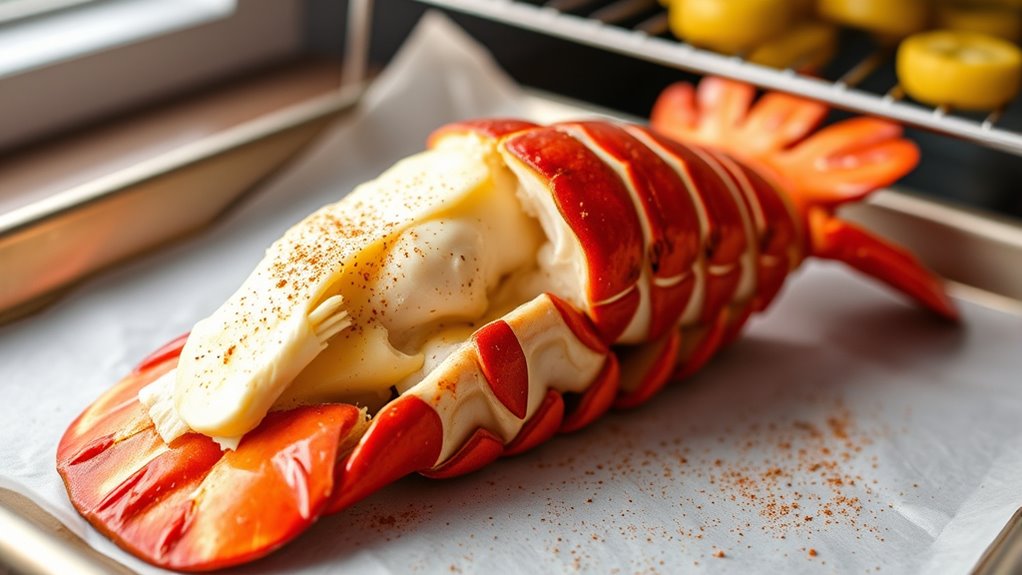
Brush the lobster meat with butter or olive oil, then season lightly to enhance its natural taste.
Place the lobster tails in a preheated oven at 425°F. Bake for 12-15 minutes until the meat turns opaque and firm to the touch.
Finish by drizzling a rich garlic butter sauce over the lobster tails for extra flavor.
Mastering these simple steps guarantees tender, juicy lobster every time. There’s so much more you can do to elevate your lobster cooking technique.
Key Takeaways
- Preheat oven to 425°F and prepare lobster tails by cutting the top shell lengthwise and loosening the meat.
- Brush lobster meat with melted butter or olive oil, season lightly with salt, pepper, and paprika for flavor.
- Bake lobster tails in a shallow dish for 12-15 minutes, covered loosely with foil to retain moisture.
- Check doneness by ensuring meat is opaque, firm, and reaches an internal temperature of 140-145°F.
- Drizzle garlic butter sauce over lobster immediately after baking and serve with lemon wedges and light sides.
How to Choose the Right Lobster Tail for Oven Cooking
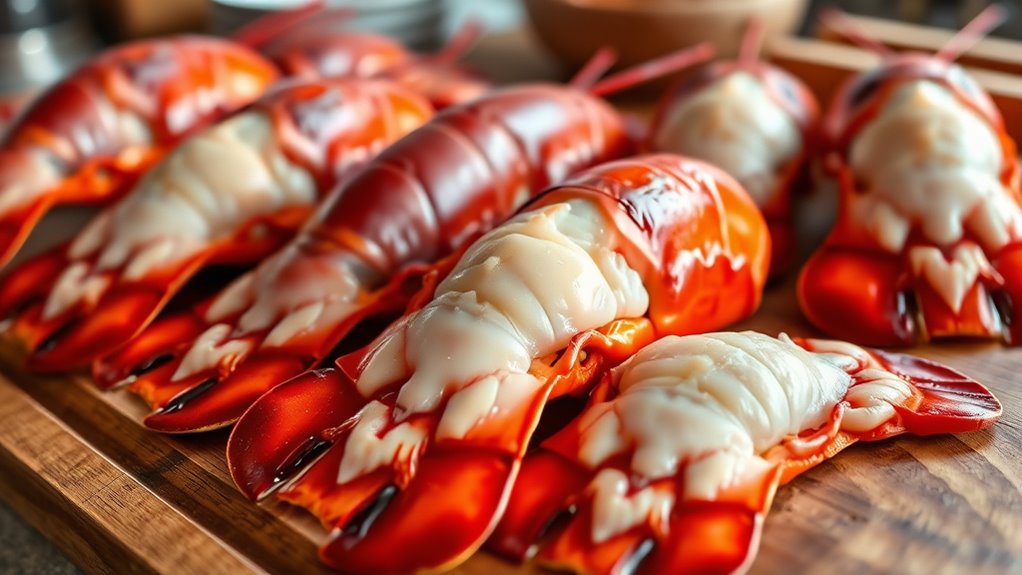
When selecting lobster tails for oven cooking, focus on size and freshness to guarantee the best results. You want tails that weigh between 4 to 6 ounces; they cook evenly and fit nicely on most baking trays. Avoid tails that look dry or have a strong fishy smell—freshness is key for tender, flavorful meat.
Check the shell for a vibrant color and intact segments; cracked or dull shells may indicate poor quality. If you’re buying frozen, pick ones with minimal ice crystals to prevent sogginess. Also, consider the source—wild-caught lobster often offers better texture and taste than farmed.
Choosing the right tail sets the foundation for a delicious oven-baked lobster dish you’ll enjoy every time.
How to Thaw Lobster Tail Safely Before Baking

You’ll want to thaw your lobster tail safely to keep it fresh and tasty. The best way is to thaw it in the refrigerator overnight, but if you’re short on time, you can use the quick cold water method.
Both options guarantee your lobster tail is ready for baking without risking food safety.
Refrigerator Thawing Method
Although thawing lobster tail might seem straightforward, using the refrigerator method guarantees it defrosts evenly and safely. To do this, place the frozen lobster tail in a sealed plastic bag to prevent moisture loss and cross-contamination. Then, set it on a plate or dish and leave it in the refrigerator.
Depending on the size, it usually takes 8 to 12 hours to fully thaw. Plan ahead to allow enough time for this slow, safe thawing process. Avoid leaving the lobster tail at room temperature, as this can promote bacterial growth.
Once thawed, you can keep it in the refrigerator for up to 24 hours before cooking. This method ensures your lobster tail stays fresh, maintains its texture, and is ready for baking.
Quick Cold Water Thawing
How quickly can you safely thaw a lobster tail without waiting overnight? The quick cold water thawing method is your answer. Place the lobster tail in a sealed plastic bag to prevent water from touching the meat.
Then, submerge it in a bowl of cold tap water. Change the water every 20 to 30 minutes to keep it cold and safe. Depending on the size, your lobster tail should thaw within 1 to 2 hours.
Avoid using warm or hot water, as this can encourage bacterial growth and partially cook the meat. Once thawed, pat the lobster tail dry with paper towels before cooking. This method lets you safely prepare lobster tails quickly without compromising quality or safety.
Best Oven Temperatures for Cooking Lobster Tail
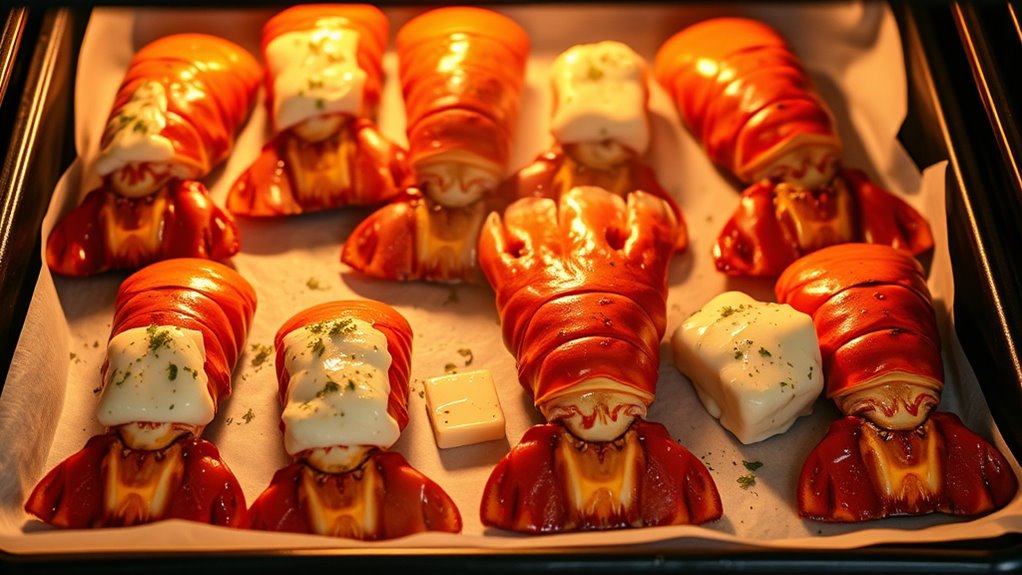
You’ll want to cook your lobster tail at the right temperature to get the perfect texture—usually between 350°F and 425°F. Cooking too hot can toughen the meat, while too low might leave it undercooked.
Adjust the heat based on the size of the tail to make certain of even cooking throughout.
Ideal Temperature Range
When cooking lobster tail in the oven, choosing the right temperature is key to achieving tender, juicy meat without overcooking. You want to keep the temperature moderate to guarantee even cooking and avoid drying out the delicate meat. Most recipes recommend staying between 350°F and 450°F.
Here’s a quick guide to help you decide:
| Temperature (°F) | Cooking Time (minutes) | Result |
|---|---|---|
| 350 | 12-15 | Gentle, tender |
| 400 | 10-12 | Balanced, juicy |
| 450 | 8-10 | Slightly firmer, quick |
Sticking within this range helps you control the cooking process and enjoy perfectly cooked lobster tail every time.
Temperature Effects On Texture
Choosing the right oven temperature not only affects cooking time but also has a direct impact on the texture of your lobster tail. If the temperature is too high, the meat can become tough and rubbery, ruining its delicate flavor. On the other hand, cooking at a moderate temperature, around 350°F to 400°F, helps the lobster tail cook evenly and stay tender.
Lower temperatures allow the meat to gently firm up without drying out, preserving its juicy, buttery texture. Avoid overheating, which causes the proteins to contract too quickly, squeezing out moisture. By maintaining a balanced oven temperature, you prevent your lobster tail remains succulent and tender, delivering that perfect melt-in-your-mouth experience every time you cook it.
Adjusting Heat For Size
Since lobster tails vary in size, adjusting your oven temperature and cooking time is essential to guarantee even doneness without overcooking. For smaller tails, around 4 to 6 ounces, set your oven to 350°F and bake for 8 to 10 minutes.
Medium tails, between 6 and 8 ounces, do well at 375°F for 12 to 14 minutes. Larger tails, 8 ounces and above, need 400°F and 15 to 18 minutes to cook through. Keep a close eye to avoid drying out the meat.
How to Prepare Lobster Tail for Baking (Cleaning & Cutting)
Before you start baking, you’ll need to clean and cut the lobster tail properly to guarantee even cooking and easy eating. First, rinse the lobster tail under cold water to remove any debris. Next, use kitchen shears to cut through the top shell lengthwise, stopping just before the tail fin.
This helps expose the meat without detaching it from the shell. Then, gently pry the shell open to loosen it from the meat, but keep the tail intact. Check for the vein running along the back of the meat and remove it with a knife or your fingers to ensure a cleaner taste.
Finally, pat the lobster meat dry with paper towels to help it cook evenly and absorb any seasoning you’ll add later.
How to Butterfly Lobster Tail for Oven Cooking
Once you’ve cleaned and cut the lobster tail, butterfly it to help the meat cook evenly and present beautifully. Start by using kitchen shears to cut down the middle of the shell, stopping just before the fin. Gently pull the shell apart, loosening the meat without detaching it.
Lift the meat up and lay it over the shell, exposing the flesh for seasoning and even heat exposure.
| Step | Tip |
|---|---|
| Cut shell | Use sturdy kitchen shears |
| Stop at fin | Avoid cutting through the end |
| Loosen meat | Be gentle to keep it attached |
| Flip meat over | Lay meat on shell for presentation |
| Season & bake | Season before placing in the oven |
Step-by-Step Guide to Cooking Lobster Tail in the Oven
You’ll start by properly preparing your lobster tails to guarantee even cooking and maximum flavor. Then, follow simple baking techniques that keep the meat tender and juicy.
Finally, apply a few handy tips that make your oven-cooked lobster tails turn out perfect every time.
Preparing Lobster Tails
Although lobster tails may seem intimidating at first, preparing them for the oven is straightforward and rewarding. Start by thawing frozen tails in the refrigerator overnight or under cold running water if you’re short on time. Pat them dry with paper towels.
Next, use kitchen shears to carefully cut down the top shell, stopping just before the tail fin. Gently pry the shell apart and lift the meat, keeping it attached at the base. Rest the meat on top of the shell for even cooking and an elegant presentation.
Finally, use a small knife to score the surface of the meat lightly—this helps seasoning penetrate and cooks the tail evenly. Now, your lobster tails are ready for the next steps in your oven cooking journey.
Baking Techniques and Tips
Before placing your lobster tails in the oven, preheat it to 425°F (220°C) to guarantee even cooking. Use a shallow baking dish to allow heat to circulate effectively. Brush the lobster meat with melted butter or olive oil to keep it moist and flavorful.
Cover the tails loosely with foil for the first half of baking to prevent drying out, then remove it to brown the meat.
| Technique | Tip |
|---|---|
| Preheating | Set to 425°F (220°C) |
| Moisture | Brush with butter or oil |
| Cooking time | 12-15 minutes, depending on size |
Follow these tips to achieve perfectly baked lobster tails every time.
How to Check When Lobster Tail Is Perfectly Cooked
When cooking lobster tail in the oven, knowing exactly when it’s done guarantees a tender, juicy result rather than a rubbery one. To check if your lobster tail is perfectly cooked, use these simple methods:
- Visual Check: The meat should turn opaque white and firm up. The shell will also turn bright red.
- Internal Temperature: Use a meat thermometer to check the thickest part of the tail; it should read 140-145°F (60-63°C).
- Texture Test: Gently press the meat; it should feel firm but still springy, not mushy or overly stiff.
How to Season Lobster Tail for Oven Baking
Since seasoning enhances the natural sweetness of lobster tail, you’ll want to choose flavors that complement rather than overpower it. Start by brushing the lobster meat with melted butter or olive oil to keep it moist. Then, sprinkle a pinch of salt and freshly ground black pepper to bring out the flavors.
A light dusting of paprika adds color and a subtle smoky note without being too strong. You can also add a squeeze of fresh lemon juice or a few lemon zest shavings to brighten the taste. Avoid heavy spices or strong herbs that might mask the lobster’s delicate flavor.
Keep it simple to let the lobster shine when you bake it in the oven.
How to Make Garlic Butter Sauce for Lobster Tail
Enhancing your seasoned lobster tail with a rich garlic butter sauce will elevate its flavor and add a luscious finish. Making this sauce is simple and quick, requiring only a few ingredients to bring out the lobster’s natural sweetness.
Here’s how to make it:
- Melt Butter: Gently melt 4 tablespoons of unsalted butter in a small saucepan over low heat.
- Add Garlic: Stir in 2 minced garlic cloves and cook for 1-2 minutes until fragrant, but don’t let it brown.
- Finish and Season: Remove from heat, then mix in a pinch of salt, a squeeze of fresh lemon juice, and chopped parsley for brightness.
Drizzle this sauce over your lobster tail right after baking to enjoy a perfect, buttery complement.
Tips for Serving Oven-Baked Lobster Tail Impressively
To serve oven-baked lobster tail impressively, focus on presentation and complementary flavors that highlight its rich, delicate taste. Start by plating the lobster tail on a chilled plate to keep it fresh. Garnish with a sprinkle of fresh herbs like parsley or chives for color contrast.
Serve with lemon wedges to add a zesty brightness that cuts through the buttery richness. Drizzle your garlic butter sauce over the lobster just before serving to keep it warm and flavorful. Pair the dish with simple sides such as steamed asparagus or a light salad to avoid overpowering the lobster.
Ultimately, use elegant tableware and consider adding a crisp white wine to elevate the dining experience. These small touches will make your oven-baked lobster tail truly impressive.
Mistakes to Avoid When Cooking Lobster Tail in the Oven
When cooking lobster tail in the oven, avoiding common mistakes can make all the difference between a perfect dish and a disappointing one. To guarantee your lobster tail turns out tender and flavorful, watch out for these errors:
- Overcooking: Lobster tail cooks quickly; leaving it in too long dries it out. Keep a close eye on the time and use a thermometer to check for doneness (140°F).
- Skipping the shell cut: Cutting the shell before baking helps heat penetrate evenly and makes eating easier. Don’t skip this step.
- Neglecting seasoning: Lobster tail needs seasoning or butter to enhance its natural flavor. Avoid baking it plain to prevent a bland result.
How to Reheat Lobster Tail Without Drying It
Although reheating lobster tail can be tricky, you don’t have to settle for dry, tough meat. To keep it juicy, start by wrapping the lobster tail in aluminum foil to lock in moisture. Preheat your oven to 250°F (120°C) and place the wrapped tail on a baking sheet.
Heat it gently for about 10-15 minutes, depending on size. Avoid overheating, which causes dryness. Alternatively, you can steam the lobster tail for a few minutes until it’s warmed through.
Whichever method you choose, check frequently to prevent overcooking. Adding a small pat of butter inside the foil before reheating can also help maintain tenderness. This way, your lobster tail stays flavorful and succulent, just like when it was freshly cooked.
Frequently Asked Questions
Can I Cook Lobster Tail in the Oven Without Thawing?
You can cook lobster tail in the oven without thawing, but it’ll take longer and might cook unevenly.
For best results, thaw it first to guarantee even cooking and tender, juicy meat every time.
How Long Can Cooked Lobster Tail Be Stored in the Fridge?
Like a hidden treasure, your cooked lobster tail can stay fresh in the fridge for 3 to 4 days.
Just wrap it tight, so it doesn’t lose its sweet, ocean-kissed flavor and texture.
Is It Safe to Eat Lobster Tail if It’s Slightly Undercooked?
You shouldn’t eat lobster tail if it’s slightly undercooked because it may contain harmful bacteria. Always cook it until opaque and firm to guarantee safety and avoid foodborne illness.
Don’t risk it!
Can I Freeze Cooked Lobster Tail After Baking?
You can freeze cooked lobster tail, wrapping it tightly like a treasure chest to keep flavors locked in. Just cool it completely, seal well, and pop it in the freezer for up to three months without losing quality.
What Side Dishes Pair Best With Oven-Baked Lobster Tail?
You’ll love pairing oven-baked lobster tail with garlic butter asparagus, roasted potatoes, or a fresh green salad. Light, crisp sides like lemon rice or steamed veggies complement the rich, sweet lobster perfectly every time.
These options balance the richness of the lobster without overpowering its delicate flavor. Consider adding a squeeze of fresh lemon to tie the meal together.
For a heartier side, creamy risotto or buttery mashed potatoes also work beautifully. Choose sides that enhance rather than compete with the lobster’s natural sweetness.
Conclusion
Now that you know how to cook lobster tail in the oven perfectly, why settle for anything less than delicious? With the right selection, thawing, preparation, and that irresistible garlic butter sauce, you’re set for a restaurant-quality meal at home.
Just avoid common mistakes and follow the tips to serve impressively every time. Ready to impress your guests with tender, flavorful lobster tail? Your oven is waiting—let’s get cooking!
Mastering how to cook lobster tail in the oven ensures a succulent, juicy result every time. Whether for a special occasion or a gourmet dinner, this method brings out the best in your lobster tail recipe. Enjoy the perfect lobster tail cooked in the oven and delight your taste buds!