How to Organize Kitchen Utensils
Start by sorting your kitchen utensils into groups like spoons, knives, and peelers. Organizing kitchen utensils helps create a more efficient cooking environment. It reduces clutter and makes it easier to find what you need quickly.
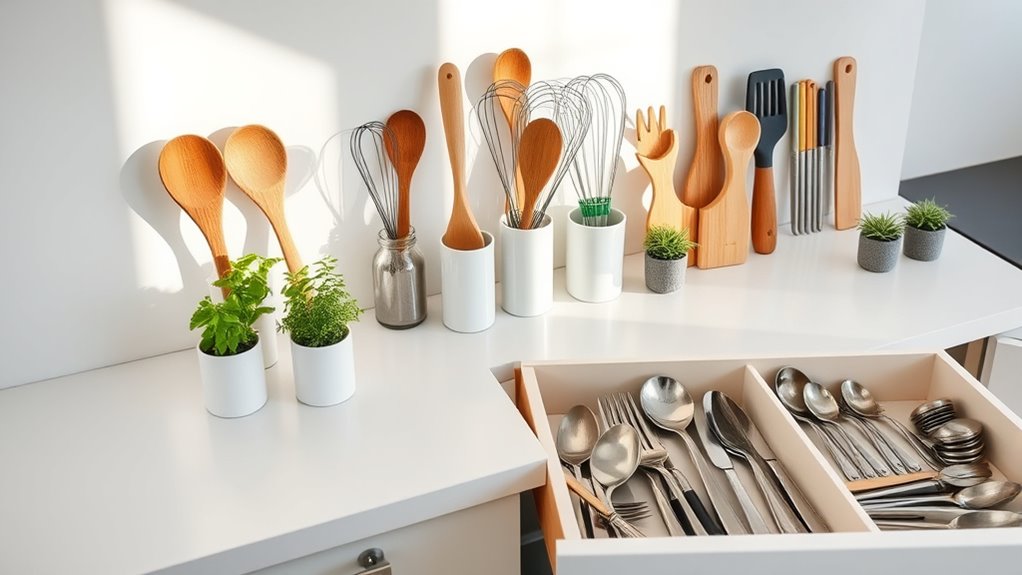
Next, check for duplicates or broken items to discard. Choose storage based on your kitchen space and how often you use each tool. Drawer organizers, magnetic strips, or countertop holders work great for keeping things tidy.
Keep frequently used items accessible and label sections if needed. Regularly maintain order by returning utensils after use and reassessing your setup.
With a few smart tips, you’ll make cooking smoother and more enjoyable.
Key Takeaways
- Sort utensils by type and frequency of use to streamline access and reduce kitchen clutter.
- Use drawer organizers, hooks, or magnetic strips to maximize space and keep utensils accessible.
- Regularly discard broken or duplicate utensils to maintain an efficient and safe kitchen setup.
- Utilize budget-friendly solutions like repurposed jars or adhesive hooks for cost-effective organization.
- Label storage sections and develop consistent habits to sustain long-term utensil order and tidiness.
How To Sort Your Kitchen Utensils Before Organizing
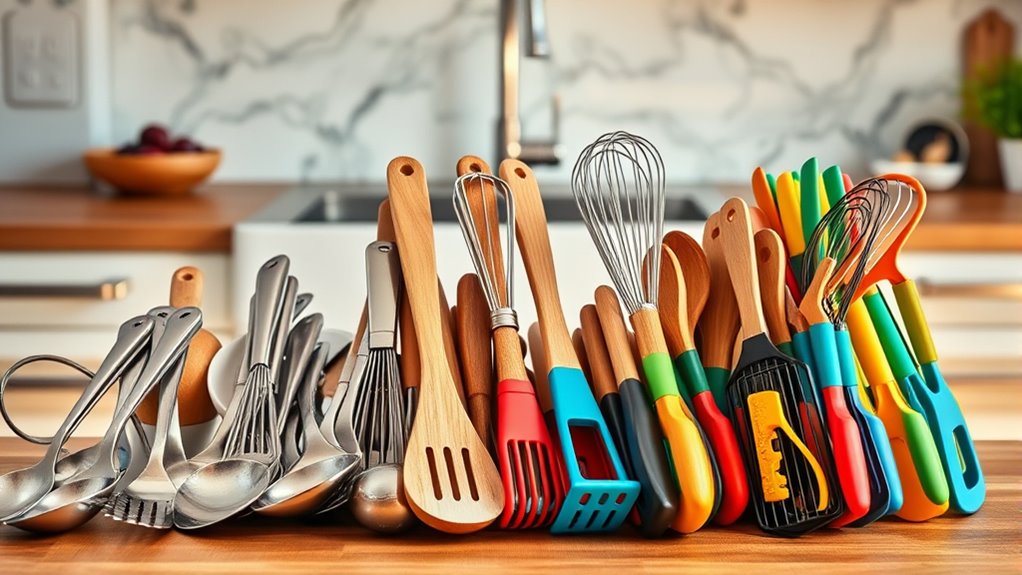
Before you immerse yourself in organizing your kitchen utensils, take some time to sort through them first. Grab all your utensils and spread them out where you can see everything clearly. Next, group similar items together—spoons with spoons, knives with knives, and so on.
Don’t forget to include specialty tools like peelers or zesters. As you sort, check for duplicates and broken pieces. Set aside anything you rarely use or no longer need; this will free up space.
You can also separate utensils by frequency of use, placing everyday tools in one pile and occasional-use items in another. This sorting step helps you understand what you have, making the actual organizing process quicker and more efficient. Once sorted, you’ll be ready to arrange your utensils thoughtfully.
Why Organizing Kitchen Utensils Makes Cooking Easier
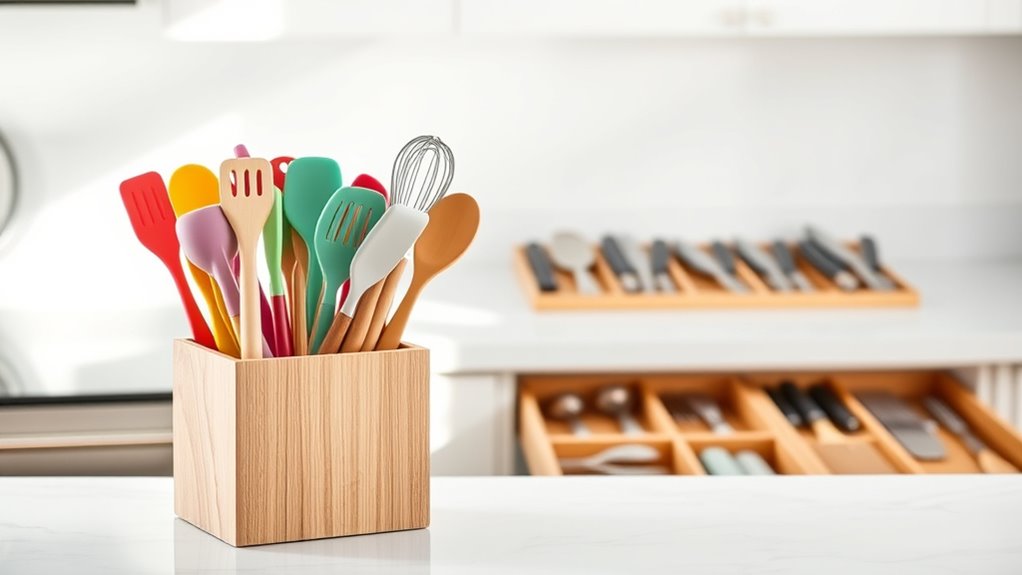
When your utensils are organized, you’ll find what you need quickly and save valuable time. This reduces stress during cooking, helping you stay focused and calm.
Plus, an efficient kitchen setup makes every step smoother and more enjoyable.
Quick Access Saves Time
How often do you find yourself rummaging through drawers while cooking? When utensils are organized for quick access, you save precious time by grabbing exactly what you need without the hassle. Imagine having your spatulas, spoons, and knives neatly separated and within arm’s reach.
You won’t waste moments searching, which keeps your workflow smooth and efficient. Plus, when cooking multiple dishes, quick access prevents interruptions and lets you focus on each step. By arranging utensils based on their use or frequency, you streamline your process considerably.
Ultimately, this simple habit helps you move faster in the kitchen, making meal prep less tedious and more enjoyable. Organizing isn’t just about neatness—it’s about making your cooking time smarter and quicker.
Reduces Cooking Stress
Although cooking can sometimes feel overwhelming, having your kitchen utensils well-organized eases the process and reduces stress. When you know exactly where everything is, you avoid frantic searching that disrupts your flow. This calm setup lets you focus on the joy of cooking instead of the chaos.
Organizing your utensils helps you:
- Stay calm by eliminating clutter and confusion.
- Maintain a smooth rhythm without constant interruptions.
- Feel more confident and in control throughout cooking.
Enhances Kitchen Efficiency
Keeping your utensils organized doesn’t just calm your mind—it speeds up your entire cooking process. When everything has its place, you won’t waste time digging through drawers or containers searching for the right tool. You’ll grab what you need instantly, keeping your workflow smooth and uninterrupted.
Organized utensils help you stay focused on cooking rather than on clutter. Plus, you can easily spot if something’s missing or needs replacing, preventing delays mid-prep. By grouping similar items together—like spatulas with spoons—you streamline your movements and reduce unnecessary steps.
Ultimately, a well-organized kitchen lets you cook more efficiently, making meal prep faster and less frustrating. You’ll enjoy the process more and get dishes on the table quicker every time.
How To Choose The Best Storage Solutions For Your Kitchen Utensils
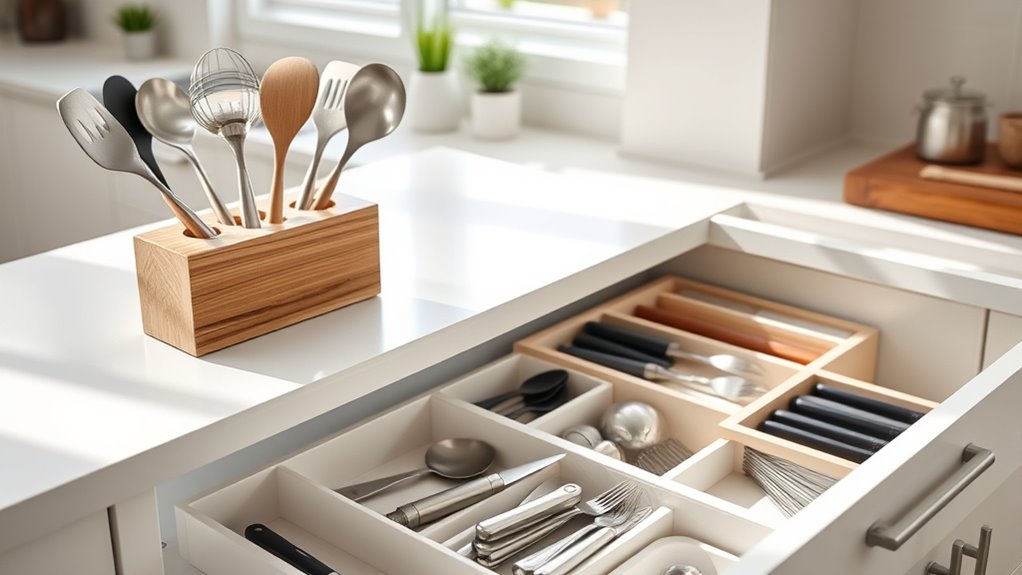
Start by evaluating the space you have available in your kitchen to find storage options that fit perfectly. Then, choose designs that not only look good but also keep your utensils easy to access and organized.
This way, you’ll create a setup that works smoothly every time you cook.
Assess Kitchen Space
Before choosing storage solutions, you need to evaluate the space you have available in your kitchen. Take a close look at your countertops, drawers, and cabinets to understand where utensils can fit without crowding your workspace. Consider these key points:
- Measure dimensions to know exactly how much room you can dedicate to utensil storage.
- Identify underused spots like cabinet doors or wall areas that can hold racks or hooks.
- Note how frequently you use different utensils to prioritize storage locations for convenience.
Assessing your kitchen space thoroughly helps you avoid clutter and guarantee your utensils are easy to access. This step lays the foundation for an organized kitchen where every tool has its place. Once you know your space, you’ll be ready to pick storage options that fit perfectly.
Select Functional Designs
Once you’ve assessed your kitchen space, it’s time to choose storage solutions that match both your needs and the layout. Pick designs that maximize accessibility—like drawer organizers, wall-mounted racks, or countertop holders—depending on your daily usage. If you cook often, opt for easy-to-reach options.
Consider multifunctional storage to save space, such as utensil holders with compartments or magnetic strips for metal tools. Make sure the materials are durable and easy to clean, like stainless steel or BPA-free plastic. Also, select designs that fit your kitchen’s style without overcrowding the area.
How To Use Drawer Organizers To Maximize Kitchen Utensil Space
Although kitchen drawers often get cluttered quickly, using drawer organizers can help you maximize your utensil space efficiently. Start by choosing organizers with adjustable compartments so you can customize the layout to fit your utensils perfectly.
Maximize utensil space by using adjustable drawer organizers tailored to your kitchen needs.
Next, group similar items together to make finding what you need faster and keep everything neat. Finally, make sure to leave some space for new utensils or gadgets you might add later.
Here’s how to use drawer organizers effectively:
- Sort utensils by type and size before placing them in compartments
- Use shallow trays for smaller tools like peelers and measuring spoons
- Reserve deeper sections for bulky items such as ladles and whisks
These simple steps help you maintain order and save valuable drawer space.
Creative Ways To Store Kitchen Utensils On The Countertop
You can keep your utensils within easy reach by using stylish holders that add a touch of personality to your countertop. Look for multi-functional containers that not only store utensils but also hold other kitchen essentials. This approach keeps your space organized without sacrificing style or convenience.
Stylish Utensil Holders
When kitchen utensils are stored in stylish holders, they not only stay organized but also add charm to your countertop. Choosing the right holder can brighten your space and keep essentials within easy reach. You want something that fits your kitchen’s vibe while being practical.
Consider these ideas:
- Rustic wooden holders for a warm, natural look
- Sleek metal containers to complement modern decor
- Colorful ceramic jars that bring playful pops of color
Each option lets you showcase your utensils while maintaining order. Plus, it’s easy to switch styles when you want a fresh look. With a stylish holder, your utensils become part of your kitchen’s personality, making cooking more enjoyable and your countertop clutter-free.
Multi-Functional Counter Containers
Since countertop space is limited, choosing multi-functional containers lets you store utensils efficiently while adding practicality. These containers often combine storage with features like built-in cutting boards, drying racks, or compartments for smaller tools.
You get more than just a holder—you gain a versatile kitchen helper that keeps your space tidy and your utensils accessible.
Here’s how multi-functional containers can enhance your kitchen:
| Feature | Benefit |
|---|---|
| Built-in Cutting Board | Saves counter space |
| Drying Rack | Keeps utensils dry |
| Multiple Compartments | Organizes by utensil type |
How To Use Wall And Hanging Storage For Kitchen Utensils
Although counter space is often limited, wall and hanging storage offers a smart way to keep your kitchen utensils within easy reach without cluttering your countertops.
You can maximize vertical space by installing hooks, rails, or magnetic strips on your walls. This not only keeps utensils visible but also adds a decorative touch to your kitchen.
To get started, consider:
- Hanging a pegboard where you can arrange hooks and small containers for various utensils.
- Using magnetic strips to hold metal tools like knives and spatulas securely.
- Installing a rail with S-hooks to hang frequently used items like ladles and whiskers.
These solutions keep your utensils organized, accessible, and free up valuable counter space for cooking prep.
How To Organize And Store Your Most-Used Kitchen Utensils
Wall and hanging storage can clear up your countertops, but you’ll still want a system to keep your most-used utensils within easy reach. Start by grouping frequently used items like spatulas, ladles, and whisks. Use a utensil crock or drawer organizer to keep them tidy and accessible.
Labeling sections helps maintain order. Consider magnetic strips or small hooks inside cabinet doors for extra storage without clutter.
| Storage Method | Ideal Utensils |
|---|---|
| Utensil Crock | Spatulas, whisks |
| Drawer Organizer | Measuring spoons, peelers |
| Magnetic Strip | Metal tools like knives |
| Cabinet Hooks | Small tools, scissors |
When To Toss Or Donate Your Old Kitchen Utensils
Knowing when to toss or donate your old kitchen utensils can save you space and keep your kitchen efficient. Start by evaluating each item’s condition and usefulness. If a utensil is broken, rusted, or warped, it’s time to toss it.
For utensils you rarely use but are still in good shape, consider donating them to shelters or community kitchens. This helps others while decluttering your space.
Keep these tips in mind:
- Toss utensils with damage that could cause harm or affect food safety.
- Donate gently used items you no longer need but are still functional.
- Avoid holding onto duplicates that crowd your drawers and cabinets.
How To Maintain Your Kitchen Utensil Organization
To keep your kitchen utensil organization effective, you need to develop simple habits that prevent clutter from building up again. After cooking, put each utensil back in its designated spot rather than leaving them on the counter or in random drawers. Regularly check for utensils that are broken, unused, or duplicates, and remove them promptly.
Wipe down your utensil holders and drawers often to keep them clean and inviting. Consider setting a monthly reminder to quickly reassess your organization system and adjust as needed. By consistently maintaining your system, you’ll save time searching for tools and keep your kitchen looking neat.
Staying mindful and organized guarantees that your utensils remain easy to find and your workspace stays clutter-free.
Budget-Friendly Hacks To Organize Kitchen Utensils
Maintaining your kitchen utensil organization doesn’t have to break the bank. You can repurpose everyday items to keep things tidy without spending much. Try these budget-friendly hacks:
- Use empty jars or cans to store utensils upright on your countertop. Label them for easy access.
- Install adhesive hooks or magnetic strips inside cabinet doors to hang smaller tools and free up drawer space.
- Repurpose a cutlery tray or drawer organizer you already have to separate utensils by type.
These simple tricks help you sort and store utensils efficiently without costly organizers. By using what you have and adding a few inexpensive touches, you’ll keep your kitchen neat on a budget. Smart organization saves time and stress while protecting your wallet.
Quick Tips For Keeping Your Kitchen Utensils Neatly Arranged
Even if you’ve organized your utensils well, keeping them neat requires consistent effort. Start by returning each item to its designated spot immediately after use. Use drawer dividers or utensil trays to separate types, so you can quickly find what you need and prevent clutter.
Regularly declutter by removing duplicates or broken tools. Consider storing frequently used utensils in a countertop holder for easy access, but avoid overcrowding it. Label compartments if necessary to maintain order.
Wipe down storage areas often to keep everything clean and inviting. Finally, develop a habit of tidying up your utensil storage weekly. These small, quick actions help assure your kitchen stays organized, making cooking smoother and more enjoyable every day.
Frequently Asked Questions
What Materials Are Best for Durable Kitchen Utensils?
You’ll want stainless steel or silicone utensils for durability—they resist rust, heat, and stains. Wood’s sturdy but needs care, while plastic wears out faster.
Choose materials that match your cooking style and last long.
How Often Should Kitchen Utensils Be Replaced?
You should replace your kitchen utensils every 1 to 3 years, as their wear and tear quietly tell a story. When handles crack or surfaces warp, don’t hesitate—refreshing them keeps your cooking smooth and safe.
Are There Eco-Friendly Kitchen Utensil Options?
Yes, you can choose eco-friendly kitchen utensils made from bamboo, recycled stainless steel, or silicone. These options are durable, biodegradable, and reduce plastic waste, helping you create a more sustainable kitchen environment effortlessly.
Can I Organize Utensils in a Small Kitchen Effectively?
You might think small kitchens limit your options, but you can organize utensils effectively by using vertical storage, magnetic strips, and drawer dividers. These smart solutions save space and keep everything within easy reach.
Using vertical storage maximizes wall space and keeps counters clear. Magnetic strips are perfect for holding knives and metal utensils securely. Drawer dividers help separate and organize smaller items efficiently.
How Do I Clean and Sanitize Wooden Utensils Properly?
You should hand wash wooden utensils with mild soap and warm water, then dry them immediately. Avoid soaking or dishwashers to prevent cracking.
Occasionally, rub with mineral oil to keep them sanitized and prolong their lifespan.
Conclusion
Organizing your kitchen utensils is like planting a garden—each tool finds its perfect spot, blooming into a space that’s both beautiful and functional. When you sort, store, and maintain with care, your cooking flows like a well-choreographed dance.
With thoughtful storage and a little creativity, your utensils won’t just be tools; they’ll be your kitchen’s shining stars, ready to make every meal a masterpiece. Keep them tidy, and watch your culinary world flourish effortlessly.
By implementing effective kitchen utensil organization, you create a more efficient and enjoyable cooking environment. Proper storage techniques help maximize space and accessibility, making meal preparation smoother. Embrace these tips to transform your kitchen utensils into essential assets that enhance your cooking experience.