Are Outdoor Grills Better With Griddle or Not
If you are considering whether outdoor grills are better with a griddle, adding one to your setup can greatly enhance your cooking versatility. A griddle allows for smoother heat control and makes it easier to cook delicate foods like pancakes, eggs, and seafood without worrying about them falling through the grill grates.
Additionally, a griddle provides consistent, even heat, while the grill imparts smoky, charred flavors perfect for steaks and burgers. Combining both options can expand your outdoor cooking possibilities, depending on your menu and available space.
Exploring the benefits of each will help you decide which setup suits your needs best.
Key Takeaways
- Outdoor grills with griddles expand cooking options, allowing preparation of delicate foods and breakfast items not suitable for open grates. Griddles provide even, gentle heat for uniform cooking, complementing grills’ high-heat, smoky flavor capabilities. Combining a griddle with a grill increases versatility, accommodating both charred meats and tender vegetables or seafood.
- Griddles require more cleaning effort, so maintenance preferences may affect whether adding one improves grill usability. Outdoor grills alone excel at direct flame searing and smoky flavors, but a griddle enhances menu variety and cooking styles.
Griddle vs. Grill: What’s the Difference?
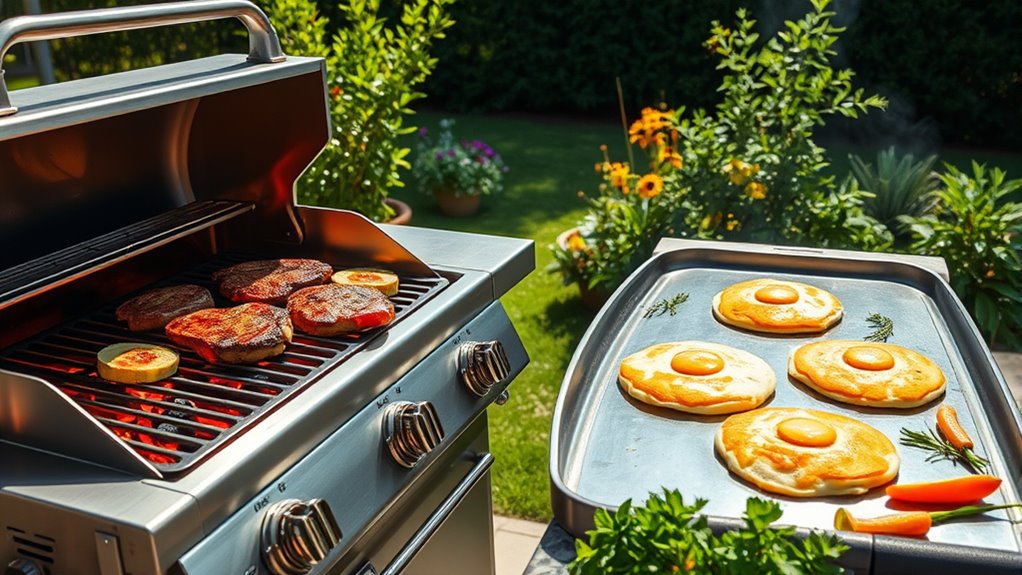
Although both griddles and grills cook food outdoors, they offer distinct cooking experiences. When you use a grill, you’re cooking over open flames or heated grates, which gives your food those classic char marks and smoky flavor. Grills work great if you want that direct heat and a bit of flare in taste.
On the other hand, a griddle provides a flat, solid surface heated evenly underneath. You’ll find it perfect for cooking items that might fall through grill grates or need a smooth surface, like pancakes or eggs. Plus, with a griddle, you have more room to cook multiple things at once without worrying about flare-ups.
Both have their perks, but your choice depends on how you like to cook outdoors.
Which Foods Cook Best on a Griddle vs. a Grill
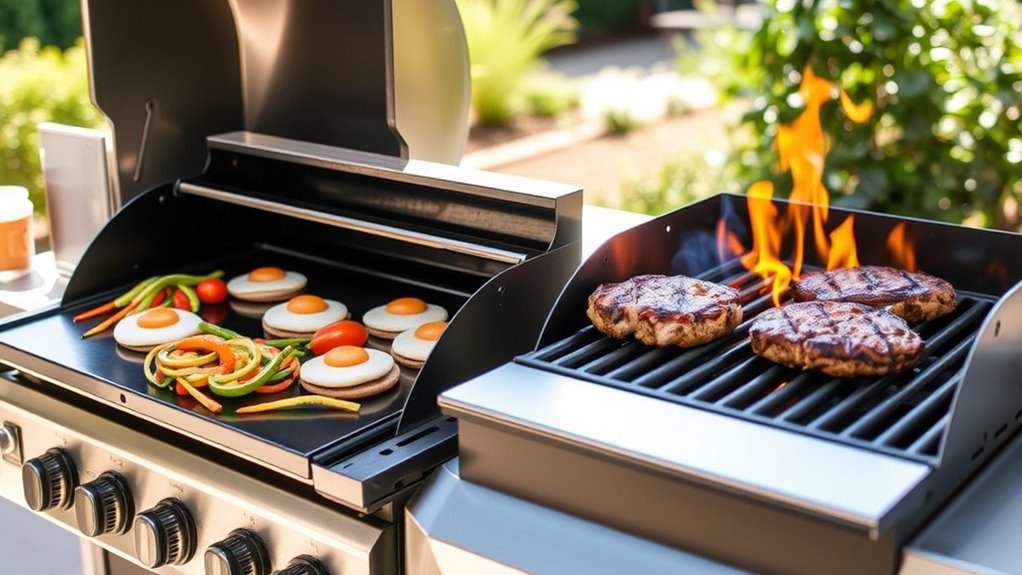
You’ll find that griddles are perfect for foods like pancakes, eggs, and veggies that benefit from even, flat cooking. Grills, on the other hand, excel with steaks, burgers, and anything that gains flavor from direct flames and grill marks.
Understanding these differences helps you choose the right method to get the texture and taste you want.
Best Foods For Griddles
When choosing between a griddle and a grill, understanding which foods thrive on each can elevate your outdoor cooking experience. Griddles are perfect for foods that benefit from even, flat cooking surfaces. You’ll find pancakes, eggs, and bacon cook superbly on a griddle because it prevents sticking and allows easy flipping.
Vegetables like peppers, onions, and mushrooms also do well, as the griddle’s surface lets them caramelize evenly without falling through grates. Sandwiches and quesadillas are another great fit, since the flat surface presses and toasts them uniformly. Even delicate seafood like shrimp and scallops cook nicely on a griddle, avoiding flare-ups that grills might cause.
If you want versatility with foods that need gentle, consistent heat, a griddle is your go-to option.
Ideal Grill Food Choices
Since grills offer open flames and higher direct heat, they excel at cooking foods that benefit from searing and smoky flavors. You’ll want to use your grill for items that develop a rich char and keep juices locked inside. Here are three ideal choices:
- Steaks and Burgers: The direct heat creates a caramelized crust while keeping the inside tender and juicy.
- Chicken with Skin: Grilling crisps the skin beautifully while cooking the meat evenly beneath.
- Thick-Cut Vegetables: Items like bell peppers and zucchini get a smoky char and retain their texture well.
These foods thrive on the grill’s intense heat and open flame, giving you classic barbecue flavors you just can’t replicate on a griddle.
Texture Differences Cooking Methods
Although both griddles and grills cook food using high heat, they deliver distinctly different textures that can make or break your dish. When you use a grill, the direct flame creates those classic char marks and a smoky crust, perfect for steaks, burgers, and vegetables. This method locks in juices while giving food a slightly crisp exterior.
On the other hand, a griddle offers a flat, even surface that cooks food uniformly, making it ideal for delicate items like pancakes, eggs, and thinly sliced meats. You’ll get a tender, consistent texture without the risk of flare-ups or uneven cooking. So, if you want a smoky crunch, go for the grill; if you prefer gentle, even cooking, the griddle’s your best bet.
What a Griddle Lets You Cook Outdoors
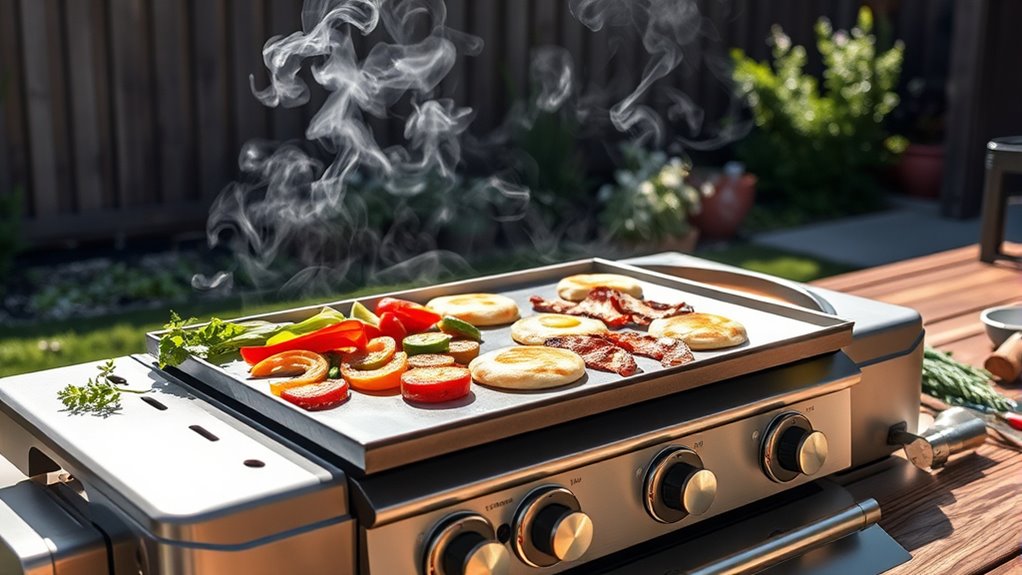
If you want to expand your outdoor cooking options beyond traditional grilling, a griddle offers versatile possibilities. With a griddle, you can cook foods that might fall through grill grates or need an even surface to cook properly.
Expand your outdoor cooking beyond grilling with a griddle that handles delicate and tricky foods perfectly.
Here are three things you can cook easily on a griddle outdoors:
- Breakfast favorites – Think pancakes, eggs, and bacon, all cooked evenly without sticking or falling apart.
- Vegetables and stir-fries – Sauté peppers, onions, and zucchini quickly, locking in flavor and texture.
- Delicate seafood and sandwiches – Grill fish fillets or prepare crispy grilled cheese sandwiches without worrying about food sticking or breaking.
A griddle lets you broaden your outdoor menu and enjoy a variety of meals beyond typical grilled meats.
When a Traditional Grill Works Best
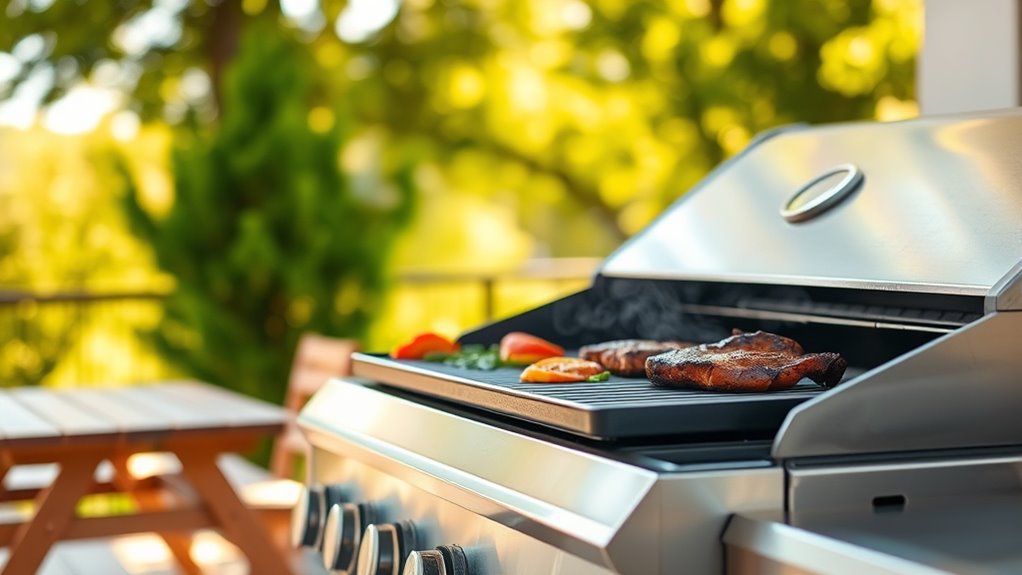
When you want that smoky, charred flavor, a traditional grill shines with its direct flame. It’s perfect for searing steaks and burgers to lock in juices and create a crisp crust.
You’ll appreciate how the flames add that classic taste you can’t get with a griddle.
Direct Flame Benefits
You get unmatched flavor and texture from a traditional grill’s direct flame, especially when cooking meats like steaks or burgers. The intense heat sears the surface, locking in juices and creating those signature grill marks you love.
Here’s why direct flame excels:
- Quick searing: The high temperature caramelizes the meat’s exterior fast, enhancing taste and texture.
- Fat flare-ups: When fat drips onto the flame, it creates smoky bursts that infuse your food with rich, complex aromas.
- Crisp edges: The direct flame crisps edges and adds a slight char, giving a satisfying contrast in every bite.
If you want bold, intense results, cooking over a direct flame is the way to go.
Classic Grill Flavor
The intense heat and smoky bursts from direct flames create the foundation for the classic grill flavor that many grill enthusiasts crave. When you use a traditional grill, you’re exposing your food to those open flames, which caramelize the surface and lock in juices while adding that unmistakable charred taste. This method works best for steaks, burgers, and vegetables that benefit from high heat and quick cooking.
You can’t replicate that signature smokiness or those grill marks with a griddle. If you want that authentic backyard barbecue flavor, a traditional grill is your go-to. So, when flavor is your priority and you want that charred, smoky essence, stick with the classic grill—it’s simply unmatched in delivering that true grilled taste.
Flavor and Cooking: Griddle vs. Grill
Although both griddles and grills cook food outdoors, they deliver distinct flavors and textures that can change your meal experience. When you use a grill, you get that smoky char and sear marks, perfect for steaks and burgers.
A griddle, on the other hand, provides even heat across a flat surface, great for delicate foods like eggs and pancakes.
Here’s how they compare:
- Flavor: Grills add smoky, charred notes; griddles offer a clean, buttery taste.
- Texture: Grills create crisp edges and grill marks; griddles keep food tender and evenly cooked.
- Versatility: Griddles handle small or loose foods better; grills excel with larger cuts and direct flames.
Choosing between them depends on the flavors and dishes you want to create.
Cleaning and Maintaining Outdoor Grills and Griddles
Since outdoor cooking exposes your grill or griddle to grease, food residue, and the elements, regular cleaning and maintenance keep them performing at their best. After each use, scrape off leftover food while the surface is still warm. For grills, clean the grates with a wire brush to remove stuck-on debris.
Griddles require wiping with a cloth or paper towel, followed by a light coating of oil to prevent rust. Periodically, deep clean by disassembling removable parts and soaking them in warm, soapy water. Avoid harsh chemicals that can damage surfaces.
Cover your equipment when not in use to shield it from weather damage. By staying on top of cleaning and maintenance, you’ll extend the lifespan of your grill or griddle and enjoy better cooking results every time.
Budget and Space for Griddles vs. Grills
When deciding between a griddle and a grill, you’ll want to take into account both your budget and the space available. Griddles often cost less upfront, but high-quality models can match grills in price. Space-wise, griddles tend to be more compact, which suits smaller patios or balconies.
Consider these points:
- Initial Cost: Griddles generally start cheaper, but premium grills offer more features.
- Size and Storage: Grills usually require more space and sometimes dedicated storage.
- Versatility vs. Footprint: Grills can handle a wider variety of foods but need more room to operate comfortably.
How to Choose Between an Outdoor Grill With or Without a Griddle?
Deciding whether to choose an outdoor grill with or without a griddle depends on how you plan to use your cooking space. If you enjoy cooking a variety of foods like pancakes, vegetables, or seafood, a griddle adds versatility. It lets you prepare meals that a traditional grill grate can’t handle well.
On the other hand, if you mainly grill burgers, steaks, or kebabs, a grill without a griddle keeps things simple and focused. Consider your typical cooking style and the types of food you often prepare. Also, think about cleaning and maintenance—griddles require extra care.
Ultimately, choose a setup that fits your menu preferences, space, and ease of use. This way, your outdoor cooking will be both enjoyable and efficient.
Frequently Asked Questions
Can I Convert My Existing Grill to Include a Griddle?
Yes, you can convert your existing grill to include a griddle by adding a removable griddle plate or purchasing a griddle accessory designed for your grill model.
This lets you cook versatile meals without replacing your whole grill.
Are Griddles Better for Cooking Breakfast Outdoors?
Cooking breakfast outdoors with a griddle is like catching the sunrise in a skillet; you’ll enjoy even heat and versatility for pancakes, eggs, and bacon. It makes your morning meal easier, tastier, and more fun to prepare.
With a griddle, you can cook multiple items at once without crowding. The flat surface ensures consistent cooking, so nothing sticks or burns.
Whether you’re camping or having a backyard brunch, a griddle adds convenience and flavor. It truly elevates your outdoor breakfast experience.
Do Griddles Require Special Fuel or Accessories?
No, griddles don’t require special fuel; you can use your existing propane or charcoal grill. Just make sure you have proper utensils and a scraper for cleaning, so you can cook smoothly and maintain it well.
How Does Weather Affect Griddle Cooking Compared to Grills?
You might think weather ruins griddle cooking, but it’s actually less affected than grills. Wind or cold can cool grill flames, while griddles evenly retain heat, letting you cook reliably outdoors in most conditions.
Can Kids Safely Use Outdoor Griddles for Cooking?
You can let kids use outdoor griddles safely if you supervise closely and teach them proper handling. Always keep them away from hot surfaces and make sure they use heat-resistant tools to prevent burns and accidents.
Supervision is key to ensuring their safety.
Teaching children the right techniques helps minimize risks.
Conclusion
When deciding between an outdoor grill with or without a griddle, think of it like choosing your kitchen’s secret weapon. A griddle adds versatility, letting you sizzle pancakes or veggies alongside your steaks, while a traditional grill keeps things classic with that smoky char.
If you want to expand your outdoor cooking horizons without losing simplicity, a griddle is your ace in the hole. Choose what fits your style, space, and flavor cravings best! Outdoor grills with griddles often provide more cooking options and flexibility, making them a great choice for those who love variety.