7 Reasons Hickory Is Good for Cutting Boards
You’ll appreciate hickory cutting boards for their unmatched durability and toughness. Hickory is known for its hard, dense grain that resists warping, cracking, and deep knife marks. This makes it an excellent choice for cutting boards that need to withstand heavy use in the kitchen.
They handle tough kitchen tasks like crushing nuts and chopping heavy veggies with ease. Plus, hickory’s natural antibacterial properties help keep your board safe and hygienic.
Regular care, such as oiling and proper storage, ensures your cutting board remains long-lasting and beautiful.
In addition to durability, hickory cutting boards feature unique grain patterns that add charm to your kitchen. Keep exploring to see why hickory stands out as a top choice for cutting boards.
Key Takeaways
- Hickory’s dense grain structure resists warping, cracking, and deep knife marks for long-lasting durability.
- Its high hardness level withstands heavy chopping and crushing without surface damage.
- Natural antibacterial compounds like lignin and tannins promote hygienic food preparation.
- Unique, varied grain patterns provide both aesthetic appeal and functional stability.
- Proper maintenance, including regular oiling and drying, ensures longevity and prevents mold or swelling.
Why Hickory Is a Top Choice for Cutting Boards
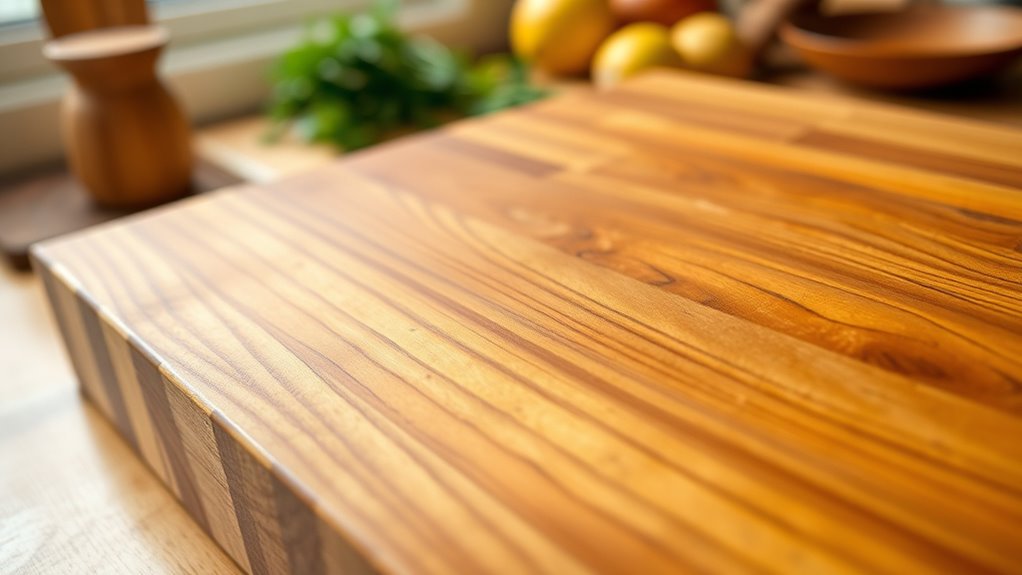
When you choose a cutting board, durability and performance matter most—and hickory delivers on both. You’ll appreciate how this hardwood stands up to daily kitchen tasks without warping or cracking. Hickory’s dense grain structure gives you a sturdy surface that resists deep knife marks, keeping your board looking great longer.
Plus, it offers a natural beauty with rich color variations that add warmth to your kitchen. Hickory also handles moisture well, reducing the risk of swelling or damage from water exposure. When you use a hickory cutting board, you get a reliable, long-lasting tool that balances toughness with a smooth cutting surface.
It’s no wonder cooks keep coming back to hickory as their go-to wood choice.
How Hickory’s Hardness and Durability Protect Your Board
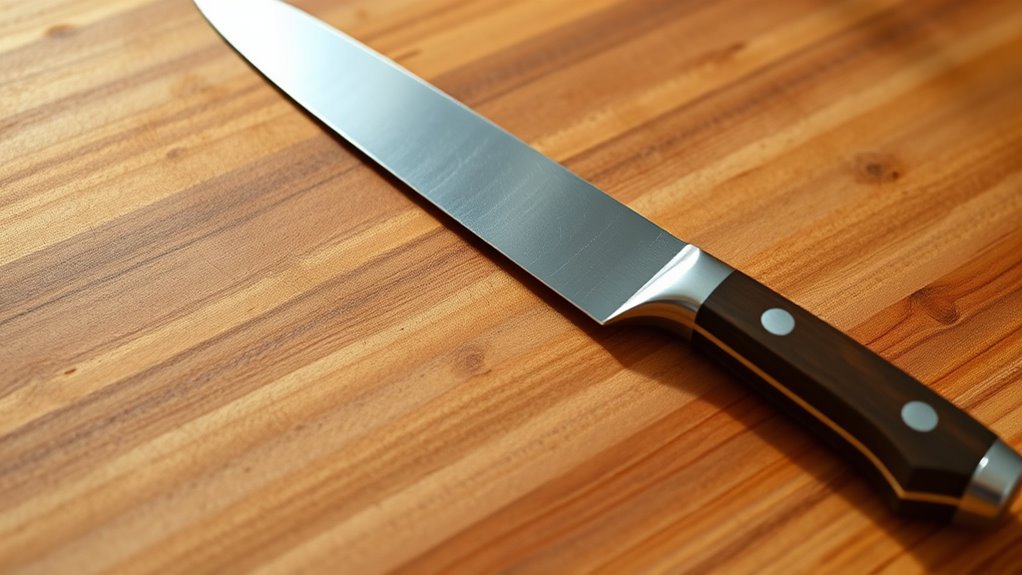
Hickory’s impressive hardness plays a big role in protecting your cutting board from everyday wear and tear. When you use a hickory board, you benefit from its toughness and resistance, which keep it looking new longer. Here’s how its hardness and durability work for you:
Hickory’s toughness protects your cutting board from daily wear, keeping it looking new and durable longer.
- Resists deep knife marks, preventing grooves that harbor bacteria.
- Withstands heavy chopping without cracking or splintering.
- Maintains structural integrity even with frequent washing.
- Offers a firm surface that supports precise cutting without bending.
Choosing hickory means you get a cutting board that endures daily kitchen demands, saving you money and hassle over time. Its natural strength safeguards your investment, making food prep safer and more efficient.
How Hickory’s Grain Pattern Adds Beauty and Function
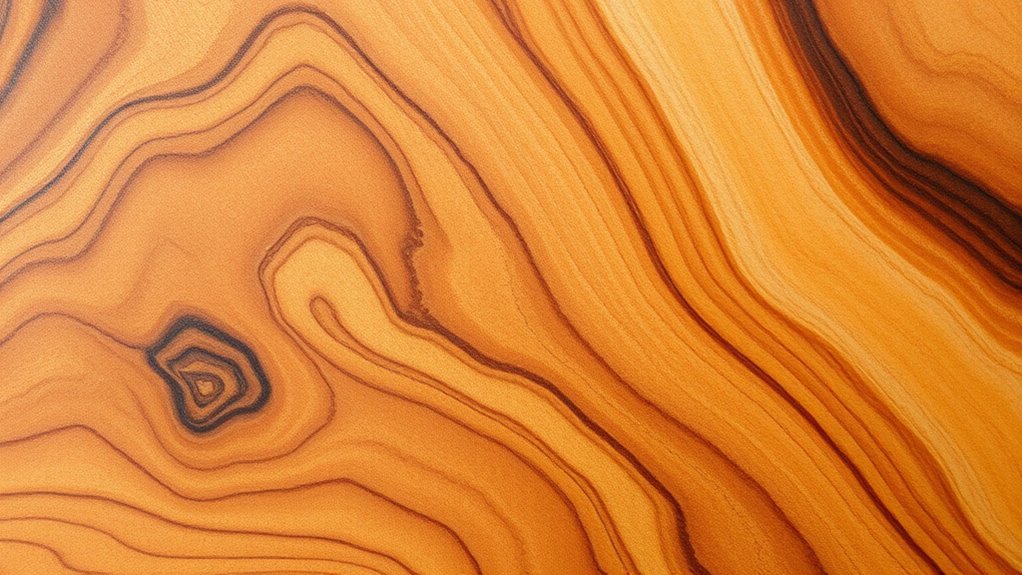
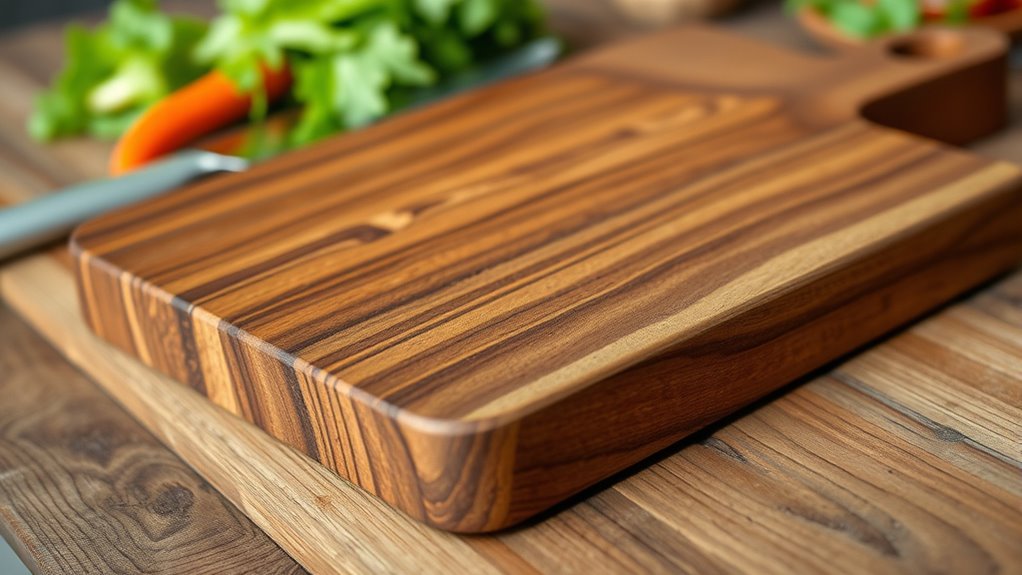
Though you might not always notice it at first glance, the grain pattern of hickory wood brings both striking beauty and practical benefits to your cutting board. Hickory’s grain varies from straight to wavy, creating a natural, eye-catching texture that adds character to your kitchen. This variation means no two boards look exactly alike, giving you a unique piece every time.
Functionally, the dense grain helps prevent warping and cracking, keeping your cutting board stable over time. It also enhances the board’s ability to handle moisture, reducing the chances of damage from spills or washing. By choosing hickory, you get a cutting board that’s not only visually appealing but built to perform well day after day.
Why Hickory Cutting Boards Resist Knife Marks Better
The dense grain that gives hickory cutting boards their strength also plays a big role in resisting knife marks. When you use a hickory board, you’ll notice it doesn’t scar as easily as softer woods, keeping your board looking fresh longer.
Here’s why hickory stands up to knife marks better:
- High Hardness: Hickory ranks high on the Janka hardness scale, so it withstands cuts without deep gouges.
- Tight Grain Structure: The compact grain limits how far knife marks penetrate the surface.
- Durability: Its resilience means it bounces back from minor scratches over time.
- Less Surface Wear: You’ll spend less time sanding or resurfacing your board, saving effort and maintaining quality.
Choosing hickory means your cutting board stays durable and attractive despite heavy use.
How Hickory Keeps Your Cutting Board Hygienic and Safe
You’ll appreciate how hickory’s natural antibacterial properties help keep your cutting board safe for food prep. Its durability and low porosity prevent bacteria from settling into the wood.
Plus, hickory resists moisture damage, reducing the risk of mold and warping over time.
Natural Antibacterial Properties
How does hickory help keep your cutting board hygienic? Hickory naturally fights bacteria, making your kitchen safer. This wood contains compounds that inhibit microbial growth, reducing the risk of contamination.
When you use a hickory cutting board, you benefit from its built-in defense system against germs.
Here’s how hickory’s natural antibacterial properties work:
- Lignin content: It produces antimicrobial substances that slow bacteria growth.
- Tannins: These act as natural disinfectants.
- Moisture regulation: Hickory resists excess water, limiting bacteria-friendly environments.
- Self-healing: Minor cuts close up naturally, preventing bacteria from settling.
Choosing hickory means you get a cutting board that actively helps keep your food prep clean and safe.
Durable and Less Porous
Because hickory is incredibly durable and less porous than many other woods, your cutting board stays hygienic and safe for food prep. Its tight grain structure limits tiny gaps where bacteria and moisture can hide, making it easier for you to clean and maintain. You won’t have to worry about deep cuts or grooves that trap food particles, which often cause contamination in softer woods.
Hickory’s toughness means it withstands heavy chopping without significant damage, so your board remains smooth and safe for longer. When you use a hickory cutting board, you’re choosing a surface that naturally resists bacterial buildup and stays reliable through daily use, helping you keep your kitchen cleaner and your meals safer.
Resistance to Moisture Damage
Although moisture is a common enemy of cutting boards, hickory stands up to it better than many other woods. Its natural tight grain and dense fibers limit water absorption, which helps prevent warping and cracking.
When you choose hickory, you’re investing in a cutting board that stays stable and hygienic even after repeated washing.
Here’s how hickory’s resistance to moisture benefits you:
- Reduces bacterial growth by preventing water retention
- Maintains shape and strength over time
- Minimizes unpleasant odors caused by trapped moisture
- Requires less frequent replacement due to water damage
With hickory, your cutting board stays safer and lasts longer, making your kitchen routine cleaner and more efficient.
Why Hickory Cutting Boards Are Easy to Maintain
You’ll appreciate how hickory’s natural resistance to moisture keeps your cutting board in great shape. Cleaning it is straightforward, requiring just simple soap and water.
Plus, the durable surface means your board will last through years of use with minimal effort.
Natural Resistance to Moisture
How does hickory stand up to everyday kitchen moisture so well? Its natural oils and dense grain structure create a protective barrier that repels water, preventing swelling and warping. This means your cutting board stays reliable even with frequent washing and exposure to damp ingredients.
Here’s why hickory resists moisture effectively:
- Tight Grain Pattern – Limits water absorption.
- Natural Oils – Act as a moisture shield.
- High Density – Reduces wood’s porosity.
- Durable Fibers – Resist cracking from humidity changes.
Because of these qualities, you won’t have to worry about your hickory cutting board deteriorating quickly. Its moisture resistance supports long-lasting performance, making maintenance easier and helping your board look great for years.
Simple Cleaning Process
Because hickory naturally resists moisture and damage, cleaning your cutting board is straightforward and hassle-free. You won’t need special cleaners or extensive scrubbing. A simple rinse with warm water and mild soap usually does the trick.
Plus, hickory’s dense grain prevents deep stains and odors, so your board stays fresh longer.
Here’s a quick guide to cleaning your hickory cutting board:
| Step | Action | Tip |
|---|---|---|
| 1 | Rinse with warm water | Avoid soaking the board |
| 2 | Apply mild soap | Use a soft sponge |
| 3 | Rinse off soap thoroughly | Prevent soap residue |
| 4 | Dry immediately | Use a towel or air dry |
This simple process keeps your board in great shape with minimal effort.
Durable Surface Longevity
Keeping your hickory cutting board clean is just the start of its long-lasting appeal. Hickory’s dense grain resists deep cuts and warping, so your board stays smooth and functional for years. You’ll find it easy to maintain thanks to its natural durability.
To keep it in top shape, follow these key tips:
- Oil your board regularly to prevent drying and cracking.
- Avoid soaking it in water; instead, wipe it down promptly after use.
- Sand lightly if minor scratches or stains appear.
- Store in a dry, well-ventilated area to prevent mold and swelling.
Which Kitchen Tasks Benefit Most From Hickory Cutting Boards
Which kitchen tasks truly benefit from the strength and durability of hickory cutting boards? When you’re chopping tough vegetables like carrots or butternut squash, hickory’s hard surface stands up without damaging your knives. It’s ideal for slicing dense fruits such as apples and pears, giving you a stable cutting area that won’t warp or crack.
If you often prepare meat, hickory resists deep cuts, so it’s easier to clean and more hygienic. You’ll also find it perfect for heavy-duty tasks like crushing garlic or cracking nuts, thanks to its solid build. Overall, hickory cutting boards handle rigorous daily kitchen work with ease, making your food prep safer and more efficient every time you cook.
Frequently Asked Questions
Is Hickory Wood Eco-Friendly and Sustainably Sourced?
Yes, hickory wood can be eco-friendly if sourced sustainably. You should look for certifications like FSC to guarantee responsible harvesting. By choosing certified hickory, you help support sustainable forestry and reduce environmental impact.
Can Hickory Cutting Boards Be Used With Hot Pots or Pans?
You shouldn’t place hot pots or pans directly on hickory cutting boards, as the heat can damage the wood and cause warping or cracking. Use trivets or heat-resistant pads to protect your board and keep it lasting longer.
This simple step helps maintain the board’s integrity and appearance. Protecting your cutting board ensures it remains a durable kitchen tool. Always handle hot cookware with care to avoid damage.
How Does Hickory Compare in Price to Other Hardwoods?
Hickory cutting boards usually cost less than premium hardwoods like maple or walnut. You’ll find them affordable yet durable, giving you great value without sacrificing quality.
They’re a smart choice if you’re budget-conscious.
Are There Any Special Finishes Used on Hickory Cutting Boards?
Yes, you’ll often find hickory cutting boards finished with food-safe oils like mineral oil or beeswax. These finishes protect the wood, enhance its natural beauty, and keep your board durable and safe for daily use.
Can Hickory Cutting Boards Be Customized or Personalized?
Yes, you can customize hickory cutting boards with engravings, initials, or unique shapes. Many makers offer personalized options, letting you create a functional, beautiful piece that reflects your style and makes a great gift too.
Conclusion
So, you want a cutting board that’s tough, beautiful, and practically immune to knife marks? Hickory’s got you covered—because who wouldn’t want a board that’s harder than your chef’s ego and just as durable? It’s hygienic, easy to maintain, and perfect for all your kitchen tasks.
Ironically, the toughest wood might just be the gentlest on your knives and your sanity. Hickory’s the silent hero your kitchen deserves. When choosing a cutting board, hickory stands out for its strength, durability, and knife-friendly qualities that make it ideal for everyday use.