Is Copper Cookware Safe
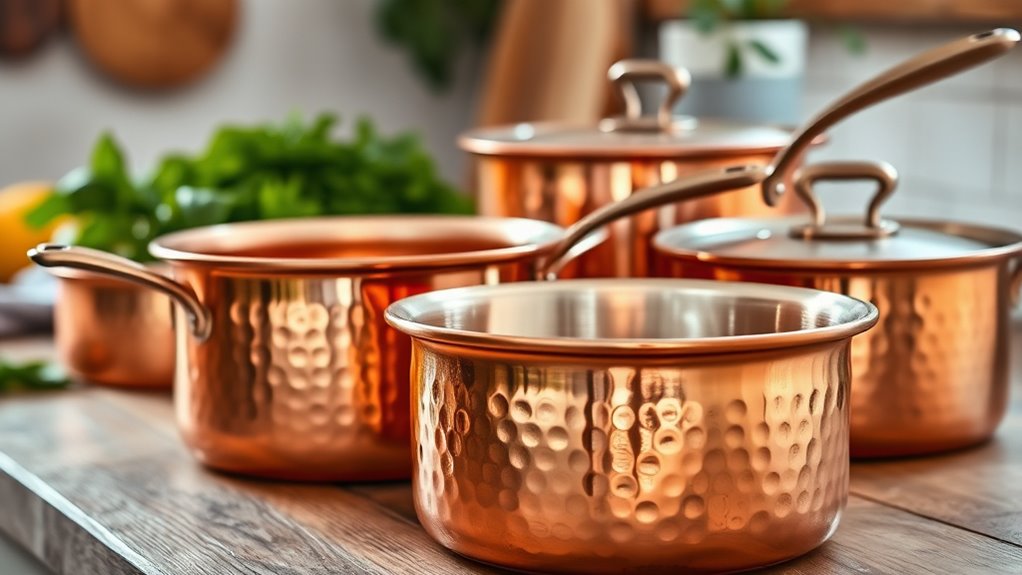
You can safely use copper cookware as long as it’s properly lined with a non-reactive metal like stainless steel or tin. Copper cookware safety is crucial because untreated copper can react with acidic foods, altering flavors and causing health risks.
Using lined copper pots and pans ensures you enjoy its excellent heat conductivity without compromise.
Untreated copper can react with acidic foods, altering flavors and causing health risks. To keep your cookware safe and durable, avoid overheating, use gentle utensils, and clean it carefully.
Taking these steps helps preserve copper’s excellent heat control and cooking performance.
Keep exploring to uncover tips on care, safety, and when to repair or replace your copper pots and pans. Proper maintenance extends the life of your copper cookware and keeps it safe for everyday cooking.
Key Takeaways
- Copper cookware is safe when lined with non-reactive metals like stainless steel or tin to prevent copper from leaching into food.
- Unlined copper reacts with acidic or alkaline foods, potentially causing toxicity and altering flavors.
- Proper use includes cooking on medium to low heat and avoiding metal utensils to protect the lining and prevent copper exposure.
- Regular inspection and maintenance prevent damage, corrosion, and ensure safe, effective cookware performance.
- Avoid overheating and prolonged soaking to maintain cookware integrity and minimize health risks.
Why Do Cooks Love Copper Cookware?
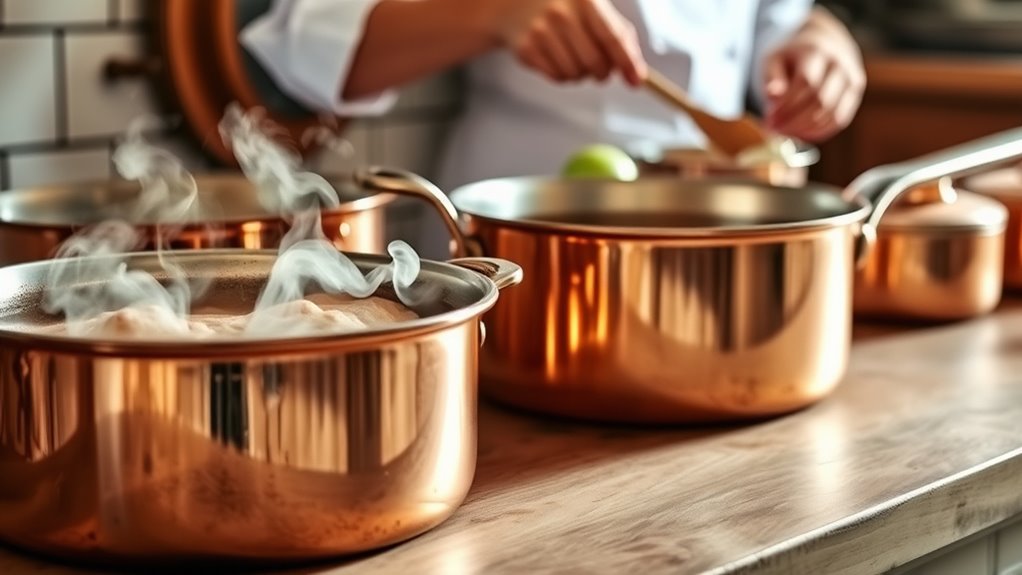
Though it may require a bit more care, cooks love copper cookware because it heats quickly and distributes heat evenly, giving you precise control over your cooking. When you use copper pots or pans, you’ll notice they respond instantly to temperature changes, allowing you to avoid hot spots that can burn your food. This responsiveness means you can simmer sauces gently or sear meats perfectly without guesswork.
Plus, copper’s excellent thermal conductivity helps you cook more efficiently, saving time and energy. You’ll appreciate how copper cookware feels balanced and comfortable, often crafted with sturdy handles and elegant designs. Whether you’re a professional chef or a home cook, copper’s performance makes it an appealing choice for achieving consistent, high-quality results every time.
How Copper Cookware Is Made and Finished for Safety
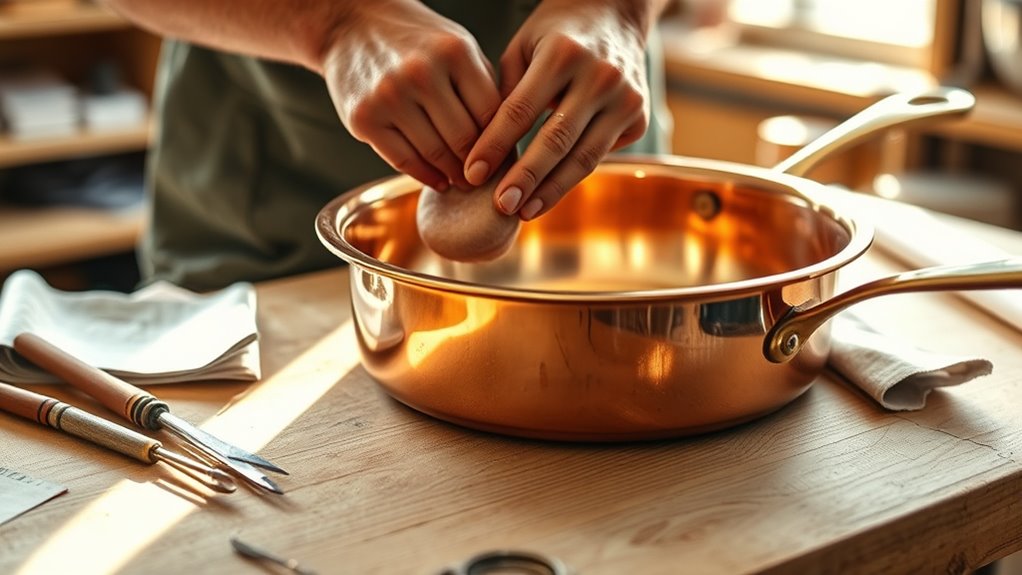
Because copper reacts with certain foods, manufacturers line copper cookware with safe, non-reactive metals like stainless steel or tin to protect both the cookware and your meals. This lining process assures you get the benefits of copper’s heat conductivity without health risks. The cookware is typically hand-hammered or machine-pressed into shape, then polished to a smooth finish.
Copper cookware is lined with stainless steel or tin to ensure safe, efficient cooking without health risks.
Next, the lining is carefully applied and bonded to the copper surface for durability.
Here’s what happens during the making and finishing process:
- Copper sheets are shaped into pots or pans
- Surfaces are polished and cleaned thoroughly
- A tin or stainless steel lining is added inside
- Linings are fused using heat and pressure
- Handles and rivets are securely attached
This process guarantees your copper cookware is both safe and long-lasting.
Why Copper Cookware Conducts Heat So Well
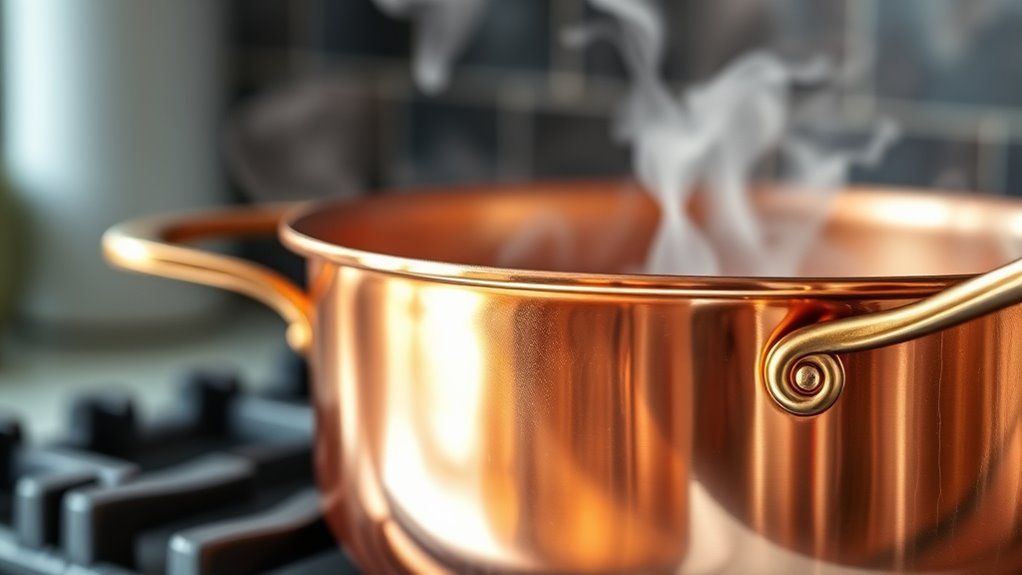
When you cook with copper cookware, you’ll notice it heats up quickly and evenly, giving you precise control over your dishes. That’s because copper is one of the best conductors of heat among metals. Its atomic structure allows heat to flow rapidly through the material, distributing warmth uniformly across the surface.
This means no hot spots, so your food cooks consistently. Plus, copper responds quickly to temperature changes, letting you adjust heat instantly without delay. This responsiveness helps you avoid overcooking or burning.
Can Copper Cookware React With Foods? What You Need to Know
Copper cookware’s excellent heat conduction can enhance your cooking, but it also raises an important question: can copper react with the foods you prepare? Yes, copper can react, especially with acidic ingredients, which may alter flavors and cause discoloration. However, most copper cookware is lined with a non-reactive metal like stainless steel or tin to prevent this.
Here’s what you need to know:
- Copper directly contacts food only if unlined.
- Acidic foods (tomatoes, vinegar, citrus) can trigger reactions.
- Reactions might produce a metallic taste.
- Linings act as barriers to keep copper from mixing with food.
- Properly maintained linings reduce reactivity risks.
Using lined copper cookware helps you enjoy great heat conduction without worrying about food reactions.
Risks of Cooking With Untreated Copper
If you cook with untreated copper, you risk exposing your food to harmful reactions that can affect both taste and safety. Copper reacts with acidic or alkaline foods, causing the metal to leach into your meal. This not only alters the food’s flavor, often giving it a metallic or bitter taste, but can also lead to copper toxicity if consumed in large amounts.
Symptoms of copper poisoning include nausea, vomiting, and stomach pain. Additionally, prolonged exposure to untreated copper cookware can cause your pots and pans to tarnish quickly, reducing their lifespan and performance. To avoid these risks, it’s important to recognize that untreated copper isn’t safe for direct cooking, especially with certain food types, and should be handled with caution in your kitchen.
How Protective Finishes Keep Copper Cookware Safe
You’ll find copper cookware often comes with protective finishes like tin, stainless steel, or food-safe lacquer to keep it safe for cooking. These linings prevent copper from reacting with your food, preserving both flavor and health.
Knowing how to care for these finishes will help your cookware last longer and stay effective.
Types Of Protective Coatings
Although copper itself offers excellent heat conductivity, its reactive nature means it needs a protective coating to keep your cookware safe and durable. These coatings prevent copper from reacting with acidic foods and help maintain its longevity.
You’ll find several types of protective finishes, each with unique benefits:
- Tin lining: Traditional, food-safe, but wears out faster and needs re-tinning.
- Stainless steel: Durable, non-reactive, and easy to maintain.
- Nickel plating: Provides a smooth surface but less common due to allergy concerns.
- Polymer coatings: Non-stick options, though less heat-resistant.
- Oil seasoning: Natural method, mainly for unlined copper pans but requires upkeep.
Choosing the right coating helps you enjoy copper’s performance without compromising safety.
Benefits Of Lining Materials
Because copper reacts with certain foods, protective linings play a crucial role in keeping your cookware safe and functional. These linings prevent copper from leaching into acidic or alkaline dishes, which can affect flavor and pose health risks. They also shield the copper surface from tarnishing and corrosion, extending your cookware’s lifespan.
With materials like stainless steel, tin, or ceramic, you get a smooth, non-reactive cooking surface that distributes heat evenly while maintaining copper’s excellent thermal conductivity. This means you can cook with precision without worrying about chemical interactions. Plus, linings make your cookware easier to clean and maintain, so you can enjoy copper’s benefits safely every time you cook.
Maintenance Of Copper Finishes
When you care for your copper cookware’s finish properly, you protect both its appearance and safety. The protective finish prevents copper from reacting with food, so maintaining it is essential. To keep your cookware in top shape, follow these tips:
- Clean with mild detergent and soft cloth to avoid scratching.
- Avoid abrasive cleaners that can wear down the finish.
- Dry thoroughly after washing to prevent water spots and oxidation.
- Polish occasionally with a copper-safe polish to restore shine.
- Store in a dry place, away from humidity and direct sunlight.
Is Lined Copper Cookware Better for Everyday Cooking?
When you choose lined copper cookware, you get the excellent heat conductivity of copper with a safer cooking surface. The lining prevents direct contact between food and copper, reducing the risk of copper leaching.
This makes lined copper pots and pans a better option for everyday use.
Benefits of Lined Copper
Although unlined copper offers excellent heat conductivity, lined copper cookware provides a safer and more practical option for everyday cooking. When you choose lined copper, you enjoy the benefits of copper’s superior heat distribution without worrying about copper reacting with acidic foods. This makes it easier to cook a variety of dishes without altering flavors or risking toxicity.
Here’s why lined copper cookware works well for your kitchen:
- Prevents copper from leaching into food
- Maintains even cooking temperatures
- Easier to clean and maintain
- Compatible with acidic and alkaline ingredients
- Durable and long-lasting with proper care
Safety Compared to Unlined
How safe is unlined copper cookware compared to lined options? Unlined copper can react with acidic foods, releasing copper ions that may cause nausea or stomach upset if ingested in large amounts. If you cook acidic dishes often, unlined copper isn’t the best choice for everyday use.
Lined copper cookware, usually coated with stainless steel or tin, prevents this reaction, making it safer for regular cooking. You get copper’s excellent heat conduction without worrying about copper leaching into your food. While unlined copper offers superior heat control, lined versions balance safety and performance.
Which Foods Should You Avoid Cooking in Copper Pans?
Since copper reacts with certain ingredients, you should avoid cooking acidic or alkaline foods in copper pans. These reactions can cause the copper to leach into your food, affecting flavor and safety. To keep your cooking safe and tasty, steer clear of:
Avoid cooking acidic or alkaline foods in copper pans to prevent harmful reactions and preserve flavor.
- Tomatoes and tomato-based sauces
- Citrus fruits like lemons and oranges
- Vinegar and pickled foods
- Onions and garlic (when cooked for long periods)
- Foods with a high alkaline content, such as rhubarb
These foods can cause discoloration and produce a metallic taste. If you want to cook these ingredients, use copper pans lined with stainless steel or tin to prevent direct contact.
How to Use Copper Cookware Safely Every Day
To get the most out of your copper cookware, you’ll want to handle it with care and follow some simple safety tips. Always use wooden or silicone utensils to avoid scratching the lining. Avoid overheating your pans, as excessive heat can damage the lining and release copper into your food.
Cook on medium or low heat for best results. Since copper reacts with acidic foods, make sure your cookware has a proper lining, like stainless steel or tin, and avoid cooking highly acidic dishes if the lining is worn. Store your copper pots and pans in a dry place to prevent tarnishing and corrosion.
Best Ways to Clean and Maintain Copper Cookware
You’ll want to clean your copper cookware regularly to keep it looking bright and performing well. Using gentle cleaning methods and avoiding harsh chemicals will protect the surface.
Let’s go over some easy maintenance tips to extend the life of your copper pots and pans.
Cleaning Methods
Because copper cookware requires special care, knowing the best cleaning methods helps you maintain its shine and performance. You want to avoid harsh chemicals and abrasive tools that can damage the surface. Instead, try gentle but effective techniques to keep your cookware looking great.
Here are five cleaning tips for copper cookware:
- Use a mixture of lemon juice and salt to remove tarnish naturally.
- Wash with warm water and mild dish soap after each use.
- Avoid soaking copper pans for long periods to prevent damage.
- Dry immediately with a soft cloth to prevent water spots.
- For stubborn stains, apply a paste of baking soda and water, then rinse thoroughly.
Following these steps will help you keep your copper cookware both beautiful and functional.
Maintenance Tips
Keeping your copper cookware in top shape goes beyond regular cleaning. You should polish it regularly to maintain its shine and prevent tarnish. Avoid using harsh abrasives that can scratch the surface.
Always dry your cookware immediately after washing to prevent water spots. Storing copper pots and pans properly helps avoid damage—hang them or stack with protective layers. Here’s a quick guide to help you maintain your copper cookware effectively:
| Task | Recommended Method | Frequency |
|---|---|---|
| Polishing | Use a copper cleaner or lemon and salt | Monthly |
| Washing | Hand wash with mild soap | After each use |
| Drying & Storing | Dry immediately, hang or separate | After each use |
Following these tips will keep your copper cookware looking great and performing safely.
When to Repair or Replace Your Copper Cookware
Although copper cookware is durable, knowing when to repair or replace it guarantees your kitchen stays safe and efficient. You should closely inspect your pots and pans for signs of wear that could affect cooking performance or safety. If you notice damage, act promptly to avoid hazards.
Look for these warning signs:
- Deep dents or warping that affect heat distribution
- Peeling or worn copper lining exposing reactive metals
- Loose or damaged handles that risk accidents
- Persistent discoloration or corrosion that cleaning can’t fix
- Cracks or holes causing leaks during cooking
If repairs are costlier than replacement or if safety is compromised, it’s time to invest in new copper cookware. This guarantees your meals stay delicious and your kitchen stays hazard-free.
Frequently Asked Questions
Can Copper Cookware Affect the Taste of Food?
Yes, copper cookware can affect your food’s taste if it’s unlined, giving a metallic flavor. But if you use lined copper pots, you won’t notice any taste changes while cooking delicious meals.
Is Copper Cookware Dishwasher Safe?
Sure, toss your copper pans in the dishwasher—watch them return looking like a haunted relic! You’d better hand wash them gently; dishwashers strip their shine and damage the lining faster than you can say “sparkle.”
How Heavy Is Copper Cookware Compared to Other Types?
Copper cookware is heavier than aluminum but lighter than cast iron. You’ll feel its solid weight in your hand, offering excellent heat conduction without the bulk, making it easier to handle than some heavier alternatives.
Does Copper Cookware Work on Induction Stovetops?
Copper cookware doesn’t work directly on induction stovetops because it’s not magnetic. You’ll need copper pans with a magnetic stainless steel base or use an induction interface disk to cook on induction burners effectively.
Are There Any Eco-Friendly Copper Cookware Brands?
Yes, you’ll find eco-friendly copper cookware brands like Falk Culinair and Mauviel that prioritize sustainable sourcing and recyclable materials. They focus on durability too, so your cookware lasts longer, reducing waste and environmental impact.
Conclusion
Think of copper cookware like a trusted friend who shines bright but needs a little care. Just like you wouldn’t wear your favorite shoes in the rain, you shouldn’t cook acidic foods in untreated copper—it can react and cause harm.
When you maintain it properly and use it wisely, copper cookware rewards you with even heat and lasting beauty. Treat it well, and it’ll cook up a storm for years to come.
In conclusion, copper cookware is safe when used correctly and properly maintained. Understanding how to care for it ensures you enjoy its benefits without risk. Safe cooking practices make copper cookware a valuable addition to your kitchen.