A Good Frying Pan to Cook on a Gas Stove
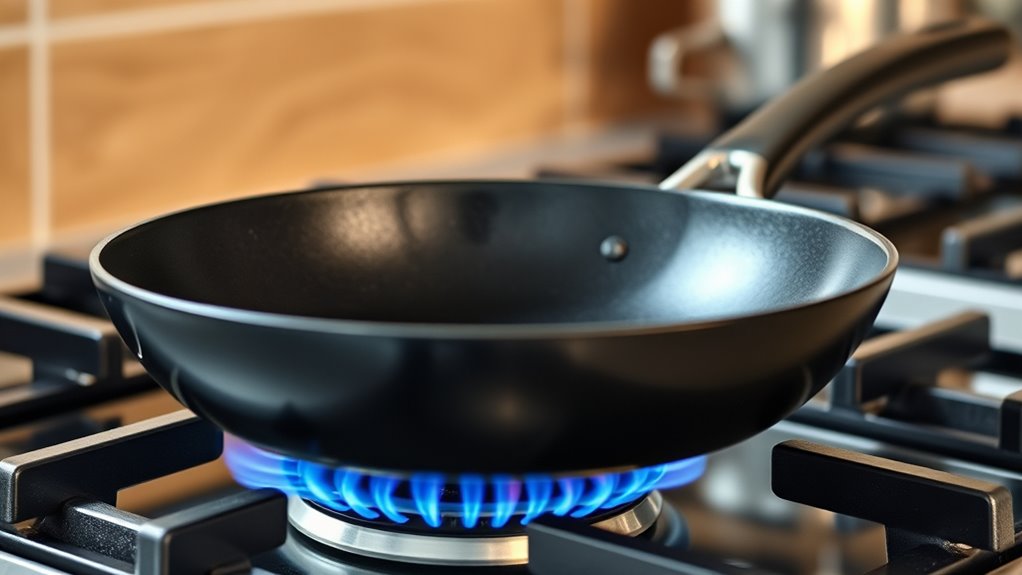
To cook well on a gas stove, choosing a good frying pan is essential. A good frying pan to cook on a gas stove should have a flat, sturdy base that guarantees even heat distribution and stability. This ensures your food cooks evenly without hot spots or wobbling.
Pick materials like cast iron or stainless steel for durability and excellent heat retention. Aluminum is a great option for quick and even heating. Avoid thin pans that warp easily under high heat, as they can affect cooking performance.
Look for heat-resistant handles to ensure safety while cooking. Proper care and maintenance also keep your pan in top shape for years. Keep going to discover how each feature really impacts your cooking.
Key Takeaways
- Choose pans with flat, sturdy bases for even heat distribution and stable contact with gas stove burners.
- Opt for materials like cast iron, stainless steel, or copper for durability and efficient heat handling on a gas stove.
- Select pan thickness based on cooking needs: thicker pans retain heat better, thinner pans heat up faster but may warp.
- Use appropriately sized pans: small for quick searing, medium for versatile cooking, and large for family-sized meals.
- Maintain pans by avoiding high flames, preheating gradually, hand washing, and regularly seasoning cast iron cookware.
Why Choosing the Right Frying Pan Matters for Gas Stoves

When you cook on a gas stove, choosing the right frying pan makes a big difference in how evenly your food cooks and how well the pan holds up over time. Gas stoves deliver direct, intense heat, so your pan needs to handle quick temperature changes without warping. If the pan doesn’t heat evenly, you’ll end up with hot spots that burn some food while leaving other parts undercooked.
You’ll also want a pan that responds quickly when you adjust the flame, giving you better control over your cooking. Plus, a durable pan can withstand the open flame and constant heat without degrading. Picking the right pan guarantees your meals turn out perfectly every time and saves you from replacing cookware frequently.
What Materials Make the Best Frying Pans for Gas Stoves?
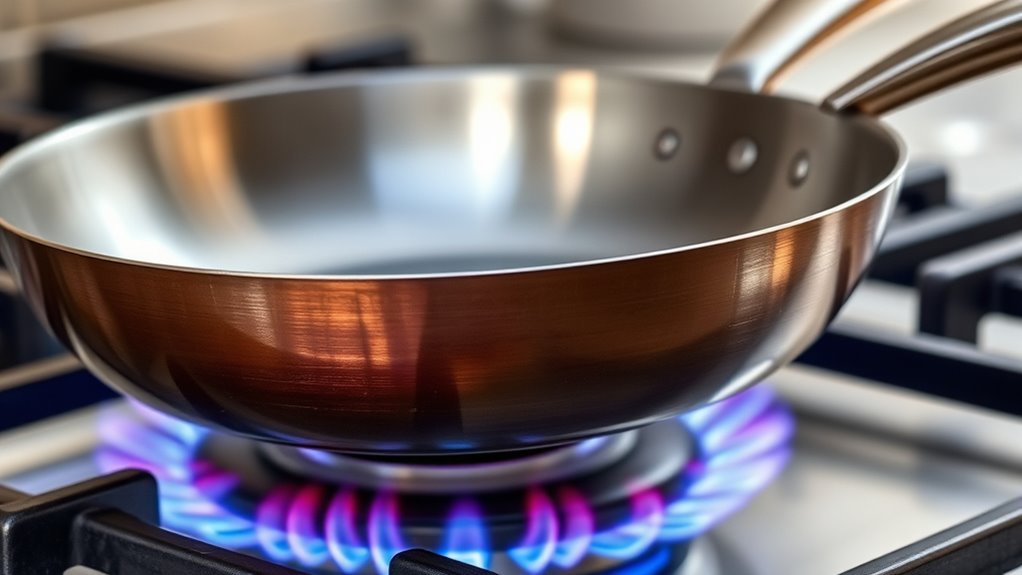
Choosing the right material for your frying pan considerably impacts how well it performs on a gas stove. Cast iron is a top choice because it distributes heat evenly and retains it well, perfect for consistent cooking. Stainless steel pans are durable and handle high heat without warping, making them reliable for gas stoves.
Aluminum pans heat up quickly and offer good heat conductivity, but make sure they have a sturdy base to prevent warping. Copper pans excel at heat responsiveness but usually come with a stainless steel lining to avoid reactivity. When selecting, consider how each material handles direct flame, heat distribution, and durability to match your cooking style.
Picking the right material guarantees your frying pan works efficiently and lasts longer on your gas stove.
Nonstick vs. Stainless Steel: Which Pan Works Better on Gas Stoves?

Although both nonstick and stainless steel pans have their merits on gas stoves, deciding which one works better depends on your cooking needs and maintenance preferences. Nonstick pans heat quickly and prevent food from sticking, making them perfect for cooking eggs, pancakes, or delicate fish. They also require less oil, which is great for healthier meals.
However, they demand gentle care to avoid scratching the coating. Stainless steel pans, on the other hand, offer superior durability and high-heat tolerance, ideal if you love searing meats or deglazing for sauces. They’re dishwasher safe and can withstand metal utensils but may require more oil to prevent sticking.
Ultimately, choose nonstick for convenience and easy cleanup, or stainless steel for versatility and longevity on your gas stove.
Why You Need a Flat, Sturdy Base for Gas Stove Pans
You want a frying pan with a flat, sturdy base to guarantee even heat distribution across the surface. This helps your food cook consistently without hot spots.
Plus, a stable pan keeps you safe by preventing wobbling while you’re cooking.
Even Heat Distribution
When cooking on a gas stove, a flat and sturdy base guarantees your frying pan heats evenly, preventing hot spots that can burn food. Uneven heat means you’ll struggle with inconsistent cooking results, where some parts of your dish cook too fast while others lag behind.
To achieve that perfect sear or sauté, your pan must distribute heat uniformly.
Here’s why even heat distribution matters:
- Ensures consistent cooking, so every bite tastes great
- Prevents food from sticking or burning in one spot
- Saves energy by reducing the need to adjust heat constantly
- Helps maintain the pan’s longevity by avoiding warping from uneven heating
Choosing a pan with a flat, sturdy base means you’ll cook smarter and enjoy better meals.
Stability During Cooking
Because gas stove flames can be uneven and powerful, a flat, sturdy base keeps your frying pan stable and secure during cooking. When your pan sits evenly on the burner, it won’t wobble or tip, reducing the risk of spills and accidents. You’ll have better control when stirring or flipping food, making your cooking experience safer and smoother.
A pan with a warped or uneven bottom can rock back and forth, causing hot oil or food to splash, which can be dangerous. Plus, stability guarantees consistent contact with the heat source, improving cooking efficiency. So, always choose a frying pan designed with a flat, heavy base to match your gas stove’s intensity and keep your kitchen safe and your meals perfectly cooked.
How Frying Pan Thickness Affects Heat on Gas Stoves
Although it might seem like a small detail, the thickness of your frying pan dramatically influences how heat distributes on a gas stove. A thicker pan absorbs and spreads heat more evenly, preventing hot spots that can burn your food. Conversely, thinner pans heat quickly but often unevenly, making temperature control tricky.
Consider these points when choosing thickness:
- Thick pans retain heat longer, ideal for steady cooking.
- Thin pans respond faster to temperature changes, offering quick heat adjustments.
- Heavy pans may take longer to heat but cook food more uniformly.
- Thinner pans risk warping under high gas flames, reducing lifespan.
How Handle Design Improves Safety and Comfort on Gas Stove Pans
When you choose a frying pan, pay close attention to the handle design for better safety and comfort. Handles made from heat-resistant materials keep your hands cool, while an ergonomic grip helps you hold the pan securely.
These features make cooking on a gas stove easier and safer every time.
Heat-Resistant Handle Materials
Choosing a frying pan with heat-resistant handle materials makes a big difference in both safety and comfort while cooking on a gas stove. When you pick the right handle material, you reduce the risk of burns and make it easier to maneuver the pan.
Here are some common heat-resistant materials to look for:
- Silicone: Provides excellent heat resistance and a soft, non-slip grip.
- Stainless Steel with Insulation: Durable and heats slower when insulated properly.
- Bakelite: A classic choice, heat-resistant but can degrade over time.
- Wood: Naturally heat-resistant and comfortable, but requires care to avoid damage.
Choosing these materials helps keep your hands safe and your cooking experience smooth.
Ergonomic Grip Design
Since you handle your frying pan frequently while cooking, an ergonomic grip design plays an essential role in enhancing both safety and comfort. A well-designed handle fits your hand naturally, reducing strain during prolonged use. It allows you to maintain a secure hold, even when your hands are wet or greasy, minimizing the risk of accidental slips that could cause burns or spills.
Ergonomic grips often feature textured surfaces or contours that improve control and balance, making it easier to maneuver the pan, especially on a gas stove with open flames. When choosing a frying pan, look for handles shaped to support your wrist and fingers comfortably, so you can cook confidently without discomfort or worry about dropping the pan.
Why Quick Heat Response Matters for Gas Stove Cooking
Why does quick heat response matter so much when cooking on a gas stove? Because gas stoves heat up and cool down instantly, your frying pan needs to keep pace. If your pan reacts slowly, you risk overcooking or undercooking your food.
Quick heat response gives you control and precision, enhancing your cooking experience.
With a pan that heats rapidly, you can:
- Sear meats perfectly by locking in juices.
- Adjust temperature instantly to prevent burning.
- Cook delicate ingredients like eggs without sticking.
- Save energy by reducing cooking time.
Choosing a pan with excellent heat conductivity means you’ll enjoy more consistent results and better control, making your gas stove cooking efficient and satisfying every time.
Best Frying Pan Sizes for Different Gas Stove Cooking Tasks
You’ll want to choose your frying pan size based on what you’re cooking. Small pans work great for searing, while medium sizes offer the versatility needed for everyday meals.
If you’re cooking for a family, a large pan will give you plenty of space to handle bigger portions.
Small Pans For Searing
When you need to quickly sear meats or vegetables on a gas stove, small frying pans deliver the best results. Their compact size allows you to concentrate heat efficiently, creating that perfect, caramelized crust. You’ll find that a small pan heats up faster and gives you better control over cooking temperature.
Consider these key benefits of small pans for searing:
- Rapid heat distribution for even cooking
- Fits perfectly on single burners without wasting energy
- Easier to maneuver, flip, and control food placement
- Requires less oil, making meals healthier and cleaner
Choose a pan around 8 to 10 inches to maximize these advantages. This size balances enough surface area for searing while keeping heat intense and focused. Small pans are your go-to for quick, high-heat searing on gas stoves.
Medium Sizes For Versatility
Although small pans excel at searing, medium-sized frying pans offer the versatility you need for a wider range of cooking tasks on a gas stove. Typically ranging from 8 to 10 inches in diameter, these pans strike a perfect balance between capacity and control. You can easily sauté vegetables, cook eggs, or prepare single-serve meals without overcrowding the pan.
Their size also allows for even heat distribution on most gas burners, ensuring consistent cooking. If you’re juggling multiple ingredients or want a pan that adapts to various recipes, a medium pan is your go-to. It’s compact enough for quick tasks but spacious enough when you need more room.
Investing in one gives you flexibility without sacrificing efficiency in your kitchen.
Large Pans For Family
Medium-sized pans handle most everyday cooking tasks well, but if you’re preparing meals for a family or larger group, a bigger pan becomes necessary. Large frying pans, typically 12 inches or more, give you enough surface area to cook multiple portions at once without crowding. This helps guarantee even cooking and better browning.
When choosing a large pan for your gas stove, consider:
- A wide base for stable heat distribution
- Deep sides to prevent splatters and accommodate bigger meals
- Durable materials like stainless steel or cast iron for longevity
- Comfortable, heat-resistant handles for easy maneuvering
With the right large pan, you’ll save time and serve perfectly cooked dishes to everyone gathered at your table.
How to Prevent Warping and Damage From Gas Stove Flames
To keep your frying pan in top shape on a gas stove, you need to manage the flame size carefully. Avoid turning the flame too high, as excessive heat can cause warping and damage the pan’s surface. Make sure the flames don’t extend beyond the pan’s bottom edge; this prevents uneven heating and protects the handle from overheating.
Always preheat your pan gradually instead of placing it on a full flame immediately. This helps maintain the pan’s structural integrity. Also, avoid sudden temperature changes—don’t put a hot pan under cold water, as thermal shock can warp it.
How to Care for and Maintain Your Frying Pan on a Gas Stove
When you cook regularly on a gas stove, caring for your frying pan guarantees it performs well and lasts longer. To maintain your pan’s quality, you’ll want to clean and store it properly. Avoid harsh detergents or abrasive sponges that can damage the surface.
Proper care ensures your frying pan performs well and lasts longer when cooking on a gas stove.
Season cast iron pans regularly to keep them non-stick and rust-free. Also, always let your pan cool before washing to prevent warping.
Here are four key care tips:
- Hand wash with mild soap and warm water
- Dry thoroughly to prevent rust
- Re-season cast iron or carbon steel pans after cleaning
- Store pans in a dry place, avoiding stacking that can scratch surfaces
Following these steps helps keep your frying pan in top shape for all your gas stove cooking needs.
Best Durable Frying Pan Brands for Gas Stove Cooking
Although many frying pans work on gas stoves, choosing a durable brand guarantees you get consistent heat distribution and long-lasting performance. Brands like All-Clad, Le Creuset, and Lodge are trusted for their sturdy construction and excellent heat retention. All-Clad’s stainless steel pans excel in durability and even heating, perfect for your gas stove’s flames.
Le Creuset offers enameled cast iron pans that handle high heat while resisting wear. Lodge provides affordable cast iron options that improve seasoning over time, enhancing nonstick qualities. If you prefer nonstick, brands like T-fal and Calphalon deliver resilient coatings that withstand gas stove temperatures without peeling.
Selecting any of these brands ensures your frying pan handles daily cooking demands, making your meals tastier and your investment worthwhile.
Where to Buy Quality Frying Pans Made for Gas Stoves
Since finding a quality frying pan made for gas stoves can be overwhelming, knowing where to shop makes a big difference. You’ll want to choose retailers that offer a wide selection and reliable brands. Start by checking specialty kitchen stores where experts can guide you.
Online marketplaces provide customer reviews and competitive prices, making it easier to compare options. Don’t overlook department stores, which often carry trusted frying pan brands. Also, consider manufacturer websites for the latest models and exclusive deals.
Here are four places to begin your search:
- Specialty kitchen stores like Williams Sonoma or Sur La Table
- Online retailers such as Amazon or Wayfair
- Department stores like Macy’s or Target
- Manufacturer websites like All-Clad or Lodge
This approach helps you find durable, gas stove-friendly pans suited to your cooking style.
Frequently Asked Questions
Can I Use Induction Frying Pans on a Gas Stove?
Yes, you can use induction frying pans on a gas stove. They work perfectly fine since induction pans have magnetic bases that also conduct heat well on gas burners, so you won’t have any cooking issues.
What Is the Best Way to Season a Cast Iron Pan?
You season a cast iron pan by coating it with oil, then heating it in the oven at 450°F for an hour.
Coincidentally, this process creates a non-stick surface that improves with every use.
Are Dishwasher-Safe Frying Pans Good for Gas Stoves?
Dishwasher-safe frying pans can work on gas stoves, but you’ll want to avoid harsh detergents that damage coatings. Hand washing often preserves nonstick surfaces better, ensuring your pan lasts longer and performs well.
Using gentle cleaning methods helps maintain the pan’s quality and functionality. Even if a pan is dishwasher-safe, frequent dishwasher use might shorten its lifespan. Taking care when washing will keep your pan in good shape for cooking on gas stoves.
How Do I Know if a Frying Pan Is Oven-Safe?
You’ll know if a frying pan is oven-safe by checking the manufacturer’s label or manual. Look for heat-resistant handles and materials like stainless steel or cast iron.
Avoid pans with plastic parts that can melt.
Can I Use Metal Utensils on Nonstick Frying Pans?
You can use metal utensils on nonstick pans, but you shouldn’t. Metal scratches easily, damaging the coating; instead, choose wooden or silicone tools.
Protecting your pan keeps it smooth, ensuring your food cooks evenly every time.
Conclusion
Choosing the right frying pan for your gas stove isn’t just about cooking—it’s about creating moments. You might think any pan will do, but the perfect one, with its sturdy base and ideal material, comes just when you need it most. It’s like finding a trusted partner in the kitchen, ready to handle the heat.
So, invest wisely—you deserve a pan that works as hard as you do, every single time. A good frying pan to cook on a gas stove ensures even heat distribution and durability. Make your cooking experience effortless with the right cookware by your side.