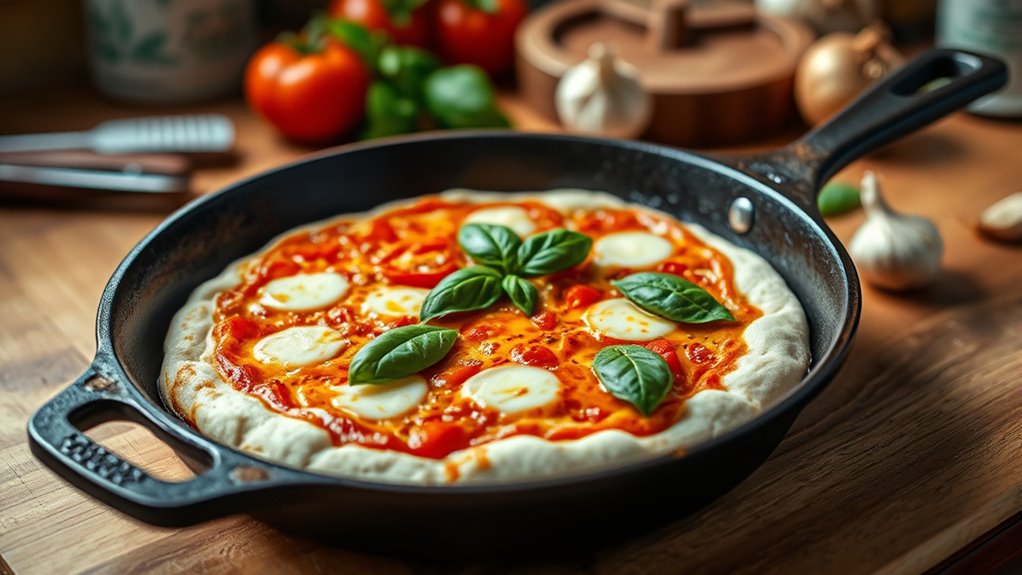
How to Make Pizza in a Cast Iron Skillet
To make pizza in a cast iron skillet, start by preparing a slightly thick, elastic dough. This ensures a crispy crust with a soft interior, perfect for skillet pizza.
Using a cast iron skillet helps achieve even heat distribution and a deliciously browned crust.
Preheat your oiled skillet on medium heat to prevent sticking and promote browning.
Spread your sauce and cheese evenly, then add toppings without overcrowding.
Cook the pizza on the stovetop or in the oven until the crust turns golden and the cheese bubbles.
Proper skillet care is essential to boost results and prevent rust.
Keep going for tips on perfect layering, cooking, and maintenance to master your cast iron skillet pizza-making skills.
Key Takeaways
- Preheat the cast iron skillet on medium heat for 5 minutes and lightly oil the surface to prevent sticking and promote browning.
- Prepare a slightly thicker, elastic dough that can withstand high heat without tearing or burning for a crispy crust and soft interior.
- Spread sauce evenly, sprinkle shredded cheese, and layer toppings thoughtfully to avoid overcrowding and ensure even cooking.
- Cook pizza until the crust is golden brown, cheese is bubbling, and the base is firm with slight browning.
- Clean the skillet immediately after use with warm water, dry thoroughly, and apply a thin oil layer to maintain seasoning and prevent rust.
How to Choose the Best Dough for Cast Iron Skillet Pizza

When selecting dough for your cast iron skillet pizza, what qualities should you prioritize? You want a dough that’s sturdy enough to hold up against the skillet’s intense heat without burning or sticking. Look for dough with a good balance of elasticity and hydration—it should stretch easily but not tear.
A slightly thicker dough works best, as it will develop a crispy, golden crust while staying soft inside. Avoid overly thin or delicate doughs that can crisp too quickly or burn. Also, consider doughs with a bit of fermentation time; they develop flavor and a better texture under high heat.
Choosing the right dough sets the foundation for a perfectly cooked, delicious skillet pizza every time.
How to Make Dough for Cast Iron Skillet Pizza
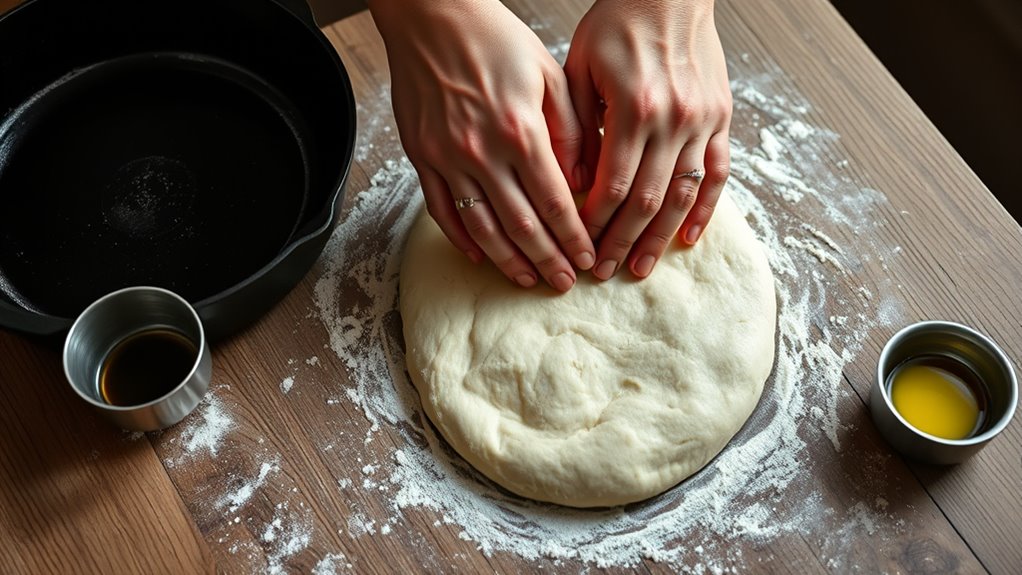
Selecting the right dough is just the start; crafting your own dough guarantees you get the perfect texture and flavor for your cast iron skillet pizza. Begin by mixing 2 cups of all-purpose flour, 1 teaspoon of salt, and 1 teaspoon of sugar in a bowl. In a separate cup, dissolve 1 packet of active dry yeast in ¾ cup of warm water.
Let it sit for 5 minutes until it’s foamy. Combine the yeast mixture with the dry ingredients and add 1 tablespoon of olive oil. Knead the dough on a floured surface for about 8 minutes until smooth and elastic.
Place it in a greased bowl, cover, and let it rise for 1 hour or until doubled. Your dough is now ready for the skillet.
How to Prepare Your Cast Iron Skillet for Pizza
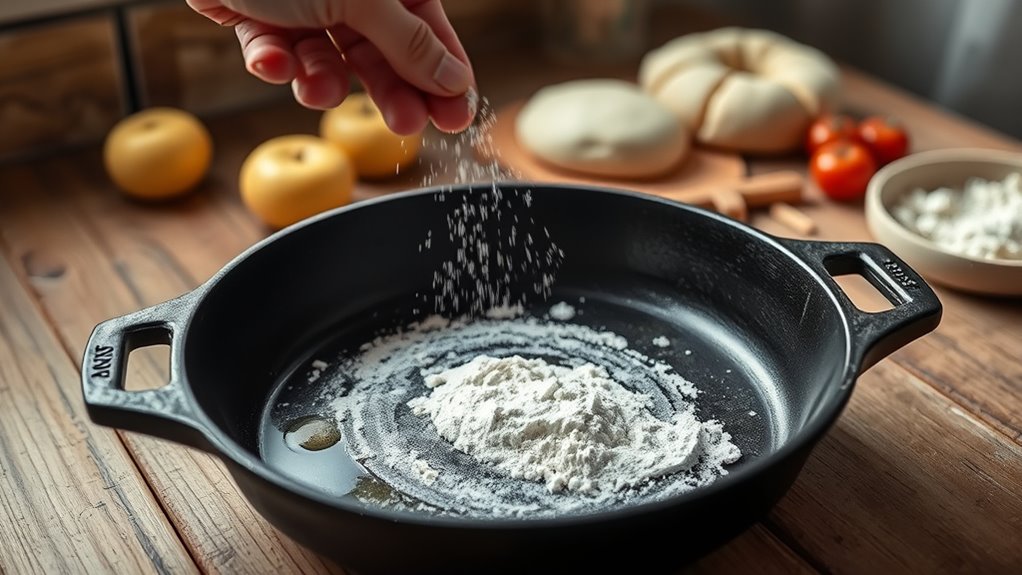
Before you start assembling your pizza, make sure your cast iron skillet is properly prepared to guarantee even cooking and a crispy crust. First, preheat the skillet on medium heat for about 5 minutes. Then, add a thin layer of oil—vegetable or olive oil works best—to prevent sticking and enhance browning.
Use a paper towel to spread the oil evenly across the surface.
Here’s a quick guide to preparing your skillet:
| Step | Action | Tip |
|---|---|---|
| 1 | Preheat skillet | Medium heat, 5 minutes |
| 2 | Add oil | Use 1 tbsp, spread thin |
| 3 | Check temperature | Hot but not smoking |
| 4 | Test oil spread | Should coat surface evenly |
| 5 | Ready for dough | Place dough immediately |
Proper preparation guarantees sticking and ensures your crust crisps perfectly.
How to Layer Sauce, Cheese, and Toppings
Once your skillet is hot and oiled, it’s time to add the flavors that bring your pizza to life. Start by spreading a thin, even layer of your favorite tomato sauce over the dough, leaving a small border around the edges. This helps the crust stay crisp.
Next, sprinkle a generous amount of shredded cheese, like mozzarella, evenly across the sauce. Make sure every bite will have some cheesy goodness. After that, add your toppings thoughtfully—distribute them so the pizza cooks evenly, avoiding overcrowding.
Consider layering heavier toppings first, like sausage or mushrooms, then lighter ones like bell peppers or olives. This layering helps toppings cook properly without sogginess. With sauce, cheese, and toppings perfectly layered, your pizza is ready for the next step in your skillet cooking journey.
How to Cook Pizza on the Stovetop vs. in the Oven
While both stovetop and oven methods can yield delicious cast iron skillet pizzas, each offers unique advantages that affect texture and cooking time. When you cook on the stovetop, your pizza gets a crisp, golden crust quickly because the direct heat from the pan sears the dough. You’ll want to keep the heat moderate to avoid burning while allowing the cheese to melt evenly.
Cooking in the oven, however, provides more even heat all around, which helps the toppings cook thoroughly and the crust brown uniformly. Oven cooking takes a bit longer but often results in a more balanced bake. You can even combine methods—start on the stovetop to crisp the base, then finish in the oven for perfectly melted toppings and a bubbly crust.
How to Know When Your Cast Iron Pizza Is Done?
Whether you finish your pizza on the stovetop, in the oven, or with a combination of both, knowing when it’s done can make all the difference in flavor and texture.
You’ll want to check for key signs: a golden crust, bubbling cheese, and a firm base.
Use this quick guide to help you judge doneness:
| Indicator | What to Look For |
|---|---|
| Crust Color | Golden brown and slightly crispy |
| Cheese | Melted and bubbling |
| Bottom of Pizza | Firm, not soggy, with some browning |
| Aroma | Rich, toasty, and inviting |
Trust your senses—when these signs align, your cast iron pizza is ready to enjoy!
Tips for a Crispy Cast Iron Skillet Pizza Crust
To achieve a perfectly crispy crust in your cast iron skillet, you need to focus on heat management and dough preparation. Preheat your skillet thoroughly on medium-high heat before adding the dough, so it starts crisping immediately. Use a dough with moderate hydration; too wet will steam instead of crisp.
Press the dough evenly to guarantee uniform thickness, avoiding overly thick edges. Lightly oil the skillet to prevent sticking and promote browning. After placing the dough, resist the urge to move it; this helps form a stable crust.
If your stovetop allows, finish cooking in a preheated oven to evenly crisp the bottom without burning. Finally, keep an eye on the crust’s color—a deep golden brown signals perfect crispness and texture.
Creative Topping Ideas for Cast Iron Skillet Pizza
You can make your cast iron skillet pizza truly stand out by experimenting with unique flavor combinations like fig and prosciutto or spicy sausage with honey drizzle. Using seasonal ingredients not only boosts freshness but also adds a vibrant twist to your toppings.
Try mixing and matching what’s in season to create exciting, mouthwatering pizzas every time.
Unique Flavor Combinations
Although classic toppings like pepperoni and mozzarella are always a hit, experimenting with unique flavor combinations can take your cast iron skillet pizza to the next level. Try pairing tangy goat cheese with caramelized onions and fresh rosemary for a savory twist.
Or, layer spicy chorizo with roasted red peppers and a drizzle of honey to balance heat and sweetness. You can also mix figs, prosciutto, and arugula for a sophisticated bite that’s both salty and sweet.
Don’t hesitate to add unexpected ingredients like smoked gouda with sautéed mushrooms or apple slices with sharp cheddar. These combinations work well in the skillet’s intense heat, melting flavors together beautifully.
Feel free to mix and match until you find your perfect, unforgettable pizza topping blend.
Seasonal Ingredient Inspirations
When the seasons change, so do the freshest ingredients available, giving you a chance to create cast iron skillet pizzas that highlight the best flavors of the moment. In spring, try topping your pizza with asparagus, peas, and fresh ricotta for a bright, fresh taste.
Summer calls for juicy tomatoes, basil, and sweet corn, while fall invites you to experiment with roasted butternut squash, caramelized onions, and sage. Winter’s heartier options include sautéed mushrooms, kale, and smoked mozzarella.
Using seasonal ingredients not only enhances flavor but also supports local farmers and reduces your carbon footprint. Keep an eye on farmers’ markets or your garden to inspire your next pizza creation—freshness makes all the difference when you’re cooking in a cast iron skillet.
How to Clean and Care for Your Cast Iron Skillet
After enjoying your homemade pizza, you’ll want to clean your cast iron skillet the right way to keep it in top shape. Knowing how to properly wash, season, and store your skillet will extend its life and improve its non-stick surface.
Let’s go over the essential steps to care for your cast iron after each use.
Proper Cleaning Techniques
Since cast iron skillets develop a natural non-stick surface over time, proper cleaning is essential to maintain their seasoning and prevent rust. After cooking your pizza, avoid harsh soaps or soaking your skillet. Instead, rinse it with warm water and gently scrub with a brush or sponge while it’s still warm.
Dry it thoroughly to stop any moisture from causing rust.
Remember these key steps to keep your skillet in top shape:
- Clean immediately after use to prevent stuck-on food
- Use coarse salt as a scrub for stubborn bits
- Avoid dishwasher or soaking in water
- Dry completely, even heating it briefly on the stove
- Apply a thin layer of oil after drying to protect the surface
Taking care of your skillet this way keeps your pizza crust perfect every time!
Seasoning Your Skillet
Why does seasoning your cast iron skillet matter so much? Seasoning creates a natural, non-stick surface that improves with every use. After cleaning your skillet, dry it thoroughly to prevent rust.
Then, apply a thin layer of vegetable oil or flaxseed oil all over the skillet, inside and out. Place it upside down in a preheated oven at 450°F (232°C) for one hour, with a baking sheet underneath to catch drips. Let it cool completely in the oven before removing.
This process bonds the oil to the iron, forming a protective layer that enhances flavor and durability. Regular seasoning keeps your skillet rust-free, smooth, and ready for your next pizza adventure, so don’t skip this essential step.
Storage and Maintenance Tips
Proper seasoning sets the foundation, but keeping your cast iron skillet in top shape requires consistent care and smart storage. After cooking, clean your skillet while it’s still warm using hot water and a stiff brush—skip soap to preserve seasoning. Dry it thoroughly to prevent rust, then apply a thin layer of oil.
Store your skillet in a dry place, preferably with a paper towel inside to absorb moisture.
- Feel proud knowing your skillet improves with use
- Enjoy rust-free cooking every time
- Avoid frustration by never soaking your skillet
- Protect your investment with simple daily habits
- Experience the joy of a well-maintained, reliable pan
Follow these tips, and your cast iron will serve you delicious pizza for years.
Fixing Common Cast Iron Skillet Pizza Problems
Even the most experienced cooks run into issues when making pizza in a cast iron skillet, but you can easily fix them with a few simple adjustments.
If your crust sticks, make sure you preheat the skillet and use enough oil. If the crust is soggy, cook the pizza a bit longer or increase heat slightly.
Burnt cheese? Lower the oven rack or cover the skillet with foil.
| Problem | Cause | Fix |
|---|---|---|
| Sticking crust | Insufficient oil/preheat | Preheat skillet, add oil |
| Soggy crust | Undercooked base | Cook longer, increase heat |
| Burnt cheese | Too close to heat source | Lower rack, cover with foil |
Frequently Asked Questions
Can I Use Store-Bought Pizza Sauce Instead of Homemade?
Yes, you can definitely use store-bought pizza sauce instead of homemade. It saves time and still tastes great.
Just make sure to choose a good-quality sauce to keep your pizza flavorful and delicious.
What Type of Cheese Melts Best in a Cast Iron Skillet?
Mozzarella melts best, bubbling like a golden lake in your cast iron skillet.
You’ll also love provolone or fontina—they melt smoothly, creating gooey, stretchy cheese that complements your crispy crust perfectly.
How Thick Should I Roll Out the Dough for Skillet Pizza?
You should roll out your dough about 1/4 to 1/2 inch thick. This thickness guarantees it cooks evenly in the skillet, giving you a crispy crust without being too thin or doughy in the center.
Can I Freeze Cast Iron Skillet Pizza Leftovers?
You can freeze cast iron skillet pizza leftovers—like tucking a warm ember safely away. Just cool the pizza, wrap it tightly, and store it in the freezer.
When ready, reheat for that fiery, fresh taste.
Is Cast Iron Safe for Cooking Acidic Toppings Like Tomatoes?
Yes, cast iron is safe for cooking acidic toppings like tomatoes, but if your skillet isn’t well-seasoned, the acid might strip some seasoning.
Make sure to maintain your pan’s seasoning to prevent any metallic taste or damage.
Conclusion
Now that you know how to make pizza in a cast iron skillet, you’re ready to impress! Did you know that Americans eat about 350 slices of pizza per second? That’s a lot of pizza love!
Using your skillet, you can create crispy, delicious pies with endless topping combos. Just remember to prep your skillet well and keep an eye on cooking times. Enjoy every bite of your homemade, skillet-crafted pizza made in your cast iron skillet!