
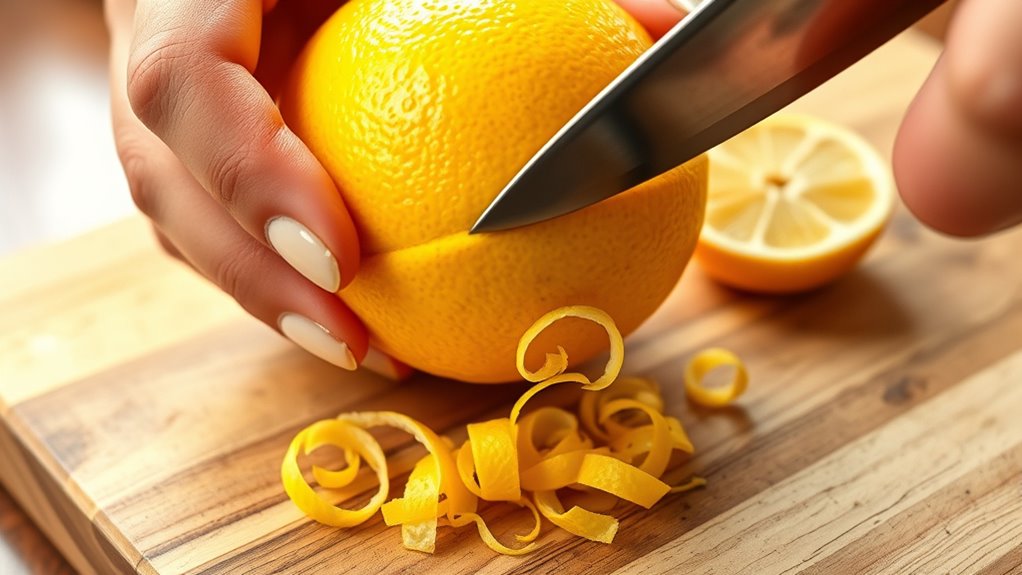
How to Zest a Lemon Without a Zester or Grater
You can zest a lemon without a zester or grater by carefully peeling thin strips of just the bright yellow outer skin using a vegetable peeler or sharp knife. This simple method allows you to extract the flavorful zest without special tools.
Avoid peeling the bitter white pith underneath, as it can affect the taste.
Then, finely mince the strips to release the aromatic oils. Washing the lemon first ensures cleanliness and better zest quality.
Work gently to keep the zest controlled so it doesn’t crumble or include pith.
Choose fresh fruit for the best flavor and texture.
There’s more to explore about zesting techniques and flavor tips ahead.
This easy approach helps you enjoy lemon zest anytime, even without traditional tools.
Key Takeaways
- Use a sharp paring or kitchen knife to carefully peel thin strips of the lemon’s yellow zest, avoiding the bitter white pith.
- Wash the lemon thoroughly before peeling to ensure cleanliness and better zest quality.
- Lay peel strips flat and finely chop or mince them to mimic zest texture and release more flavor.
- Use gentle, controlled motions to peel thin layers without digging into the pith or damaging the zest.
- Dry leftover zest by air drying or low-heat oven drying and store in an airtight container for later use.
Why You Might Need to Zest a Lemon Without a Zester
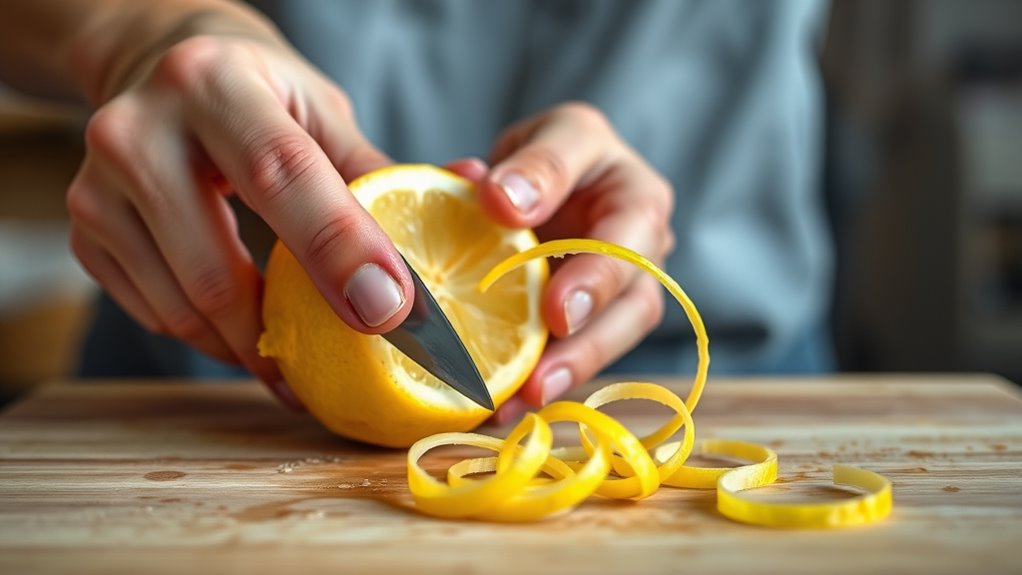
Although having a zester makes the job easier, you might find yourself without one when a recipe calls for lemon zest. Maybe you’re cooking at a friend’s house, or your zester broke, or you simply don’t own one yet. In those moments, don’t let the lack of a specialized tool prevent you from adding that bright, citrusy flavor.
Lemon zest brings a fresh, tangy punch to dishes, enhancing everything from desserts to salads. You can still achieve the zest’s aromatic oils and vibrant taste by using common kitchen tools you probably already have. Knowing how to zest a lemon without a zester ensures you won’t miss out on that essential ingredient, keeping your cooking flavorful and on point no matter what.
Which Parts of a Lemon to Use for Zesting
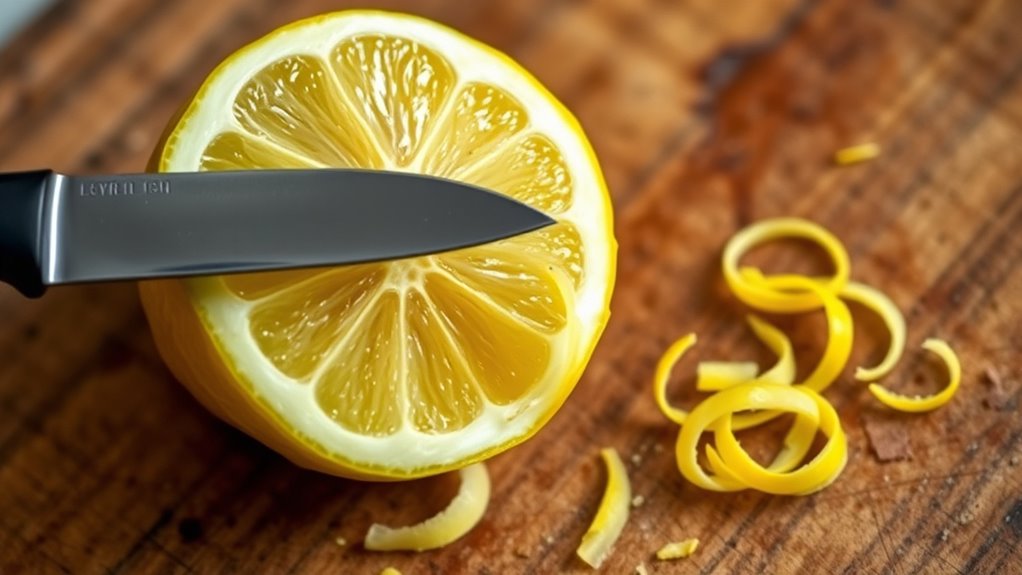
When you zest a lemon, focus on the outermost layer of the peel—the bright yellow skin—because it contains the flavorful oils that give zest its signature aroma and taste. Avoid the white part underneath, called the pith, as it’s bitter and can ruin your dish’s flavor. You only want the thin, colored layer that holds those essential oils.
If you’re using tools or even a makeshift method, be careful not to dig too deep into the pith. Concentrate on just scraping or shaving the yellow surface gently. That’s where all the lemony goodness lives, adding fresh, vibrant notes to your recipes without any bitterness creeping in.
Stick to this part for the best zest every time.
Peel Thin Lemon Strips With a Vegetable Peeler or Knife
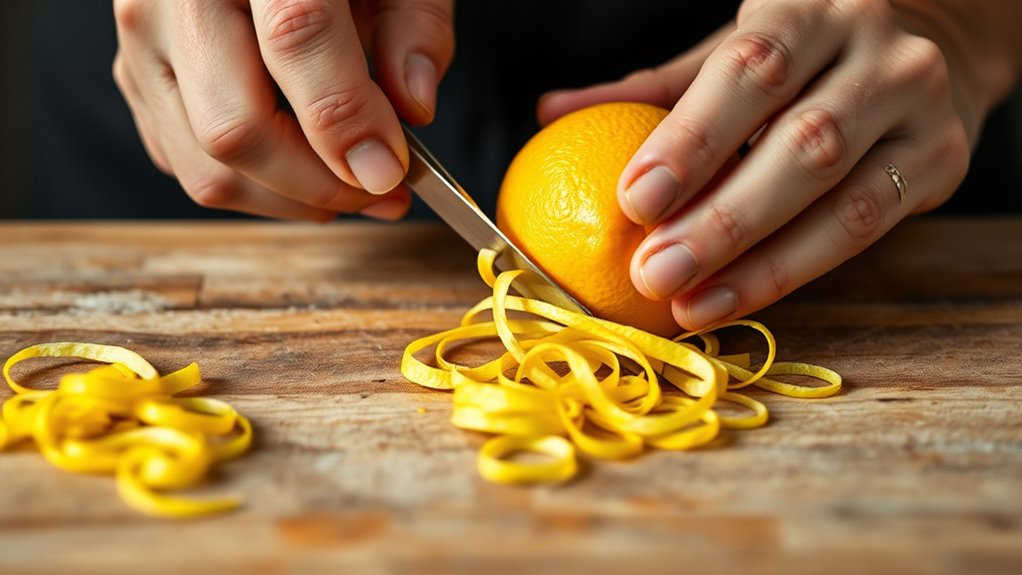
Now that you know which part of the lemon to focus on, you can start peeling thin strips using a vegetable peeler or a sharp knife. Here’s how to do it safely and effectively:
- Wash the lemon thoroughly to remove any wax or residue.
- Hold the lemon firmly in one hand and the peeler or knife in the other.
- Gently glide the peeler or knife along the lemon’s surface, taking care to peel only the colored zest, avoiding the bitter white pith.
- Peel thin strips, turning the lemon as you go to get even, manageable pieces.
These thin strips are perfect for adding flavor or for further preparation in your recipes. Just remember to work slowly and carefully!
Finely Mince Lemon Peel Using a Knife for Zest
Once you have your thin strips of lemon peel, you can finely mince them with a sharp knife to release even more flavor. Lay the strips flat on a cutting board, then use a rocking motion with the knife to chop the peel into tiny pieces. Keep your fingers tucked in to avoid cuts.
The finer you mince, the more surface area you expose, which intensifies the lemon’s aroma and taste in your dish. Take your time and be patient; a few extra seconds will give you zest that blends smoothly without large, chewy bits.
Finely minced lemon peel works well in dressings, sauces, and baked goods, adding a bright, fresh pop of citrus that enhances any recipe.
Create Lemon Zest Without a Microplane
If you don’t have a microplane, don’t worry—you can still get great lemon zest using a vegetable peeler or a sharp knife. A paring knife works well for carefully removing thin strips of peel.
With a bit of practice, you’ll be able to create zest that’s perfect for your recipes.
Using a Vegetable Peeler
How can you create lemon zest without a microplane? Using a vegetable peeler is a simple and effective way. Here’s how you can do it:
- Wash the lemon thoroughly to remove any wax or pesticides. Gently peel thin strips of the lemon’s outer skin with the vegetable peeler, avoiding the bitter white pith underneath. Lay the strips flat and use a sharp paring knife or kitchen scissors to finely chop the peel into smaller zest pieces.
- Use the zest immediately or let it dry for later use in recipes. This method gives you larger zest pieces than a microplane but still packs bright citrus flavor into your dish without special tools.
Employing a Sharp Knife
Peeling lemon zest with a vegetable peeler works well, but you can also achieve fine zest using just a sharp knife. Start by washing the lemon thoroughly. Hold it steady on a cutting board, then carefully slice thin strips of the yellow outer peel, avoiding the bitter white pith underneath.
Lay the strips flat and finely mince them with your knife, moving slowly to maintain control and guarantee even pieces. This method requires patience but yields aromatic zest perfect for cooking or baking. Keep your knife sharp to make clean cuts and reduce slipping.
Utilizing a Paring Knife
When you don’t have a microplane on hand, a paring knife offers a reliable alternative for zesting lemons. It requires a bit more care but delivers fresh zest easily.
Here’s how to do it:
- Wash the lemon thoroughly to remove any wax or pesticides.
- Hold the lemon steady and carefully slice thin strips of the yellow outer peel, avoiding the bitter white pith.
- Lay the strips flat and finely mince them with the knife to create zest-sized pieces.
- Use the zest immediately for the freshest flavor or dry it for later use.
Remove Lemon Peel Safely With a Potato Peeler
Although a potato peeler isn’t the most common tool for zesting, it can safely remove lemon peel with minimal effort. Hold the lemon firmly in one hand and the peeler in the other. Gently glide the peeler over the lemon’s skin, taking care to avoid cutting too deeply into the white pith, which tastes bitter.
Aim to remove thin strips of the yellow zest only. Work your way around the lemon until you have enough peel for your recipe. After peeling, you can finely chop the strips by hand if needed.
Using a potato peeler reduces the risk of slipping and injuring yourself, making it a safe alternative if you don’t have a traditional zester or grater handy.
Scrape Lemon Zest Using a Spoon or Butter Knife
Two simple household tools—a spoon or a butter knife—can effectively scrape lemon zest when you don’t have specialized equipment. Here’s how to do it:
- Hold the lemon firmly in one hand and the spoon or butter knife in the other.
- Gently scrape the tool against the lemon’s surface, applying light pressure to lift the zest.
- Move in one direction, working around the lemon’s curve to gather thin strips of zest.
- Collect the zest on a plate or bowl, avoiding too deep a scrape to keep bitter pith away.
This method takes a bit more patience but gives you fresh zest without extra tools.
Just remember to use smooth, controlled strokes for the best results.
Avoid the Bitter White Pith When Zesting Without Tools
When zesting a lemon without tools, you’ll want to watch out for the bitter white pith beneath the skin. You can spot it as the thick, spongy layer that’s much less flavorful than the bright outer peel.
To avoid it, peel carefully in thin layers, taking just the colored zest and leaving the pith behind.
Identifying The Pith
How can you avoid the bitter taste that comes from the white pith when zesting a lemon without tools? First, you need to recognize what the pith looks like. The pith is the thick, white layer beneath the bright yellow skin.
Here’s how to identify it easily:
- Look closely at the lemon’s surface; the zest is smooth and vibrant yellow.
- The pith appears rougher and dull white, often thicker near the stem.
- When peeling or scraping, stop as soon as you see white starting to show.
- If you feel bitterness while tasting a small scrap, that’s the pith.
Peeling Techniques To Avoid
Recognizing the pith’s appearance helps you steer clear of common peeling mistakes that lead to bitterness. When zesting without tools, avoid scraping too deeply into the lemon’s white layer—it’s where bitterness hides. Don’t use a knife with a dull edge or one that’s too large; it makes controlling the peel thickness tricky, increasing the chance of grabbing pith.
Steer clear of peeling in broad strips; instead, opt for thin, narrow slices to minimize pith inclusion. Also, avoid peeling too quickly or roughly, as this can tear through the zest into the bitter layer. Focus on gentle, deliberate motions to get just the vibrant yellow skin.
How to Dry and Store Lemon Zest for Later Use
Since fresh lemon zest can lose its vibrant flavor quickly, drying it is a smart way to preserve its bright citrus notes for future recipes. Here’s how you can dry and store your zest effectively:
- Spread the zest in a thin, even layer on a plate or baking sheet.
- Let it air dry at room temperature for 24 to 48 hours, stirring occasionally to prevent clumping.
- Alternatively, dry it in the oven at the lowest setting (around 150°F or 65°C) for 15-20 minutes, checking frequently.
- Once fully dry and crumbly, store the zest in an airtight container away from light and heat.
This method keeps your lemon zest flavorful and ready to enhance dishes whenever you need it.
Common Mistakes to Avoid When Zesting a Lemon
Although zesting a lemon seems straightforward, it’s easy to make mistakes that affect both flavor and texture. First, avoid zesting too deeply—you want just the colorful outer peel, not the bitter white pith underneath. Using too much pressure can scrape that pith, ruining the zest’s taste.
Also, don’t zest a lemon that hasn’t been washed well; pesticides or dirt can contaminate your zest. Another common error is zesting a lemon that’s too dry or old, which yields less flavorful zest. When using makeshift tools, be careful to maintain control to avoid uneven or chunky zest.
Finally, avoid zesting directly over your dish if you’re unsure—it’s better to zest into a bowl to prevent unwanted bits from falling in.
Extra Tips: Adding Lemon Flavor Without Zesting
If you don’t have a zester on hand, you can still add bright lemon flavor using lemon juice. Another great option is infusing lemon peels into oils, syrups, or teas to capture that citrusy essence.
These simple tricks let you enjoy lemon’s freshness without the extra tools.
Using Lemon Juice
How can you add bright lemon flavor without the hassle of zesting? Lemon juice is your go-to alternative, delivering vibrant citrus notes with ease. Here’s how to use it effectively:
- Balance acidity: Start with a small amount and adjust, since lemon juice is more tart than zest.
- Enhance sweetness: Mix lemon juice with a bit of honey or sugar to mellow sharpness in desserts or drinks.
- Marinate meats and veggies: Use lemon juice to tenderize and infuse dishes with invigorating flavor.
- Finish dishes: Add a splash just before serving to brighten soups, salads, or sauces.
Using lemon juice saves time and tools while still packing your meals with that invigorating lemon essence you crave.
Infusing Lemon Peels
While lemon juice adds quick brightness, you can extract even more depth by infusing lemon peels into your dishes and drinks. Start by carefully peeling the lemon, avoiding the bitter white pith. Then, add the peels to hot water, tea, or cocktails and let them steep for 10 to 15 minutes.
For savory dishes, toss the peels into simmering sauces, soups, or stews, allowing the oils to infuse flavor gradually. You can also soak peels in olive oil or vinegar for a zingy homemade dressing. Just remember to remove the peels before serving to avoid bitterness.
Infusing lemon peels is a simple way to boost flavor without needing a zester or grater, giving your recipes a fresh, aromatic twist.
Frequently Asked Questions
Can I Zest Other Citrus Fruits the Same Way as a Lemon?
Yes, you can zest other citrus fruits like oranges, limes, and grapefruits the same way. Just make sure to avoid the bitter white pith underneath the skin, and you’ll get flavorful zest for your recipes.
How Long Does Lemon Zest Stay Fresh in the Refrigerator?
Lemon zest stays fresh in the refrigerator for about one week if you store it in an airtight container.
To keep it vibrant longer, consider freezing it in small portions for up to six months.
Is Lemon Zest Safe to Eat if the Lemon Isn’T Organic?
You can eat lemon zest from non-organic lemons, but you should wash the lemon thoroughly to remove pesticides. If you’re concerned, consider buying organic or using a fruit wash to reduce potential chemical residues before zesting.
Washing helps minimize exposure to chemicals, but it may not remove all residues. Organic lemons are grown without synthetic pesticides, making them a safer choice for zesting.
Using a vegetable brush under running water can also aid in cleaning the lemon skin effectively.
Can I Freeze Lemon Zest for Future Use?
You can freeze lemon zest like a snapshot of summer, locking in its flavor perfectly. Just spread it on a tray, freeze, then store in an airtight container.
It stays fresh for months, ready when you need it.
What Dishes Benefit Most From Using Fresh Lemon Zest?
You’ll find fresh lemon zest shines in dishes like lemon chicken, pasta, salads, and baked goods. It brightens sauces and cocktails too. Using zest boosts flavor, adding a fresh, tangy punch to your meals and drinks.
Conclusion
Now that you know how to zest a lemon without a zester or grater, are you ready to add that bright, citrusy kick to your dishes anytime? By carefully peeling thin strips and mincing them finely, you can create fresh zest without special tools. Just remember to avoid the bitter white pith and store your zest properly for later use.
With these simple techniques, flavorful cooking is always within reach! Mastering how to zest a lemon without a zester or grater ensures you can enhance your recipes effortlessly. Enjoy the vibrant taste of lemon zest and elevate your culinary creations today.